


You let your dog out into the backyard, expecting them to play or simply do their business. Instead, they immediately drop their head and start grazing like a tiny, focused cow.
If you find yourself constantly asking, “why does my dog eat grass,” you are absolutely not alone. This incredibly common behavior puzzles millions of pet parents every single day.
While it looks slightly concerning, eating plant matter is deeply ingrained in modern canine biology. Let’s explore the hidden reasons behind your dog’s lawn-mowing habit and discover exactly when it warrants a trip to the veterinarian.
The Great Canine Mystery: Decoding Your Dog’s Lawn-Mowing Habit
Watching your carnivorous best friend actively seek out a patch of weeds can feel very unnatural. However, veterinary behaviorists confirm that grazing is a perfectly normal canine activity.
- Most dogs actively enjoy eating grass without showing any signs of underlying illness.
- It is a widespread behavioral quirk passed down through thousands of years of evolution.
- Understanding this habit requires looking past their modern food bowl and examining their deep ancestral roots.
1. The Biological Urge: Evolutionary Instincts and Ancestral Diets
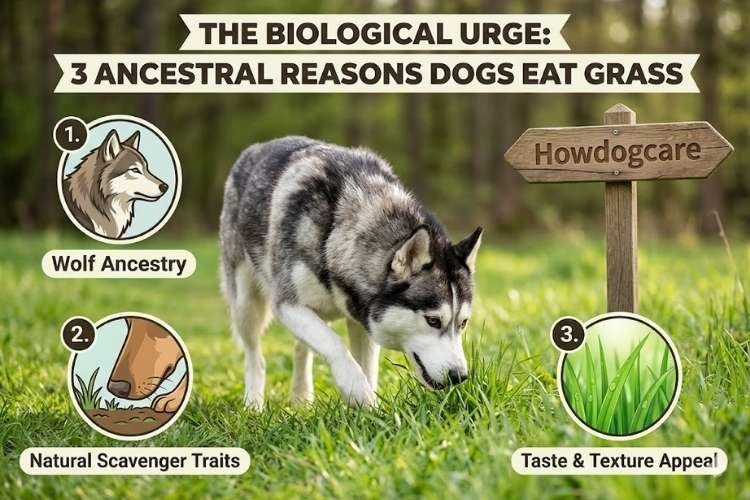
Long before dogs enjoyed premium kibble on comfortable sofas, they survived entirely in the wild. Their ancestors were highly adaptable omnivores, relying on a diverse diet to survive harsh conditions.
Today’s domesticated dogs still carry these powerful, ancient genetic blueprints.
Wolf Ancestry: Why Wild Canines Consume Plant Matter
Your dog shares a massive amount of DNA with the modern gray wolf. Wild canines are primarily hunters, but they are also opportunistic eaters who regularly consume plant matter.
- When wild wolves hunt herbivores (like deer or rabbits), they consume the entire animal.
- This includes the prey’s stomach and intestines, which are heavily packed with predigested grass and vegetation.
- Because of this biological history, your dog’s digestive system naturally craves and processes fibrous plant materials.
Scavenger Traits: The “If It Fits in the Mouth, Eat It” Philosophy
Dogs are biologically wired as natural scavengers. They do not possess the refined palates of humans; they explore their environment primarily through their noses and mouths.
- If a dog finds something texturally interesting on the ground, their first instinct is often to eat it.
- Grazing satisfies their deep-rooted psychological need to forage and scavenge for extra calories.
- This opportunistic feeding style helped their wild ancestors survive terrifying periods of famine and food scarcity.
The Taste and Texture Appeal of Fresh Spring Grass
Sometimes, the answer to your grazing question is remarkably simple: they genuinely like how it tastes. Not all grass is created equal in the eyes of a foraging canine.
- Notice how your dog meticulously sniffs the lawn before selecting a specific blade to chew.
- Fresh spring grass is naturally sweet, highly crisp, and packed with refreshing moisture.
- Many dogs simply enjoy the satisfying crunch and unique texture of a broadleaf weed on a warm afternoon.
2. The Quest for Fiber: Fulfilling Hidden Nutritional Needs

Beyond ancient instincts and simple taste preferences, grazing often points directly to your dog’s current dietary setup. A dog eating grass might be actively trying to fix a nutritional deficiency.
Just like humans, dogs absolutely require specific levels of dietary roughage to maintain a healthy internal ecosystem.
How Roughage Aids in Healthy Canine Digestion
Dietary fiber is the unsung hero of a smoothly functioning canine gastrointestinal tract. It physically adds bulk to your dog’s stool, allowing food to pass safely and efficiently through the intestines.
- Roughage heavily absorbs excess water in the colon, preventing painful constipation.
- It acts as a biological broom, physically sweeping the intestinal walls clean of trapped debris.
- By actively seeking out fibrous grass, your dog might be self-medicating a sluggish digestive system.
Evaluating Your Dog’s Current Kibble for Proper Fiber Content
If your dog constantly grazes, you must critically examine their daily food source. Many highly processed, budget-friendly commercial diets completely lack adequate fiber levels.
- Flip your dog food bag over and strictly examine the guaranteed analysis panel.
- A healthy maintenance kibble should generally contain between 2% to 5% crude fiber.
- If the number is significantly lower, your dog may be eating grass to desperately supplement their daily roughage intake.
The Connection Between Grass Eating and Irregular Bowel Movements
Your dog’s bathroom habits provide the ultimate clue to their sudden lawn-eating obsession. Chronic grazing is frequently linked to hidden gastrointestinal discomfort.
- Monitor their bathroom breaks closely; if they are straining to poop, their fiber intake is likely too low.
- Dogs intuitively understand that eating massive amounts of grass will eventually trigger a bowel movement.
- If you notice a direct correlation between heavy grazing and hard, pebble-like stools, dietary intervention is absolutely necessary.
3. The “Upset Stomach” Theory: Fact or Fiction?

When pet parents ask, “why does my dog eat grass,” the most common answer they hear is that their dog feels sick. This age-old theory suggests that canines eat plant matter specifically to make themselves vomit.
However, modern veterinary science paints a significantly different picture regarding this backyard behavior.
Grass as a Natural Antacid and Emetic (Vomit Inducer)
It is true that long, unchewed blades of grass actively tickle the dog’s throat and sensitive stomach lining. This intense physical irritation can occasionally trigger an immediate gag reflex.
- Some dogs frantically gulp broadleaf weeds whole without chewing them at all.
- This tickling sensation acts as a mechanical emetic, forcefully clearing the stomach of spoiled food, excess bile, or trapped gas.
- In these specific, frantic cases, the dog is instinctively using the lawn as a rapid, natural antacid.
The 2026 Veterinary Consensus on Self-Medicating Dogs
In 2026, the veterinary consensus firmly rejects the idea that all dogs eat grass because they are actively nauseous. While self-medication happens, it is no longer considered the primary biological driver.
- Most dogs grazing in the backyard show absolutely no prior signs of gastrointestinal distress, such as lip-smacking or heavy drooling.
- Veterinarians now heavily agree that the behavior is vastly more complex than a simple, passing stomachache.
- Relying solely on the “sick dog” theory often causes well-meaning owners to completely miss critical nutritional or psychological red flags.
Why Less Than 25% of Dogs Actually Vomit After Grazing
Clinical studies completely shatter the myth that grass ingestion strictly equals vomiting. In reality, observing your dog throw up after a grazing session is a relatively rare event.
- Extensive research proves that fewer than 25% of dogs actually vomit after consuming grass.
- The vast majority digest the plant matter entirely or simply pass it harmlessly in their stool a day later.
- If your dog consistently throws up every single time they eat the lawn, you are witnessing a distinct, underlying medical issue, not a normal grazing habit.
4. Psychological Triggers: Boredom, Anxiety, and OCD

If your dog is perfectly healthy and well-fed, you must critically examine their current mental state. The answer to “why does my dog eat grass” often lies deeply rooted in canine psychology rather than basic biology.
A healthy mind requires just as much daily maintenance as a healthy body.
The Unstimulated Dog: Chewing Grass for Pure Entertainment
A highly intelligent, high-energy dog trapped in a small, unstimulating backyard will quickly invent their own games. Grazing is an incredibly accessible, highly interactive form of self-entertainment.
- Ripping thick grass directly out of the soil provides deeply satisfying sensory feedback and physical resistance to their jaws.
- Boredom grazing is highly prevalent in young puppies and energetic working breeds left entirely alone for long hours.
- If they drastically lack engaging puzzle toys or heavy chew bones, the lush green lawn easily becomes a giant, interactive pacifier.
Anxiety Relief: Repetitive Behaviors as a Soothing Mechanism
Dogs experience intense environmental stress and severe separation anxiety exactly like humans do. For a highly anxious canine, repetitive physical actions rapidly release calming endorphins directly into the brain.
- Obsessively plucking and chewing grass serves as a powerful, self-soothing coping mechanism during thunderstorms or loud neighborhood construction.
- This repetitive, rhythmic behavior acts exactly like a nervous human biting their fingernails during a stressful meeting.
- If the backyard grazing appears frantic, uncontrollable, or heavily obsessive, it has likely crossed over into a severe compulsive behavioral disorder.
Attention-Seeking Behavior: Training You Through Bad Habits
Dogs are brilliant, biological master manipulators who constantly study human reactions. If you rush outside and yell loudly every single time they take a bite of the lawn, they have successfully trained you.
- To a severely under-stimulated dog, negative attention from their owner is still highly rewarding attention.
- They quickly learn that eating a mouthful of grass guarantees you will immediately drop your phone and engage with them.
- You must silently redirect them to a high-value squeaky toy instead of inadvertently rewarding the grazing with loud verbal corrections.
5. Pica in Dogs: When Eating Non-Food Items Becomes a Condition
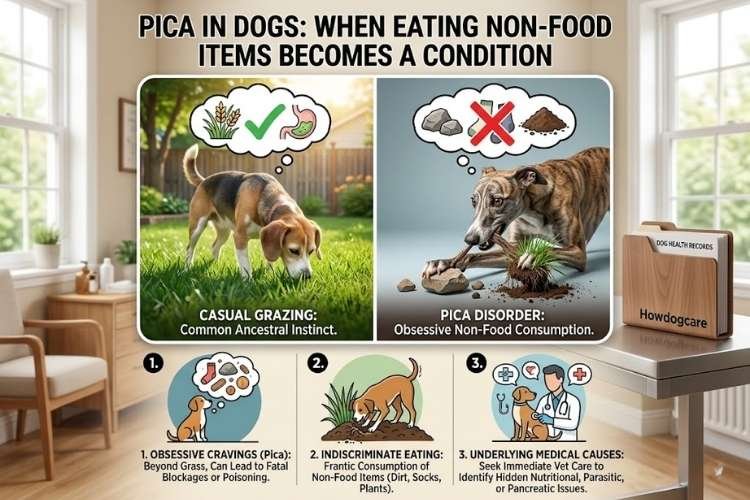
Sometimes, eating grass is an early symptom of a much more serious, systemic medical condition known as Pica. This dangerous disorder completely distorts a dog’s natural, biological dietary instincts.
You must be able to recognize the clear difference between casual grazing and obsessive consumption.
Understanding Pica: Dirt, Grass, Rocks, and Foreign Objects
Pica is a documented clinical condition where an animal compulsively consumes items with absolutely zero nutritional value. It is highly dangerous and rarely stops without aggressive professional intervention.
- A dog suffering from severe Pica will not stop at fresh grass; they aggressively consume dirt, heavy rocks, socks, or toxic houseplants.
- This indiscriminate eating rapidly leads to fatal intestinal blockages, punctured bowels, or severe internal poisoning.
- If your dog frantically eats massive mouthfuls of grass, completely swallowing the roots and dark soil attached to it, suspect Pica immediately.
Identifying the Underlying Medical Causes of True Pica
True Pica is rarely just a quirky, stubborn behavioral problem; it is a massive red flag waving directly from inside your dog’s body. You must partner with a veterinarian to uncover the invisible medical trigger.
- Severe nutritional deficiencies, deep internal parasite loads, or aggressive exocrine pancreatic insufficiency heavily trigger Pica cravings.
- Your veterinarian will run comprehensive, diagnostic blood panels to explicitly check for failing liver disease or severe anemia.
- Successfully treating the underlying biological disease almost always instantly cures the dangerous, obsessive non-food cravings.
You might also like
- 10 Best Dog Food for Puppies (2026 Reviews & Buying Guide)
- Top 10 Best Dog First Aid Kits (2026): Trail, Travel & Home
- How to Stop Leash Pulling: Simple Training Tips That Work
- 10 Best Dog Grooming Table – Top Picks, Reviews & Expert Tips
- Top 10 Best Outdoor Dog Kennel Reviews (Updated Guide & Tips)
6. Is Eating Grass Actually Dangerous for My Dog? (The Health Risks)
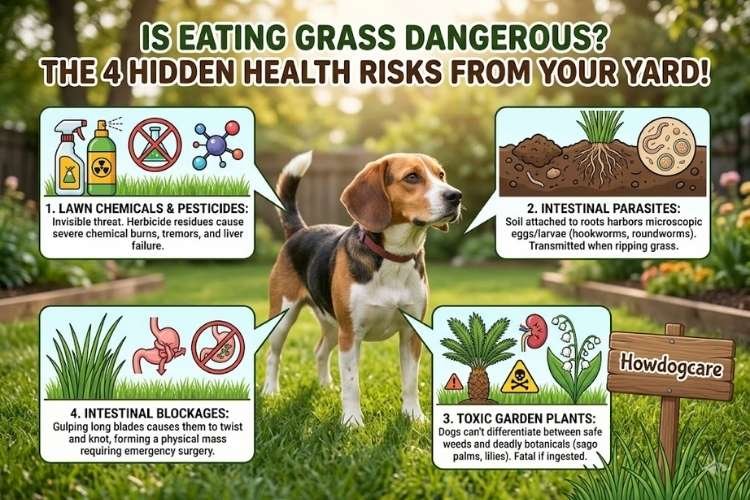
While the act of grazing itself is biologically normal, the modern environment makes it incredibly risky. When you constantly ask, “why does my dog eat grass,” you must also ask what else they are blindly ingesting.
Your perfectly manicured lawn is often a massive minefield of hidden, microscopic dangers that can trigger severe medical emergencies.
The Invisible Threat of Toxic Pesticides and Lawn Chemicals
Modern landscaping relies heavily on harsh chemical treatments to maintain a pristine, weed-free appearance. These invisible toxins are the absolute greatest threat to a grazing canine.
- Commercial herbicides and synthetic fertilizers are highly toxic to the sensitive canine nervous system.
- Even if your personal yard is chemical-free, public parks and neighbor’s lawns are routinely sprayed without any warning signs.
- Ingesting these dangerous compounds easily causes severe chemical burns in the mouth, uncontrollable tremors, and rapid liver failure.
Intestinal Parasites: Hookworms and Roundworms Hidden in Dirt
When your dog aggressively rips grass out by the roots, they consume a significant amount of dark, damp topsoil. This untreated dirt is the ultimate biological breeding ground for microscopic threats.
- Stray cats, raccoons, and wild rodents frequently use outdoor lawns as their personal, infectious litter boxes.
- This contaminated soil heavily harbors microscopic hookworm larvae and roundworm eggs.
- Swallowing this infected dirt instantly transmits severe, blood-sucking parasites directly into your dog’s fragile intestinal tract.
Toxic Plants Masquerading as Safe Yard Weeds
Dogs absolutely do not possess the complex botanical intelligence to differentiate between a harmless blade of fescue and a highly deadly garden weed. To a foraging dog, all green leaves look completely identical.
- Common yard additions like lily of the valley, oleander, and sago palms are incredibly lethal if consumed.
- During a frantic grazing session, your dog can easily grab a massive mouthful of these toxic leaves by mistake.
- Even a tiny, accidental bite of these dangerous plants rapidly triggers acute kidney failure or fatal cardiac arrest within hours.
Intestinal Blockages: The Danger of Swallowing Long, Unchewed Blades
Dogs rarely take the time to chew their food thoroughly, and roughage is absolutely no exception to this dangerous rule. Gulping plant matter whole creates a massive mechanical hazard inside their bodies.
- Swallowing massive, whole blades of thick grass completely bypasses the vital mechanical breakdown process in the mouth.
- These long, fibrous strands easily twist together in the stomach, forming a dense, impenetrable biological knot.
- This physical mass completely blocks the delicate intestines, requiring immediate, highly expensive emergency surgery to safely remove.
7. Strategic Solutions: How to Safely Stop Your Dog from Eating Grass
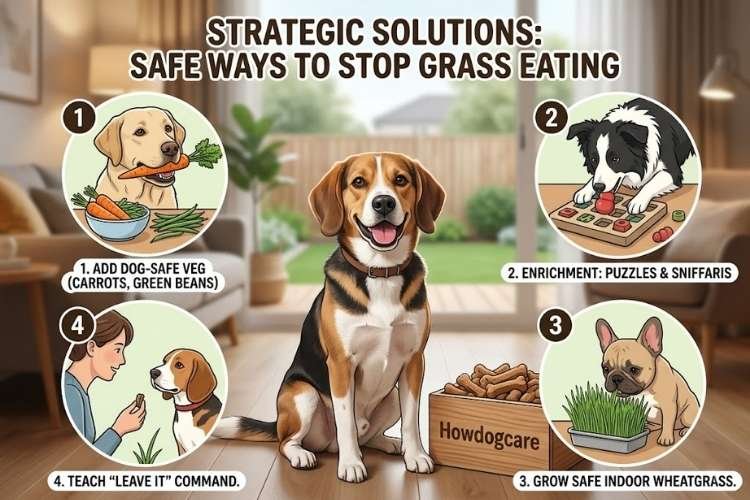
Once you actively rule out severe medical emergencies with your veterinarian, breaking this frustrating habit requires extreme consistency. You cannot simply punish a dog for expressing a natural biological urge.
You must proactively replace the dangerous backyard behavior with safe, highly rewarding indoor alternatives.
Upgrading Their Diet with Dog-Safe Vegetables (Carrots, Green Beans)
If your dog is desperately craving crunchy fiber, you must provide a safe, biologically appropriate outlet. Human vegetables are a phenomenal, highly nutritious substitute for dirty, parasite-ridden yard weeds.
- Offer raw, peeled baby carrots or frozen green beans as a highly rewarding, low-calorie daily snack.
- These vegetables naturally satisfy their deep biological urge to chew while heavily boosting their daily fiber intake.
- Always chop hard vegetables into tiny, bite-sized pieces to strictly prevent accidental choking in eager, fast eaters.
Increasing Daily Physical and Mental Enrichment (Puzzle Toys, Sniffaris)
A physically exhausted and mentally fulfilled dog rarely resorts to obsessive backyard lawn-mowing. You must actively drain their massive energy reserves before ever letting them outside unsupervised.
- Replace standard neighborhood walks with slow, highly engaging “sniffaris,” allowing them to thoroughly investigate every tree and bush.
- Serve all their daily meals inside complex, interactive puzzle toys or stuffed, frozen Kongs to challenge their brain.
- This intense mental stimulation rapidly burns excess anxiety and completely cures highly destructive boredom grazing.
Growing Safe, Indoor “Dog Grass” (Wheatgrass Alternatives)
Some dogs simply love the sweet taste of fresh greens, completely regardless of your extensive training efforts. For these stubbornly dedicated grazers, controlled compromise is your absolute best management strategy.
- Purchase a highly affordable, organic indoor wheatgrass kit specifically designed for household pets.
- This provides a 100% pesticide-free, incredibly safe grazing station entirely within your direct physical control.
- It perfectly satisfies their biological urge to forage without exposing them to hidden backyard chemicals or deadly toxic plants.
Teaching the “Leave It” Command for Ultimate Impulse Control
The absolute most powerful tool in your entire training arsenal is a flawless, highly reliable drop command. This single behavioral cue actively saves canine lives from dangerous foreign objects every single day.
- Aggressively practice the “leave it” command indoors using low-value kibble and high-value, smelly training treats.
- Gradually transition this rigorous training outdoors directly to the lawn, strictly using a short leash for absolute physical control.
- When they successfully ignore the grass and look directly at you, immediately reward them with an irresistible, high-value jackpot treat.
8. Red Alert Symptoms: Exactly When to Call the Veterinarian
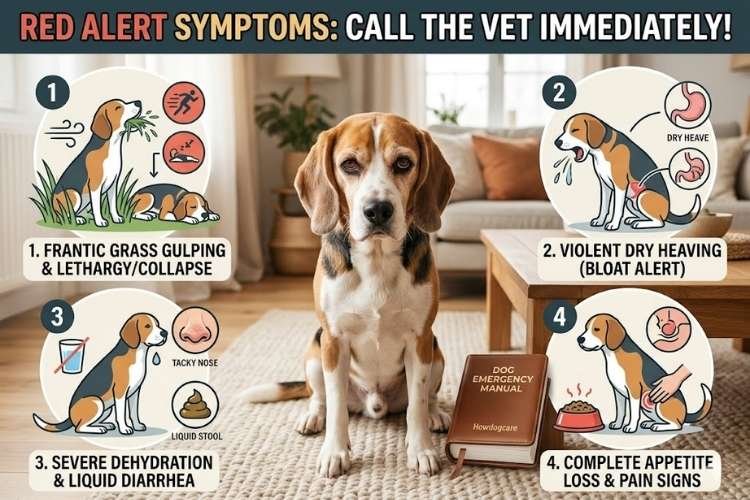
Understanding exactly why does my dog eat grass provides immense peace of mind for standard, casual grazing. However, you must remain hyper-vigilant and quickly recognize when this harmless habit rapidly transforms into a severe medical emergency.
Never ignore sudden, drastic changes in your dog’s daily behavior. If the grazing is accompanied by any physical distress, immediate veterinary intervention is absolutely non-negotiable.
Frantic, Obsessive Grass Eating Paired with Lethargy
A healthy dog grazes casually, taking their time to select the perfect blade. If your dog suddenly drops to the ground and frantically tears up massive chunks of earth, a severe internal crisis is occurring.
- This frantic, panic-driven eating is a massive red flag for acute gastrointestinal distress or severe abdominal pain.
- If this obsessive consumption is immediately followed by extreme lethargy or collapse, their internal organs are actively failing.
- Do not wait to see if they pass the grass; rush them directly to an emergency veterinary clinic for immediate abdominal x-rays.
Vomiting Multiple Times or Dry Heaving After Ingesting Grass
Occasional vomiting after eating a long blade of grass is biologically normal. However, violent, continuous retching is a classic, undeniable symptom of a highly fatal condition.
- If your dog constantly attempts to vomit but violently dry heaves without producing any liquid, they are experiencing gastric dilatation-volvulus (bloat).
- Bloat rapidly twists the stomach, completely cutting off vital blood supply to the heart and surrounding organs.
- This is a catastrophic, time-sensitive emergency; your dog literally has minutes to reach a surgical table before the condition becomes fatal.
Signs of Severe Dehydration, Diarrhea, and Loss of Appetite
Grass eating should never actively replace your dog’s standard kibble intake. If they suddenly refuse their favorite dinner but obsessively graze outside, a severe gastrointestinal infection is actively spreading.
- Watch closely for highly dangerous secondary symptoms like explosive liquid diarrhea or a completely dry, tacky nose.
- These symptoms rapidly dehydrate a dog, causing acute kidney damage within 24 to 48 hours.
- A complete loss of appetite paired with heavy grazing strongly indicates severe intestinal blockages, requiring urgent surgical removal.
Frequently Asked Questions (FAQs) About Dogs Eating Grass
1. Does eating grass automatically mean my dog has intestinal worms?
No, grazing does not automatically guarantee a severe parasite infection. However, the physical act of eating dirty, untreated soil significantly increases their overall exposure risk.
- If your dog frequently rips grass out by the roots, they are actively consuming parasite-heavy topsoil.
- You must maintain a strict, year-round prescription preventative to actively shield their intestines from dangerous hookworms and roundworms.
2. Should I actively punish my dog for eating the lawn?
You should never use physical punishment or loud verbal scolding to stop a dog from grazing. Punishing a deeply ingrained biological instinct directly causes severe psychological anxiety and deeply destroys their trust in you.
- Instead of yelling, immediately redirect their attention using a highly positive “leave it” command.
- Instantly reward their compliance with a high-value training treat or a wildly exciting game of tug-of-war.
3. Why does my dog only aggressively eat grass in the early spring?
This highly specific seasonal behavior comes down to simple canine taste preferences. Springtime produces a massive, rapid growth of heavily hydrated, highly palatable plant matter.
- Fresh spring grass is naturally packed with sweet sugars, rich moisture, and a highly satisfying crunch.
- Many dogs view the new spring lawn exactly like a human views a bowl of fresh, crispy salad after a long winter.
4. What specific lawn fertilizer treatments are completely fatal to dogs?
Never allow your dog to graze on a lawn recently treated with synthetic landscaping chemicals. Certain commercial compounds attack the canine nervous system with terrifying speed.
- Strictly avoid any lawn products containing organophosphates, carbamates, or heavy cocoa bean mulch.
- If you must treat your yard, strictly use 100% pet-safe, organic alternatives and enforce a strict 48-hour grazing ban after application.
Conclusion: Finding Peace of Mind with Your Grazing Pup
Ultimately, answering the classic question of why does my dog eat grass requires closely observing your dog’s entire lifestyle. For the vast majority of healthy canines, it is simply a harmless, deeply ancestral instinct mixed with a desire for crunchy fiber.
By proactively upgrading their daily nutrition, actively preventing severe boredom, and fiercely protecting them from toxic lawn chemicals, you maintain absolute control over their health. Stay vigilant for the crucial red alert symptoms, and you can comfortably let your furry best friend enjoy their quirky, natural grazing habits safely.