


You are relaxing on the couch when you hear that familiar, repetitive slurping sound. You look over and see your furry best friend obsessively grooming their feet. If you find yourself constantly wondering, “why is my dog licking paws,” you are absolutely not alone.
This is one of the most common issues pet parents face today. While occasional grooming is perfectly normal, constant licking is a giant red flag. Let’s uncover the root causes of this itchy behavior and explore proven solutions to give your dog fast relief.
The Hidden Messages Behind Your Dog’s Wet Paws
A dog’s paws are their primary physical connection to the world. Because they do not wear protective shoes, their sensitive footpads endure massive daily wear and tear.
When a dog excessively licks or chews their paws, they are actively trying to tell you something is physically or mentally wrong. They use their rough tongue to soothe localized pain, relieve intense itching, or cope with heavy mental stress.
Ignoring this behavior quickly leads to severe secondary bacterial infections and painful, weeping hot spots. To permanently stop the cycle, you must play detective and identify the specific underlying trigger.
1. Environmental Allergies: The Invisible Itch Triggers
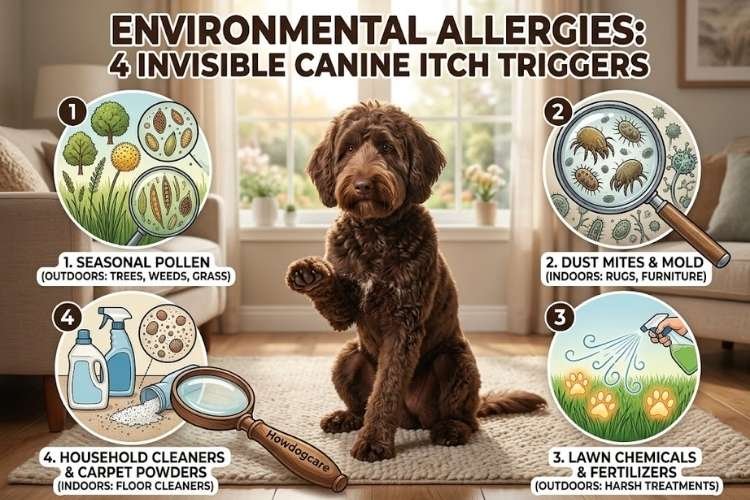
The most frequent answer to itchy feet lies just outside your front door. Environmental allergies, clinically known as canine atopy, cause severe skin reactions in sensitive dogs.
Unlike humans who sneeze and get watery eyes, dogs absorb environmental allergens primarily through their skin and paws.
Identifying Seasonal Pollen, Mold, and Dust Mites
Just like us, dogs suffer heavily from seasonal allergy spikes. Tree, weed, and grass pollens are notorious for causing intense paw irritation during the spring and fall months.
During the cold winter months, indoor allergens actively take over. Dust mites, mold spores, and heavy dander become the primary culprits when the windows are sealed shut.
If your dog’s foot-chewing heavily increases during specific times of the year, seasonal environmental allergies are highly likely the root cause.
Contact Dermatitis: Lawn Chemicals and Household Cleaners
Sometimes, the aggressive itch is a direct physical reaction to a harsh chemical. This painful condition is clinically known as contact dermatitis.
- Outdoor Hazards: Freshly treated lawns, synthetic garden fertilizers, and harsh winter de-icing salts directly burn your dog’s sensitive paw pads.
- Indoor Hazards: Bleach-based floor cleaners and heavily scented carpet powders easily trigger severe localized allergic reactions.
Always wipe your dog’s paws with a damp cloth immediately after a walk to physically remove these toxic, invisible irritants.
The “Frito Feet” Phenomenon: Yeast Infections Explained
Does your dog’s paws smell exactly like a bag of old corn chips? This highly distinct, musky odor points directly to a raging yeast infection.
Yeast naturally lives on your dog’s skin in incredibly small, harmless amounts. However, excessive licking rapidly traps deep moisture between the tight toes.
This warm, damp environment causes Malassezia yeast to multiply out of control. The resulting infection causes intense itching, red inflamed skin, and that unmistakable “Frito” smell.
2. Food Allergies: When Kibble Causes Itchy Paws
If you have entirely ruled out environmental factors, you must look closely at their daily food bowl. Diet plays a massive biological role in your dog’s overall skin health.
When pet parents ask “why is my dog licking paws” year-round without any seasonal breaks, veterinarians immediately suspect a hidden food allergy.
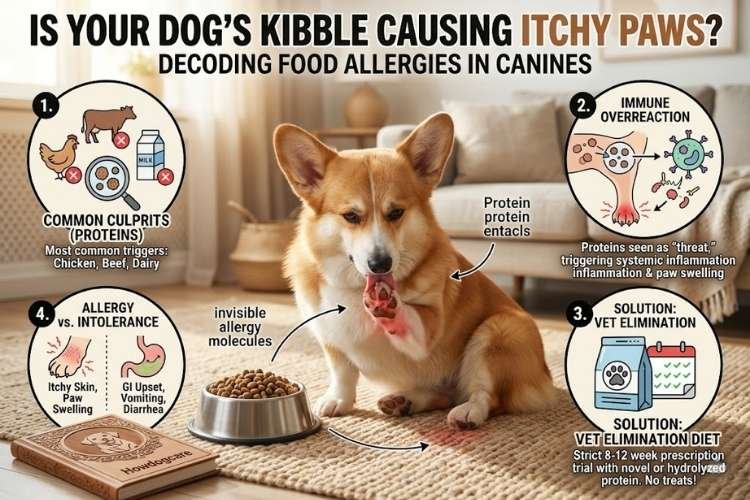
The Most Common Canine Dietary Culprits (Chicken, Beef, Dairy)
Many well-meaning owners mistakenly blame grains (like wheat or corn) for their dog’s itchy skin. In reality, true canine food allergies are almost always triggered by massive protein sources.
- Chicken and beef completely dominate the list, accounting for the vast majority of diagnosed food allergies in dogs.
- Dairy products, lamb, and egg yolks are also highly common dietary triggers.
When your dog consumes a specific protein they are allergic to, their immune system completely overreacts. This pushes severe inflammation directly to their extremities, like their paws and ears.
How to Conduct a Proper 8-Week Veterinary Elimination Diet
You absolutely cannot diagnose a complex food allergy with a simple blood or saliva test. The only medically accurate method is a strict, highly controlled dietary trial.
Your veterinarian will prescribe a novel protein diet (using strange meats like rabbit or venison) or a hydrolyzed protein diet (where proteins are broken down into microscopic, undetectable pieces).
You must feed this prescription food—and absolutely nothing else—for a strict 8 to 12 weeks. Even a single dropped french fry or flavored heartworm chew will completely ruin the entire diagnostic trial.
The Difference Between a True Food Allergy and Food Intolerance
It is vitally important to understand that a food allergy and a food intolerance are two entirely different biological issues.
A true food allergy triggers a massive immune system response. This directly causes intensely itchy skin, chronic recurring ear infections, and heavily swollen paws.
A food intolerance strictly affects the delicate digestive tract. It simply means your dog lacks the enzymes to digest a specific ingredient, resulting in vomiting or diarrhea without the aggressive skin itching.
3. Hidden Physical Injuries and Acute Pain
If you have entirely ruled out environmental allergies and strict dietary issues, you must meticulously inspect for physical trauma. Dogs cannot apply bandages or ask for an ice pack when they get hurt.
Instead, they intuitively use their rough tongues to aggressively clean fresh wounds, remove foreign debris, and actively soothe sharp, localized pain.
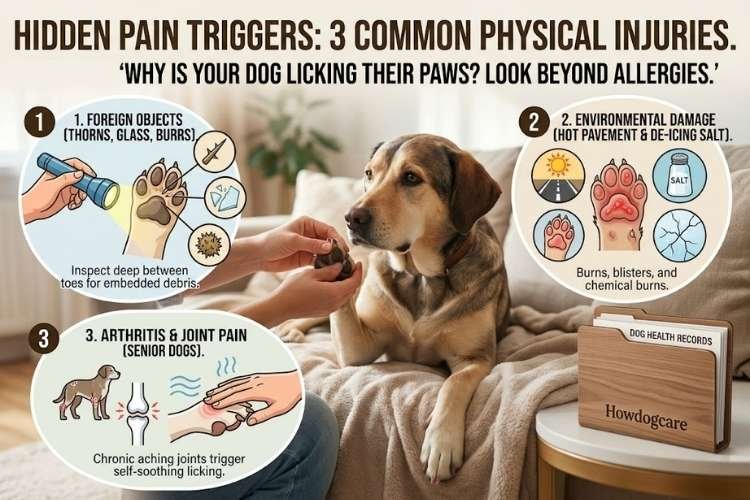
Foreign Objects: Embedded Thorns, Burrs, and Glass Splinters
Your dog’s paws act exactly like powerful magnets for dangerous outdoor debris. Even a microscopic foreign object trapped in the skin causes immense, throbbing discomfort.
- Foxtails and grass awns are notorious for migrating deep under the skin, requiring emergency surgical removal.
- Sharp thorns, microscopic glass shards, and jagged burrs easily lodge directly into the tough paw pads during routine walks.
- You must use a bright flashlight to physically separate the tight toes and thoroughly inspect the deep webbed fur for hidden invaders.
Broken Nails, Torn Paw Pads, and Blisters from Hot Pavement
The tough, leathery exterior of a dog’s foot is still highly susceptible to severe environmental damage. Summer heat and aggressively rough terrain completely destroy unprotected paws.
- Walking on scorching hot asphalt rapidly causes severe thermal burns, resulting in painful, peeling blisters.
- Sprinting across jagged rocks or sharp ice easily slices the thick pad, causing immediate, heavy bleeding.
- A snagged or cleanly broken dewclaw exposes the highly sensitive quick, triggering frantic, agonizing licking to stop the stinging.
Arthritis and Deep Joint Pain in Senior Dogs (Licking to Soothe Aches)
When pet parents constantly ask, “why is my dog licking paws,” they rarely suspect invisible internal bone pain. However, chronic joint aches heavily influence localized grooming.
- Senior dogs frequently lick their carpal (wrist) joints or lower paws to actively comfort deep, aching arthritis.
- The physical, repetitive act of licking releases a steady stream of soothing endorphins, temporarily masking their chronic joint pain.
- If your older dog obsessively licks a specific joint while heavily limping, you must immediately consult your veterinarian for proper pain management.
4. Unwelcome Guests: Parasites That Cause Severe Paw Licking
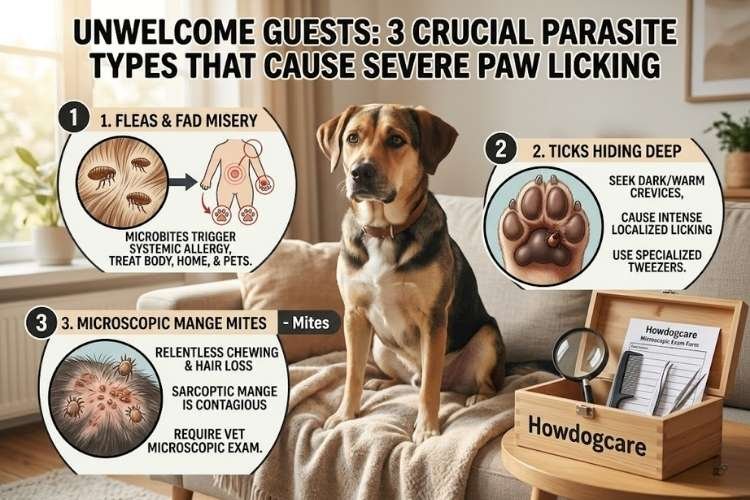
Microscopic invaders and common blood-sucking parasites view your dog’s warm, protected paws as the absolute perfect hiding spot. These unwanted pests trigger an intense, maddening itch that completely consumes your dog’s attention.
Routine, year-round parasite prevention is your only guaranteed defense against these highly aggressive hitchhikers.
Fleas and the Misery of Flea Allergy Dermatitis (FAD)
A single, microscopic flea bite can instantly send a highly sensitive dog into an absolute licking frenzy. The culprit is the toxic protein found directly inside the flea’s saliva.
- Flea Allergy Dermatitis (FAD) is a massive, systemic allergic reaction that affects the entire body.
- Even if you never spot a live, crawling flea, your dog will aggressively chew their feet, legs, and tail base to find desperate relief.
- You must thoroughly treat your dog, all other household pets, and your carpets to completely break this aggressive parasite lifecycle.
Related: Top 8 Best Flea Medicine For Dogs Reviews
Ticks Hiding Deep Between the Toes
Ticks actively seek out dark, warm, and highly protected areas on your dog’s body to feed safely. The tight, webbed space directly between the toes is prime, highly valuable real estate.
- An engorged tick creates a painful, heavily swollen, and highly irritated localized lump.
- The dog will constantly lick and chew this specific, targeted area, desperately trying to dislodge the biting parasite.
- Never pull a tick out with your bare hands; strictly use proper tick-removal tweezers to ensure the microscopic head does not snap off inside the paw.
Demodectic and Sarcoptic Mange (Microscopic Paw Mites)
If the frantic paw licking is immediately accompanied by severe, patchy hair loss and heavily crusted, bleeding skin, microscopic mites are highly likely the culprit.
- Demodex mites naturally live on your dog but aggressively overpopulate during times of severe stress or weak immunity.
- Sarcoptic mange (canine scabies) is highly contagious and causes an unbearable, burning itch that forces absolutely relentless chewing.
- Your veterinarian must perform deep skin scrapes under a microscope to properly identify and fiercely treat these invisible, burrowing mites.
5. Psychological Triggers: Anxiety, Boredom, and OCD
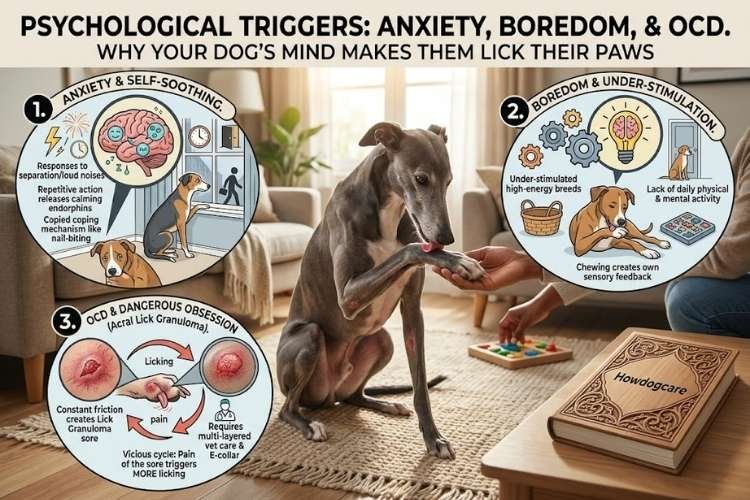
Physical ailments are absolutely not the only triggers for itchy feet. Canine mental health plays a massive, frequently overlooked role in chronic, highly destructive grooming behaviors.
A healthy mind requires exactly as much daily, active maintenance as a healthy physical body.
Self-Soothing: Licking as a Response to Separation Anxiety and Loud Noises
The rhythmic, repetitive motion of licking releases powerful, highly calming endorphins directly into a dog’s stressed brain. Anxious dogs intuitively use their own paws exactly like a human uses a comforting stress ball.
- Severe separation anxiety, booming thunderstorms, or loud neighborhood fireworks frequently trigger sudden, obsessive foot licking.
- This coping mechanism provides a temporary, deeply soothing distraction from their terrifying environmental triggers.
- You must actively treat the underlying anxiety with specialized training, calming pheromones, or veterinary-prescribed anti-anxiety medication.
The Under-Stimulated Dog: Boredom in High-Energy Working Breeds
A physically exhausted and mentally fulfilled canine rarely resorts to obsessive, highly destructive self-grooming. Boredom is a massive, highly dangerous trigger for brilliant working breeds.
- High-energy dogs (like German Shepherds or Terriers) trapped indoors completely lack a necessary “job.”
- They quickly invent their own highly destructive tasks; aggressively chewing their own feet provides immense, satisfying sensory feedback.
- You must immediately increase their daily rigorous exercise and introduce highly complex, food-dispensing puzzle toys to drain their massive mental energy.
Acral Lick Granuloma: When Licking Becomes a Dangerous Obsession
When left completely unchecked, anxiety-driven or boredom-driven licking rapidly destroys the top layers of the skin. This creates a deeply painful, highly vicious psychological cycle.
- The constant friction creates a thick, raised, and deeply infected sore clinically known as an Acral Lick Granuloma.
- It becomes a highly dangerous obsessive-compulsive disorder (OCD) where the intense pain of the open sore actually triggers even more frantic licking.
- Healing a granuloma requires intense, multi-layered veterinary intervention, powerful antibiotics, and strictly enforced physical barriers like an E-collar.
You might also like
6. Immediate At-Home Relief: How to Stop the Licking Cycle
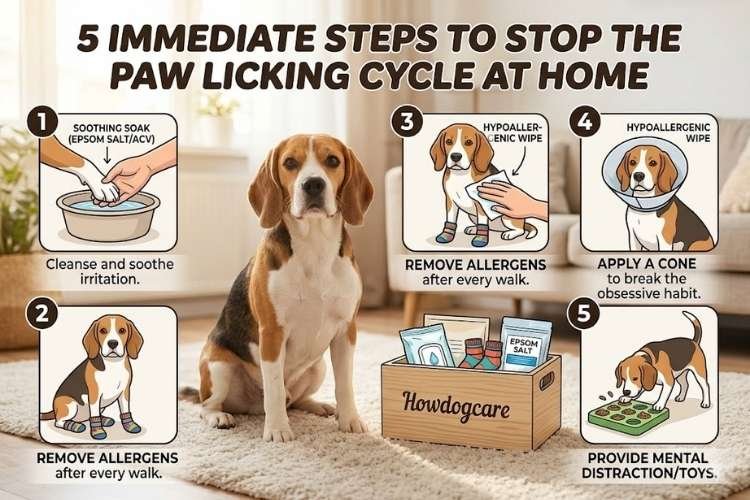
Figuring out the exact reason behind your dog’s itchy feet takes time and careful observation. However, you cannot simply let them chew their skin completely raw while you play detective.
When you are desperately wondering, “why is my dog licking paws,” your first priority is immediate symptom relief. You must proactively break the physical licking cycle to allow the heavily damaged skin a chance to heal.
Soothing Paw Soaks: Diluted Apple Cider Vinegar and Epsom Salts
A gentle, medicated paw soak actively pulls out deep environmental toxins and instantly soothes heavily inflamed skin. It creates a highly unfavorable environment for aggressive yeast and bacteria.
- Mix a solution of 50% warm water and 50% organic apple cider vinegar in a small, shallow tub.
- Alternatively, dissolve one cup of plain Epsom salts into a gallon of warm water to specifically target swollen, aching joints.
- Gently soak your dog’s paws for five full minutes, then thoroughly pat them completely dry with a clean microfiber towel.
The Critical Importance of Routine Post-Walk Paw Wipes
Prevention is significantly easier than aggressively treating a raging skin infection. You must physically remove invisible environmental allergens before your dog ever has the chance to lick them off.
- Keep a container of hypoallergenic, chlorhexidine-based pet wipes directly next to your front door.
- Thoroughly wipe down the top, bottom, and deep between the toes immediately after every single outdoor excursion.
- This simple, 30-second daily habit completely eliminates toxic lawn chemicals, heavy pollen, and microscopic mold spores from their feet.
Using Dog Booties to Shield Against Environmental Irritants
If your dog suffers from severe, chronic contact dermatitis, a physical barrier is your absolute best defense. High-quality dog booties completely separate their sensitive footpads from dangerous environmental triggers.
- Train your dog slowly indoors using soft, highly flexible silicone or fabric booties paired with high-value treats.
- Booties strictly prevent painful thermal burns from scorching summer asphalt and actively block harsh winter de-icing salts.
- They also completely eliminate the mechanical damage of constant chewing by physically blocking the tongue from reaching the skin.
The E-Collar (Cone of Shame): Breaking the Licking Habit to Allow Healing
Sometimes, a dog’s obsessive urge to chew their own feet completely overrides all your best training efforts. In these severe cases, strict physical intervention is absolutely mandatory.
- A traditional hard plastic Elizabethan collar (E-collar) or a soft inflatable neck donut physically prevents their mouth from reaching their paws.
- While dogs heavily dislike wearing them, a cone is highly effective at stopping the dangerous creation of bleeding hot spots.
- You must keep the cone on strictly until the broken skin is completely healed and the underlying medical trigger is resolved.
7. Medical Intervention: When to Rush to the Veterinarian

While soothing soaks and daily wipes easily manage mild seasonal allergies, they cannot cure a massive internal infection. You must constantly monitor the physical condition of the paw pads for severe medical red flags.
Never wait to see if a deep wound or foul-smelling infection will magically heal on its own.
Spotting Dangerous Limping or Complete Refusal to Bear Weight
A dog actively chewing a paw while simultaneously refusing to put any physical weight on it is experiencing immense, acute agony. This is absolutely not a simple allergy flare-up.
- Severe limping strongly indicates a deeply embedded foreign object, a cleanly fractured toe bone, or a rapidly spreading internal infection.
- Forcing a dog to walk on a severely injured paw easily causes permanent, highly expensive structural damage to the delicate ligaments.
- You must immediately restrict all their physical activity and carry them directly to an emergency veterinary clinic for diagnostic x-rays.
Identifying Bleeding, Severe Swelling, and Foul Odors from the Paw Pad
Healthy dog paws should feel slightly rough but completely dry and heavily calloused. If the texture or smell rapidly changes, microscopic bacteria have completely taken over.
- Look closely for weeping sores, thick yellow pus, or severe, balloon-like swelling between the tight toes.
- A strong, rotting, or intensely sweet odor directly indicates a massive secondary bacterial or yeast infection.
- These aggressive, deep-tissue infections strictly require powerful, veterinary-prescribed oral antibiotics and medicated topical foams to properly cure.
When At-Home Remedies Fail: The Role of Prescription Cytopoint and Apoquel
If you have tried every single natural remedy but your dog remains miserable, modern veterinary dermatology offers absolute miracles. Science has created highly targeted therapies specifically designed to stop the canine itch cycle.
- Apoquel is a highly effective daily oral tablet that rapidly blocks the specific neural pathways that tell your dog’s brain to itch.
- Cytopoint is a revolutionary, long-lasting biological injection that aggressively neutralizes the primary itch-inducing protein in your dog’s bloodstream for 4 to 8 weeks.
- These powerful, targeted medications provide massive, life-changing relief for dogs suffering from severe, uncontrollable atopic dermatitis.
Frequently Asked Questions (FAQs) About Paw Licking
When you are desperately trying to solve a frustrating behavioral issue, you need rapid, highly accurate answers. Here are the expert, concise solutions to the most common questions surrounding itchy canine feet.
1. Why does my dog only obsessively lick their paws at night?
Dogs naturally experience fewer environmental distractions during the quiet nighttime hours. When the house is completely silent, their brain hyper-focuses directly on the physical sensation of their itchy, inflamed skin. Furthermore, natural cortisol levels drop heavily at night, which actually increases the severe biological sensation of itching.
2. Can I safely use human anti-itch creams (like hydrocortisone) on my dog’s paws?
No, you should never apply human medicated creams directly to your dog’s paws without strict veterinary approval. Dogs will immediately lick the sticky cream entirely off their feet. Ingesting human-grade hydrocortisone or zinc oxide rapidly causes severe, acute gastrointestinal toxicity and heavy vomiting.
3. Should I be worried if my dog constantly licks other dogs’ paws?
Occasional, gentle licking of another dog’s face or paws is a highly normal, submissive canine grooming behavior. However, if the licking becomes frantic or heavily obsessive, it points directly to an underlying anxiety disorder. You must actively redirect this obsessive behavior to prevent the other dog from developing a painful hot spot.
4. How often should I trim the fur between my dog’s paw pads to prevent irritation?
For long-haired breeds (like Golden Retrievers or Poodles), you must carefully trim the heavy fur between their paw pads every 4 to 6 weeks. Thick, overgrown paw hair rapidly traps deep moisture, toxic allergens, and sharp debris directly against the sensitive skin, rapidly triggering severe yeast infections.
Conclusion: Stepping Toward Healthy, Itch-Free Paws
Ultimately, correctly answering the frustrating question of “why is my dog licking paws” requires immense patience and highly careful observation. From invisible springtime pollen and hidden poultry allergies to deep psychological anxiety, the triggers are incredibly diverse.
By proactively wiping their paws daily, closely examining their diet, and actively partnering with your veterinarian for stubborn infections, you hold the power to completely stop the itch. Stay highly vigilant for those critical red alert symptoms, and you will quickly return your furry best friend to a comfortable, happy, and entirely lick-free life.