Specs are compiled from manufacturer listings and verified buyer reviews and can change over time — please confirm the key details on the product page before buying.
Pick the wrong puppy bag and you’ll see it within 48 hours — as loose stool, midnight whining, or a coat that suddenly looks dull. Getting it right depends on three checks. You match the formula to your puppy’s adult size, you check that the bag actually says “growth” or “puppy,” and you stop paying for ingredient poetry that does nothing for a nine-week-old digestive system. Every pick below carries an explicit puppy or growth claim and has been fed by real owners through the first year.
This guide is built by comparing the manufacturers’ published specifications and the patterns across verified customer reviews, so you get each pick’s real strengths and trade-offs instead of marketing spin.
Below you’ll find nine formulas sorted by what they actually do well — giant-breed growth, sensitive stomachs, small kibble for tiny mouths — plus the feeding and transition answers that trip up most new owners. dog food for puppies stops being a guessing game once you know which spec on the bag actually matters.
Top Picks
How To Choose The Best Dog Food for Puppies
Start with your puppy’s expected adult weight, not the weight on the scale today. That adult-weight estimate decides whether you buy a large-breed formula or a small-breed one. It also changes the protein and mineral levels you should look for on the back of the bag.
Match the formula to the adult weight, not the current weight
A large-breed puppy — broadly, one headed past 50 pounds as an adult — grows bone fast, and formulas built for that growth carry specific calcium and phosphorus levels alongside glucosamine for joints. A small-breed puppy eats a fraction of that volume and does better on a denser, smaller kibble he can actually pick up. A giant-breed puppy on a dense small-breed formula is a common source of loose stool.
Look for an explicit puppy or growth claim
The phrase you want is “growth” or “puppy” — either a puppy-specific recipe or an all-life-stages formula that explicitly covers growth. A bag that only says “adult” or “maintenance” is missing nutrients a growing puppy needs in different ratios. Some large-breed formulas also cap themselves out of the largest dogs, so read the fine print before you commit to a 30-pound bag.
Weigh kibble size against your puppy’s mouth
A toy-breed puppy with milk teeth struggles with a dime-sized piece of kibble and will often just walk away. Small-bite or small-breed kibble solves that without changing the nutrition. If you land on a bag that’s too hard, a splash of warm water softens it in a couple of minutes — plenty of owners do exactly this for the first few weeks.
Plan the transition before the bag arrives
Mix the new food into the old over several days rather than swapping overnight. A puppy’s gut is still settling, so an overnight swap can cause diarrhea even with a good food. If stool stays loose past the transition window, the formula is the wrong fit — not puppy food in general.
Side-by-Side Comparison
| Model | Best For | Bag Size | Protein Source | Breed Fit | Amazon |
|---|---|---|---|---|---|
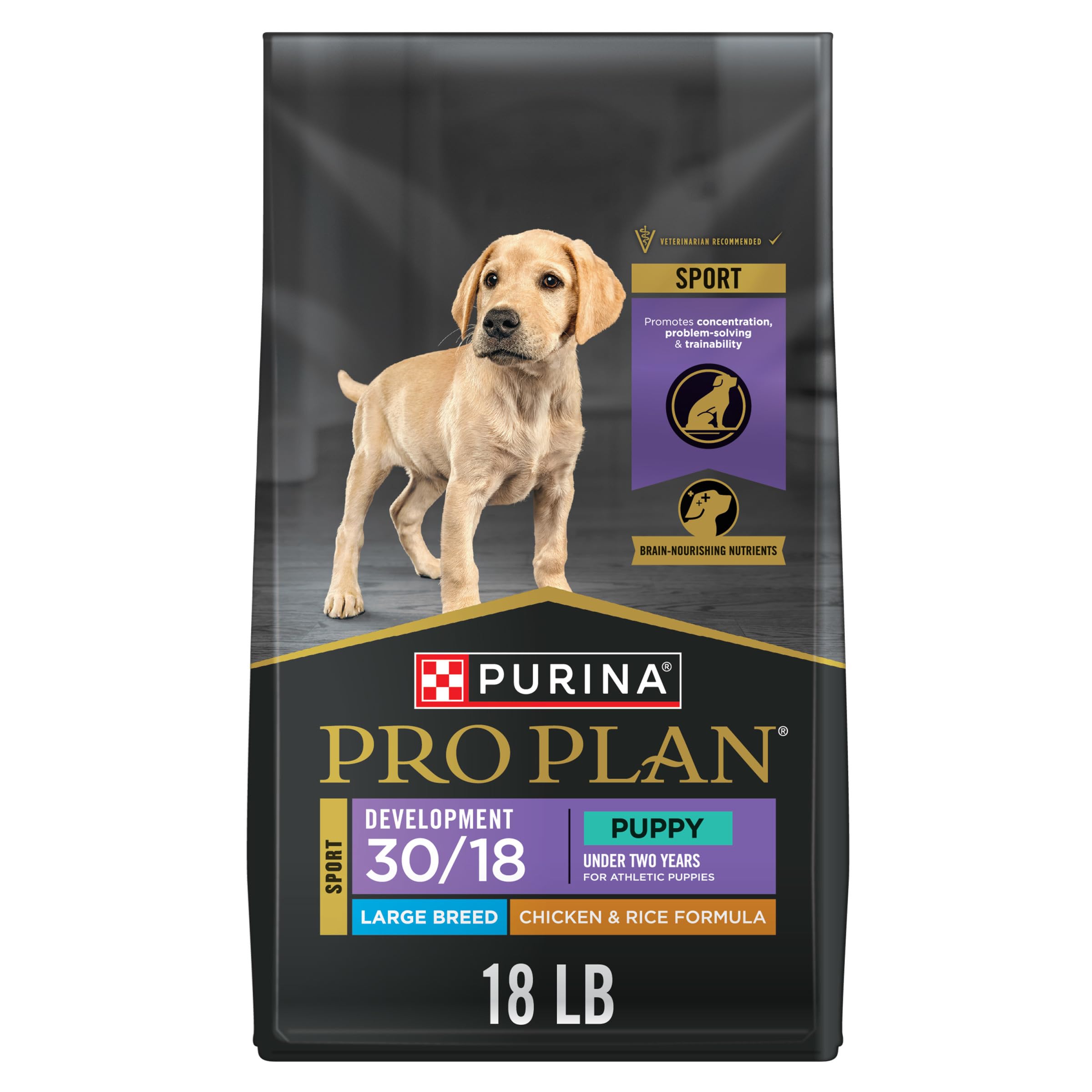
| Purina Pro Plan Sport Development Large Breed 30/18★ Best Overall | Large and giant breed puppies | 18 lb | Real chicken (No. 1 ingredient) | Large breed | Amazon |
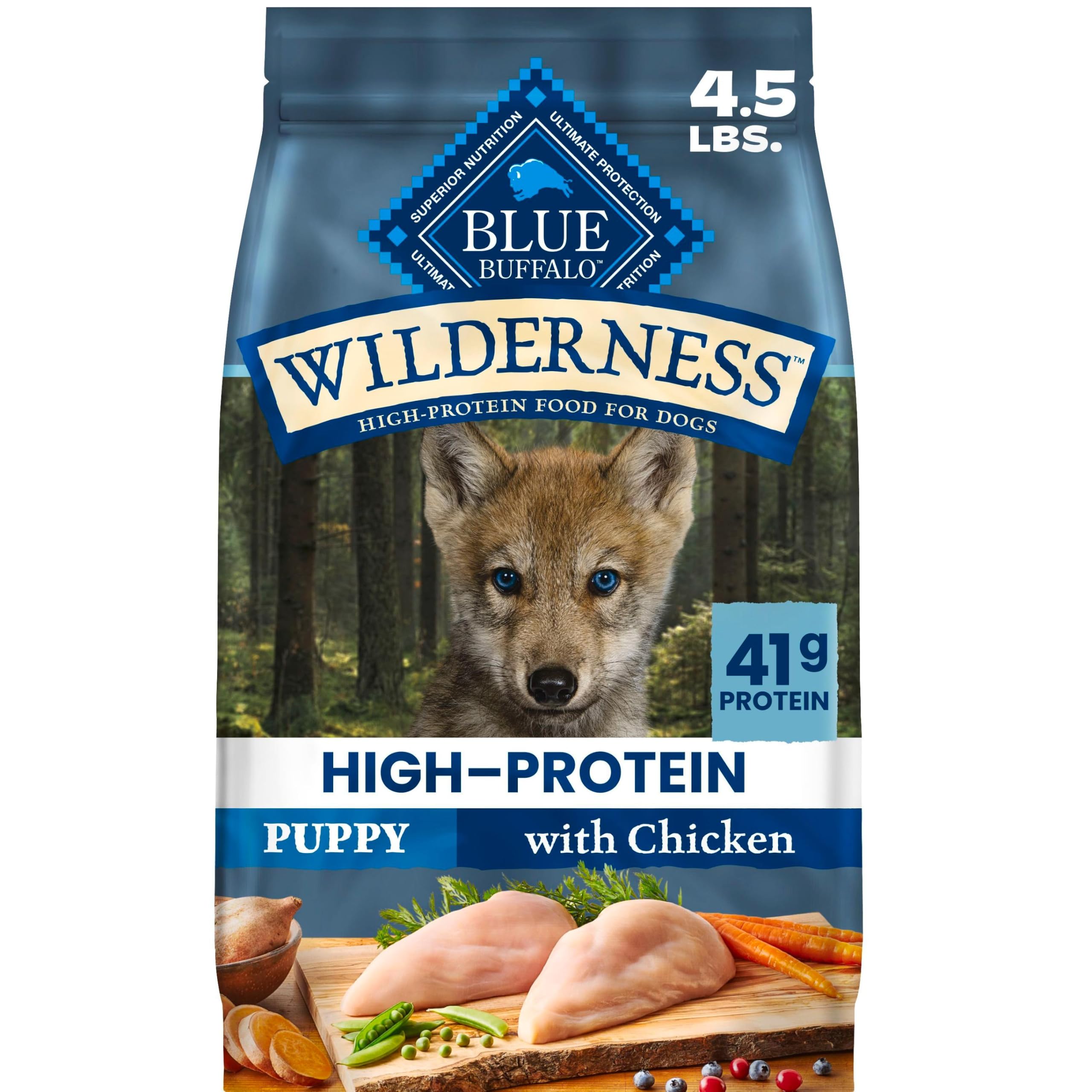
| Blue Buffalo Wilderness Chicken & Wholesome Grains PuppyBest High-Protein Pick | High-protein feeding with grains | 4.5 lb | Real chicken, 41 g protein | All breed sizes | Amazon |
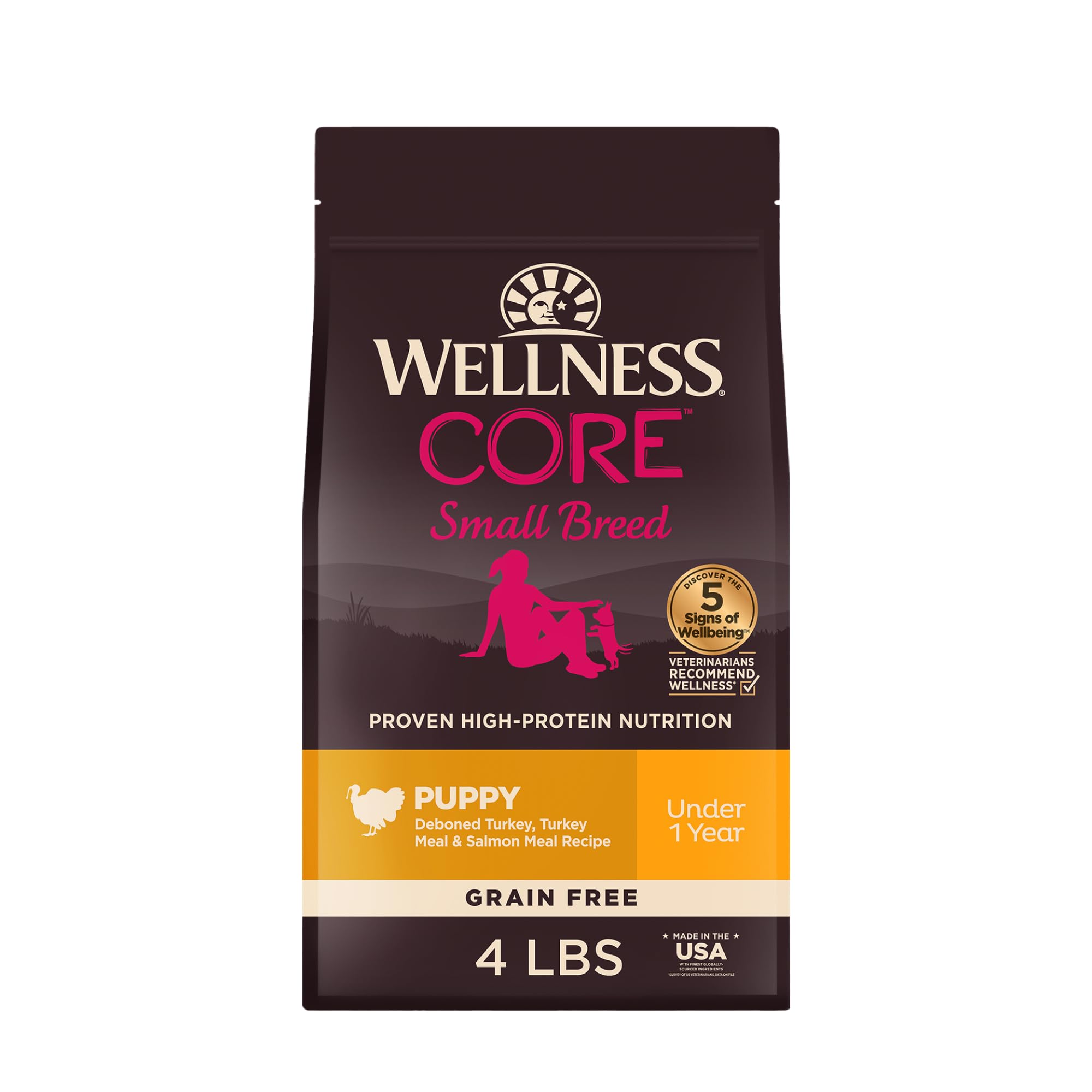
| Wellness CORE Small Breed PuppyBest Grain-Free Pick | Grain-free small breed feeding | 4 lb | Turkey and salmon, 53% protein ingredients | Small breed | Amazon |
| NutriSource Small & Medium Breed Puppy (4 lb) | Small kibble for tiny mouths | 4 lb | Chicken meal (No. 1 ingredient) | Small and medium | Amazon |
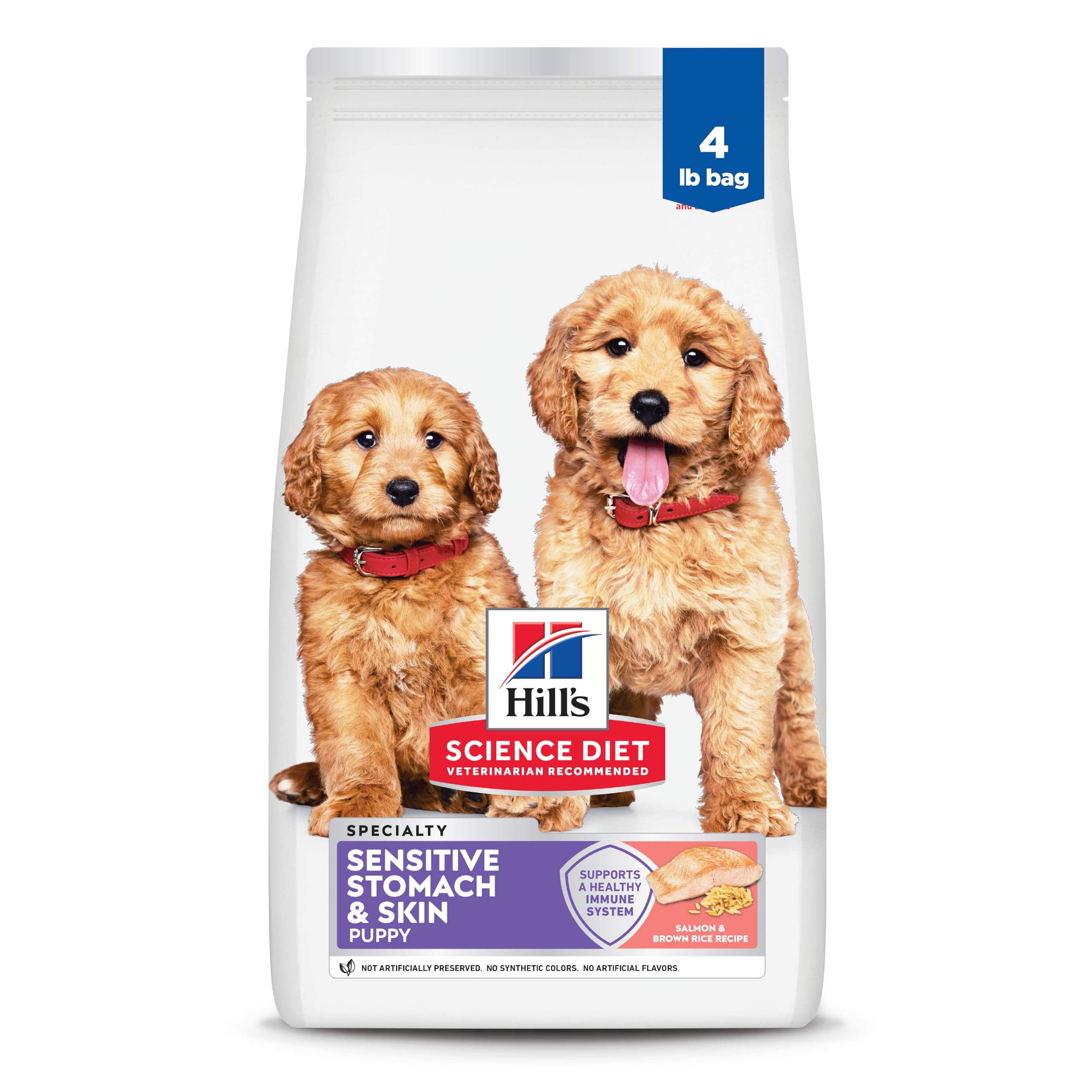
| Hill’s Science Diet Puppy Sensitive Stomach & Skin | Sensitive stomachs and itchy skin | 4 lb | Salmon (No. 1 ingredient) | All breed sizes | Amazon |
| The Honest Kitchen Puppy Whole Grain Clusters | Human-grade whole food feeding | 4 lb | Cage-free chicken (No. 1 ingredient) | All breed sizes | Amazon |
| Open Farm Ancient Grains Puppy | Traceable, legume-free ingredients | 4 lb | Chicken and wild-caught salmon, 26% crude protein | All breed sizes | Amazon |
| Fromm Large Breed Puppy Gold | Families feeding several large dogs | 30 lb | Chicken, duck, and lamb | Large breeds (50 lb+ adult) | Amazon |
| NutriSource Small & Medium Breed Puppy (26 lb) | Long-term small breed feeding | 26 lb | Chicken and rice | Small breed | Amazon |
Detailed Reviews
1. Purina Pro Plan Sport Development Large Breed 30/18 18 lb
Our pick — 4.5+★ from 350+ verified ratings; the strongest balance of quality and price.
Built for the puppy that will outweigh you by his first birthday — and grows bone faster than most foods plan for.
If you brought home a Great Dane, a Lab, or anything headed past 50 pounds as an adult, this is the bag to start with. The 30/18 in the name is the headline: 30% protein and 18% fat, a ratio built for athletic large-breed growth rather than the lighter profile you’d feed a lap dog. Real chicken sits as the number one ingredient, and the formula adds glucosamine for joints and cartilage, plus calcium, phosphorus, and essential vitamins aimed squarely at healthy bone growth.
What wins people over is simple: puppies eat it. Large-breed owners repeatedly describe dogs that clean the bowl and keep pace with their energy, which is the whole point of a sport-development recipe. Digestive comfort shows up too — this is a formula that tends to go down without drama when you introduce it gradually, and several owners raising two puppies in sequence report the same steady result both times. As one owner put it after raising two Labs on this line: both dogs did great with it, with regular, solid movements throughout.
The honest catch is cost. Quite a few owners call this expensive and point out they can find comparable food for less, and the price does drift upward over time. Buying the larger bag rather than the small one softens that, since you get more for the money and shop less often. For a giant-breed puppy eating serious volume daily, the math works out better than the sticker suggests.
What Large-Breed Owners Get
- 30/18 protein-to-fat ratio purpose-built for athletic large-breed growth
- Real chicken as the number one ingredient, with glucosamine for joints and cartilage
- Calcium, phosphorus, and essential vitamins targeted at healthy bone growth
- Excellent bowl acceptance — puppies finish it without coaxing
- Comes in an 18-pound bag that cuts down on repeat shopping trips
Where It Costs You
- Runs expensive versus comparable formulas, and the price creeps upward
- Rich enough that some giant-breed puppies need a slow, careful introduction
- Not the right pick for a small or toy breed puppy
Reach for this if: your puppy is a large or giant breed and you want one formula that covers growth, joints, and energy in a single bag.
Think twice if: you’re feeding a toy or small breed — the 30/18 profile is built for a much bigger frame.
2. Blue Buffalo Wilderness Chicken & Wholesome Grains 4.5 lb
Forty-one grams of protein per serving from real chicken, with grains kept in the bag rather than stripped out.
Most high-protein puppy kibbles reach their protein number by cutting out grains entirely. Blue Buffalo Wilderness goes the other way. Real chicken comes first, with a stated 41 grams of protein to build lean muscle in a growing puppy. Oats, barley, and brown rice stay in for complex carbohydrates (slow-burning energy from whole grains) that keep an active puppy steady through the day. It also has DHA and ARA (fatty acids found in mother’s milk) plus choline, all aimed at brain development and healthy eyes in the earliest growth window.
The bone and teeth side is covered by a calcium, phosphorus, and vitamin blend, and the kibble is deliberately small-bite so chewing scrapes tartar as your puppy eats. The forty-one grams of protein also lands well above the 26% crude protein Open Farm lists for its ancient grains recipe, so if muscle development is your priority, this bag pushes harder in that direction.
Palate is where opinions split. Plenty of puppies tear into it — “My puppy loves this. Even recognizes the bag!” is the shape of the enthusiasm — but taste gets mixed reactions overall and some owners find the bag expensive for the volume you get. A 4.5-pound bag goes fast in a medium-breed puppy, so plan on reordering sooner than you’d like.
Where it delivers: the protein-to-grain balance is the draw here. You get 41 grams of protein from real chicken and still keep the oats, barley, and brown rice that fuel an energetic puppy. The DHA-and-ARA pairing covers brain and eye development, a detail most owners don’t think to check for.
The trade-off to expect: taste is genuinely mixed across the reviews, and the small 4.5-pound bag means frequent reorders if you’re feeding anything bigger than a toy breed.
Good fit: puppy parents who want a protein-forward kibble that still includes whole grains, particularly for small and medium breeds.
Look elsewhere if: you have a picky eater who’s already turned his nose up at chicken-based kibble.
3. Wellness CORE Small Breed Puppy Turkey and Salmon 4 lb
A grain-free small-breed bag where over half the recipe is animal protein, and the kibble is sized for a mouth the width of a walnut.
Wellness built this recipe on the idea that dogs do best on a meat-led diet, and the numbers back it up. 53% of the recipe is high-quality protein ingredients, led by responsibly sourced turkey. There’s no corn, wheat, or soy, and no poultry by-products, artificial colors, or preservatives. Beyond the protein, you get guaranteed levels of DHA for brain development, antioxidants for the immune system, probiotics (good bacteria) for digestive health, and calcium with phosphorus for bone and muscle growth. That’s a fairly complete development checklist in one small bag.
Taste is the standout, and it’s not a close call — it’s the thing that comes up again and again, well ahead of every other compliment. The most useful real-world proof is the picky-eater angle: this is a food fussy dogs actually finish, including dogs that turn down fresh chicken and vegetables. Sensitive-stomach small breeds also tend to adjust well after a short settling period, and one owner of a little dog described the result simply as “My little guy loves it!”
Now the caveat worth hearing clearly. Digestibility is mixed rather than universal — some puppies take to it immediately, and a few refuse it outright or don’t tolerate it, which is true of every puppy formula on this list. Two things you can control: introduce it slowly over days, and check the ingredient panel if your dog has a chicken allergy, because the turkey recipe also contains chicken. Feeding a chicken-sensitive dog this bag is a mistake the label can warn you about before your puppy does.
The grain-free case: if you’ve decided against grains, this is one of the strongest small-breed options here — 53% protein ingredients, DHA, probiotics, and a kibble size built for a tiny mouth.
Worth knowing: the turkey recipe includes chicken, so it’s not a safe bet for a chicken-allergic puppy despite the name on the front.
Suits: small-breed puppies on a grain-free plan, especially fussy eaters who’ve rejected other kibbles.
Not for: puppies with a confirmed chicken allergy, since the turkey formula still lists chicken.
4. NutriSource Small & Medium Breed Puppy Dry Dog Food, 4 lb

Kibble roughly the size of a grain of rice, built so a five-pound puppy can actually chew without help.
A five-pound Teddybear puppy does not need a heroic kibble. NutriSource keeps the pieces genuinely small — one owner measured them at about 3/16 by 3/8 of an inch, or around 5mm by 10mm — which is small enough to chew comfortably even after puppy teeth come out. Chicken meal leads the ingredient list, supplying the amino acids behind healthy muscle growth, and the formula adds prebiotics and probiotics for gut support.
There’s more developmental coverage than the modest bag suggests. L-Carnitine, taurine, choline chloride, and DL methionine are all supplemented for cardiovascular development, while omega-3 and omega-6 fatty acids handle skin and coat. Brown rice, oatmeal, and barley provide the easily digestible carbohydrates that keep a growing puppy’s energy even. It’s also corn-free, soy-free, and wheat-free, with no artificial colors or flavors.
Breeders are the quiet endorsement here. A fair number of owners started on this bag because their breeder was already feeding it, and they simply kept going. Buyers report puppies eat it eagerly, the kibble doesn’t carry the heavy oily smell some dry foods do, and there are no digestive complaints to speak of. The one recurring grumble is kibble size: a few owners with very small mouths found the pieces bigger than expected. If you have a toy breed under ten weeks, plan to soften the kibble in warm water for the first stretch.
Why Small-Breed Owners Stick With It
- Kibble measured by an owner at roughly 5mm by 10mm — genuinely small
- Chicken meal as the number one ingredient for muscle growth
- Prebiotics and probiotics for digestive support
- L-Carnitine, taurine, choline chloride, and DL methionine for heart development
- Low odor and not oily, unlike some dry kibbles
The Small Print
- Some owners with tiny mouths still found the kibble larger than expected
- A 4-pound bag runs out quickly with a growing puppy
- Fish may be present in the facility, per the allergen notes
The right call for: toy and small-breed puppies where kibble size is the deciding factor, and for anyone continuing what their breeder started.
Keep looking if: you want one large bag to last a month — this one is sized for trial and short runs.
5. Hill’s Science Diet Puppy Sensitive Stomach & Skin 4 lb
One bag aimed at the two things new puppy owners panic about at the same time: loose stool and itchy skin.
This is a puppy formula built around a single idea — triple support for stomach, skin, and immune system — and it goes at all three deliberately. The base is a highly digestible recipe with prebiotic fiber, meant to be gentle on a young stomach so nutrients actually get absorbed. Salmon is the number one ingredient. Vitamin E plus omega-3 and omega-6 fatty acids address skin and coat, while vitamin C and E antioxidants support the immune system. DHA covers brain development and high-quality protein fuels growing muscles.
Where it earns its place on this list is the sensibility angle. Puppies with touchy digestion hold their food down on this bag, and the skin side shows up in the feedback too — coat condition improving and scratching settling down after a switch. That combination is rare enough to be worth naming: most puppy formulas pick either digestive comfort or skin support as the headline, and this one genuinely tries to do both. It’s also a limited-ingredient style recipe made with natural ingredients plus added vitamins, minerals, and amino acids.
The trade-off is straightforward. A salmon-based kibble carries a fishy smell — “a bit much” is how it lands for some noses, and it’s noticeable in a small kitchen. Cost is the other recurring note; it’s premium-tier for a four-pound bag. Both are fair criticisms, and neither outweighs the formula for a puppy who was already struggling. Small round kibble sized for puppy teeth means you don’t have to soften it, which helps when you’re already managing a sensitive system.
What it solves: a digestible salmon recipe with prebiotic fiber, omega fatty acids, and vitamin E — a combination aimed at both the stomach and the skin rather than one or the other.
What to accept: the salmon smell is real and noticeable, and the four-pound bag sits at the premium end.
Pick this when: your puppy has a touchy stomach, itchy patches, or both, and you’d rather solve it with food than trial and error.
Pass if: you can’t handle a fish-forward smell in the house or need the most budget-friendly bag on the shelf.
6. The Honest Kitchen Puppy Whole Grain Chicken & Superfoods 4 lb
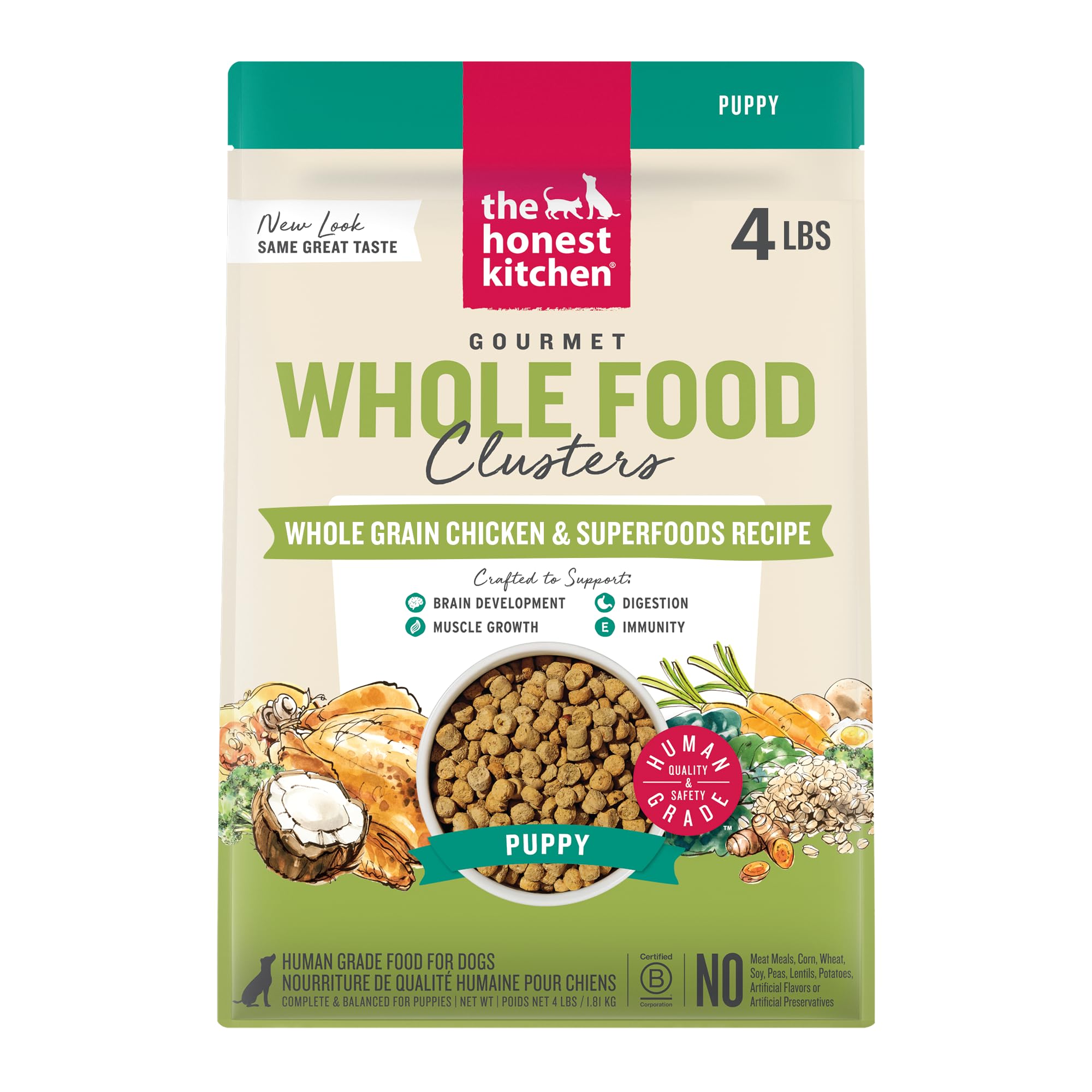
Kibble made to human food standards, cold-pressed into clusters you can actually identify as food.
This is the bag for the owner who reads every label and wants to recognize what’s on it. The Honest Kitchen builds the recipe to human-grade standards, with cage-free chicken as the number one ingredient alongside chicken liver, oats, carrots, broccoli, and kale. There are no meat meals, no by-products, and no corn, wheat, soy, GMO ingredients, or artificial preservatives. A 4-pound bag offers roughly eight servings for a 30-pound dog, and the clusters work as a full meal or a topper.
The developmental side is covered by DHA from fish oil for brain and eye growth, antioxidants and superfoods for immunity, and pumpkin, apples, and live probiotics for digestion. Those clusters also double as training treats, which is a genuinely useful bit of versatility — a bite-sized piece that’s nutritious enough for dinner and small enough to reward with repeatedly.
The catch is texture and tummy fit, and it’s worth being direct about both. The clusters are crumbly by design and several owners found them breaking down into powder quickly, so store the bag sealed and expect some dust at the bottom. More importantly, this is a formula where a puppy either takes to it or doesn’t — some dogs love the taste and still end up with soft stool on it, and a few had to stop entirely. That’s a fit issue, not a flaw in the ingredients, but it means you should buy the small bag first and transition slowly before committing to a bigger one.
The Case for Human Grade
- Cage-free chicken first, with recognizable whole foods and no meat meals
- DHA from fish oil for brain and eye development
- Pumpkin, apples, and live probiotics for digestion
- Clusters double as training treats
- Free of corn, wheat, soy, GMOs, and artificial preservatives
What Trips Owners Up
- Clusters crumble into powder fast — keep the bag sealed tight
- Some puppies develop loose stool on this formula and have to switch
- One owner’s bag arrived pulverized in transit
Worth it for: owners who want a human-grade, whole-food puppy kibble and are willing to run a slow transition to confirm the fit.
Rethink it if: your puppy already has a fragile digestive system — start with the smallest bag available.
7. Open Farm Ancient Grains Chicken & Salmon 4 lb

Scan the code on the bag and it tells you where the salmon came from — that level of tracing is rare in puppy food.
Open Farm’s pitch is that every ingredient is third-party certified and traceable to its geographic origin, right down to a lot code you can look up. The formula carries a minimum of 26% crude protein from wild-caught salmon that’s Ocean Wise certified and chicken raised under Global Animal Partnership standards. Ancient grains — oats and quinoa — supply the carbohydrates, and the recipe is deliberately free of peas, potatoes, and legumes, along with any artificial flavors or preservatives.
It’s also built to a real nutritional standard: the recipe is formulated to meet AAFCO nutrient profiles for puppy growth, so you’re not guessing whether it covers the basics. Non-GMO pumpkin, quinoa, coconut oil, and carrots add antioxidants, fiber, and micronutrients on top. For a family that wants to know exactly what went into the bowl and where it came from, few bags answer that question as completely.
Two honest limits. First, the kibble runs hard — an owner of a nine-week-old Australian Cattle Dog found the pieces too firm for such a young puppy to chew easily, which is a real issue for the littlest mouths. Second, the fish is unmistakable on the nose; the salmon brings a smell that lingers on puppy breath, and that lands differently depending on your household. Softening the kibble with warm water solves the first; nothing solves the second except switching formulas once they’re grown.
The transparency case: lot-level ingredient tracing, Ocean Wise certified salmon, Global Animal Partnership chicken, and an AAFCO puppy growth formulation — this is the most verifiable bag on the list.
The adjustment: the kibble is hard for very young puppies and the fish smell is strong; both are manageable with warm water and open windows.
Best suited to: owners who want to verify sourcing and prefer a legume-free ancient grains recipe for a puppy of any breed size.
Worth a second thought if: you’re feeding a puppy under ten weeks who struggles with firm kibble.
8. Fromm Large Breed Puppy Gold Chicken 30 lb

Thirty pounds of large-breed puppy food from a family company that’s been at it since 1904.
At 30 pounds, this is the bag that carries you through a growth spurt without a weekly reorder — and the weight gap against the small-breed options here is dramatic. Compare it to the Wellness CORE 4-pounder and you’re looking at 18 pounds versus 4 pounds, a 4.5x difference in what lands on your doorstep. For anyone feeding a Lab or a giant breed through the heaviest eating months, that volume is the whole argument.
The recipe itself is built for puppies headed past 50 pounds as adults, and it’s formulated to meet AAFCO nutritional levels for growth. Protein comes from three sources — chicken, duck, and lamb — all described as highly digestible and palatable, supplying the amino acids for muscle maintenance and tissue repair. Whole grains contribute vitamins, minerals, and complex carbohydrates for energy and fiber, and the formula is enhanced with probiotics for digestion plus salmon oil for a healthy coat.
What people notice after switching is the stool. Puppies moved onto Fromm tend to firm up into consistent, well-formed movements, and dogs that had been having tummy trouble settle down on it. Coats come in shiny and puppies keep growing at a healthy rate. The honest note is price and variety — it costs more than some competitors, and owners have wished for more flavor options to rotate through. Neither is a dealbreaker for a large-breed family that has found a formula their dogs do well on.
Why the big bag wins: 30 pounds of food, three protein sources in chicken, duck, and lamb, plus probiotics and salmon oil — enough volume and coverage to feed a growing large breed without constant restocking.
What to weigh: it’s priced above some competitors and the flavor lineup is limited if you like rotating proteins.
Made for: households with a large or giant breed puppy eating serious daily volume who want one big bag and steady stool.
Less ideal for: small-breed owners — the 30-pound bag would go stale long before it’s finished.
9. NutriSource Small & Medium Breed Puppy Dry Dog Food, 26 lb

The same small-breed recipe as the four-pounder above, scaled up to a bag that lasts a whole growth phase.
If the 4-pound NutriSource caught your eye but the bag size felt like a trial run, this is the same line in a 26-pound format. The grain-inclusive recipe delivers compact nutrition with prebiotics and probiotics for gut support, and it carries balanced omega-3 and omega-6 fatty acids alongside L-Carnitine, taurine, choline chloride, and DL methionine for heart health. Small kibble stays the point here — it’s built for small and medium breeds, not a giant mouth.
One label detail deserves your attention before you buy. This formula meets AAFCO nutrient profiles for all life stages excluding the growth of large-size dogs at 70 pounds or more as an adult. That exclusion is explicit, and it’s the reason this bag belongs with small and medium breeds rather than your neighbor’s Great Dane puppy. For a mini bernedoodle, a Chihuahua mix, or a Shih Tzu, it’s exactly the right fit.
Owners tend to describe this one as reliable: puppies eat it without fuss, digestive issues stay quiet, and puppies that started on it because their breeder used it simply kept thriving. Stool can run a touch firm, which is manageable and generally preferable to the alternative. The mixed note is cost — some find it well priced, others consider it on the expensive side for a grain-inclusive bag. Buying the 26-pound size spreads that out considerably versus the small bag.
Why the Big Bag Makes Sense
- 26 pounds of small-breed kibble in one purchase
- Prebiotics and probiotics for gut support
- L-Carnitine, taurine, choline chloride, and DL methionine for heart health
- Omega-3 and omega-6 for skin and coat
- Consistent quality and delivery according to owners
Where It Won’t Work
- Not formulated for large-breed growth at 70 pounds or more as an adult
- Stool can come out somewhat hard
- Cost is a split opinion — some find it premium-priced for grain-inclusive
Go with this: small and medium breed owners who want one bag that covers the whole puppy phase without weekly reorders.
Hard stop: if your puppy will hit 70 pounds or more as an adult, this formula explicitly excludes large-breed growth.
Know the Specs
Protein and Fat Percentages
The two numbers on the front of a puppy bag tell you how the food is built. Protein supports muscle and tissue growth; fat supplies the concentrated energy a puppy burns through daily. Higher ratios tend toward athletic or large-breed growth, while moderate ratios suit smaller, less active puppies. The Purina Pro Plan 30/18 name, for example, means 30% protein and 18% fat — a ratio aimed at energetic large breeds. Always compare like with like: a “crude protein” minimum on one bag and a “protein ingredients” percentage on another are not measuring the same thing.
AAFCO Growth Statements
AAFCO nutrient profiles are the standard reference for whether a food actually meets a puppy’s nutritional needs. A bag that says it’s formulated for “growth” or “all life stages” is claiming puppy coverage; a “maintenance” or “adult” claim is not. Some formulas add an exclusion — NutriSource’s 26-pound bag covers all life stages except growth of large-size dogs at 70 pounds or more as an adult. Read that line before you buy, because it tells you precisely which puppies the bag is and isn’t built for.
DHA and Brain Development
DHA is a fatty acid naturally present in mother’s milk, and puppy formulas add it to support brain and eye development during the earliest growth window. You’ll see it paired with ARA and choline on some bags, as Blue Buffalo does, or sourced from fish oil as The Honest Kitchen and Open Farm do. It’s one of the few puppy-specific additions worth checking for, because a formula built for adult maintenance typically doesn’t carry it at puppy levels.
Kibble Size and Texture
Kibble diameter decides whether a small puppy can pick the food up at all. Small-breed recipes run to pieces around 5mm by 10mm, which a tiny mouth can manage; large-breed kibble runs bigger and harder. Young puppies with milk teeth often do better with softened kibble — a splash of warm water for a couple of minutes is enough. Very crumbly clusters break down into powder quickly, so seal the bag tightly between meals.
Common Questions
How do I switch my puppy to a new food without causing diarrhea?
Is large breed puppy food really different from regular puppy food?
Can I feed my puppy an all life stages formula instead?
My puppy has a sensitive stomach — which formula should I start with?
How long does a four pound bag of puppy food last?
Is grain-free puppy food better than grain-inclusive?
Does the turkey flavor of Wellness CORE contain chicken?
What kibble size works for a toy breed puppy?
Do puppy formulas need DHA and how do I spot it on the bag?
Can puppy food also be used as a training treat?
How should I store a large bag of puppy food once it’s open?
The Bottom Line
The dog food for puppies pick that covers the most ground is the Purina Pro Plan Sport Development Large Breed 30/18. It pairs a purpose-built 30% protein and 18% fat ratio with glucosamine, calcium, and phosphorus for bone and joint growth, and large-breed puppies actually finish the bowl. If your puppy’s problem is a touchy stomach or itchy skin rather than size, the Hill’s Science Diet Puppy Sensitive Stomach & Skin tackles both with a salmon-first recipe that includes prebiotic fiber (fiber that feeds good gut bacteria). Feeding a toy breed with a tiny mouth? The NutriSource Small & Medium Breed Puppy keeps kibble at roughly 5mm by 10mm, so dinner isn’t a struggle. Pick the bag that matches your puppy’s adult size and digestion, switch foods over several days, and the first year gets a lot calmer.
How we choose
We do not accept paid placement. Every pick is matched to a real buyer and a real use-case; we do not hands-on test units.
Sources
Specifications: manufacturer listings and product documentation. Review insights: verified customer reviews, as of October 2026. Pricing: not shown on this page (it changes often); check the current price via the retailer link.
As an Amazon Associate, How Dog Care earns from qualifying purchases. This does not affect which products we feature.