

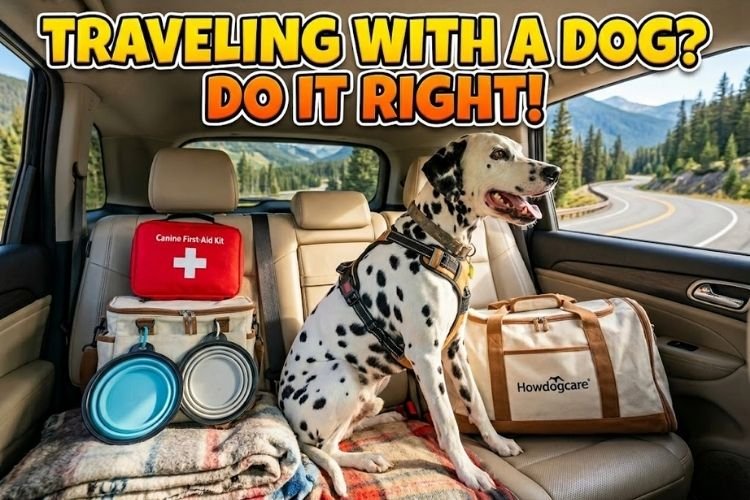
The Joy and Challenge of Hitting the Road With Your Canine Companion
Traveling with a dog is a dream for many pet parents, conjuring images of scenic hikes and cozy hotel stays. However, the actual reality of hitting the road or navigating an airport often involves intense logistical planning.
Without meticulous preparation, a fun getaway can quickly spiral into a highly stressful ordeal for both you and your pet. Your dog relies entirely on you to navigate unfamiliar environments and maintain their daily routine.
This comprehensive guide serves as your ultimate blueprint for safe, anxiety-free pet travel. We will break down every essential step, empowering you to effectively manage travel logistics and focus strictly on making incredible memories together.
Pre-Trip Preparation: Setting Up for Travel Success
Expert pet travel does not start the morning you pack the car. Truly safe and responsible travel begins several weeks before your scheduled departure date.
You must actively prioritize your dog’s physical health and legal compliance long before leaving home. Rushing these critical steps frequently leads to denied airline boarding or frantic vet visits in unfamiliar cities.
Schedule a Comprehensive Pre-Travel Veterinary Checkup
Never assume your dog is physically fit for rigorous travel without professional medical confirmation. Always book a comprehensive evaluation with your veterinarian at least three to four weeks before your trip.
- Assess physical fitness: Ensure your dog’s heart, lungs, and joints can comfortably handle the physical stress of long drives or flights.
- Discuss anxiety management: Ask your vet about safe, proven options if your dog suffers from severe motion sickness or travel anxiety.
- Refill essential prescriptions: Always pack extra doses of your dog’s daily medications to effectively cover any unexpected travel delays.
Secure Necessary Health Certificates and Interstate Travel Documents
Crossing state lines or boarding a commercial airplane requires strict, legally binding paperwork. A standard vaccination receipt from a local clinic is rarely enough to satisfy airline officials or border agents.
- Obtain a CVI: Most airlines and states legally require a Certificate of Veterinary Inspection (CVI) signed by a federally accredited veterinarian.
- Check strict expiration dates: These official health certificates are typically only valid for 10 to 30 days after the exact date of issuance.
- Update rabies records: Always carry a physically signed rabies vaccination certificate, rather than relying solely on the metal collar tag.
Update Microchip Details and Engraved ID Tags
A lost dog in an unfamiliar environment is a pet parent’s absolute worst nightmare. You must proactively secure your dog’s identification methods before you ever step foot outside your front door.
- Verify microchip registration: Log into your microchip provider’s online portal and ensure your current cell phone number is active and correct.
- Order a travel-specific ID tag: Engrave a temporary metal tag featuring your destination address, hotel name, and an emergency backup phone number.
- Check collar fit: Ensure your dog’s collar or travel harness is properly fitted so they cannot easily slip out if they suddenly panic.
Research True “Pet-Friendly” Destinations and Local Breed Restrictions
The term “pet-friendly” is highly subjective in the modern travel industry. A hotel that advertises allowing dogs might strictly limit weight to under 15 pounds or charge exorbitant, non-refundable cleaning fees.
- Call accommodations directly: Never rely solely on a third-party booking website; call the front desk to confirm their exact, current pet policies.
- Check local breed legislation (BSL): Certain cities and counties legally ban specific breeds, such as Pit Bull Terriers or Rottweilers, from entering city limits.
- Map out safe green spaces: Ensure your final destination actually offers safe, accessible parks or trails where your dog can comfortably and legally relieve themselves.
The Ultimate Packing List for Traveling with a Dog
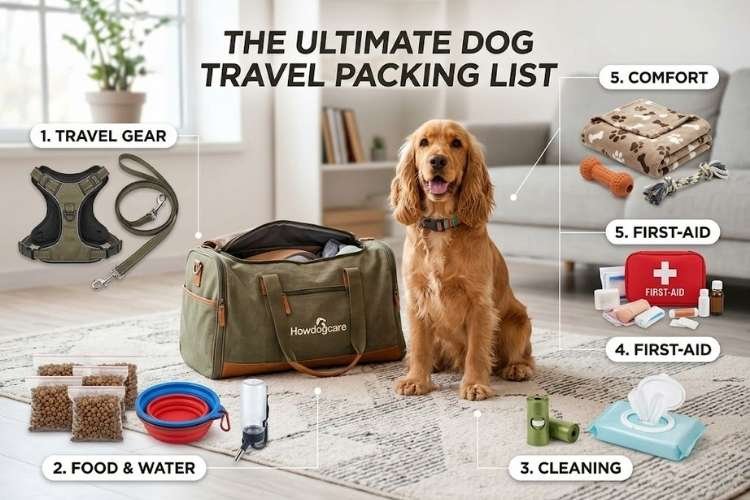
Successfully traveling with a dog requires significantly more luggage than simply grabbing a leash and a bag of treats. Your canine companion relies entirely on you to bring their daily ecosystem on the road.
To avoid frantic roadside stops or emergency pet store visits, you must pack systematically. Use this comprehensive, highly scannable packing list to ensure you have every essential item ready before you ever start the engine.
Essential Travel Gear: Crash-Tested Crates, Harnesses, and Barriers
Securing your pet inside a moving vehicle is absolutely non-negotiable for their safety and yours. Unrestrained dogs easily become dangerous projectiles during sudden stops or accidents.
- Crash-tested crates: Invest in a heavy-duty, independently crash-tested kennel that securely anchors directly to your vehicle’s cargo tie-downs.
- Safety harnesses: If your dog rides on the passenger seat, use a heavy-duty safety harness that clicks directly into the vehicle’s seatbelt receptacle.
- Cargo barriers: For large breeds, install a sturdy metal barrier to prevent them from jumping into the front seat and dangerously distracting the driver.
Daily Maintenance: Food, Bottled Water, and Portable Silicone Bowls
A dog’s digestive system is highly sensitive to sudden dietary changes, especially when compounded by the physical stress of travel. You must strictly adhere to their exact daily diet from home.
- Pre-portioned meals: Measure their dry kibble into individual, sealed zip-top bags for incredibly easy, mess-free feeding in hotel rooms.
- Familiar drinking water: Bring gallons of tap water directly from your own house; unfamiliar local water frequently causes severe canine upset stomachs and diarrhea.
- Collapsible bowls: Pack lightweight, food-grade silicone bowls that fold completely flat for quick, convenient hydration during highway rest stops.
Ralated: Top 10 Best Automatic Dog Waterer Outdoor Reviews
Comfort and Familiarity: Unwashed Blankets, Favorite Toys, and Bedding
Unfamiliar hotel rooms, loud vehicles, and strange smells easily trigger massive sensory overload in pets. You can actively combat this severe travel anxiety by bringing comforting items from your living room.
- Unwashed blankets: Pack a soft blanket your dog has recently slept on. Their own familiar scent naturally lowers their resting heart rate in strange environments.
- High-value chew toys: Bring incredibly durable, familiar chew toys to keep them mentally occupied and safely distracted during long stretches of driving.
- Their own bed: Never force your dog to sleep on a cold, unfamiliar hotel floor. Bringing their personal bed instantly creates a highly recognizable safe zone.
The Canine First-Aid Kit: What You Must Include for the Road
Accidents happen unexpectedly, and veterinary clinics are rarely right next door when you are exploring the wilderness. A dedicated canine medical kit is an absolute lifesaver for minor injuries.
- Wound care basics: Pack sterile gauze pads, self-adhering bandages (vet wrap), and pet-safe antiseptic spray for sudden cuts or scraped paw pads.
- Tick removal tools: Always carry a dedicated tick twister and pet-safe tweezers if you plan on hiking through wooded areas or tall grass.
- Emergency supplies: Include vet-approved antihistamines for sudden insect stings and a small saline syringe for safely flushing dust or debris out of their eyes.
Related: Top 10 Best Dog First Aid Kits (2026): Trail, Travel & Home
Cleaning Supplies: Waste Bags, Enzymatic Cleaners, and Wet Wipes
Even the most perfectly house-trained dog can experience unexpected, stress-induced accidents or severe motion sickness while traveling. Being highly prepared prevents permanent, costly damage to rental cars or hotel carpets.
- Excessive waste bags: Pack double the amount of poop bags you logically think you will need for the entire duration of the trip.
- Pet-safe wet wipes: Use hypoallergenic grooming wipes to rapidly clean muddy paws or wipe down their coat after a dusty outdoor hike.
- Enzymatic cleaners: Always carry a travel-sized bottle of enzymatic spray to permanently neutralize urine odors and confidently save your hotel room deposit.
Road Trip Mastery: Keeping Your Dog Safe in the Car
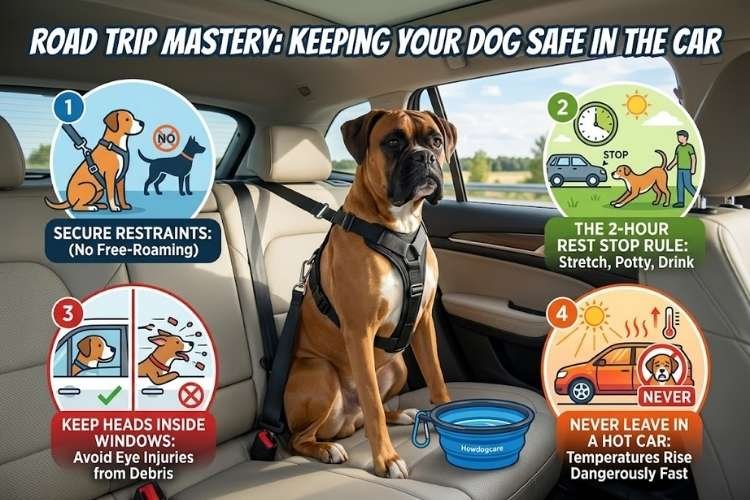
Hitting the open road is a classic, deeply rewarding way of traveling with a dog, but a vehicle presents unique physical dangers. Turning your car into a highly secure, comfortable environment is the absolute foundation of a successful road trip.
You must proactively manage potential driving distractions and fiercely prioritize your pet’s physical safety during long stretches of highway travel.
Why Free-Roaming in the Car is a Major Safety Hazard
Allowing your dog to freely pace across the back seat or sit on your lap while driving is incredibly dangerous. In the event of a sudden, hard stop, an unrestrained dog instantly becomes a deadly, high-speed projectile.
- Driver distraction: A dog suddenly jumping into the front seat or aggressively barking at the window causes critical, split-second driver distraction.
- Airbag trauma: Front-seat airbags are designed strictly for adult humans and will cause catastrophic, fatal injuries to a dog upon deployment.
- Crash securement: Always utilize a crash-tested crate or a heavy-duty seatbelt harness to keep them firmly anchored during sudden evasive maneuvers.
The 2-Hour Rule: Planning Strategic Rest and Potty Stops
Dogs cannot comfortably hold their bladders or sit completely still for eight consecutive hours of driving. Adhering strictly to the “2-Hour Rule” actively prevents painful urinary tract issues and highly stressful indoor vehicle accidents.
- Mandatory stretching: Stop every two hours to let your dog walk, stretch their stiff joints, and safely explore a new patch of grass.
- Hydration checks: Offer small amounts of fresh water at every single stop to actively prevent dangerous dehydration without causing an overly full bladder.
- Secure leashing: Always double-check that their collar or harness is completely secure before ever opening the car door at a busy, loud highway rest stop.
Related: Top 10 Best Light Up Dog Leash Reviews (Updated Guide)
The Golden Rule: Never Leave Your Dog Unattended in a Hot Vehicle
Leaving a pet alone inside a parked car is the single most deadly mistake an owner can make. The interior temperature of a vehicle skyrockets to fatal levels in mere minutes, even on mildly warm days.
- The greenhouse effect: Cracking the windows does absolutely nothing to stop the rapid, deadly accumulation of heat inside a parked car.
- Rapid heatstroke: Dogs do not sweat like humans; they pant to cool down. In a hot car, panting becomes entirely ineffective, leading to fatal heatstroke incredibly fast.
- Plan your meals: Always utilize drive-thrus, pack a cooler with sandwiches, or find strictly pet-friendly outdoor patios so your dog is never left alone.
Managing Canine Carsickness and Motion Nausea
Motion sickness frequently turns a fun vacation into a miserable, highly nauseating ordeal for a sensitive pet. If your dog excessively drools, heavily pants, or actively vomits in the car, they are suffering from severe motion nausea.
- Fast before driving: Withhold heavy meals for at least two to three hours before departure to significantly reduce the risk of active vomiting.
- Cool airflow: Keep the car interior incredibly cool and ensure the air conditioning vents are pointed directly toward their travel crate.
- Veterinary medications: Consult your vet about highly effective, prescription anti-nausea medications like Cerenia to completely block the vomiting reflex.
Window Safety: Why Heads Should Stay Inside the Vehicle
Dogs absolutely love sticking their heads out of a moving car window to catch the rushing scents. However, this highly popular habit exposes them to severe, irreversible physical injuries.
- High-speed debris: Tiny rocks, dust, and insects kicked up by tires act like flying shrapnel, easily causing severe corneal scratching or permanent blindness.
- Ear damage: The intense, high-speed wind forcefully flapping their soft ear flaps can easily cause painful, swollen ear hematomas over time.
- Risk of falling: A sudden swerve or a highly reactive lunge at a passing animal can easily cause an unrestrained dog to fall entirely out of the moving vehicle.
Taking to the Skies: An Expert Guide to Flying with a Dog
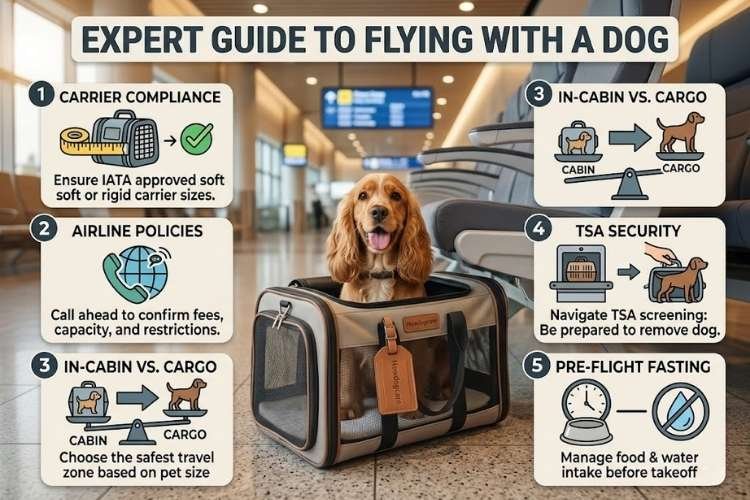
While a scenic road trip offers incredible flexibility, traveling with a dog on a commercial airplane introduces an entirely new level of strict logistical complexity. Navigating crowded terminals and strict airline regulations requires meticulous, expert-level preparation.
You must fiercely advocate for your pet’s physical safety and emotional comfort throughout the entire highly stressful aviation process.
Navigating Complex Airline Pet Policies and Booking Fees
Airline pet regulations vary wildly and frequently change without any explicit public notice. Never automatically assume your chosen carrier operates under the exact same rules as your previous flight.
- Call before booking: Always call the airline directly to confirm strict pet capacity limits on your specific flight before purchasing your own non-refundable ticket.
- Understand breed embargoes: Many airlines strictly ban short-nosed (brachycephalic) breeds like Pugs and Bulldogs from flying entirely due to severe, high-altitude respiratory risks.
- Prepare for hidden fees: Expect to pay hefty, one-way pet booking fees that frequently range from $100 to $200 per flight segment.
In-Cabin vs. Cargo: Making the Safest Choice for Your Pet’s Size
The physical size of your dog strictly dictates exactly where they are legally allowed to ride during the flight. This crucial distinction is the absolute most critical safety factor in canine aviation.
- In-cabin safety: Dogs weighing under 20 pounds can typically ride safely beneath the seat directly in front of you, remaining in your constant, protective care.
- The risks of cargo: Large breeds are forced to fly in the pressurized cargo hold. This highly stressful environment exposes them to loud noises, temperature fluctuations, and total isolation.
- Assess cargo alternatives: If your large dog suffers from severe anxiety or is a senior, seriously consider renting a car or hiring a professional ground transport service instead of risking cargo travel.
Choosing the Right Airline-Approved Travel Carrier
Showing up to the ticketing counter with the wrong travel carrier guarantees immediate boarding denial. You must purchase gear that explicitly meets strict International Air Transport Association (IATA) guidelines.
- Soft-sided cabin bags: In-cabin carriers must be highly flexible to easily squish under strict airline seat dimensions while offering excellent mesh ventilation.
- Rigid cargo crates: Cargo holds strictly require heavily reinforced, hard-plastic crates secured entirely with solid metal nuts and bolts, not flimsy plastic snaps.
- The stand-and-turn rule: Airline officials will actively verify that your dog can comfortably stand up without their ears touching the roof and turn completely around inside their crate.
Navigating Airport Security and Utilizing Pet Relief Areas
The TSA security checkpoint is frequently the most chaotic and overwhelming phase of air travel for a sensitive pet. Knowing exactly what to expect actively prevents panicked escapes in crowded, loud terminals.
- The screening process: You must physically carry your dog or walk them on a leash through the metal detector while their empty carrier goes through the heavy X-ray machine.
- Leash security: Ensure your dog wears a highly secure, escape-proof harness that they cannot easily back out of during the incredibly loud, chaotic security screening.
- Map relief areas: Modern airports feature designated indoor pet relief areas. Map these exact locations ahead of time to allow one final, crucial bathroom break directly before boarding.
Related: Top 10 Best Dog GPS Tracker Reviews (Updated Guide)
Pre-Flight Fasting: When to Stop Food and Water Before Takeoff
A mid-air potty accident inside a cramped travel carrier is a miserable, highly unsanitary experience for your dog. You must strategically manage their intake to keep their stomach and bladder completely empty during the flight.
- Strategic fasting: Withhold solid meals for at least four to six hours before your scheduled takeoff to actively prevent high-altitude motion sickness and vomiting.
- Ice cube hydration: Instead of offering a massive bowl of water that rapidly fills their bladder, give them a few ice cubes to safely combat thirst without causing an accident.
- Never open the carrier: Once you board the aircraft, strict federal regulations mandate that the carrier must remain completely zipped closed for the entire duration of the flight.
Alternative Transportation: Navigating Trains, Buses, and Ferries
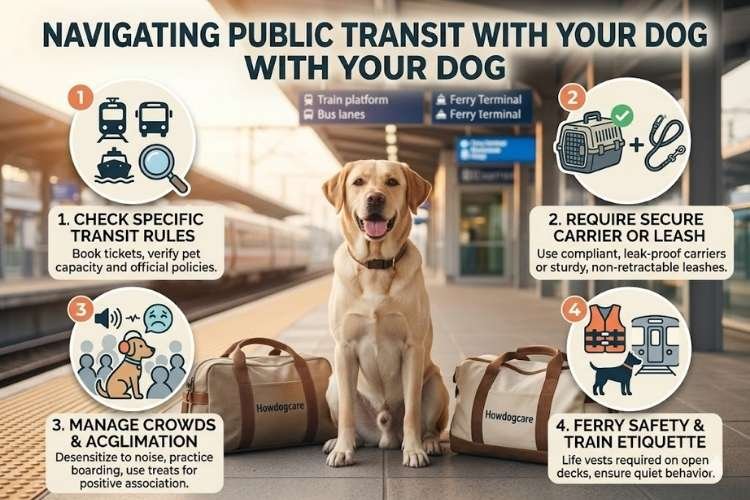
While personal cars and commercial flights dominate the conversation, traveling with a dog sometimes requires utilizing regional public transportation. Taking a train or scenic ferry offers unique views, but it comes with its own strict set of operational rules.
You must proactively research specific transit authority regulations to avoid being abruptly denied boarding at the terminal.
Understanding Rules for Traveling with a Dog on Public Transit
National railway systems and local city transit authorities view pet travel vastly differently. You cannot simply walk your dog onto a subway car without knowing the strict local ordinances.
- Carrier requirements: Most national train services, like Amtrak, strictly require pets to remain entirely enclosed in an approved, leak-proof carrier for the entire journey.
- Strict weight limits: Rail services frequently enforce rigid weight limits, heavily restricting combined pet and carrier weight to 20 pounds, essentially banning large breeds.
- Rush hour avoidance: Actively avoid navigating highly crowded subway platforms or local buses during peak commuter hours to prevent severe canine panic and trampling risks.
Ferry and Boat Travel Safety Protocols and Life Jackets
Taking a ferry to a coastal destination is an incredibly fun way to travel, but open water presents unique, unpredictable physical hazards.
- Canine life jackets: Even strong, athletic swimmers must wear a high-quality, brightly colored canine life vest when walking on slippery, open ferry decks.
- Deck regulations: Many commercial ferries strictly require dogs to remain locked inside your parked vehicle on the lower car deck, which can become dangerously hot and terrifyingly loud.
- Secure leashing: Never allow your dog to freely approach the open railings; sudden rogue waves or blaring ship horns can easily trigger a panicked jump.
Hotel and Rental Etiquette: Being a Good Canine Guest
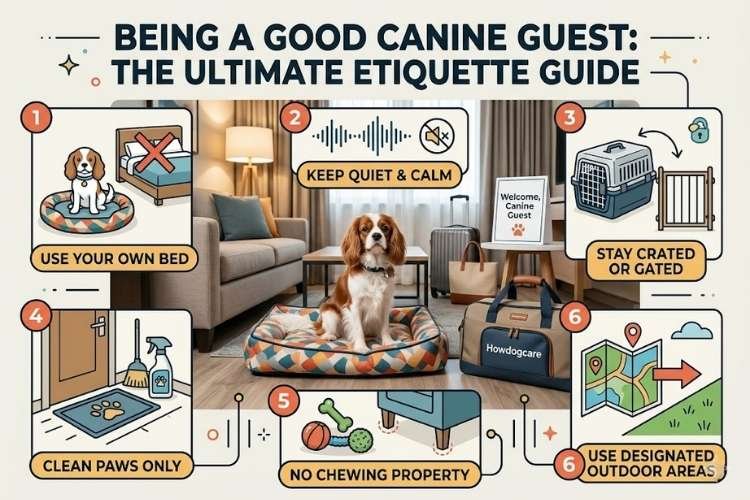
Reaching your final destination safely is only half the battle. Successfully traveling with a dog requires strict adherence to rental etiquette to ensure you are welcomed back and avoid massive financial penalties.
You must fiercely respect the property and ensure your dog remains a quiet, invisible guest to neighboring travelers.
Confirming “Pet-Friendly” vs. “Pet-Tolerant” Accommodation Policies
The hospitality industry uses incredibly vague marketing terminology. You must actively distinguish between a hotel that genuinely loves dogs and one that merely tolerates their physical presence.
- Pet-tolerant reality: Many hotels only tolerate dogs, severely restricting them from walking through the main lobby, pool areas, or outdoor dining patios.
- True pet-friendliness: Seek out accommodations that actively welcome pets, offering dedicated on-site dog parks, complimentary water bowls, and treats upon check-in.
- Hidden weight restrictions: Always explicitly ask the front desk about strict weight limits; many “pet-friendly” hotels will abruptly cancel your reservation if your dog exceeds 40 pounds.
Establishing a “Safe Zone” in an Unfamiliar Hotel Room
A new hotel room is flooded with the overwhelming scents of thousands of previous strangers. You must rapidly transform this sterile environment into a highly recognizable, secure sanctuary.
- Deploy familiar scents: Immediately unpack their unwashed bed, travel crate, and favorite chew toys, placing them in a quiet corner away from the main door.
- Maintain normal routines: Feed them at their exact normal time using their familiar bowls from home to heavily enforce a deep sense of predictable normalcy.
- Block visual triggers: Close the heavy blackout curtains immediately to prevent them from anxiously guarding the window and barking at unfamiliar pedestrians outside.
Managing Barking and Preventing Hotel Separation Anxiety
Nothing results in a faster hotel eviction than a dog relentlessly howling in an empty room. Hotel environments frequently trigger intense, unexpected separation anxiety even in normally quiet dogs.
- Never leave them unattended: The vast majority of hotels strictly prohibit leaving dogs entirely alone in the room due to severe noise complaints and destructive panic.
- Utilize white noise: Turn on the room’s loud air conditioning fan or play a white noise app to effectively drown out unfamiliar hallway footsteps and closing elevator doors.
- Prioritize physical exhaustion: Ensure your dog is heavily physically exhausted from a long, rigorous outdoor walk before expecting them to settle quietly indoors.
Related: Top 10 Best Anti Bark Collars for Dogs Reviews (Updated Guide)
Ground Rules for Paws on Hotel Furniture and Bedding
Respecting the rental property guarantees you will have your hefty pet deposit fully refunded. You must actively manage where your dog is allowed to sleep and play.
- Bring designated covers: If your dog is accustomed to sleeping on the bed with you, you must pack your own heavy blankets to completely protect the pristine hotel linens.
- Wipe muddy paws: Always use pet-safe wet wipes to thoroughly clean their paws before allowing them to step onto light-colored hotel carpets.
- Prevent destructive boredom: Never allow your dog to aggressively dig into mattresses or chew on wooden hotel furniture, which guarantees massive damage fees.
Managing Travel Anxiety and Environmental Stress in Dogs
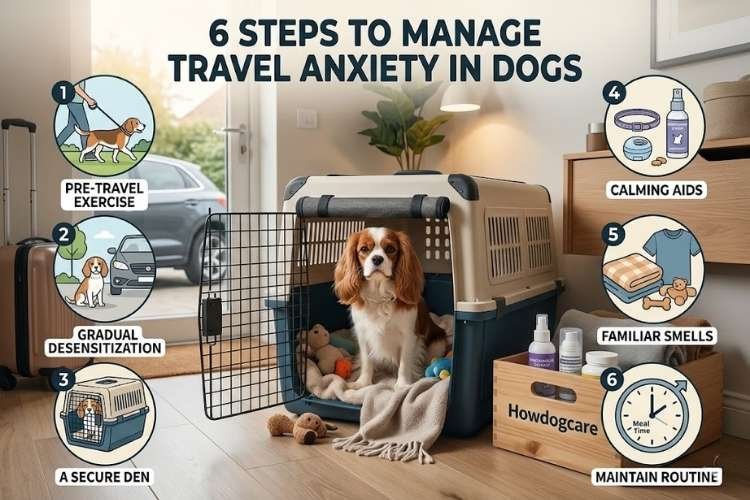
The intense psychological toll of traveling with a dog is frequently overlooked by excited pet parents. An unfamiliar environment instantly strips away your dog’s core sense of predictable security, easily triggering intense fear and sensory overload.
You must proactively address this environmental stress using proven, veterinary-backed solutions rather than simply hoping they will eventually calm down.
Recognizing the Subtle Body Language Signs of Canine Stress
Dogs cannot verbally tell you they are terrified, so they rely entirely on subtle physical cues to express their escalating discomfort. Ignoring these early warning signs frequently leads to severe panic attacks or defensive aggression.
- Lip licking and yawning: An anxious dog will repeatedly lick their lips or dramatically yawn even when they are not actively tired or hungry.
- Whale eye: If your dog rigidly turns their head away but intensely watches you from the corner of their eye, showing the white sclera, they are highly stressed.
- Excessive drooling and panting: Sudden, heavy panting in a cool, air-conditioned room or thick strings of drool indicate severe, overwhelming anxiety.
Desensitization Training: Practice Runs Before the Big Trip
You absolutely must never make a ten-hour highway drive your dog’s very first experience inside a vehicle. Desensitization training actively prevents severe travel trauma by slowly introducing them to the stressful environment.
- Start with short drives: Begin by driving simply around the block, heavily rewarding them with high-value treats for remaining calm in the backseat.
- Gradually increase duration: Slowly extend the driving time to nearby parks or pet stores, building their physical tolerance to constant vehicular motion.
- Simulate the environment: If flying, practice putting them inside their travel carrier at home and rolling them gently across the living room floor.
Utilizing Natural Calming Supplements and Pheromone Collars
For dogs suffering from mild to moderate travel nervousness, holistic and over-the-counter interventions offer excellent, non-sedating relief. These natural tools gently soothe the nervous system without causing severe drowsiness.
- Pheromone therapy: Utilize a synthetic Dog Appeasing Pheromone (DAP) collar or spray their travel crate to mimic the highly comforting scent of a nursing mother dog.
- Anxiety wraps: Invest in a tightly fitting, compression-style garment (like a Thundershirt) to apply constant, gentle pressure that naturally lowers their resting heart rate.
- Calming chews: Offer veterinary-approved chews containing L-theanine, chamomile, or melatonin roughly thirty minutes before beginning your stressful journey.
When to Consult Your Vet About Prescription Anti-Anxiety Medication
If your dog violently shakes, destroys their crate, or dangerously thrashes during travel, natural supplements will absolutely fail. Severe, uncontrollable panic strictly requires professional medical intervention.
- Schedule a behavioral consult: Speak directly with your veterinarian about highly effective prescription medications like Trazodone or Gabapentin for travel.
- Never use human sedatives: Never blindly administer human medications like Benadryl without explicit veterinary dosing, as this can easily cause fatal toxic reactions.
- Execute a trial run: Always test the prescribed medication at home weeks before the trip to accurately observe the specific sedative effects on your unique dog.
You might also like
Outdoor Adventures on the Road: Hiking and Exploring Safely
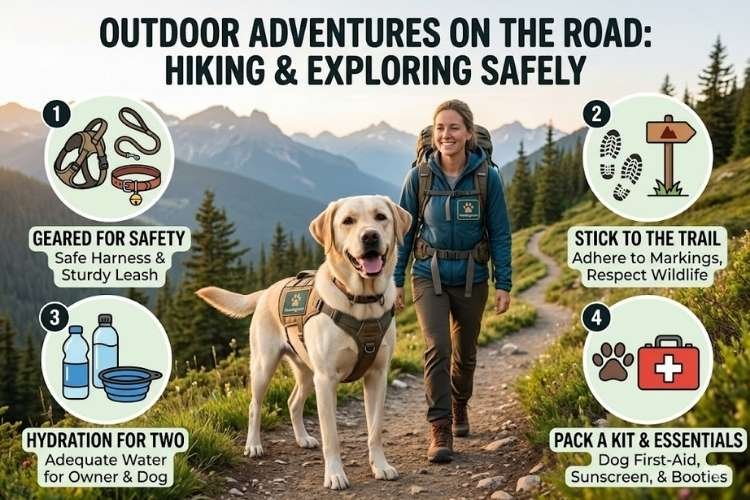
Arriving at a stunning, scenic destination frequently means hitting the local trails together. However, safely exploring the unpredictable wilderness requires entirely different safety protocols than a standard neighborhood walk.
You must fiercely protect your dog from extreme environmental hazards and strictly respect local conservation laws to ensure a safe, injury-free adventure.
Understanding Trail Etiquette and Adhering to Leash Laws
The wilderness is a shared, highly fragile ecosystem. Allowing your dog to uncontrollably sprint through delicate nature trails violently disrupts local wildlife and severely annoys other hikers.
- Strict leash adherence: Even if your dog possesses a flawless recall, you must strictly keep them on a standard six-foot leash on highly trafficked public trails.
- Yield the right of way: Always step entirely off the trail and command your dog to sit quietly when other hikers, mountain bikers, or horses rapidly approach.
- Pack out all waste: Never leave bagged dog poop sitting on the side of a hiking trail; you must physically carry it out to a designated wilderness trash receptacle.
Protecting Paws from Blistering Pavement and Freezing Snow
A dog’s paw pads are incredibly tough, but they are highly vulnerable to extreme environmental temperatures. Severe thermal burns or frostbite can permanently cripple your dog during a vacation.
- The seven-second rule: Firmly press the back of your bare hand against the asphalt. If it is too painfully hot to hold for seven seconds, it will instantly blister your dog’s paws.
- Invest in protective booties: Forcefully train your dog to wear heavy-duty, rubber-soled booties to actively prevent sharp rocks, ice chunks, or hot sand from causing severe lacerations.
- Apply protective wax: If boots fail, apply a thick layer of protective paw wax (like Musher’s Secret) to actively shield their sensitive pads from corrosive winter road salt.
Wildlife Encounters and Regional Parasite/Tick Prevention
Traveling to a new geographic region immediately exposes your dog to entirely unfamiliar, highly dangerous biological threats. You must proactively defend them against regional predators and microscopic, disease-carrying parasites.
- Maintain a strict distance: Never allow your dog to actively bark at or aggressively chase large, highly defensive wildlife like moose, bears, or venomous snakes.
- Upgrade tick prevention: Ensure your dog’s oral flea and tick preventative is completely up to date before entering dense, heavily wooded regions prone to Lyme disease.
- Perform daily body checks: Thoroughly inspect your dog’s entire body, specifically checking inside their ears and between their toes, for embedded ticks after every single outdoor hike.
Emergency Preparedness Far From Home
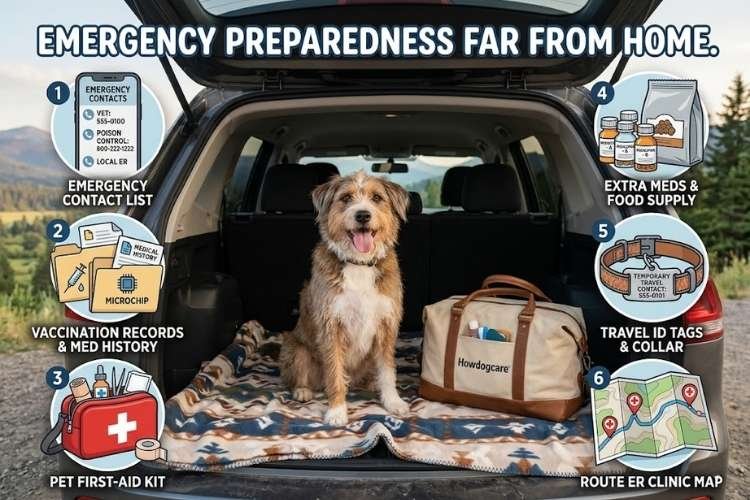
Even with flawless logistical planning, unexpected emergencies can strike at any moment when you are miles away from your trusted local veterinarian. True pet travel mastery requires aggressively planning for worst-case scenarios before they ever happen.
You must proactively build a robust safety net, ensuring you can rapidly respond to medical crises or accidental escapes in a completely unfamiliar environment.
Locating 24-Hour Emergency Vets Along Your Travel Route
Scrambling to search for an open animal hospital on your phone at two in the morning while your dog is severely injured is a terrifying, highly preventable nightmare.
- Map your route: Before leaving home, physically map out the exact locations and phone numbers of 24-hour emergency veterinary clinics along your entire driving route.
- Destination clinics: Save the contact information for the closest emergency hospital to your final hotel or campsite directly into your phone’s contacts.
- Confirm their hours: Never assume a rural clinic operates 24/7; actively call ahead to confirm their exact overnight staffing and emergency capabilities.
Creating a “Lost Dog” Action Plan in an Unfamiliar City
A sudden loud noise in a new city can cause even the most obedient dog to panic, slip their collar, and bolt into unknown traffic. You must have an immediate, actionable recovery plan ready to deploy.
- Carry high-resolution photos: Keep a dedicated album of clear, highly recent photos of your dog on your phone to instantly print on “Lost Dog” flyers.
- Pre-save local contacts: Research and save the direct phone numbers for local animal control, city shelters, and non-emergency police dispatch at your destination.
- Leverage local social media: Immediately identify and join local community Facebook groups or neighborhood apps (like Nextdoor) for your destination to rapidly broadcast a lost pet alert.
Keeping Digital and Physical Copies of Medical Records Handy
If your dog requires sudden emergency surgery in a different state, the attending veterinarian must immediately know their comprehensive medical history, allergies, and vaccination status.
- The physical travel folder: Always carry a brightly colored, physical folder containing paper copies of their latest rabies certificate, microchip numbers, and recent bloodwork.
- Cloud-based backups: Scan every medical document and upload them directly to a secure, highly accessible cloud storage app (like Google Drive) on your smartphone.
- List current medications: Write down the exact dosages and brand names of any daily prescriptions your dog takes, in case their medication is unexpectedly lost or destroyed.
Frequently Asked Questions (FAQs) About Traveling with a Dog
1. How long can a dog safely ride in a car without a break?
For maximum safety and comfort, a dog should never ride in a car for more than two consecutive hours without a break. Adhering strictly to this two-hour rule prevents painful bladder distension, severe joint stiffness, and dangerous boredom-induced behavioral issues.
2. Should I feed my dog the morning of a long drive or flight?
No, you should actively withhold heavy meals for at least four to six hours prior to a long drive or commercial flight. Traveling on a completely empty stomach drastically reduces the risk of severe motion sickness, active vomiting, and highly unsanitary mid-transit potty accidents.
3. Is it safe to sedate my dog for a flight in cargo?
Absolutely not. The American Veterinary Medical Association (AVMA) and all major airlines strictly prohibit the use of heavy sedatives or tranquilizers for animals flying in cargo. Sedatives severely suppress a dog’s natural ability to regulate their body temperature and can cause fatal respiratory failure at high altitudes.
4. Do hotels usually charge extra hidden fees for dogs?
Yes, the vast majority of “pet-friendly” hotels charge mandatory, non-refundable pet fees ranging from $25 to $150 per stay to cover deep cleaning. Always call the hotel directly to distinguish between a flat non-refundable fee and a fully refundable damage deposit.
5. Can small dogs go to the bathroom on pee pads during a flight?
While you can securely line the bottom of their in-cabin carrier with highly absorbent puppy pee pads, federal aviation regulations strictly prohibit you from opening the carrier mid-flight. If an accident occurs, the dog must unfortunately sit on the soiled pad until you safely reach the airport terminal.
Ready for Adventure: Making Lifelong Memories With Your Dog
Mastering the complex logistics of traveling with a dog ultimately transforms a highly stressful ordeal into an incredibly rewarding bonding experience. By proactively managing their physical safety, mitigating severe environmental anxiety, and packing meticulously, you eliminate the vast majority of travel-related disasters.
The intense effort required for pre-trip preparation directly translates into pure, uninterrupted peace of mind on the road. Whether you are navigating an international airport or setting up a rugged wilderness campsite, you are now fully equipped to safely explore the world together. Pack your bags, securely buckle their harness, and get ready to create unforgettable, lifelong memories with your best friend.