





Choosing between grain free vs regular dog food is one of the most confusing decisions pet parents face today. Walk into any pet store, and you will see aggressive marketing campaigns pushing both sides of the dietary spectrum.
You want the absolute best for your furry best friend, but deciphering the complex ingredient labels feels overwhelming. Does your dog actually need to avoid grains, or is it just a clever marketing gimmick?
In this comprehensive guide, we will break down the exact science, the veterinary warnings, and the undeniable facts. By the end, you will know exactly which diet is safest and healthiest for your specific dog.
The Great Kibble Debate: Navigating Grain-Free vs Regular Dog Food
Over the past decade, the pet food industry has heavily demonized carbohydrates. This marketing shift created a massive divide and immense confusion within the pet care community.
Owners constantly wonder if traditional whole grains are simply cheap, unhealthy fillers or essential nutritional building blocks.
Understanding the underlying science behind grain free vs regular dog food is absolutely critical. Your choice directly impacts your dog’s daily digestion, sustained energy levels, and long-term cardiac health.
Why Diet Trends Can Be Dangerous for Your Dog’s Health
Human dietary fads frequently spill over into the commercial pet food industry. When gluten-free and paleo diets surged in human popularity, grain-free kibble instantly dominated pet store shelves.
However, a dog’s biological digestive system is vastly different from a human’s. Canines evolved alongside humans for thousands of years, developing the specific enzymes needed to digest starches and grains efficiently.
Blindly following human marketing trends without consulting veterinary science can lead to severe canine nutritional deficiencies.
Key risks of following pet food trends blindly:
- Unintended ingredient exposure: Forcing your dog to consume abnormally high levels of legumes or potatoes.
- Severe cardiac risks: Potential links to fatal heart conditions, which are currently under strict FDA investigation.
- Microbiome disruption: Eliminating the specific beneficial fibers necessary for a healthy, functioning gut.
Understanding the Basics: What Exactly Are These Diets?
To make a truly informed dietary decision, you must completely strip away the colorful marketing jargon. You need to look directly at the black-and-white ingredient label on the back of the bag.
Both diet types require a dense carbohydrate source to physically bind the kibble together during the high-heat extrusion process. Meat alone cannot form a crunchy kibble.
The true, fundamental difference lies strictly in which specific carbohydrate sources the manufacturer chooses to utilize.
Defining Grain-Free Dog Food (The Role of Peas, Lentils, and Potatoes)
A grain-free diet completely eliminates all traditional grains, including wheat, corn, rice, oats, and barley.
To replace the structural binding power of these grains, manufacturers must use alternative carbohydrate sources. These alternatives provide the necessary energy and physical shape to the kibble.
These substitute carbohydrates are typically heavy legumes (pulses) or starchy tubers.
Common grain substitutes include:
- Peas and Lentils: Extremely high in plant-based protein but currently heavily scrutinized by veterinary cardiologists.
- Sweet Potatoes: Excellent, highly digestible sources of complex carbohydrates and soothing dietary fiber.
- Chickpeas: Frequently used by budget brands to artificially boost the overall protein percentage on the guaranteed analysis label.
Defining Regular (Grain-Inclusive) Dog Food (The Power of Rice, Oats, and Barley)
Regular dog food simply means the recipe intentionally includes whole grains as a primary carbohydrate and fiber source.
Despite highly negative marketing campaigns by boutique brands, veterinarians widely consider whole grains to be incredibly nutritious for the vast majority of dogs.
High-quality grains provide essential B vitamins, crucial minerals, and easily digestible energy for highly active canines.
Top beneficial grains found in premium regular diets:
- Brown Rice: Incredibly gentle on the stomach and actively helps firm up loose stools.
- Oatmeal: Packed with soothing, soluble fiber that actively regulates healthy bowel movements.
- Barley: Provides a slow, sustained release of energy to prevent dangerous blood sugar spikes throughout the day.
5 Major Differences Between Grain-Free and Regular Dog Food
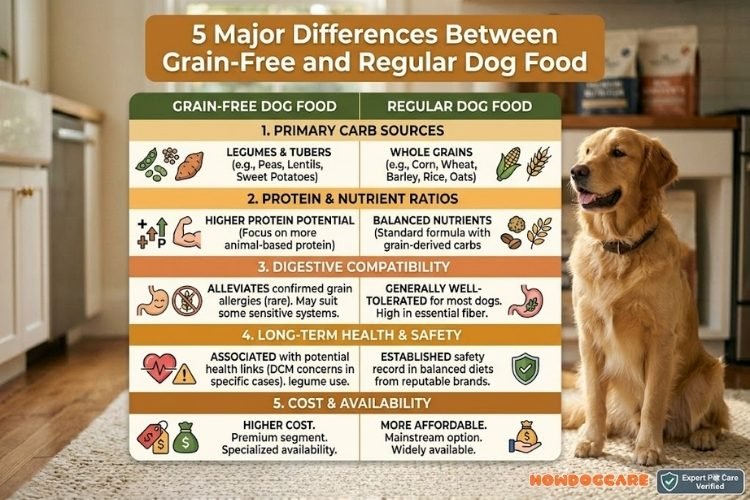
Understanding the core debate between grain free vs regular dog food requires analyzing the exact nutritional breakdowns. While both diets sustain canine life, their metabolic impact differs significantly. Manufacturers alter the entire recipe profile when they remove traditional grains from the extrusion process.
You must look past the flashy packaging and understand how these ingredients function inside your dog’s body. Let’s explore the five most critical differences you must understand before buying your next bag of kibble.
1. Primary Carbohydrate Sources and Glycemic Index
Regular dog foods rely heavily on whole grains like oats, barley, and brown rice for sustained energy. These complex carbohydrates digest incredibly slowly. This steady digestion prevents dangerous spikes in your dog’s daily blood sugar and keeps them feeling full longer.
Conversely, grain-free formulas substitute grains with peas, lentils, or potatoes to bind the kibble together. Some of these alternatives possess a significantly higher glycemic index. This rapid digestion causes quick energy spikes followed by sudden, intense lethargy.
Key carbohydrate differences include:
- Energy release: Grains provide steady endurance, while some tubers cause rapid sugar spikes.
- Weight management: High-glycemic grain-free alternatives frequently contribute to severe canine obesity.
- Diabetic risk: Regular whole grains are far safer for dogs struggling to regulate their insulin levels.
2. Fiber Content and Overall Digestive Impact
Traditional grains provide an incredible source of highly soluble dietary fiber. This specific fiber gently absorbs excess water in the gut, consistently producing firm, easy-to-pick-up stools. When you evaluate grain free vs regular dog food, the digestive impact is often immediately noticeable in the yard.
Grain-free diets must substitute this essential grain fiber with legume or potato fiber. While still nutritious, heavy legume content frequently ferments poorly in the digestive tract. This poor fermentation causes intense gas and severe bloating in highly sensitive dogs.
Digestive impacts to watch for:
- Stool consistency: Grain-inclusive diets generally produce much firmer, smaller bowel movements.
- Flatulence: Heavy pea and lentil concentrations in grain-free foods frequently trigger room-clearing gas.
- Microbiome health: Whole grains actively feed the beneficial bacteria inside your dog’s stomach.
3. The FDA Investigation: The Risk of Diet-Associated DCM (Heart Disease)
The most urgent difference lies in current veterinary cardiology research. The FDA is actively investigating a deeply concerning link between boutique grain-free diets and Dilated Cardiomyopathy (DCM). This fatal disease causes the dog’s heart to physically enlarge and pump blood inefficiently.
Research strongly suggests the incredibly high concentration of peas and lentils in grain-free foods blocks the absorption of taurine. Taurine is a critical amino acid absolutely necessary for canine cardiac muscle function.
Crucial heart health facts:
- The Legume link: High levels of pulses (peas, lentils, chickpeas) are the primary suspects in diet-associated DCM.
- Taurine deficiency: Grain-free diets frequently inhibit the body’s ability to process essential cardiac amino acids.
- Veterinary consensus: Most cardiologists now strongly recommend regular, grain-inclusive diets to protect heart health.
4. Management of True Canine Food Allergies
Many owners immediately switch to grain-free food, falsely believing their dog is highly allergic to wheat or corn. However, true canine grain allergies are incredibly rare in the veterinary world. Less than one percent of all dogs suffer from a diagnosed, legitimate grain intolerance.
The vast majority of canine food allergies are triggered strictly by the primary animal protein. If your dog suffers from relentless paw licking and chronic ear infections, the meat source is usually to blame. Therefore, switching to a grain-free chicken recipe rarely solves a chicken-based allergic reaction.
The reality of canine dietary allergies:
- Primary triggers: Beef, chicken, and dairy cause over 90% of all canine food allergies.
- The grain myth: Corn and wheat are highly digestible and almost never trigger immune responses.
- The real solution: Switching to a novel protein (like venison or duck) is far more effective than removing grains.
5. Price Point and Long-Term Affordability
Budgeting for high-quality pet care is a reality every responsible owner must face. Grain-free diets almost always carry a significantly higher premium price tag. Manufacturers spend drastically more money sourcing alternative carbohydrates like sweet potatoes and pass those high costs directly to you.
Regular dog foods utilizing wholesome grains are far more cost-effective to produce and purchase. You can easily secure a top-tier, scientifically backed, grain-inclusive diet for a fraction of the cost of a boutique grain-free bag. This affordability ensures you can consistently provide excellent nutrition without compromising your financial stability.
Read More Articles
- Best Dog Food: Complete Guide for Every Dog (2026)
- Top 10 Best Dog Grooming Scissors Kit Reviews (Updated Guide)
- Top 10 Best Outdoor Dog Kennel Reviews (Updated Guide & Tips)
- Top 10 Best Dog Muzzles Reviews (Updated Guide & Expert Tips)
- Top 10 Best Electric Dog Grooming Table Reviews (Updated Guide)
- Top 10 Best Heavy Duty Dog Crate Reviews (Updated Guide)
The Pros and Cons of Grain-Free Diets
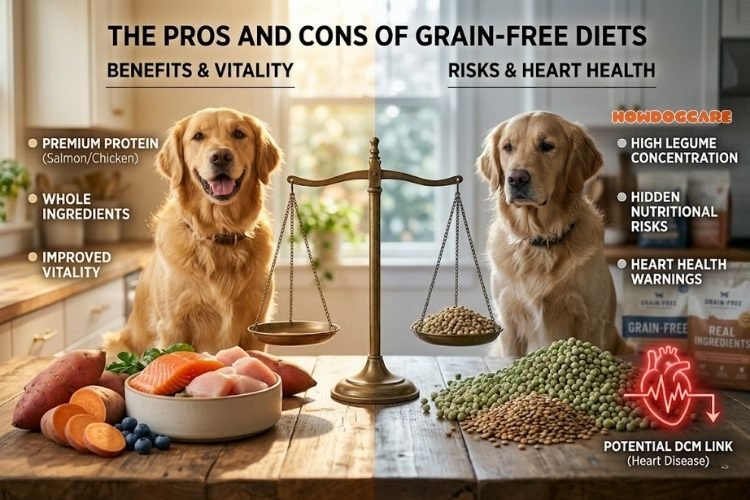
Evaluating the grain free vs regular dog food debate requires total objectivity. Neither diet is inherently evil, but they serve vastly different biological purposes in canine nutrition. Let’s examine the specific medical scenarios where a grain-free diet actually shines, alongside its hidden risks.
When Going Grain-Free is the Absolute Best Choice
For a very tiny percentage of the canine population, removing grains is medically necessary. If your veterinarian officially diagnoses your dog with a specific gluten intolerance, grain-free is your only safe option.
Certain breeds, like Irish Setters, have a documented genetic predisposition to celiac-like diseases. In these extremely rare cases, feeding traditional wheat or barley triggers severe intestinal inflammation and chronic diarrhea.
Legitimate reasons to feed grain-free:
- Diagnosed allergies: Confirmed by a vet through a strict 8-week dietary elimination trial.
- Severe gluten intolerance: A genetic inability to process specific grain proteins without severe internal inflammation.
- Veterinary prescription: Recommended specifically by a certified canine nutritionist to manage a complex health issue.
Hidden Drawbacks and Veterinary Warnings
The biggest drawback to grain-free food is the deeply concerning link to Dilated Cardiomyopathy (DCM). Leading veterinary cardiologists actively warn against feeding these diets to healthy dogs without a confirmed medical need.
Furthermore, many owners mistakenly believe grain-free means low-carbohydrate, which is entirely false. To replace the grains, manufacturers pack these formulas with dense, high-calorie starches like potatoes and tapioca.
Crucial grain-free warnings:
- Cardiac risks: High legume content blocks taurine absorption, potentially causing fatal heart disease over time.
- Weight gain: Dense alternative starches frequently lead to rapid, unhealthy canine obesity.
- Higher costs: You pay a massive premium for alternative carbohydrates that provide absolutely no extra nutritional benefit.
The Pros and Cons of Regular (Grain-Inclusive) Dog Food
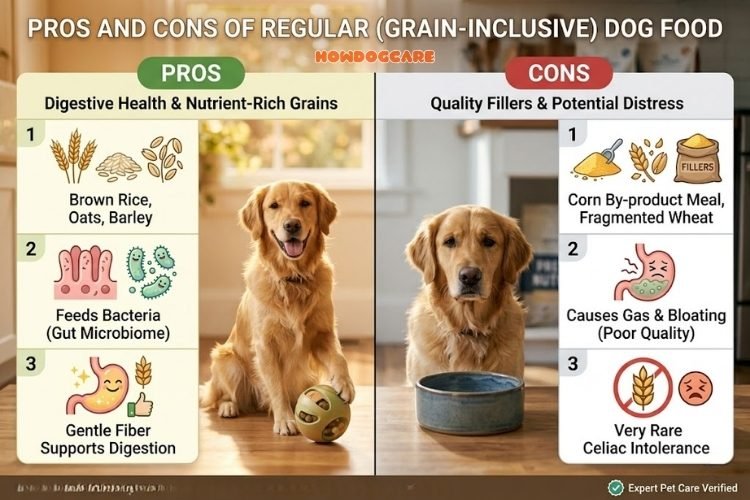
For the vast majority of healthy dogs, grain-inclusive diets remain the absolute gold standard of nutrition. When comparing grain free vs regular dog food, traditional whole grains consistently offer superior, easily digestible energy. Let’s look at why science heavily favors these traditional ingredients.
The Hidden Nutritional Benefits of Whole Grains
Whole grains are nutritional powerhouses packed with essential vitamins, minerals, and antioxidants. Ingredients like brown rice and oatmeal provide incredible sources of soluble fiber, which actively regulates a healthy canine digestive tract.
This specific fiber feeds the beneficial bacteria in your dog’s gut microbiome, boosting their entire immune system. Furthermore, whole grains provide a slow, steady release of energy, keeping your highly active dog fueled for hours without a sudden crash.
Top benefits of whole grains:
- Digestive stability: Consistently produces firm, healthy, and easy-to-manage stools.
- Heart health: Completely avoids the taurine-blocking risks associated with heavy legume concentrations.
- Sustained energy: Prevents dangerous blood sugar spikes through complex, slow-burning carbohydrate digestion.
When Grains Actually Cause Gastrointestinal Distress
While whole grains are incredibly healthy, highly processed, low-quality grains absolutely are not. Budget pet food brands frequently use fragmented grain by-products, like corn gluten meal, simply to bulk up the bag’s weight.
These heavily refined fillers provide almost zero nutritional value and frequently trigger intense gastrointestinal distress. If a grain-inclusive diet upsets your dog’s stomach, the quality of the grain is usually the exact culprit, not the grain itself.
Grains to strictly avoid:
- Corn syrup: A dangerous, highly processed sweetener that causes rapid, unhealthy blood sugar spikes.
- Wheat gluten: A cheap protein substitute used to artificially inflate the label’s total protein percentage.
- Unidentified grain fragments: Floor sweepings from human food processing plants that offer no real biological nutrition.
How to Choose the Best Option for Your Specific Dog (A 3-Step Guide)
Navigating the grain free vs regular dog food aisle does not have to be a stressful guessing game. You simply need to evaluate your dog’s specific biological needs and completely ignore the flashy marketing campaigns. Follow this straightforward three-step guide to secure the perfect diet.
Step 1: Evaluate Your Dog for True Allergic Reactions
If your dog suffers from itchy skin or chronic ear infections, do not immediately blame the grains. Over 90% of all canine food allergies are triggered by the primary meat protein, usually beef, chicken, or dairy.
Before switching to a highly expensive grain-free diet, try transitioning to a grain-inclusive formula featuring a novel protein. Feeding an oatmeal-based diet with a rare meat like duck or venison usually cures the allergic reaction instantly.
Step 2: Consult Your Veterinarian Regarding Breed-Specific Risks
Certain dog breeds carry a massive genetic predisposition to developing Dilated Cardiomyopathy (DCM). Golden Retrievers, Doberman Pinschers, and Great Danes are already at a significantly higher risk for fatal heart enlargement.
If you own a high-risk breed, feeding a grain-free diet heavily packed with legumes is incredibly dangerous. You must consult your veterinarian, as they will almost certainly mandate a high-quality, grain-inclusive diet to aggressively protect their heart.
Step 3: Read the Ingredient Label, Ignore the Marketing
Never base your purchasing decision on a beautifully designed bag featuring a wild, majestic wolf. Turn the bag over and look for the AAFCO nutritional adequacy statement, ensuring the food meets baseline survival standards.
Next, ensure the brand actively employs full-time veterinary nutritionists and conducts rigorous clinical feeding trials. The safest diets are always produced by highly transparent companies that adhere strictly to global WSAVA guidelines.
Frequently Asked Questions (FAQs) About Canine Diets
1. Do wolves eat grains, and shouldn’t my dog eat like a wolf?
While dogs share an ancestor with wolves, thousands of years of domestication have fundamentally altered their DNA. Modern dogs possess the specific amylase enzymes required to easily digest and extract vital nutrients from complex starches and whole grains. Feeding them exactly like a wild wolf ignores thousands of years of biological evolution.
2. Is grain-free dog food better for weight loss?
Absolutely not. In fact, grain-free diets frequently cause severe, rapid weight gain. To replace the grains and bind the kibble together, manufacturers use highly calorie-dense sweet potatoes and tapioca, making the kibble significantly higher in overall carbohydrates and calories.
3. How do I safely switch my dog back to a grain-inclusive diet?
You must transition their food incredibly slowly to prevent explosive diarrhea and painful stomach cramping. Blend 75% of their old grain-free food with 25% of the new grain-inclusive food for three days. Gradually adjust the ratio over a strict 10-day period until they are entirely eating the new, healthy grains.
Final Verdict: Making the Safest Nutritional Choice for Your Dog
The intense debate surrounding grain free vs regular dog food ultimately comes down to proven scientific facts versus clever marketing. Unless your veterinarian officially diagnoses your dog with a highly rare grain allergy, there is zero medical reason to avoid traditional grains.
Whole grains like brown rice, oatmeal, and barley provide incredible digestive stability, sustained energy, and essential cardiac protection. They are biologically appropriate, highly digestible, and heavily recommended by the global veterinary community.
Protect your dog’s long-term health by ignoring the trendy boutique marketing campaigns. Choose a scientifically formulated, grain-inclusive diet, and give your furry best friend the safe, balanced nutrition they truly deserve.