





Welcome to your ultimate resource for canine nutrition and health. As a dedicated pet parent, you probably stare at the food bowl every single day and wonder, how much should you feed your dog? It is arguably the most common and important question asked in veterinary clinics worldwide.
Getting your dog’s portion size exactly right is absolutely critical for their long-term health, joint longevity, and daily happiness. This comprehensive 2026 feeding guide is designed to completely remove the guesswork from mealtime. We will explore the exact science behind canine caloric needs and provide actionable, expert steps to help you measure the perfect daily portion.
The Portion Control Problem: Why “Eyeballing” Your Dog’s Food is Dangerous
Many loving dog owners simply grab a random plastic cup and scoop kibble until the bowl looks sufficiently full. This common method of “eyeballing” portions is incredibly dangerous and highly inaccurate. A standard, nutritional measuring cup holds exactly eight liquid ounces of volume, but most household cups hold significantly more.
Consistently overfeeding your dog by just a few extra pieces of kibble each day quickly leads to massive, compounding weight gain over a year. To protect your pet’s health, you must immediately abandon the guessing game. You must adopt a strictly measured, scientifically sound feeding routine using a dedicated measuring tool.
The Hidden Health Risks of Canine Obesity and Underfeeding
Canine obesity is an absolute epidemic, currently affecting over half of all dogs in modern households. Excess weight places severe, crippling strain on your dog’s entire skeletal system, frequently triggering premature arthritis and painful joint dysplasia. Furthermore, overweight dogs face a dramatically higher risk of diabetes, respiratory distress, and a significantly shortened lifespan.
Conversely, chronic underfeeding severely deprives your dog of essential amino acids and vital daily energy. Malnourished dogs suffer from a highly compromised immune system, making them susceptible to frequent infections. You will often notice severe lethargy, loss of muscle mass, and a dull, brittle coat if a dog is consistently underfed.
5 Crucial Factors That Determine Your Dog’s Daily Caloric Needs
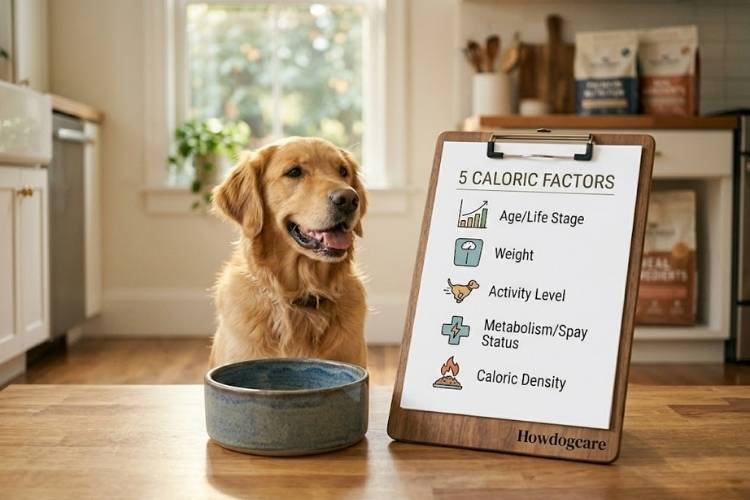
There is absolutely no universal, magic number for feeding dogs. A working Siberian Husky requires a vastly different caloric intake than a lap-bound Pug. To determine exactly how much should you feed your dog, you must deeply evaluate their unique biological and lifestyle profile.
Veterinarians calculate resting energy requirements based on several highly specific, measurable variables. You cannot rely strictly on the broad ranges printed on the back of the dog food bag. Let’s break down the five most critical factors that must directly influence your dog’s daily meal size.
1. Age and Life Stage (Puppy, Adult, or Senior)
A dog’s fundamental nutritional needs shift dramatically as they age and develop. Puppies experience explosive, rapid growth and require heavily calorie-dense diets to build strong bones, muscles, and neurological tissue.
Adult dogs need a highly stable, balanced maintenance diet to sustain their daily energy output without gaining unnecessary fat. Senior dogs, however, naturally suffer from a slowing metabolism and decreased daily activity levels. Therefore, older dogs require significantly fewer total calories, but demand higher levels of easily digestible protein to actively prevent muscle wasting.
2. Current Weight vs. Ideal Body Mass
You cannot calculate a dog’s daily food intake based solely on what they currently weigh if they are already severely overweight. You must calculate their daily portions based strictly on their ideal body weight.
Feeding an obese 80-pound dog the daily caloric requirements for an 80-pound frame will only maintain that dangerous excess fat. You must consult your veterinarian to accurately determine your dog’s optimal, healthy target weight. Always use that specific target number as the strict mathematical baseline for your portion control calculations.
3. Daily Activity Level and Exercise Routine
A dog’s daily energy expenditure heavily dictates their necessary caloric intake. A highly active sporting breed running five miles a day burns a significantly higher amount of calories than a bulldog sleeping on the couch. You must honestly evaluate your dog’s true, consistent activity level.
Activity categories to consider include:
- Sedentary: Short daily bathroom walks and primarily indoor, inactive living.
- Moderate: One to two hours of active walking or brisk, continuous yard play daily.
- Highly Active: Rigorous daily running, intense agility training, or working farm dogs.
4. Metabolism and Spay/Neuter Status
Every single dog possesses a highly unique, individual metabolic rate. Two dogs of the exact same breed, age, and weight might require slightly different portion sizes to maintain a healthy, lean physique.
Importantly, spaying or neutering your dog drastically alters their internal hormonal balance. This routine surgical alteration inherently slows down their baseline metabolism by up to 20 percent. You must proactively reduce their daily caloric intake immediately after the procedure to prevent rapid, unhealthy weight gain.
5. The Caloric Density of Your Specific Dog Food (kcal/cup)
Not all dog food kibbles are created equal in the extrusion process. One cup of a premium, high-protein formula might contain 450 calories, while a highly processed budget brand might only hold 250 calories per cup.
You must look closely at the guaranteed analysis label to find the exact kcal/cup (kilocalories per cup) measurement. This specific number is the absolute mathematical foundation of portion control. Once you know the true caloric density of the food, you can easily calculate the precise fraction of a cup your dog needs daily.
How to Calculate Exactly How Much to Feed Your Dog (A 3-Step Method)
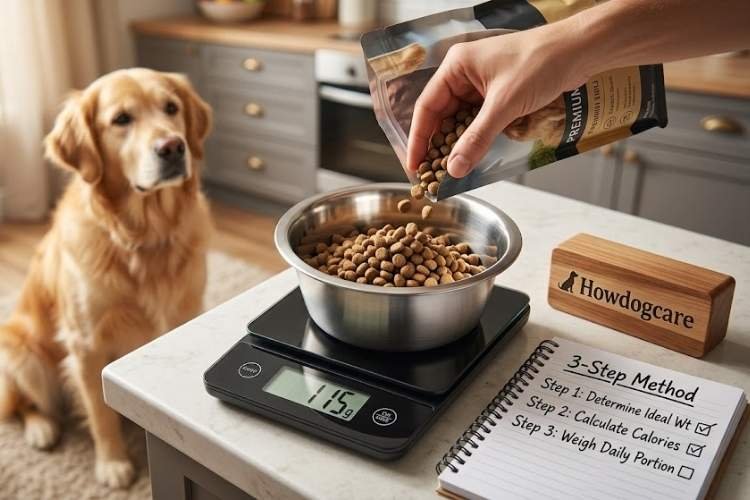
Wondering exactly how much should you feed your dog without accidentally under- or over-nourishing them? The answer lies in simple, veterinary-approved mathematics. By following a structured, clinical calculation, you completely remove dangerous human error from their daily diet.
This three-step method guarantees your dog receives the precise calories their body demands for optimal function. It transforms feeding from a blind guessing game into a highly accurate, health-focused routine.
Step 1: Reading the Feeding Chart on the Bag (The Baseline)
Every commercial dog food bag prints a standard feeding chart directly on the back label. These charts offer a generalized, highly broad starting point based strictly on estimated weight ranges. You must locate your dog’s ideal adult weight, not their current overweight mass, to find the initial suggested cup amount.
However, pet food manufacturers frequently overestimate these daily recommendations to drive faster product consumption. Therefore, you must treat this printed chart strictly as a baseline estimate. Never use it as an absolute medical directive without factoring in your dog’s individual lifestyle.
Step 2: Calculating Your Dog’s Resting Energy Requirement (RER)
To achieve true clinical accuracy, veterinarians calculate your dog’s Resting Energy Requirement (RER). This scientific formula determines the exact number of calories a dog burns strictly to sustain basic bodily functions, like breathing and digestion, while completely at rest.
First, you must convert your dog’s ideal weight from pounds to kilograms by dividing the number by 2.2. Next, apply the standard veterinary formula: multiply 70 by your dog’s body weight in kilograms raised to the 0.75 power (70×kg0.75). This resulting number represents their absolute baseline daily caloric need before factoring in any physical movement.
Step 3: Applying the Daily Multiplier for Active vs. Lazy Dogs
Once you establish the baseline RER, you must directly account for your dog’s unique daily physical activity. You achieve this by applying a specific Maintenance Energy Requirement (MER) multiplier to your initial calculation. A typical, neutered adult house dog usually requires an MER multiplier of 1.6 times their RER.
Conversely, a highly active working dog might require a multiplier of 2.0 or higher to sustain their energy output. A sedentary, senior dog might only need a multiplier of 1.2 to actively prevent obesity. Multiply your dog’s RER by their specific lifestyle factor to discover their exact, total daily caloric requirement.
The 9-Point Body Condition Score (BCS): The Ultimate Visual Weight Test
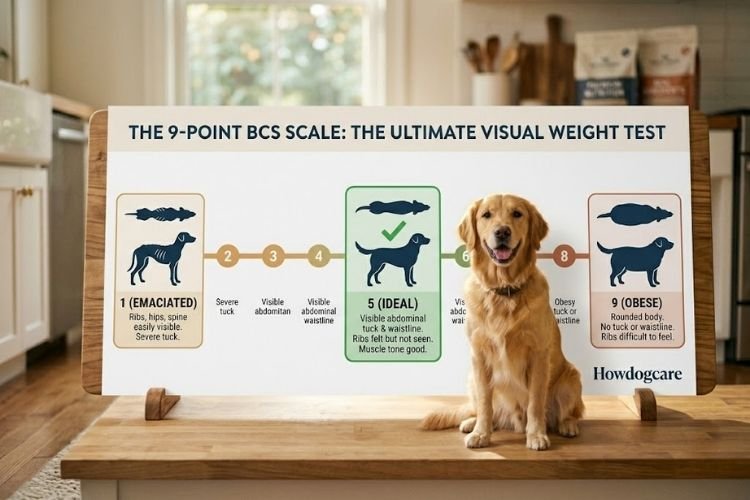
Relying purely on a mechanical bathroom scale is often misleading due to natural variations in canine muscle mass and bone density. Veterinarians universally utilize the Body Condition Score (BCS) to accurately assess a dog’s true physical health. This standard 9-point visual and tactile system directly measures the actual fat covering your dog’s skeletal frame.
A perfectly healthy dog consistently scores a 4 or 5 out of 9 on this clinical scale. At this optimal score, the dog exhibits a clearly defined waistline when viewed strictly from above. Furthermore, their abdomen should elegantly tuck upward behind the rib cage when viewed from a side profile.
How to Perform the Veterinary “Rib Test” at Home
You do not need a veterinary medical degree to accurately evaluate your dog’s Body Condition Score at home. The most effective diagnostic tool is the simple, hands-on “Rib Test.” Have your dog stand comfortably, and gently place both of your thumbs directly on their spine.
Spread your fingers flat and run them softly down the sides of their rib cage. You should evaluate the exact amount of fat separating your fingers from their bones.
How to carefully interpret the Rib Test results:
- Ideal Weight: You should easily feel the individual ribs beneath a thin, smooth layer of fat, feeling very similar to the back of your hand.
- Underweight: The ribs protrude sharply and feel completely devoid of any fat covering, resembling the hard ridges of your knuckles.
- Overweight: You must press firmly through a thick, spongy layer of fat just to locate the ribs, feeling like the fleshy base of your thumb.
Read More Articles
- Best Dog Food: Complete Guide for Every Dog (2026)
- Top 10 Best Dog Bath Tub For Home Reviews (Updated Guide)
- Top 10 Best Outdoor Dog Kennel Reviews (Updated Guide & Tips)
- Best Ultrasonic Dog Bark Control Devices – Top 10 Expert Reviews
- Top 10 Best Electric Dog Grooming Table Reviews (Updated Guide)
- Top 10 Best Heavy Duty Dog Crate Reviews (Updated Guide)
Optimal Feeding Schedules: How Often Should Dogs Eat?

Establishing a strict daily feeding schedule is just as important as measuring the food itself. Free-feeding, or leaving a full bowl out all day, actively encourages dangerous overeating and severe behavioral issues.
When you perfectly control exactly how much should you feed your dog and when they eat it, you regulate their digestion. This structured routine also makes daily potty training incredibly predictable and manageable.
Feeding Frequencies for Puppies (8 Weeks to 12 Months)
Young puppies burn massive amounts of daily energy but possess incredibly small, developing stomachs. Therefore, they cannot physically consume their entire daily caloric requirement in just one sitting without experiencing painful bloating.
You must strategically divide their daily nutritional intake to maintain safe, stable blood sugar levels.
Optimal puppy feeding schedule:
- 8 to 12 weeks: Divide their daily portion into four equally spaced, highly digestible meals.
- 3 to 6 months: Reduce the feeding frequency to three strictly measured meals per day.
- 6 to 12 months: Transition safely to the standard adult schedule of two daily meals.
Adult Dog Feeding Routines (1 to 7 Years)
Once your dog reaches full physical maturity, their metabolic rate stabilizes significantly. For the vast majority of healthy adult canines, veterinarians universally recommend a strict twice-a-day feeding schedule.
Serve one precisely measured portion in the early morning and the second portion in the early evening. This consistent 12-hour separation prevents painful stomach acid buildup and actively stops dangerous mid-day hunger pangs.
Senior Dog Dietary Adjustments (7+ Years)
As your dog gracefully enters their golden years, their overall daily activity level inevitably declines. You must proactively recalculate their daily caloric intake to prevent sudden, unhealthy senior weight gain.
Many senior dogs also develop sensitive gastrointestinal tracts or painful dental issues. Dividing their reduced daily portion into three smaller, easily digestible meals often provides immense stomach relief and sustains their declining energy levels perfectly.
The 10% Treat Rule: Factoring Snacks into the Daily Allowance
Treating your dog is a beautiful bonding experience and a highly effective component of positive reinforcement training. However, you must mathematically account for every single calorie your dog consumes outside of their primary kibble bowl.
Veterinarians strictly enforce the 10% Treat Rule for optimal, lifelong canine health. All daily treats, dental sticks, and training snacks combined must never exceed 10% of your dog’s total daily caloric requirement. This ensures the remaining 90% comes directly from their nutritionally balanced dog food.
Hidden Calories in Dental Chews and Human Food
Many well-meaning owners accidentally sabotage their dog’s careful diet by ignoring the hidden calories inside popular daily snacks. A single, large commercial dental chew can pack over 100 calories, instantly destroying a small breed’s daily dietary limits.
High-calorie traps you must actively avoid:
- Peanut butter: Incredibly calorie-dense; always use extremely sparingly as a high-value training reward.
- Cheese slices: Dangerously high in fat and sodium, frequently causing severe canine stomach upset.
- Table scraps: Often coated in toxic garlic, butter, or heavy oils that actively trigger painful canine pancreatitis.
Frequently Asked Questions (FAQs) About Dog Feeding Amounts
1. What should I do if my dog is constantly begging for more food?
If you accurately calculated how much should you feed your dog using their ideal weight and activity level, you must ignore the begging. Dogs are opportunistic scavengers by nature and will frequently eat out of sheer boredom. Try offering a low-calorie raw baby carrot or a mentally stimulating puzzle toy instead of extra kibble.
2. Should I feed my dog before or after a daily walk?
You should always feed your dog after a vigorous walk or rigorous exercise session. Feeding a large, heavy meal immediately before intense physical activity dramatically increases the risk of Gastric Dilatation-Volvulus (GDV), a rapidly fatal stomach twisting condition. Always wait at least 45 minutes after exercise before offering their meal.
3. How do I adjust food portions after my dog is spayed or neutered?
Spaying or neutering drastically alters your dog’s internal hormonal balance, instantly slowing their baseline metabolism by up to 20 percent. You must proactively reduce their daily caloric intake immediately following the procedure. Closely monitor their Body Condition Score over the next three months and adjust the portion downward if you notice sudden fat accumulation.
Conclusion: Mastering Your Dog’s Daily Nutritional Balance
Taking total clinical control of your dog’s daily portion size is the ultimate act of responsible, loving pet ownership. By permanently abandoning the dangerous “eyeballing” method and embracing precise veterinary calculations, you actively protect their long-term physical health.
Always measure their daily kibble with a standardized measuring cup, consistently adjust for their specific lifestyle, and monitor their physical Body Condition Score monthly. When you perfectly balance their daily nutrition, you directly invest in a longer, happier, and highly active life for your furry best friend.