




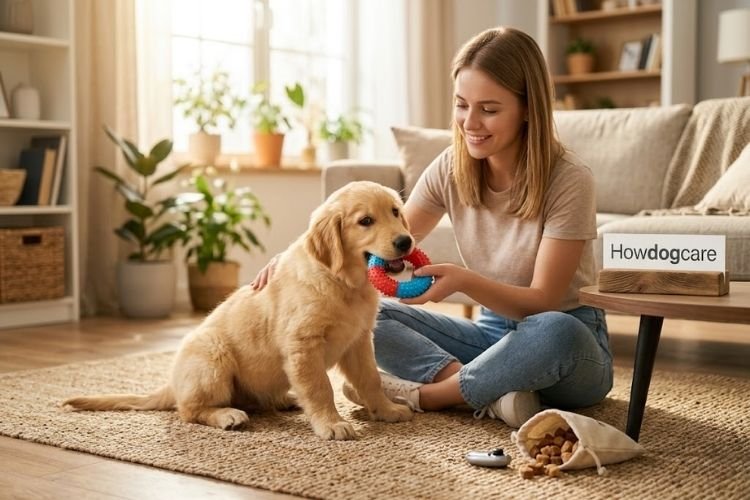
Welcome to the exciting, yet incredibly painful, reality of puppy parenthood. If your hands and ankles are covered in tiny scratches, you are urgently wondering how to train a puppy not to bite. Rest assured, this frustrating nipping behavior is completely normal, but it requires immediate, consistent correction.
In this comprehensive guide, we will break down the exact methods to stop the biting habit. You will discover actionable techniques to teach bite inhibition, soothe sore gums, and build a stronger, pain-free bond with your new furry best friend.
Understanding the “Land Shark” Phase: Why Your Puppy Bites Everything
Every new pet parent eventually faces the dreaded “land shark” phase. During this time, your adorable puppy seems intent on biting every moving object in sight. Understanding the root cause of this behavior is the first step toward stopping it.
Puppies do not bite out of malice or spite. Instead, they use their mouths to interact with their environment, communicate their needs, and relieve physical discomfort.
Teething vs. Exploring: The Biological Reasons Behind the Nipping
Just like human babies, puppies explore the world using their senses, primarily their mouths. Because they lack hands, chewing and nipping become their primary tools for investigating new textures, toys, and people.
Furthermore, puppies experience significant dental discomfort between three and six months of age. As their adult teeth erupt, their gums become highly inflamed. Teething puppies bite hard simply to relieve this intense pressure and soothe their aching mouths.
How to Tell the Difference Between Playful Mouthing and True Aggression
Many beginners panic, confusing normal puppy mouthing with dangerous aggression. Fortunately, genuine aggression in young puppies is exceedingly rare.
- Playful Mouthing: Features a relaxed, wiggly body, sneezing, and soft “play growls.” The puppy easily backs away if startled.
- True Aggression: Involves a stiff, rigid body, hard staring, lip curling, and low-pitched, continuous growling.
If your dog vigorously guards food or toys with a stiff posture, immediately consult a certified professional dog trainer for guidance.
7 Proven Steps: How to Train a Puppy Not to Bite
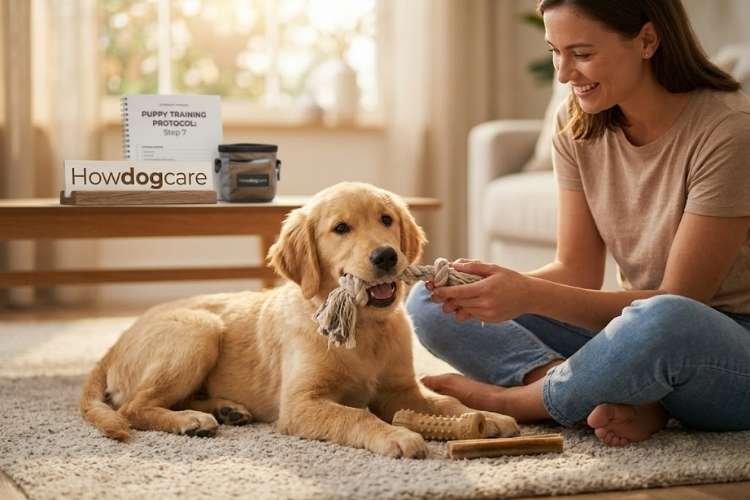
Transitioning your puppy from a relentless biter to a gentle companion requires a strategic approach. Consistency is your greatest weapon. Here are the seven proven steps to effectively teach your puppy proper mouth manners.
Step 1: Master the “Yelp and Freeze” Technique for Bite Inhibition
Bite inhibition teaches a puppy to control the force of their mouth. In a litter, puppies naturally squeal when a sibling bites too hard, instantly stopping the game. You must mimic this natural feedback loop.
- The moment teeth touch your skin, let out a high-pitched “Ouch!” or a sharp yelp.
- Instantly freeze your body and let your hand go completely limp.
- Wait for your puppy to pull back and look at you. Once they stop biting, quietly resume calm play.
Step 2: The Art of Redirection (Swapping Skin for Toys)
You must teach your puppy what is acceptable to bite. Simply saying “no” leaves a puppy frustrated and confused. Instead, clearly show them the correct target.
Whenever your puppy lunges for your hands, immediately intercept them by placing a high-value chew toy directly into their mouth. Enthusiastically praise them the second they choose to bite the toy instead of your skin.
Choosing the Right Toy Textures for Sore Gums
A teething puppy will quickly reject hard, unyielding plastic toys. To effectively redirect their biting, you must provide textures that actively soothe their inflamed gums.
- Frozen Rope Toys: Wet a clean rope toy, freeze it solid, and offer it during teething spikes.
- Textured Rubber Chews: Toys with soft rubber nubs massage the gum line perfectly.
- Chilled Carrots: A large, frozen carrot offers a safe, edible distraction that provides excellent pressure relief.
Step 3: Implement the “Reverse Time-Out” When Play Gets Too Rough
If redirection fails and your puppy becomes excessively hyper, yelping might actually excite them further. When this happens, you must physically remove their favorite reward: your attention.
Stand up, cross your arms, and completely turn your back on the puppy for 15 seconds. If they persistently bite your ankles, calmly step over a baby gate or leave the room entirely. This reverse time-out clearly communicates that hard biting immediately ends all the fun.
Step 4: Enforce Mandatory Nap Times in a Crate or Pen
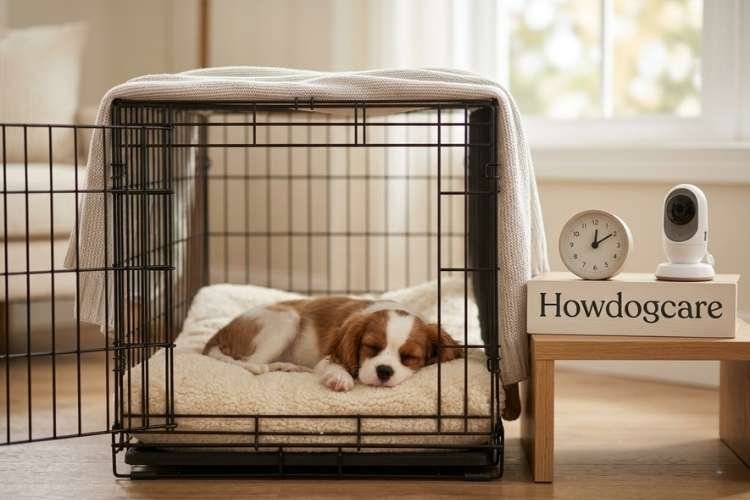
Puppies are terrible at self-regulating their energy. An exhausted puppy quickly transforms into a cranky, biting machine. Shockingly, young puppies require up to 18 to 20 hours of sleep per day for healthy brain development.
When the biting escalates and techniques stop working, it is usually nap time. Gently place your puppy in their crate or a quiet playpen with a safe chew toy to encourage deep, restorative sleep.
Recognizing the Signs of an Overtired, Hyper-Bitey Puppy
Preventing a biting meltdown is much easier than stopping one in progress. Learn to spot the subtle physical cues that your puppy desperately needs a nap.
- The “Zoomies”: Frantic, uncontrollable running in tight circles around the living room.
- Loss of Coordination: Clumsiness, tripping over their own paws, or glazed-over eyes.
- Increased Jaw Pressure: Their playful nips suddenly turn into painful, clamping bites that ignore all redirection.
Step 5: Reward Calm Interactions and “Gentle” Choices
Training isn’t just about correcting bad behavior; it is about heavily rewarding good choices. We often ignore our puppies when they are behaving well, missing prime training opportunities.
Keep a stash of high-value treats in your pocket. Whenever your puppy approaches you calmly and sits without biting, immediately reward them. This positively reinforces that keeping their teeth to themselves results in delicious snacks and affection.
Step 6: Use Safe Taste Deterrents on Clothing and Furniture
Sometimes, you need a passive training tool to stop biting when you cannot actively supervise. Taste deterrents make your clothing, shoes, or hands taste incredibly unpleasant to your dog.
Spray a pet-safe, bitter apple spray heavily on your pant legs or shoelaces before a play session. The shocking, bitter taste naturally discourages them from chewing, teaching them that human clothes are inherently nasty.
Step 7: Arrange Playdates with Well-Socialized Adult Dogs
There is no better teacher for a young puppy than a patient, well-socialized adult dog. Older dogs possess a masterful, clear language for establishing boundaries and correcting rude puppy behavior.
Arrange controlled, safe playdates with fully vaccinated adult dogs in your neighborhood. When the puppy bites too hard, the older dog will quickly deliver a safe, appropriate correction (like a sharp bark or a firm pin). This natural consequence is incredibly effective for teaching vital bite inhibition.
Read More Articles
- Best Dog Food: Complete Guide for Every Dog (2026)
- How to Train a Puppy Not to Bite: Easy Step-by-Step Guide (2026)
- Top 10 Best Outdoor Dog Kennel Reviews (Updated Guide & Tips)
- Top 10 Best Chew Toys for Aggressive Chewers of 2026
- Top 10 Best Electric Dog Grooming Table Reviews (Updated Guide)
- Top 10 Best Puppy Teething Treats Reviews
What Not to Do: 3 Common Reactions That Actually Make Biting Worse
While learning how to train a puppy not to bite, knowing what to avoid is equally crucial. Many well-meaning owners accidentally reinforce bad behavior through improper, knee-jerk reactions. Relying on outdated, punitive training methods will only create intense fear and confusion.
Let’s explore three common mistakes that actively sabotage your bite inhibition training. Correcting these human errors will dramatically speed up your puppy’s learning process.
Why Holding the Muzzle Shut Damages Trust
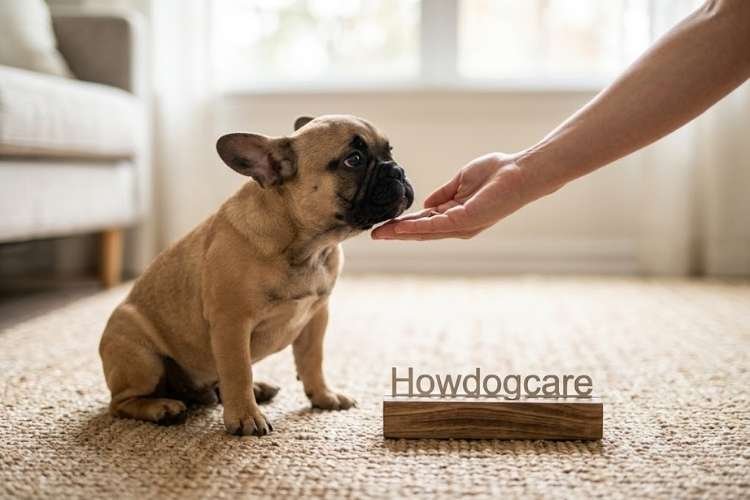
A popular, yet highly damaging, myth suggests holding a puppy’s mouth closed to physically stop the nipping. This physical punishment completely destroys the delicate bond of trust you are trying to build with your new dog.
Instead of learning to be gentle, your puppy learns to be absolutely terrified of human hands approaching their face. This deep-seated fear often escalates into dangerous defensive biting or severe hand-shyness as they grow into adult dogs.
The Hidden Dangers of “Roughhousing” with Your Bare Hands
Wrestling or playfully pushing your puppy around with your bare hands sends a terribly mixed signal. You cannot expect a young dog to understand that hands are fun toys during playtime, but completely off-limits during quiet hours.
Always maintain a crystal-clear boundary by inserting a physical toy between your skin and their sharp teeth. If you want to wrestle, use a long tug rope or a durable plush toy to keep their eager jaws safely redirected.
How Yelling “No” Can Sound Like Exciting Barking to a Puppy
When a puppy bites down hard, human instinct is to yank your hand away and yell “No!” loudly. However, to a highly overstimulated puppy, your raised, panicked voice simply sounds like excited barking.
Yelling actually escalates their arousal level, often making them bite harder and faster to keep the exciting game going. Always use a calm, neutral tone when removing your attention, ensuring you never accidentally reward the bite with dramatic energy.
Frequently Asked Questions (FAQs) About Puppy Biting
Navigating the relentless teething phase brings up many specific, frustrating challenges for new pet parents. Here are the most frequently asked questions regarding puppy mouthing and how to handle it effectively.
1. At What Age Do Puppies Finally Stop Biting?
The intense “land shark” phase typically peaks between three and four months of age as adult teeth begin to erupt. Most puppies will naturally outgrow the absolute worst of their teething discomfort by six to seven months old.
However, gentle mouthing is a natural canine communication tool. If you do not actively practice how to train a puppy not to bite during these formative early months, painful biting habits will persist well into their adult years.
2. How Do I Stop My Puppy from Biting My Ankles When I Walk?
Herding breeds, like Border Collies or Corgis, are particularly prone to ankle-biting due to their strong genetic drive. The simple movement of your feet heavily triggers their instinct to chase and nip.
- Keep a long, enticing tug toy in your pocket whenever you walk around the house.
- The moment they target your ankles, immediately freeze and stop moving to make yourself completely boring.
- Redirect their attention to the toy, rewarding them enthusiastically for tugging the object instead of your moving feet.
Conclusion: Patience, Consistency, and Protecting Your Fingers
Surviving the puppy teething phase requires immense patience and an unwavering commitment to your daily training routine. Remember that your puppy is not trying to hurt you intentionally; they are simply navigating a confusing and physically uncomfortable developmental stage.
By consistently using positive redirection, enforcing vital nap times, and managing your own reactions, you will successfully teach reliable bite inhibition. Stick firmly to the plan, protect your fingers with engaging chew toys, and enjoy watching your wildly energetic puppy mature into a gentle, well-mannered lifelong companion.