

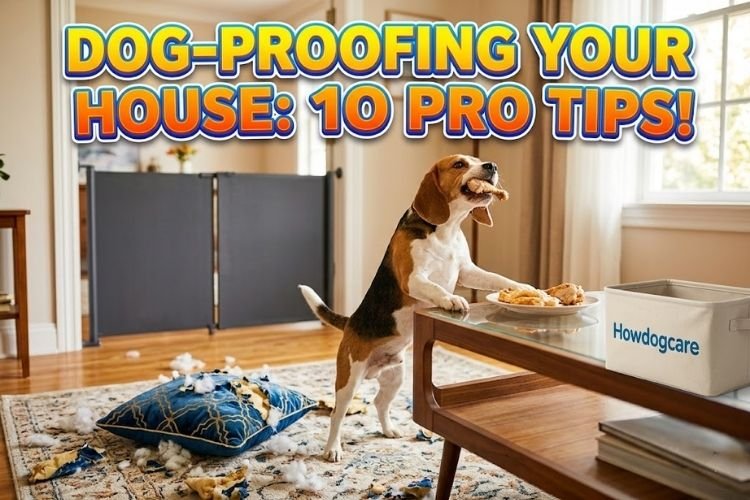
The Balance Between a Beautiful Home and a Happy Dog
Bringing a new dog home is an incredibly exciting milestone, but it quickly introduces a massive challenge. You must balance maintaining a clean, stylish living space while raising a naturally curious and energetic pup.
Dog-proofing your house is the absolute best way to achieve this harmony. It actively protects your expensive furniture, keeps your home organized, and most importantly, ensures your furry best friend stays out of danger.
Many owners falsely believe that a pet-friendly home means sacrificing their interior design. In reality, you simply need a strategic, proactive approach to home organization and canine safety. By anticipating their natural behaviors, you can easily create a beautiful sanctuary that works for everyone.
Why Proactive Dog-Proofing Saves Money and Prevents Vet Visits
Waiting for a costly accident to happen is a massive mistake. Proactively securing your living space is not just about keeping things tidy; it is a critical medical preventative measure.
Puppies and bored adult dogs explore the world primarily with their mouths. This natural curiosity frequently leads them directly into hazardous household items.
Taking action now yields significant financial and emotional benefits:
- Avoiding emergency vet bills: Swallowing toxic house plants or chewing on electrical cords frequently leads to massive, unexpected surgical costs.
- Protecting property value: Actively preventing scratched hardwood floors and chewed wooden baseboards strictly preserves your home’s long-term equity.
- Reducing daily stress: Knowing your dog is in a completely safe environment allows you to leave the house without severe separation anxiety.
Ultimately, investing a few hours into thorough hazard removal pays incredible dividends. Let’s dive directly into the top ten actionable steps you need to completely secure your environment.
Tip 1: Secure the Kitchen Against Counter-Surfers and Scavengers
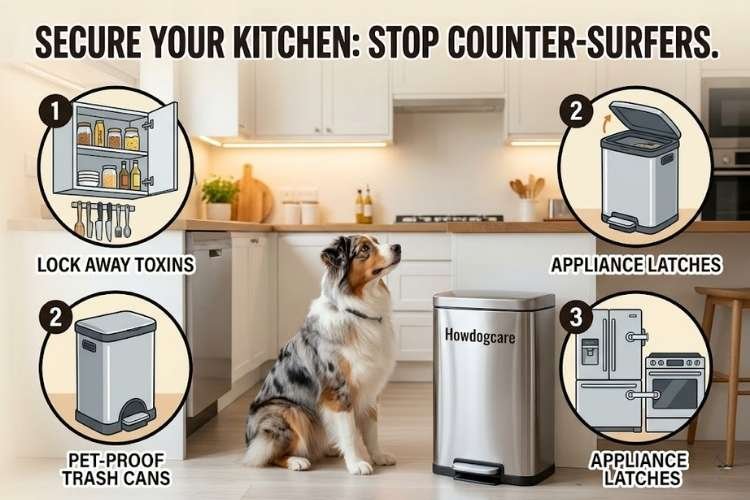
The kitchen is arguably the most dangerous room for any curious pet. When dog-proofing your house, treating this space like a hazardous materials zone is absolutely essential.
Veterinarians consistently report that the vast majority of accidental canine poisonings originate from unsecured kitchen counters. You must proactively eliminate access to these life-threatening temptations.
Locking Away Toxic Human Foods and Sharp Utensils
Dogs possess an incredibly powerful sense of smell, easily locating hidden snacks. Leaving groceries or leftovers on the counter is an open invitation for a dangerous scavenging session.
- Store toxins securely: Immediately lock away highly toxic foods like chocolate, grapes, onions, and macadamia nuts in high, unreachable wall cabinets.
- Secure sharp objects: Never leave knives or sharp cooking utensils soaking in the sink where a counter-surfing dog could easily slice their paws or snout.
- Clear the counters: Wipe down surfaces immediately after cooking to completely remove lingering food odors that actively encourage jumping.
Upgrading to Heavy-Duty, Pet-Proof Trash Cans
A standard, open-top plastic trash can is a massive medical hazard for a food-motivated dog. Discarded chicken bones, moldy leftovers, and food wrappers easily cause fatal intestinal blockages.
- Invest in locking lids: Upgrade strictly to heavy-duty, stainless-steel trash cans featuring a step-pedal and a secure, locking lid mechanism.
- Hide the bin: If your dog is a relentless scavenger, physically move the trash can inside a locked pantry or a secured under-sink cabinet.
- Take out the trash frequently: Actively empty the bin before leaving the house to completely remove the aromatic temptation while you are away.
Using Appliance Latches to Prevent Oven and Fridge Access
Highly intelligent breeds quickly learn how to use their paws and noses to pry open low-level appliances. This clever behavior rapidly exposes them to raw meat and dangerous electrical heating elements.
- Install child-proof latches: Attach heavy-duty safety latches to your refrigerator doors and low oven handles to instantly block unauthorized entry.
- Check before closing: Always physically verify that your dog has not quietly sneaked inside the open dishwasher to lick plates before you start a hot cycle.
Tip 2: Protect Your Living Room Furniture from Claws and Fur
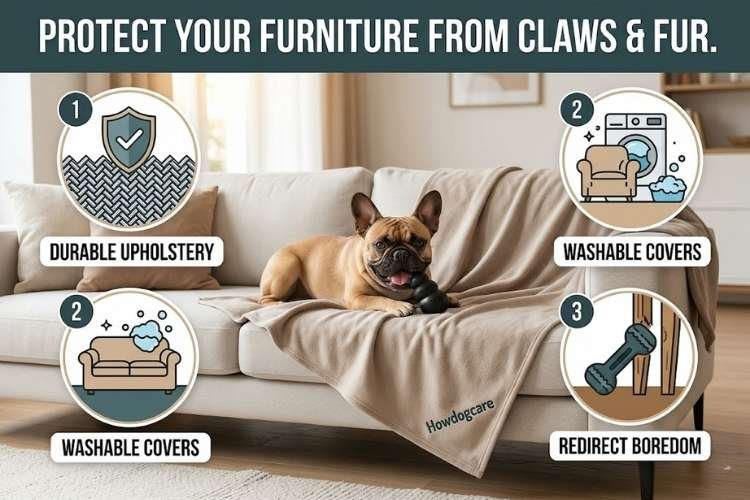
You do not have to banish your dog to the hallway to maintain a beautifully decorated family room. Instead, you must make strategic, pet-friendly design choices.
Successfully dog-proofing your house involves adapting your interior styling to withstand sharp claws, muddy paws, and excessive shedding without looking messy.
Choosing Pet-Friendly, Tightly Woven Upholstery Fabrics
Loose-weave fabrics like tweed or delicate linens act as a magnet for stubborn pet hair and easily snag on unclipped dog nails. Replacing these with durable alternatives saves you from constant frustration.
- Opt for tightly woven materials: Select robust fabrics like microfiber, canvas, or distressed leather, which naturally repel hair and resist accidental scratching.
- Match the fur: Consider purchasing sofas or rugs that closely match the exact color of your dog’s coat to naturally camouflage daily shedding between vacuuming sessions.
Related: Top 8 Best Dog Couch Cover Reviews (Updated Guide & Tips)
Strategic Placement of Washable Throw Blankets and Furniture Covers
Allowing your dog to snuggle on the couch is a wonderful bonding experience, but it strictly requires proactive fabric protection.
- Use designated blankets: Train your dog to specifically sleep on a durable throw blanket placed over their favorite corner of the sofa.
- Invest in slipcovers: Utilize high-quality, machine-washable furniture slipcovers that you can easily toss in the laundry when they become visibly soiled or smelly.
- Wash bedding frequently: Launder these protective covers weekly with an enzymatic detergent to completely neutralize deeply embedded canine odors.
Providing High-Value Chew Toys to Redirect Destructive Boredom
Dogs rarely chew expensive wooden furniture legs out of spite; they typically do it because they are severely bored or actively teething.
- Offer safe alternatives: Keep a rotating basket of highly durable, indestructible chew toys (like heavy-duty Kongs) readily available in the living room.
- Redirect immediately: If you catch your dog gnawing on a coffee table, firmly say “no” and immediately hand them an appropriate, high-value chew toy.
- Increase physical exercise: Ensure your dog is physically exhausted from a rigorous walk, drastically reducing their desire to destructively chew your belongings.
Tip 3: Conceal Electrical Cords and Dangling Cables
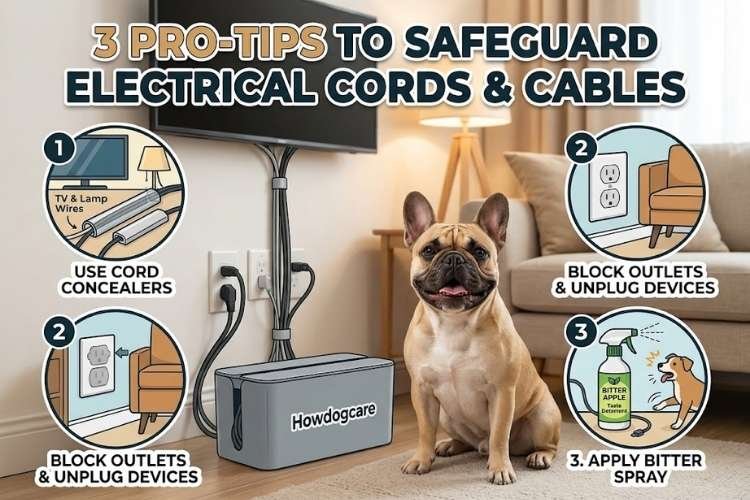
Modern homes are filled with charging cables, entertainment systems, and smart devices. This tangled web of electricity presents a massive, frequently fatal hazard to curious pets.
Effectively dog-proofing your house demands immediate intervention to secure these exposed electrical lines. Puppies, especially those actively teething, view a dangling laptop charger as the perfect chew toy, risking severe electrical burns or sudden death.
Using PVC Pipes and Cord Concealers for TV and Lamp Wires
Thick power cords running along baseboards are highly accessible targets for a bored dog. You must physically block their access to these live wires to prevent catastrophic accidents.
- Install cord covers: Utilize hard plastic cord concealers or PVC pipes to securely route TV and lamp cables directly along the wall.
- Bundle loose wires: Group messy computer cables together using heavy-duty zip ties or Velcro sleeves to eliminate dangling, bite-sized targets.
- Tuck away slack: Firmly tape any excess wire slack directly to the underside of your desk or entertainment center, completely out of canine sight.
Unplugging Small Devices and Blocking Access to Wall Outlets
Leaving your phone charger plugged into the wall with the cord resting on the floor is a dangerous, easily avoidable habit. You must actively manage all temporary power sources.
- Unplug when not in use: Always remove phone chargers, laptop cables, and small appliance cords from the wall immediately after use.
- Block low outlets: Push heavy furniture like sofas or solid bookshelves directly in front of low-level wall outlets to physically restrict access.
- Use outlet covers: Install plastic, child-proof outlet covers on unused receptacles to prevent wet noses from investigating the dangerous electrical current.
Bitter Apple Spray: Deterring Persistent Cord Chewers
If you cannot physically hide every single wire in your home, you must actively deter your dog from ever attempting to chew them.
- Apply taste deterrents: Generously coat exposed power cords with a pet-safe bitter apple spray to create an incredibly unpleasant, foul-tasting experience.
- Reapply frequently: Taste deterrents naturally evaporate, so you must consistently reapply the spray every few days to maintain its strict effectiveness.
- Supervise heavily: Deterrents are not entirely foolproof; always strictly supervise a known chewer when they are in a room with accessible electronics.
Tip 4: Identify and Remove Toxic Indoor Houseplants
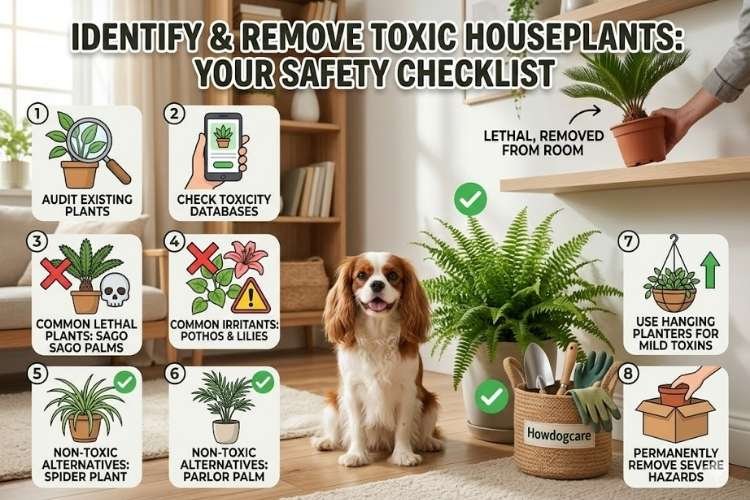
Bringing lush greenery indoors creates a beautiful, calming aesthetic, but it frequently introduces silent, deadly hazards. Many highly popular houseplants are severely toxic to canines, causing fatal organ failure if ingested.
When dog-proofing your house, auditing your interior landscaping is an absolute, non-negotiable medical requirement.
Recognizing Common Lethal Plants: Pothos, Lilies, and Sago Palms
You must physically inspect every single plant in your home and fiercely verify its toxicity level through reliable veterinary databases like the ASPCA.
- Sago Palms: This incredibly common ornamental plant is highly lethal; ingesting even a single seed causes rapid, fatal liver failure in dogs.
- True Lilies: While notoriously deadly to cats, many lily varieties also cause severe gastrointestinal distress and kidney issues in canines.
- Pothos and Philodendrons: These extremely popular trailing vines contain sharp calcium oxalate crystals, causing intense oral burning, tissue swelling, and difficulty swallowing.
Safe, Non-Toxic Botanical Alternatives for a Greener Home
You do not have to completely abandon your indoor garden to keep your dog safe. You simply need to swap dangerous plants for verified pet-friendly botanical alternatives.
- Choose safe foliage: Decorate confidently with highly attractive, 100% non-toxic plants like Spider Plants, Boston Ferns, and the classic Parlor Palm.
- Pet-safe succulents: Replace dangerous varieties with safe, low-maintenance alternatives like Haworthia or colorful Echeveria rosettes.
- Verify before buying: Always double-check a plant’s exact botanical name against veterinary poison control lists before ever bringing it through your front door.
Elevating Existing Plants Using High Shelves and Hanging Planters
If you absolutely refuse to part with a mildly toxic plant, you must permanently remove it from your dog’s physical reach.
- Utilize hanging macrame: Suspend trailing plants firmly from secure ceiling hooks, ensuring no loose vines dangle low enough to be suddenly pulled down.
- Install floating shelves: Mount sturdy wall shelves completely out of your dog’s vertical jumping range to safely display smaller potted greenery.
- Monitor falling leaves: Always promptly sweep up any dead, dropped leaves from elevated toxic plants before your scavenging dog decides to eat them off the floor.
Tip 5: Lock Down the Bathroom and Chemical Cleaning Supplies
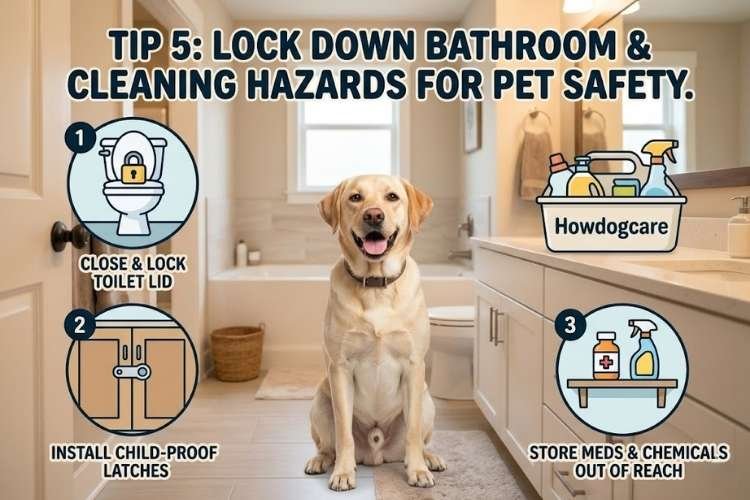
The bathroom frequently hides some of the most dangerous, highly toxic chemicals in your entire home. Successfully dog-proofing your house means strictly treating this space like a locked laboratory.
You must proactively eliminate access to bleach, harsh toilet cleaners, and human medications to prevent catastrophic poisoning. A deeply curious dog can effortlessly turn a standard bathroom into an emergency vet visit in mere minutes.
Keeping Toilet Lids Closed to Prevent Dangerous Water Consumption
Dogs are naturally drawn to the cold, seemingly fresh water found inside an open toilet bowl. However, this water frequently contains highly toxic residual bleach or continuous-cleaning chemical tablets.
- Form a strict habit: Force every family member to completely close the heavy toilet lid immediately after every single use.
- Invest in lid locks: If your large dog easily nudges the lid open, install a child-proof toilet lock to physically prevent dangerous drinking.
- Provide fresh alternatives: Always keep a clean, freshly filled water bowl nearby to actively redirect their natural thirst away from the bathroom.
Related: Top 10 Best Automatic Dog Water Bowl for Hassle-Free Hydration
Installing Child-Proof Latches on Vanity and Medicine Cabinets
The cabinet beneath your bathroom sink is essentially a ground-level treasure trove of deadly chemical cleaners and sweet-smelling lotions. An incredibly curious dog can easily pry open these light wooden doors with their nose.
- Secure the doors: Install heavy-duty, child-proof magnetic latches on every single low-level bathroom vanity cabinet.
- Relocate extreme hazards: Move incredibly dangerous chemicals, like drain unblockers and ammonia, to a high, completely unreachable linen closet.
- Lock the trash: Upgrade to a small, lidded bathroom trash can to actively prevent your dog from swallowing discarded dental floss or used hygiene products.
Storing Razors, Medications, and Soaps Completely Out of Reach
Leaving your daily personal care items resting on the edge of the bathtub is a massive medical liability. A teething puppy will happily chew on a plastic razor handle or swallow a dropped pill.
- Clear the shower ledge: Store all sharp disposable razors and heavily scented bar soaps strictly inside a high, wall-mounted shower caddy.
- Lock up prescriptions: Never leave human medications resting on the bathroom counter; perfectly seal them inside a high, latched medicine cabinet.
- Sweep the floors daily: Actively scan the bathroom tile every morning to immediately pick up dropped ibuprofen pills or highly dangerous hair ties.
Tip 6: Safeguard Your Flooring Against Scratches and Accidents
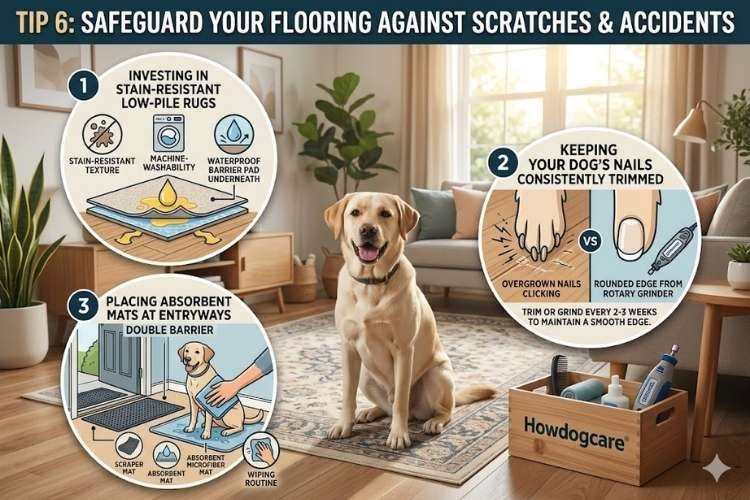
Maintaining pristine hardwood floors while raising an active, heavy-footed dog requires a highly strategic defensive plan. Protecting your expensive flooring is a crucial financial aspect of effectively managing a pet-friendly home.
You must actively shield your delicate surfaces from sharp claws and inevitable potty accidents to preserve your property value and your sanity.
Investing in Stain-Resistant, Low-Pile Area Rugs
Slippery hardwood floors frequently cause running dogs to aggressively scramble, digging their sharp claws deeply into the delicate wood grain. Strategically placed rugs provide essential traction and drastically reduce floor damage.
- Choose low-pile designs: Strictly purchase low-pile or indoor-outdoor rugs that actively resist trapping stubborn pet hair and muddy paw prints.
- Prioritize washability: Invest in modern, machine-washable area rugs that you can easily toss directly in the laundry after an unexpected stomach upset.
- Use waterproof rug pads: Always place a thick, 100% waterproof barrier pad underneath every rug to completely prevent urine from permanently warping the subfloor.
The Importance of Keeping Your Dog’s Nails Consistently Trimmed
If you can audibly hear your dog’s nails loudly clicking across the kitchen floor, they are significantly overgrown. Overgrown nails act like tiny chisels, rapidly destroying expensive hardwood finishes and causing severe canine joint pain.
- Establish a trimming routine: Actively commit to safely trimming or grinding your dog’s nails every two to three weeks to maintain a smooth, blunt edge.
- Utilize a Dremel tool: Consider using a pet-safe rotary grinder instead of traditional sharp clippers to achieve a rounded finish that simply cannot scratch wood.
- Seek professional help: If you are terrified of accidentally hitting the quick, immediately schedule recurring monthly appointments with a professional groomer.
Related: Top 10 Best Dog Nail Clippers Reviews (Updated Guide & Tips)
Placing Absorbent Mats at Every Exterior Doorway
A massive portion of floor damage occurs when a dog rapidly tracks abrasive outdoor dirt, sand, and sharp gravel directly into the house. You must actively stop this muddy debris right at the threshold.
- Create a double barrier: Place a heavy-duty, bristled scraper mat outside the door and a highly absorbent microfiber mat directly inside the entryway.
- Enforce a wiping routine: Strictly train your dog to sit patiently on the indoor mat while you thoroughly wipe their wet paws with a clean towel.
- Wash mats weekly: Frequently launder these entry mats to prevent them from becoming overly saturated with foul-smelling, abrasive outdoor mud.
Tip 7: Sweep the Floor from a Dog’s Eye Level
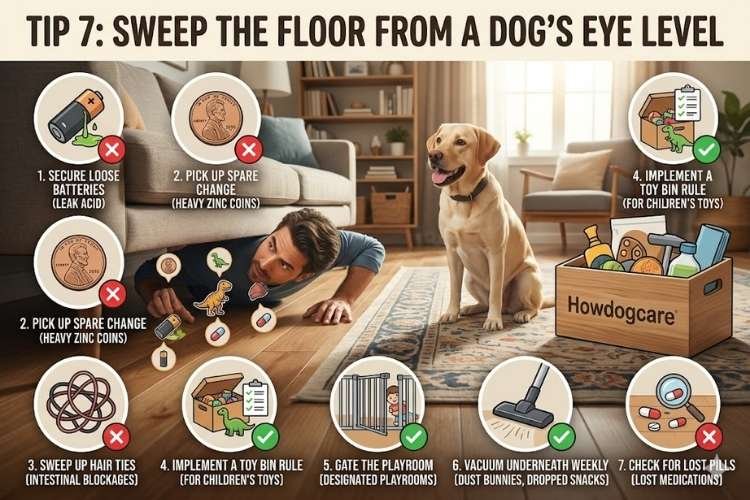
To truly succeed at dog-proofing your house, you must literally change your physical perspective. Standing up and casually looking down simply does not reveal the hidden hazards safely tucked beneath your furniture.
You must physically get down on your hands and knees to view your home exactly from a dog’s eye level. This simple perspective shift instantly exposes a shocking number of dangerous items resting completely out of your normal daily sightline.
Eliminating Everyday Choking Hazards Like Coins, Batteries, and Hair Ties
A bored puppy views the floor as a giant, interactive buffet. Even incredibly mundane household objects pose massive, life-threatening choking or poisoning risks if left unattended.
- Secure loose batteries: Swallowed batteries rapidly leak deadly battery acid, causing catastrophic, frequently fatal internal burns within mere hours.
- Pick up spare change: Heavy zinc coins, especially pennies, quickly cause severe zinc toxicity and rapid red blood cell destruction when ingested.
- Sweep up hair ties: While cats are famous for eating rubber bands, dogs frequently swallow discarded hair ties, easily leading to complex, expensive intestinal blockages.
Managing Kids’ Toys and Small Household Objects
If you have young children, strictly separating their tiny toys from the family dog is an absolute daily necessity. Dogs cannot naturally differentiate between their own plush toys and a child’s delicate plastic figurine.
- Implement a toy bin rule: Strictly enforce a rule where children must place all small toys back inside latched plastic bins immediately after playing.
- Gate the playroom: If physically possible, permanently block the dog from entering designated children’s playrooms using a sturdy, tall pet gate.
- Monitor craft supplies: Actively sweep the floor after arts and crafts time to eliminate dropped googly eyes, toxic glue sticks, or sharp metal staples.
Inspecting the Floors Beneath Sofas and Under Beds
Dark, hard-to-reach spaces are absolute magnets for dropped items and decaying organic matter. A curious, scavenging dog will happily crawl completely under a bed to retrieve a highly dangerous prize.
- Vacuum underneath weekly: Routinely move heavy living room furniture to thoroughly vacuum up hidden dust bunnies, dropped snacks, and sharp debris.
- Use under-bed blockers: Install solid plastic or thick fabric under-bed blockers to physically prevent your dog from crawling underneath your mattress to hide or chew.
- Check for lost pills: Heavily scrutinize the floor directly beneath your nightstands to ensure no dangerous human sleep aids or heart medications have accidentally rolled away.
Related: Top 10 Best Vacuums for Pet Hair Under $250 Reviews
Tip 8: Create a Centralized, Aesthetic Dog Supply Station

Successfully dog-proofing your house goes far beyond merely removing hidden dangers; it also requires brilliant, sustainable daily organization. A cluttered home filled with scattered dog supplies frequently leads to accidental trips, spills, and overwhelming daily messes.
Creating a beautifully centralized, aesthetic supply station actively maintains your interior design while keeping your dog’s daily essentials perfectly secure and out of the way.
Storing Kibble in Airtight, Pest-Proof Bins
Leaving large, open bags of dry dog food sitting on the pantry floor is a massive invitation for indoor pests and an unauthorized canine feast.
- Invest in airtight containers: Transfer all dry kibble strictly into heavy-duty, BPA-free plastic or stainless-steel bins featuring secure, airtight locking mechanisms.
- Prevent food staleness: Airtight storage actively prevents expensive kibble from turning rancid and completely locks in the highly appealing meat aroma.
- Deter rodents and ants: Properly sealing the food permanently removes the primary attractant for highly destructive household pests like mice and sugar ants.
Related: Top 10 Best Dog Food Storage Container Reviews
Organizing Leashes, Harnesses, and Towels by the Entryway
Scrambling to find a missing leash while your dog frantically paces by the front door is incredibly stressful. You must meticulously organize your walking gear for instant, effortless access.
- Install dedicated wall hooks: Mount stylish, heavy-duty hooks directly by the front door specifically for hanging wet leashes, muddy harnesses, and blinking collar lights.
- Create a towel basket: Keep a decorative wicker basket filled with clean, highly absorbent microfiber towels right at the entrance for immediate paw wiping.
- Store waste bags visibly: Keep a dedicated, easily accessible dispenser for poop bags right next to the leashes so you never accidentally leave home without them.
Establishing a Designated, Easy-to-Clean Feeding Zone
Dogs are notoriously messy eaters, frequently sloshing drinking water and dropping kibble across the kitchen floor. You must completely isolate this daily mess to a highly manageable, waterproof zone.
- Use a silicone feeding mat: Always place a thick, waterproof silicone mat featuring a raised outer lip underneath the food and water bowls to safely catch spills.
- Choose a low-traffic corner: Position the feeding station in a quiet, low-traffic area of the kitchen to allow your dog to eat peacefully without being repeatedly bumped.
- Wipe down daily: Actively commit to wiping the silicone mat and thoroughly washing the metal bowls daily to prevent dangerous bacterial growth and foul, lingering odors.
You might also like
- Traveling with a Dog: The Ultimate Tips for a Safe and Enjoyable Journey
- Top 10 Best Dog First Aid Kits (2026): Trail, Travel & Home
- The Ultimate Free Puppy Checklist for New Dog Owners
- Top 10 Best Electric Dog Grooming Table Reviews (Updated Guide)
- Best Dog Costumes for Halloween 2026 – Dress Your Pup to Impress!
Tip 9: Establish Safe Zones Using Stylish Pet Gates
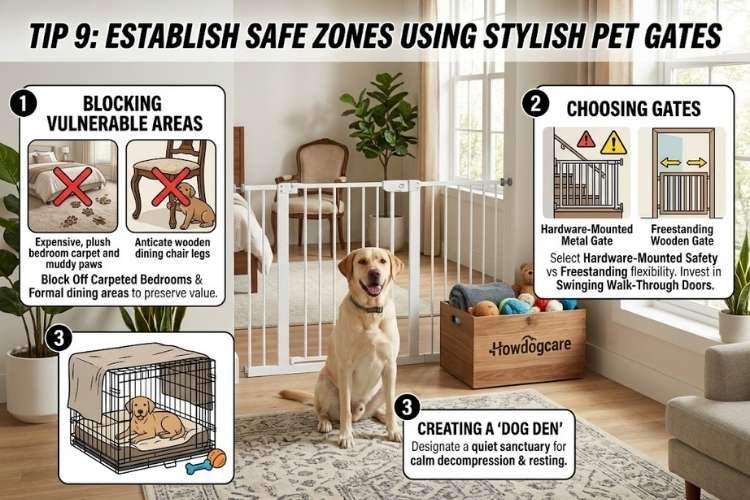
You simply cannot actively supervise your dog every single second of the day. A major component of successfully dog-proofing your house involves strictly managing their physical environment when you are busy working, cooking, or sleeping.
Implementing stylish, high-quality pet gates allows you to effortlessly create secure, designated zones. This proactive management effectively prevents destructive boredom and keeps your dog safely contained during chaotic household moments.
Blocking Off Carpeted Bedrooms and Formal Dining Areas
Certain rooms in your home possess highly valuable, easily ruined flooring or delicate heirloom furniture. You must strictly deny access to these vulnerable areas to preserve your home’s interior value.
- Protect plush carpets: Keep muddy paws and unexpected potty accidents entirely off your expensive, hard-to-clean bedroom or guest room carpets.
- Save antique furniture: Prevent a teething puppy from silently gnawing on the ornate, irreplaceable wooden legs of your formal dining room table.
- Close doors firmly: Whenever physically possible, rely on simply closing solid interior doors to instantly eliminate access to off-limits rooms.
Related: Top 10 Best Dog Doors Reviews (Updated Guide & Expert Tips)
Choosing Freestanding vs. Hardware-Mounted Pet Gates
Modern pet gates are no longer flimsy, ugly plastic barriers. You can easily select highly durable, aesthetically pleasing options that flawlessly match your home’s unique interior decor.
- Hardware-mounted safety: Strictly use heavy-duty, hardware-mounted metal gates at the absolute top of any dangerous staircases to prevent catastrophic, tumbling falls.
- Freestanding flexibility: Utilize heavy, freestanding wooden gates to quickly block wide living room entryways or temporary spaces for smaller, non-jumping breeds.
- Walk-through doors: Always invest in a gate featuring a swinging, walk-through door so you do not have to dangerously step over the barrier while carrying heavy laundry.
Creating a Dedicated “Dog Den” for Safe, Anxious-Free Resting
Dogs naturally crave a secure, enclosed space to completely decompress away from loud children or unfamiliar houseguests. You must actively provide a quiet sanctuary strictly just for them.
- Utilize a wire crate: Transform a sturdy wire crate into a cozy den by draping a breathable cover over the top and placing a soft, orthopedic bed inside.
- Choose a quiet corner: Position this den in a low-traffic corner of the living room or laundry room, away from blaring televisions and slamming exterior doors.
- Never use as punishment: Strictly maintain this den as a highly positive, rewarding safe zone; never forcefully lock your dog inside out of anger.
Tip 10: Implement a Daily Pet-Friendly Cleaning Routine
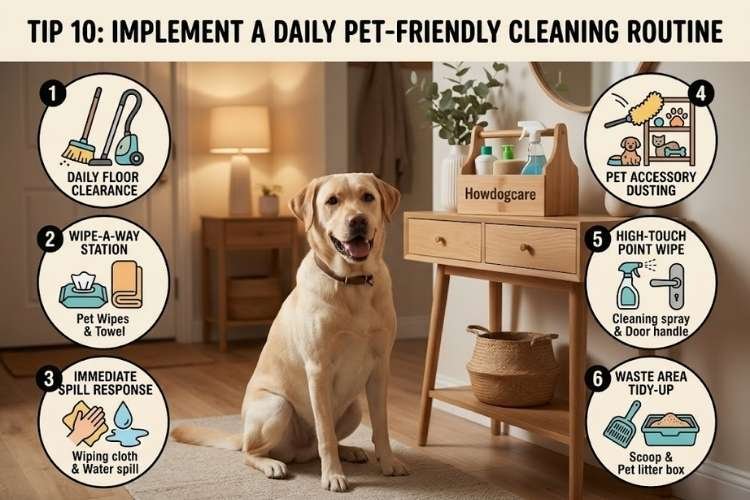
Even the most meticulously organized home will quickly succumb to overwhelming canine odors without aggressive, daily maintenance. Finalizing your strategy for dog-proofing your house requires adopting a strict, highly effective cleaning regimen.
You must actively utilize the correct tools and pet-safe chemicals to completely neutralize lingering smells and control massive seasonal shedding.
Utilizing HEPA Vacuums for Daily Dander and Shedding Control
Standard vacuums simply blow microscopic pet dander directly back into the air, drastically worsening human allergies and leaving a dusty film on your furniture.
- Invest in HEPA filtration: Strictly use a high-powered vacuum featuring a true HEPA filter to permanently trap 99% of microscopic allergens, dust mites, and fine dander.
- Target the baseboards: Actively use the crevice tool daily to suck up massive fur tumbleweeds that naturally collect along the baseboards and underneath the sofa.
- Empty the canister outside: Always empty the vacuum’s dust canister directly into an outdoor trash can to prevent a massive cloud of trapped allergens from re-entering your home.
Switching to Non-Toxic, Enzymatic Cleaners for Safe Odor Removal
Standard household bleaches and harsh ammonia cleaners are highly toxic to your dog’s sensitive respiratory system. Furthermore, they completely fail to eliminate the uric acid crystals found in canine accidents.
- Buy enzymatic formulas: Strictly use bio-enzymatic sprays that actively digest the deeply embedded proteins found in urine, vomit, and feces.
- Prevent territorial marking: Enzymes permanently destroy the microscopic scent markers that actively encourage your dog to repeatedly pee in the exact same indoor spot.
- Avoid ammonia products: Never use ammonia-based floor cleaners, as the harsh chemical smell closely mimics canine urine, actually encouraging indoor marking behaviors.
Washing Pet Bedding Weekly to Eliminate Lingering Smells
A dog’s bed rapidly acts as a massive, highly absorbent sponge for outdoor dirt, oily sebum, and foul-smelling drool. Ignoring this crucial chore guarantees your entire home will quickly smell like a wet dog.
- Establish a laundry day: Strictly commit to washing all fabric crate mats, throw blankets, and plush dog beds at least once every single week.
- Use hot water: Wash these heavily soiled items in the hottest water setting safely allowed by the fabric tag to effectively kill lingering bacteria and dust mites.
- Select unscented detergents: Always use a hypoallergenic, dye-free, and fragrance-free laundry detergent to actively prevent severe canine skin irritation and agonizing contact dermatitis.
Enjoying Peace of Mind in Your Fully Dog-Proofed Home
Successfully dog-proofing your house is an ongoing journey of love, proactive safety, and smart interior organization. While it requires immediate, focused effort, the incredible peace of mind it provides is entirely worth the investment.
You no longer have to constantly hover over your dog or panic when they quietly wander into another room. By actively removing hidden dangers and establishing strict physical boundaries, you create a deeply harmonious, stress-free environment.
Your beautiful home remains perfectly intact, your expensive furniture survives the puppy years, and your furry best friend gets to safely thrive alongside you. Embrace these proactive changes, and enjoy a lifetime of wonderful, accident-free memories with your dog.
Frequently Asked Questions (FAQs) About Dog-Proofing Your House
1. At what age can I completely stop dog-proofing my house?
You can never truly stop completely securing your home. While the intense, destructive puppy teething phase eventually ends, adult and senior dogs face entirely new physical hazards.
- Cognitive changes: Older dogs frequently experience vision loss or canine dementia, requiring newly padded furniture corners or firmly blocked staircases.
- Baseline safety: Always maintain a strict, non-negotiable baseline of locking away toxic human foods and harsh cleaning chemicals regardless of your dog’s age.
2. How do I stop my dog from chewing on wooden furniture legs?
Destructive chewing stems directly from severe canine boredom, underlying separation anxiety, or active puppy teething. You must actively manage their environment to completely stop the destruction.
- Immediate redirection: Interrupt the unwanted behavior with a firm “no” and immediately hand them a highly durable, appropriate chew toy like a rubber Kong.
- Taste deterrents: Generously apply a pet-safe bitter apple spray directly onto the wooden furniture legs to create a highly memorable, foul-tasting experience.
3. Are popular essential oil diffusers safe to use around dogs?
No, the vast majority of highly popular essential oils are severely toxic to dogs when heavily inhaled or accidentally absorbed through their skin.
- Dangerous varieties: Dispersed oils like tea tree, eucalyptus, sweet citrus, pine, and peppermint easily cause fatal respiratory distress or severe neurological tremors.
- Veterinary clearance: Always explicitly consult your local veterinarian before actively diffusing any strong botanical scents or lighting heavily scented candles in your shared living space.
4. What is the absolute best flooring material for a house with multiple dogs?
Luxury Vinyl Plank (LVP) is widely considered by flooring experts to be the absolute best material for highly active, multi-dog households.
- Maximum durability: High-quality LVP is 100% waterproof, highly resistant to sharp nail scratches, and incredibly easy to sanitize after an unexpected potty accident.
- Built-in traction: Unlike traditional, highly slippery hardwood, LVP provides a slight surface texture, actively preventing older dogs from dangerously slipping and tearing ligaments.
5. How can I keep my house smelling fresh with a large indoor dog?
Maintaining a beautifully fresh home requires a strict, multi-layered daily cleaning approach rather than simply masking foul odors with chemical room sprays..
- Enzymatic cleaners: Exclusively use bio-enzymatic chemical sprays to permanently digest and destroy the deeply embedded proteins causing lingering organic accident odors.
- Source control: Actively brush your dog daily to capture loose dander, and routinely wash all of their plush bedding in hot water to remove smelly, oily sebum.