




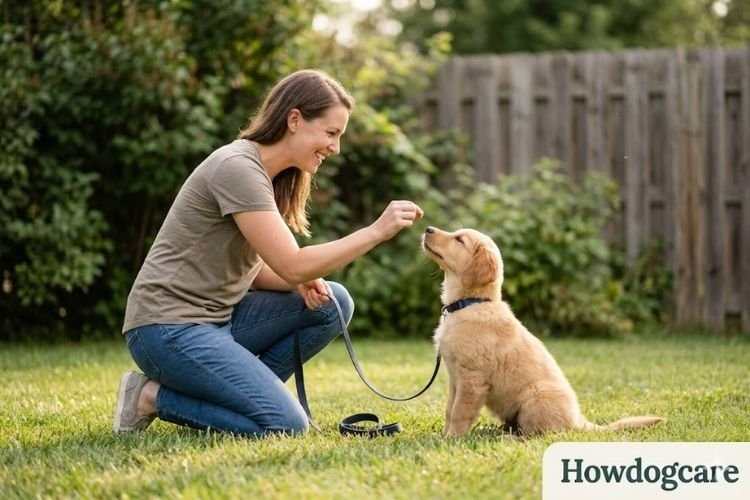
Setting the Stage: Essential Prep Before Your First Training Session
Welcome to the ultimate dog training guide for beginners. Bringing a new puppy or an older rescue dog into your home is thrilling, but it can quickly become overwhelming without a solid plan. Effective obedience training isn’t about dominance; it is about building a clear language of trust between you and your canine companion.
Before teaching any basic commands, you must establish the right environment for learning. A tired, hungry, or overly distracted dog will struggle to focus on your cues. Let’s look at how to set yourself—and your furry best friend—up for immediate success right out of the gate.
Gathering the Right Tools: Leashes, Clickers, and High-Value Treats
You wouldn’t start a complex home improvement project without a toolbox. Similarly, successful positive reinforcement training requires the right gear. Keep your daily sessions productive with these essential items:
- A Standard 6-Foot Leash: This is perfect for maintaining control while giving your dog room to move. Avoid retractable leashes during early training, as they teach dogs to pull.
- A Training Clicker: This inexpensive device makes a distinct sound, marking the exact millisecond your dog performs the right behavior. It speeds up the learning process significantly.
- High-Value Training Treats: Forget standard dry kibble. Use pea-sized, strong-smelling treats like boiled chicken, low-sodium hot dogs, or freeze-dried liver to keep your dog highly motivated.
The 5 Core Commands Every Beginner Dog Should Master
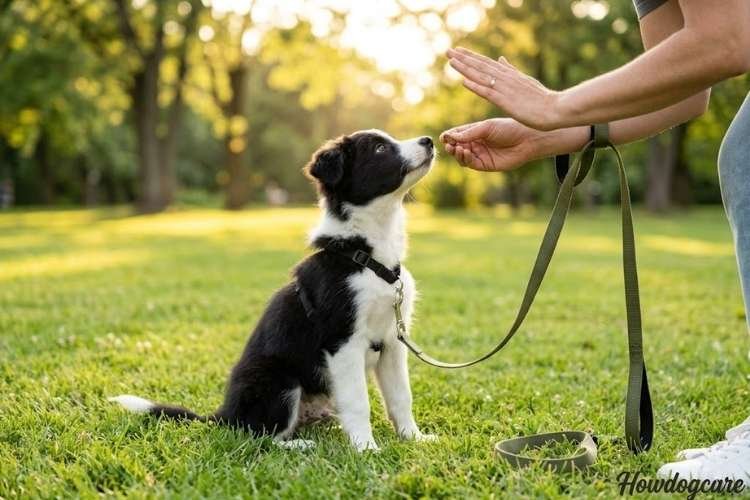
Once your toolkit is ready, it is time to start teaching the basics. Focusing on a few vital obedience cues builds a foundation for a wonderfully well-behaved pet. Short, five-minute sessions twice a day work best. Here are the five fundamental commands every dog needs to know.
1. “Sit”: The Gateway Command to Impulse Control
Teaching your dog to “sit” is usually the easiest starting point for beginners. More importantly, it acts as a polite “please” in the canine world, teaching your dog vital impulse control.
- Hold a high-value treat close to your dog’s nose.
- Slowly move your hand up and back over their head toward their tail.
- As their nose follows the treat up, their bottom will naturally lower to the floor.
- Once their hindquarters hit the ground, immediately click (or say “Yes!”), and reward them.
2. “Stay”: Preventing Dangerous Door Dashing
The “stay” command is a critical safety tool. It prevents your dog from rushing out the front door into the street or jumping out of the car prematurely.
- First, ask your dog to sit.
- Open the palm of your hand toward them (like a stop sign) and say “Stay” in a firm, calm voice.
- Take a single step backward. If they hold the position, step back in and reward them instantly.
- Gradually increase the number of steps you take backward before rewarding.
3. “Down”: Encouraging Calm Behavior on Cue
A dog in a “down” position is relaxed and significantly less likely to jump on house guests. This command helps settle high-energy dogs in highly stimulating environments, like outdoor cafes.
- Start with a great-smelling treat inside a closed fist.
- Bring your fist directly to your dog’s snout, then lower it straight down to the floor between their front paws.
- Slowly slide your hand along the ground toward yourself.
- When your dog’s elbows touch the floor to follow the treat, reward them immediately.
4. “Come” (Recall): The Lifesaving Command Every Dog Needs
A reliable recall can quite literally save your dog’s life if they slip their collar or bolt toward traffic. You must always make coming to you the absolute best part of their day.
- Put your dog on a leash and gently crouch down to their eye level.
- Say “Come” enthusiastically while gently guiding them toward you with the leash.
- When they reach you, shower them with heavy praise and a premium treat.
- Crucial Rule: Never punish a dog after they come to you, even if they misbehaved beforehand, or they will fear returning.
Proofing the Recall: Safely Adding Distance and Distractions
Dogs are terrible generalizers. A dog that comes when called in a quiet living room might completely ignore you at a busy dog park. You must “proof” the behavior to make it reliable everywhere.
- Practice outdoors in a securely fenced area with a long line leash (15 to 30 feet).
- Introduce mild distractions, like a favorite squeaky toy or another family member, before calling them.
- Only take off the long line when they consistently recall away from high-level distractions over several weeks.
5. “Leave It”: Protecting Your Dog from Harmful Objects
Whether it is a dropped piece of chocolate in the kitchen or a dead bird on a neighborhood walk, “leave it” protects your dog from ingesting toxic or dangerous items.
- Place a low-value treat in one closed fist and a high-value treat in your other hand behind your back.
- Show your dog the fist with the low-value treat and say “Leave it.”
- They will likely sniff or paw at your hand. Wait patiently until they pull away and make eye contact with you.
- Immediately reward them with the high-value treat from the hand behind your back.
House Training 101: A Foolproof Potty Training Schedule
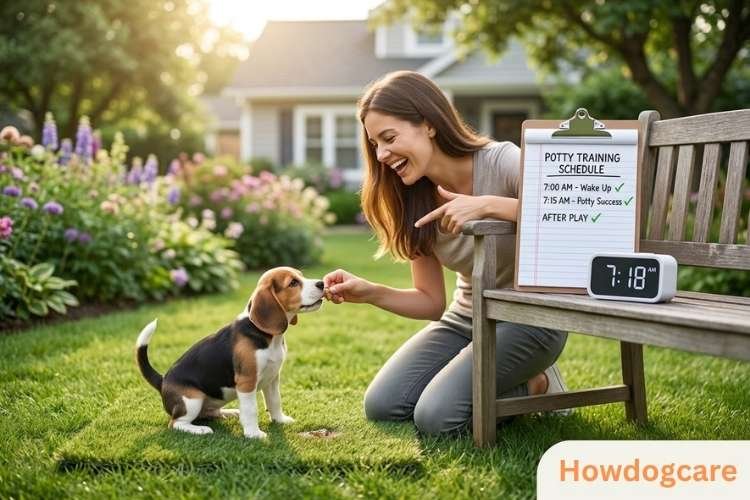
Mastering house training is often the biggest hurdle in any dog training guide for beginners. Success relies entirely on your consistency and a strict, manageable routine. Dogs thrive on predictability, so taking them outside at the exact same times every day prevents confusing indoor accidents.
- Follow the “After” Rule: Take your puppy out immediately after waking up, after eating, and after rigorous play.
- Praise Instantly: Reward them with a high-value treat immediately after they finish doing their business outside.
- Ditch the Punishment: Never scold a dog for an indoor accident; simply clean it with an enzymatic cleaner to remove lingering odors that invite repeat offenses.
Crate Training Basics: Creating a Safe Haven, Not a Punishment
A crate is an incredibly effective tool for housebreaking because dogs naturally avoid soiling their sleeping areas. However, you must introduce the crate as a comfortable, safe den, never as a time-out space for bad behavior.
- Feed their daily meals inside the crate with the door open to build powerful, positive associations.
- Toss premium treats or a stuffed chew toy inside for them to discover randomly throughout the day.
- Ensure the crate is just large enough for them to stand up, turn around, and lie down comfortably, but no larger.
Troubleshooting Nighttime Whining and Accidents
Listening to a new puppy cry at night is emotionally draining, but you must differentiate between panic and a genuine bathroom need. If they whine in the middle of the night, keep the lights off and keep your interaction strictly business.
Take them straight to their designated potty spot, wait two minutes, and immediately return them to the crate. If they are whining purely for attention after a bathroom break, you must quietly ignore it. Responding to attention-seeking cries will accidentally teach them that whining unlocks the crate door.
Read More Articles
- Best Dog Food: Complete Guide for Every Dog (2026)
- Puppy Essentials – The Complete Guide for New Dog Owners
- Top 10 Best Outdoor Dog Kennel Reviews (Updated Guide & Tips)
- Top 10 Best Nebulizer Machines for Dogs Reviews
- Top 10 Best Electric Dog Grooming Table Reviews (Updated Guide)
- Top 10 Best Heavy Duty Dog Crate Reviews (Updated Guide)
Solving Common Behavioral Problems in Beginner Dogs
Even the most well-meaning puppies will boldly test boundaries as they explore their new world. Addressing nuisance behaviors early on prevents them from becoming deeply ingrained, frustrating habits later in life. Let’s tackle two of the most frequent challenges new dog owners face.
How to Stop Nuisance Barking Without Yelling
When your dog barks excessively at the window or doorbell, shouting “Quiet!” rarely works. To your dog, your raised, panicked voice simply sounds like you are joining in on the barking. Instead, you need to change their emotional response to the trigger.
- Acknowledge the trigger calmly by looking at it, then say a simple, calm “Thank you.”
- Call your dog to you and immediately ask for an incompatible behavior, like a “sit” or “down.”
- Reward them heavily for focusing on you instead of the outside distraction.
Redirecting Puppy Nipping and Play Biting Gently
Puppies explore the world with their mouths, and those needle-like teeth can make playtime genuinely painful. Physical punishment, like tapping their nose or holding their muzzle shut, will only damage your bond and make them hand-shy.
The moment teeth touch your skin, abruptly stop moving and offer an appropriate chew toy instead. Praise them enthusiastically the second they choose to bite the toy rather than your fingers.
The “Reverse Time-Out” Method for Bite Inhibition
If redirection fails and your puppy becomes overly aroused, it is time to deploy a reverse time-out. This highly effective technique teaches them that biting makes their favorite thing—you—disappear instantly.
- When a hard nip happens, say a firm “Ouch!” and immediately stand up.
- Turn your back, cross your arms, and ignore your dog completely for 10 to 15 seconds.
- If they aggressively continue biting your ankles, step over a baby gate or step out of the room entirely for a brief moment.
- Return calmly and resume play, repeating this process relentlessly until they learn gentleness keeps the game going.
Socialization: The Key to a Well-Adjusted, Confident Canine

A complete dog training guide for beginners must emphasize the critical importance of early socialization. Exposing your dog to the world systematically prevents fear-based reactivity and aggression later in life. A well-socialized puppy naturally grows into a relaxed, confident adult dog that you can safely take anywhere.
Safe Exposure to New People, Dogs, and Environments
Proper socialization is never about forcing your dog into terrifying or overwhelming situations. Instead, it is about creating positive, highly rewarding experiences with novel sights, sounds, and surfaces. Your goal is to make the unpredictable human world feel entirely safe.
- Let your dog approach friendly strangers and calm, fully vaccinated dogs at their own comfortable pace.
- Pair startling noises, like running vacuum cleaners or distant sirens, with high-value treats to build positive emotional associations.
- Keep your socialization outings brief and always leave before your dog becomes visibly exhausted or stressed.
The “Rule of 7”: A Blueprint for Puppy Socialization
Professional trainers frequently recommend the “Rule of 7” to ensure well-rounded environmental exposure before a puppy reaches 16 weeks of age. This actionable framework guarantees your dog experiences a wide variety of harmless, everyday stimuli.
- Walk your puppy on 7 different surfaces (grass, carpet, concrete, gravel, wood, dirt, and tile).
- Encourage them to play with 7 different types of toys (squeaky, rope, plush, rubber, crinkly, floating, and treat-dispensing).
- Safely introduce them to 7 new, friendly people of varying ages, heights, and appearances (including people wearing hats or glasses).
- Feed them their daily meals in 7 different locations (inside the crate, the kitchen, the backyard, the living room, etc.).
Frequently Asked Questions (FAQs) About Beginner Dog Training
Navigating your first few months of obedience training naturally brings up a lot of practical questions. Here are the most common inquiries new pet parents ask when starting their training journey.1. How long should a daily training session last?
Keep your sessions incredibly short, aiming for just 5 to 10 minutes at a time, twice a day. Puppies have notably short attention spans, and ending the session while they are still engaged prevents frustration for both of you.
2. When should I realistically start training my new puppy?
You should start training the exact day you bring your new dog home. Simple routines, name recognition, and a strict potty schedule build immediate structure and trust.
3. Can an older rescue dog actually learn new tricks?
Absolutely! While older dogs might have ingrained habits that take longer to fade, they respond beautifully to positive reinforcement, clear boundaries, and patience.
Conclusion: Consistency is the Secret to Long-Term Training Success
Successfully applying everything in this dog training guide for beginners ultimately comes down to your unwavering, daily consistency. Training is not a one-time, weekend event; it is a lifelong, evolving conversation between you and your dog.
Celebrate the small victories, and remember that temporary behavioral regressions are a completely normal part of the learning curve. Stick strictly to your daily routines, generously reward good choices, and you will inevitably build an unbreakable bond with a wonderfully well-behaved canine companion.