

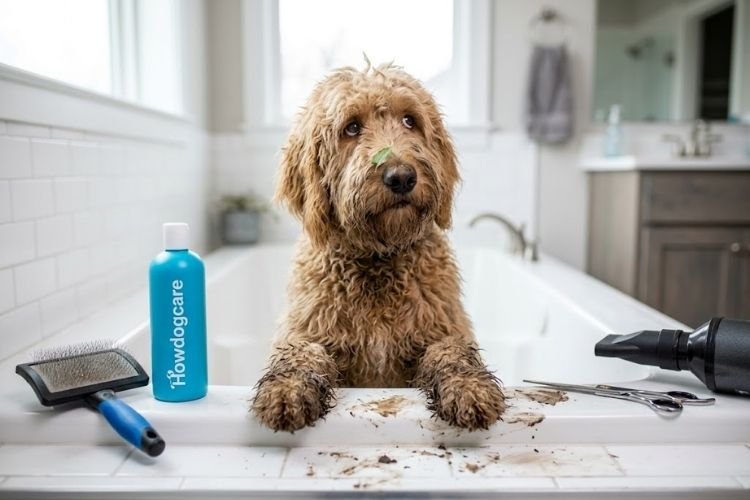
Keeping your furry best friend clean is about much more than just a shiny coat and a fresh scent. Whether you have a fluffy Poodle or a short-haired Beagle, mastering a routine is absolutely essential for their overall well-being.
Welcome to the ultimate dog grooming guide. This comprehensive resource will teach you exactly how to maintain your dog’s hygiene from home. We will cover everything from selecting the right tools to safely trimming nails, saving you money while keeping your dog incredibly healthy.
Beyond the Aesthetics: Why Regular Grooming is Crucial for Canine Health
Many pet parents mistakenly treat grooming as a luxury spa day, but it is actually a fundamental pillar of preventative veterinary care. Brushing and bathing do more than just remove dirt; they actively protect your dog’s physiological health.
A consistent routine allows you to monitor subtle changes in their body that you might otherwise miss. It is your first line of defense against hidden medical issues.
Spotting Hidden Skin Conditions and Parasites Early
Your dog’s thick fur easily hides dangerous parasites and early signs of disease. When you actively run your hands and brushes through their coat, you perform a vital, full-body physical exam.
- You can instantly feel unusual lumps, bumps, or cysts developing beneath the skin.
- You will quickly spot dangerous parasites like ticks, fleas, and mites before a severe infestation spreads to your home.
- You can easily identify developing hot spots or yeast infections while they are still highly treatable.
Preventing Painful Matting and Overgrown Nails
Neglected fur rapidly turns into severe, rock-hard mats, especially in double-coated or curly breeds. These tight tangles aggressively pull on the delicate skin with every step, causing severe pain and cutting off vital blood circulation.
Furthermore, ignoring your dog’s paws leads to devastating structural damage. Overgrown nails physically force your dog’s toes to splay outward unnaturally when they walk. Over time, this poor posture heavily damages their joints and directly leads to early-onset canine arthritis.
The Ultimate Grooming Toolkit: Essential Supplies for Every Coat Type
Before you even turn on the bathwater, you must gather the correct equipment. Attempting a haircut with dull kitchen scissors or the wrong brush will quickly frustrate both you and your pet.
Investing in high-quality, professional-grade tools guarantees a safe, stress-free experience. Let’s break down exactly what you need in your at-home kit.
Choosing the Right Brush (Slicker, Bristle, Pin, or Deshedding Tool)
There is no universal brush that magically works for every single dog breed. You must carefully match your primary tool directly to your dog’s specific hair texture and length.
- Slicker Brushes: Feature fine, tightly packed wire bristles. These are absolutely essential for detangling curly coats (like Doodles) and pulling out loose undercoat.
- Bristle Brushes: Best for short, smooth-coated breeds like Pugs or Boxers. They perfectly distribute natural skin oils to create a brilliant, healthy shine.
- Pin Brushes: Designed with rubber-tipped pins to gently glide through long, silky, drop-coated breeds without breaking the delicate hair shafts.
- Deshedding Tools: Engineered to reach deep beneath the topcoat to safely rake out massive amounts of dead hair during heavy shedding seasons.
Safe Clippers and Shears for At-Home Haircuts
If your dog requires regular haircuts, you need reliable, pet-specific clippers. Human hair clippers will instantly jam and painfully pull a dog’s dense fur. Always choose a heavy-duty, multi-speed pet clipper to safely power through thick coats.
You also need strict safety gear for detailed face trimming. Always use blunt-tipped safety shears when working around highly sensitive areas like the eyes, ears, and paw pads. The rounded metal tips guarantee you will not accidentally puncture the skin if your dog suddenly jerks their head.
Shampoos and Conditioners: Avoiding Human Products and Harsh Chemicals
Never reach for your own shampoo bottle when bathing your dog. Human skin is naturally acidic, while canine skin has a much more neutral pH balance.
Using human body wash or baby shampoo violently strips away your dog’s protective acid mantle. This immediately leaves their skin completely vulnerable to severe dryness, flaking, and painful bacterial infections.
Always purchase a high-quality, pH-balanced, dog-specific shampoo. Look for natural, soothing ingredients like colloidal oatmeal or aloe vera to deeply moisturize their skin while gently washing away outdoor grime.
7 Essential Steps to Master At-Home Dog Grooming
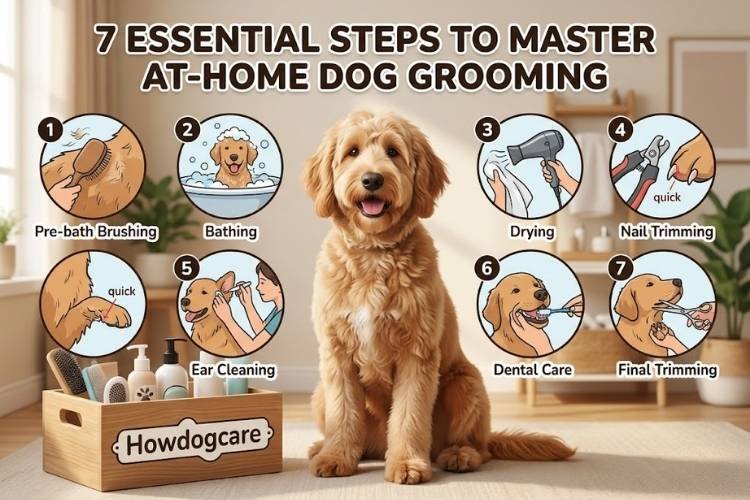
Following a clear, sequential process is the absolute secret to a stress-free session for both you and your pet. Skipping steps or rushing the process often leads to dangerous mistakes and a highly anxious dog.
By following this comprehensive dog grooming guide step-by-step, you will build a predictable, calming routine. Let’s walk through the exact professional workflow to achieve a perfectly clean, healthy pup.
Step 1: Pre-Bath Brushing to Remove Tangles and Dead Undercoat
Never put a matted or heavily tangled dog directly into a bathtub. Water acts like a powerful sponge on tangled fur, instantly tightening loose knots into rock-hard mats that are impossible to brush out later.
- Thoroughly brush the entire body, checking closely for hidden ticks, hot spots, or skin abrasions.
- Pay special attention to high-friction areas like behind the ears, under the armpits, and around the tail.
- Use a slicker brush first, followed by a metal greyhound comb to ensure the coat is 100% tangle-free down to the skin.
Step 2: The Bathing Process (Temperature, Technique, and Tear-Free Lather)
Dogs have a naturally higher body temperature than humans, so lukewarm water is always the safest choice. Hot water can easily cause dangerous overheating and heavily dry out their sensitive, unprotected skin.
- Begin soaking your dog from the neck down, keeping their head completely dry initially to prevent water from entering the ear canals.
- Vigorously massage a high-quality, dog-specific shampoo deep into the coat, ensuring the lather actively reaches the skin to remove trapped dirt.
- Always use a damp washcloth to gently wipe their face, avoiding pouring running water directly over their sensitive nose and eyes.
Step 3: Safe and Effective Drying Methods for Dogs
Leaving your dog to air-dry might seem harmless, but trapped moisture near the skin creates a perfect breeding ground for painful bacterial infections. You must dry them thoroughly to prevent severe hot spots.
- Start by firmly pressing a highly absorbent microfiber towel against their coat to soak up excess water.
- Never vigorously rub the towel back and forth, as this instantly creates severe friction mats in longer fur.
- Once the dog is damp rather than soaking wet, you can safely move on to the active blow-drying phase.
Why High-Velocity Dryers Beat Standard Hair Dryers
Human hair dryers rely on intense, focused heat, which can easily burn your dog’s delicate skin and damage their coat. Furthermore, they simply lack the power required to penetrate dense, double-coated breeds.
Conversely, professional high-velocity pet dryers use room-temperature air to physically blast the water out of the coat. This powerful airflow safely separates the hair shafts, significantly reducing your drying time while actively blowing out loose undercoat.
Step 4: Mastering the Art of Pain-Free Nail Trimming
Trimming nails is often the most stressful part of any dog grooming guide for both pets and owners. However, letting them overgrow permanently alters your dog’s skeletal structure and causes painful, long-term arthritis.
- Equip yourself with sharp, bypass-style clippers or a high-quality rotary pet nail grinder.
- Hold the paw firmly but gently, isolating one specific toe at a time to maintain total control.
- Trim tiny slivers off the tip at a 45-degree angle, stopping frequently to check your progress rather than making one massive cut.
How to Identify and Avoid Cutting the “Quick”
The “quick” is the highly sensitive inner vein that supplies vital blood and nerves to the dog’s nail. Cutting into it causes sudden, sharp pain and profuse bleeding, instantly destroying your dog’s trust in the grooming process.
- On white or translucent nails, the quick is easily visible as a distinct pink core near the base of the nail.
- On solid black nails, the quick is completely invisible from the outside, requiring extreme caution.
- Look directly at the freshly cut tip; stop immediately when you see a small, solid black dot or fleshy oval appear in the center of the nail.
Step 5: Ear Cleaning to Prevent Yeast and Bacterial Infections
Breeds with heavy, floppy ears trap dark, warm moisture inside the canal, creating an ideal environment for foul-smelling yeast infections. Routine ear cleaning is a non-negotiable step for their long-term sensory health.
- Squeeze a vet-approved liquid ear cleaner directly into the canal and gently massage the base of the ear to loosen deep debris.
- Let your dog naturally shake their head, which safely brings the loosened dirt and wax up to the visible surface.
- Use a soft cotton ball or gauze pad to gently wipe out the visible folds, never inserting Q-tips deeply into the sensitive canal.
Step 6: Dental Care and Brushing for Fresh Breath and Healthy Gums
Canine periodontal disease affects the vast majority of dogs by age three, eventually leading to tooth loss and severe systemic organ damage. Daily or weekly brushing is the only proven way to remove hardened tartar and protect their heart.
- Always use an enzymatic, dog-safe toothpaste, as human toothpaste contains highly toxic ingredients like xylitol and fluoride.
- Use a soft-bristled canine finger brush to gently scrub the outer surfaces of the teeth.
- Focus heavily on the upper gum line, where the most severe plaque and tartar tend to rapidly accumulate.
Step 7: Trimming Face, Paws, and Sanitary Areas Safely
The final step involves careful, detailed trimming to keep your dog comfortable and clean between full haircuts. Overgrown hair in these delicate areas quickly collects dangerous bacteria, feces, and slippery outdoor debris.
- Use blunt-tipped safety shears to carefully trim the excessively long hair between their paw pads, giving them better daily traction on slippery hard floors.
- Safely clip away the hair directly around their eyes to prevent painful corneal scratches and chronic tear staining.
- Keep the sanitary areas (under the tail and belly) completely clear of long fur to ensure hygienic, mess-free bathroom breaks.
You might also like
Canine Behavior: How to Keep Your Dog Calm During the Grooming Process
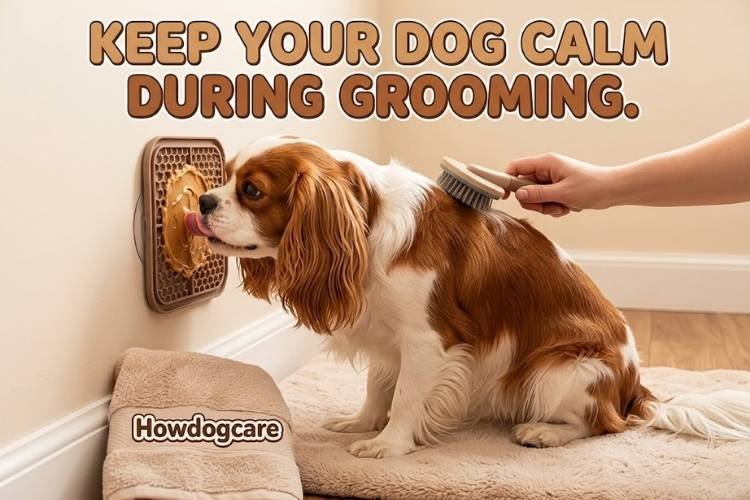
A truly successful dog grooming guide isn’t just about selecting the right tools; it is about expertly managing your dog’s emotional state. Grooming should ideally be a relaxing bonding experience, not a terrifying wrestling match.
If your dog constantly fights the brush or panics in the tub, you must actively change their negative associations. By implementing simple behavioral strategies, you can easily transform their fear into willing cooperation.
Using Lick Mats and High-Value Treats for Positive Reinforcement
Distraction is a highly effective, scientifically proven tool for keeping a nervous dog perfectly still during stressful handling tasks. You must heavily reward them for remaining calm on the grooming table.
- Smear a textured silicone lick mat with dog-safe peanut butter or plain yogurt, and freeze it solid before the session begins.
- The repetitive licking action naturally releases deep, calming endorphins directly into your dog’s brain.
- This simple trick quickly turns a scary nail trim or noisy blow-dry into a highly anticipated, rewarding treat.
Desensitization Techniques for Anxious or Rescue Dogs
If your dog immediately panics at the mere sight of metal clippers, you must slowly rebuild their trust through systematic desensitization. Never force a terrified dog through a full grooming session.
- Start by simply leaving the scary grooming tools on the living room floor, heavily rewarding your dog for bravely sniffing them.
- Gradually introduce the loud buzzing noise of the clippers or the gentle sensation of the brush for just three seconds at a time.
- Heavily praise and treat their calm behavior, slowly increasing the duration over several weeks of patient practice.
What to Avoid: 3 Dangerous Grooming Mistakes That Harm Your Pet
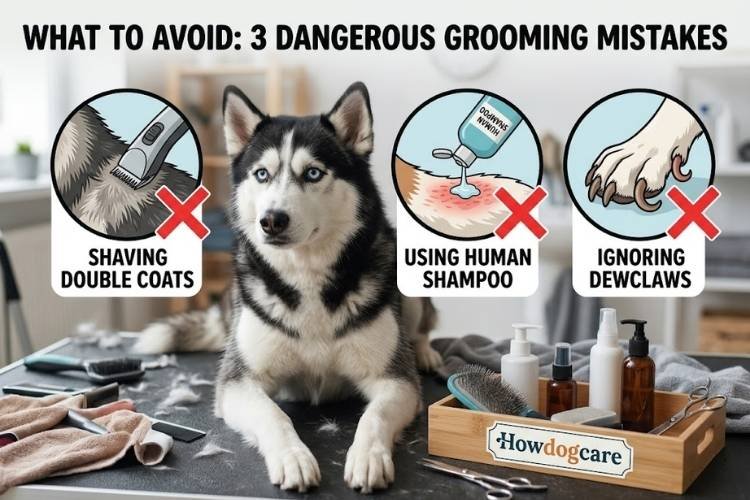
Even well-meaning pet parents can accidentally cause severe physical harm by blindly following outdated or incorrect advice. Protecting your dog requires knowing exactly what techniques to avoid.
Ensure your at-home routine is completely safe by strictly avoiding these three common, highly dangerous errors.
Mistake 1: Shaving Double-Coated Breeds in the Summer
Never shave breeds like Siberian Huskies, Golden Retrievers, or German Shepherds to “cool them down.” Their thick, dense undercoat actually acts as vital, natural insulation against both extreme winter cold and blistering summer heat.
Shaving actively destroys their intricate temperature regulation system. Furthermore, it completely exposes their pale, sensitive skin to severe sunburn, heatstroke, and permanent coat damage (alopecia).
Mistake 2: Leaving Shampoo Residue Trapped Against the Skin
Rushing the crucial rinsing process leaves a harsh, invisible layer of soap residue directly against your dog’s sensitive skin. This is the number one cause of post-bath itching.
- Trapped chemical residue quickly causes intense scratching, severe flaking, and painful contact dermatitis.
- Always rinse your dog with clean water until it runs completely clear and entirely bubble-free.
- Once you think you are finished rinsing, thoroughly rinse their entire body one more time just to be absolutely safe.
Mistake 3: Ignoring the Dewclaws During Routine Nail Trims
The dewclaw is the small, thumb-like nail located slightly higher up on the inside of your dog’s front (and sometimes back) legs. Because it never touches the ground, it absolutely does not wear down naturally during daily neighborhood walks.
If routinely ignored, dewclaws will continuously grow in a tight, sharp circle. They will eventually curl inward and grow painfully right into the sensitive flesh of the dog’s leg, requiring immediate veterinary intervention.
Frequently Asked Questions (FAQs) About Dog Grooming
Every dog is unique, which naturally leads to specific, highly situational questions. Here are the clear, authoritative answers to the most common queries pet parents have when following a comprehensive dog grooming guide.
1. How Often Should I Give My Dog a Bath?
Most healthy dogs with normal skin and coats only require a full bath every four to eight weeks. Over-bathing violently strips away their natural, protective skin oils, rapidly leading to severe dryness and itching.
However, if your dog frequently rolls in foul-smelling mud or suffers from a specific medical skin allergy, your veterinarian may prescribe a much more frequent, medicated bathing schedule.
2. What Should I Do If I Accidentally Cut the Quick?
Do not panic; accidental nicks happen quickly, even to the most highly experienced professional groomers. You must act calmly to stop the bleeding and reassure your pet.
- Immediately apply a heavy pinch of commercial styptic powder directly to the bleeding tip and hold firm pressure for thirty seconds.
- If you do not have styptic powder on hand, ordinary kitchen cornstarch or baking flour will safely and effectively clot the blood in an emergency.
3. Can I Use Human Shampoo on My Dog in an Emergency?
No, you should strictly avoid using human shampoo, including gentle baby formulations. Human skin possesses a highly acidic pH level, while canine skin is much closer to a neutral pH.
Using acidic human products violently disrupts your dog’s delicate acid mantle. This instantly compromises their skin barrier, leaving them highly vulnerable to severe dryness, bacterial infections, and yeast overgrowth.
4. How Do I Remove a Severe Mat Without Hurting My Dog?
Never use standard scissors to blindly cut a tight mat out of the fur. Tangled hair pulls the dog’s deeply hidden skin up into the mat, meaning you can easily slice right through their flesh.
Instead, heavily saturate the tangle with a specialized canine detangling spray. Gently work a metal greyhound comb through the very outer edges of the mat, slowly and patiently breaking it apart from the outside in.
5. When Should I Stop Trying and Go to a Professional Groomer?
If your dog becomes aggressively fearful, attempts to bite, or develops severe, pelt-like matting close to the skin, you must immediately stop your at-home attempts.
A certified professional groomer possesses the advanced behavioral training, specialized safety equipment, and medical knowledge required to safely handle highly stressed dogs or severely neglected coats without causing trauma.
Conclusion: Building a Stronger Bond Through Routine Grooming
Mastering this complete dog grooming guide empowers you to take proactive, daily control of your pet’s physical health and long-term comfort. It effectively transforms a once-stressful chore into a deeply rewarding, lifelong bonding experience.
By heavily utilizing positive reinforcement, investing in high-quality professional tools, and staying fiercely consistent with your routine, you ensure success. Your dedicated efforts will keep your furry best friend impeccably clean, happy, and thriving for years to come.