

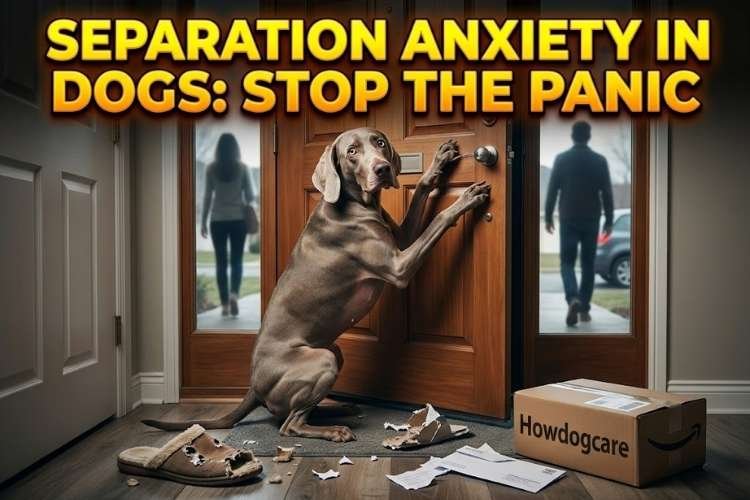
Navigating the Panic: An Introduction to Canine Isolation Stress
It is completely heartbreaking to watch your best friend panic the moment you grab your keys. For many pet parents, dealing with separation anxiety in dogs feels like an endless cycle of guilt, destroyed furniture, and stressful noise complaints from neighbors.
However, this distressing condition is never a sign of spite or bad behavior. It is a genuine, clinical canine panic disorder that requires empathy and targeted behavioral training.
By understanding the underlying psychological causes and implementing proven, natural behavioral modifications, you can truly help your pup build lasting confidence. Ultimately, you can reclaim your peace of mind and restore quiet harmony to your home.
Understanding the Root of the Problem
Before you can effectively treat your dog’s isolation stress, you must understand exactly where it originates. Dogs are highly social pack animals by nature, making forced isolation inherently unnatural to their primitive survival instincts.
What Exactly is Separation Anxiety in Dogs?
True separation anxiety in dogs is the physiological equivalent of a severe human panic attack. When left alone, the dog’s brain instantly triggers an overwhelming, uncontrollable fight-or-flight response.
Their destructive behavior is absolutely never driven by anger, boredom, or a desire for revenge. Instead, tearing up a door frame or chewing through blinds is a desperate, terrified attempt to escape the house and reunite with their family.
The Psychological Difference Between Isolation Distress and True Anxiety
Pet parents frequently confuse these two similar, yet psychologically distinct, conditions. Accurately diagnosing your dog’s specific emotional trigger is the first critical step toward an effective treatment plan.
- Isolation Distress: The dog simply panics when left entirely alone in an empty house. They will instantly calm down and relax if any friendly human or another confident pet is present.
- True Separation Anxiety: The dog is completely hyper-attached to one specific person. They will experience severe, destructive panic if that specific owner leaves, even if the house is full of other loving family members.
Why Do Certain Breeds Struggle More Than Others?
Genetics play a massive, undeniable role in a dog’s natural predisposition to isolation stress. Breeds specifically developed over centuries to work closely alongside humans naturally struggle when that vital connection is severed.
These affectionate “Velcro dogs” are heavily bred for constant human companionship. Because of this, they frequently lack the independent confidence needed to self-soothe in an empty house.
- Herding Breeds: Dogs like Border Collies and Australian Shepherds are genetically wired to constantly monitor their flock (you), making sudden separation highly stressful.
- Companion Breeds: Toy Poodles, Chihuahuas, and Bichon Frises were historically designed strictly for lap companionship, predisposing them to intense hyper-attachment.
- Rescue Dogs: Regardless of their specific breed, mixed-breed shelter dogs face a significantly higher risk of anxiety due to past trauma, multiple rehomings, and deep abandonment issues.
7 Common Causes of Canine Separation Anxiety
To effectively treat separation anxiety in dogs, you must first play detective. Veterinary behavioral science shows that canine panic disorders rarely develop without a specific environmental or psychological trigger. Identifying the root cause of your dog’s distress is absolutely essential for building a successful, targeted treatment plan. Let’s explore the most common culprits.
1. Sudden Changes in the Family Schedule or Routine
Dogs are creatures of habit who thrive on absolute predictability. A sudden, dramatic shift in your daily schedule can easily trigger severe isolation stress.
- The Work-From-Home Shift: Going back to the office after months of working from home leaves your dog completely disoriented and deeply lonely.
- Changing Shifts: A sudden change in your work hours, such as moving from days to nights, fundamentally disrupts their natural circadian rhythm.
- Their brain essentially panics because the safe, highly predictable pattern of their daily life has vanished without warning.
2. Moving to a New Home or Unfamiliar Environment
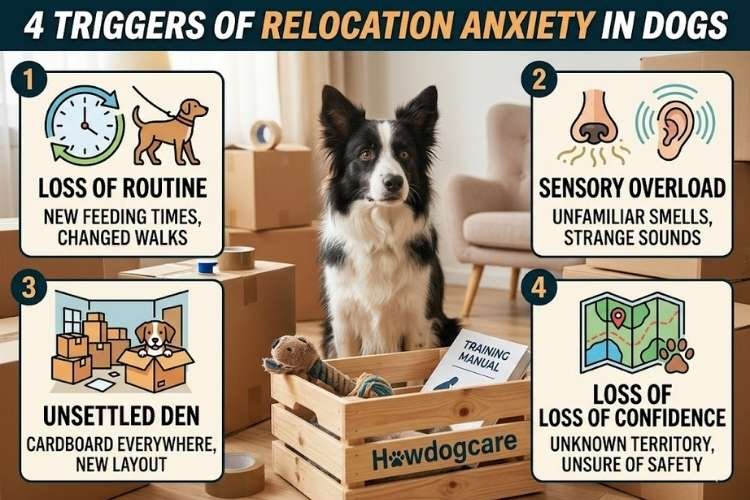
Relocating to a new house is highly stressful for humans, but it can be psychologically devastating for a dog. A completely new environment lacks their familiar, comforting scent markers.
Until they successfully map the new space and establish it as a safe territory, being left alone there feels incredibly dangerous. They no longer recognize the standard background noises, like the hum of the old refrigerator or familiar neighborhood traffic, putting them on high alert.
3. Loss of a Resident Pet or Human Family Member
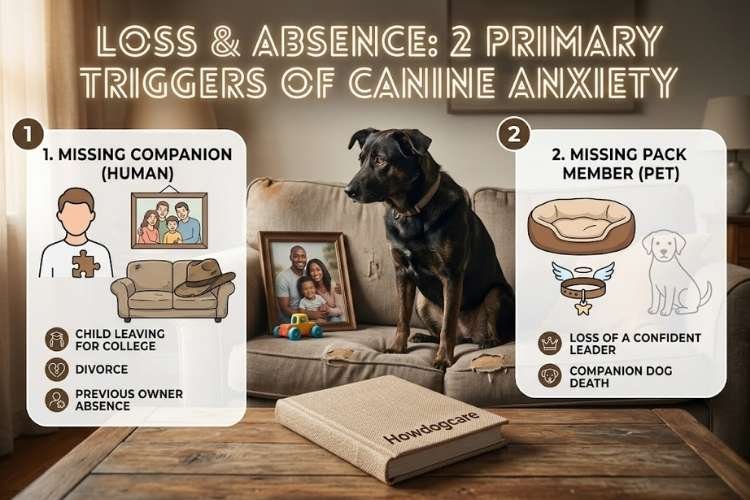
Dogs mourn the loss of family members just as deeply as we do. The sudden absence of a resident pet, a child leaving for college, or a divorce can instantly trigger separation anxiety in dogs.
This is especially common if a deceased pet previously acted as the “confident leader” who kept the anxious dog calm. The surviving dog is suddenly forced to cope with complete isolation without their primary source of emotional support and psychological safety.
4. Traumatic Past Experiences (Shelter Rescues and Rehoming)
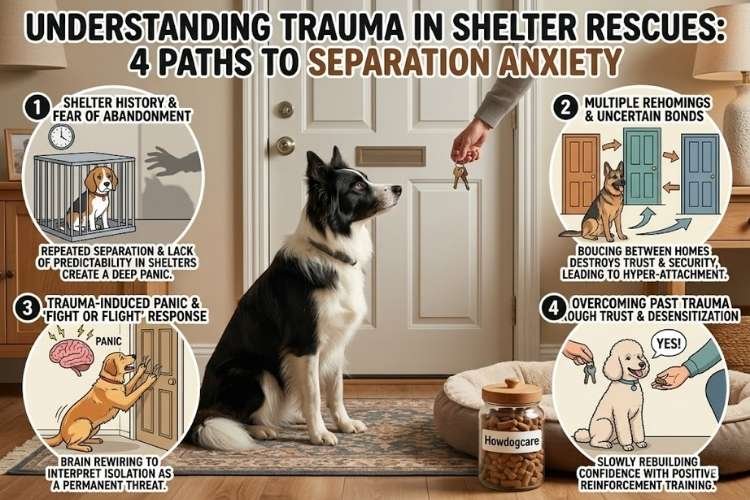
Rescue dogs tragically represent the highest demographic suffering from isolation panic. A history of being surrendered, abandoned, or bouncing between multiple loud shelter environments creates profound psychological scarring.
Their brains become physically wired to associate your departure with permanent abandonment. Every single time the front door closes, they experience acute trauma, fully expecting that you will never return to get them.
5. Hyper-Attachment and Lack of Independent Confidence
Sometimes, pet parents accidentally foster anxiety through excessive coddling and completely unrestricted access. If a dog is constantly allowed to follow you into every single room, they never learn how to safely self-soothe.
- “Velcro Dog” Syndrome: This creates a dangerous state of intense hyper-attachment.
- Loss of Independence: Because they completely lack independent confidence, their brain physically cannot handle the stress of being separated from you by even a single closed bedroom door.
Related: Crate Training Your Puppy Separation Anxiety
6. Underlying Medical Issues Triggering Panic
Never assume that sudden, destructive behavioral changes are purely psychological. Modern veterinary science emphasizes that acute physical pain or hidden illness frequently masks itself as separation anxiety.
A dog suffering from an undiagnosed urinary tract infection will panic when left indoors because they physically cannot hold their bladder. Similarly, a gradual loss of vision or hearing makes an empty, quiet house feel suddenly terrifying and entirely unpredictable.
7. Age-Related Cognitive Decline in Senior Dogs
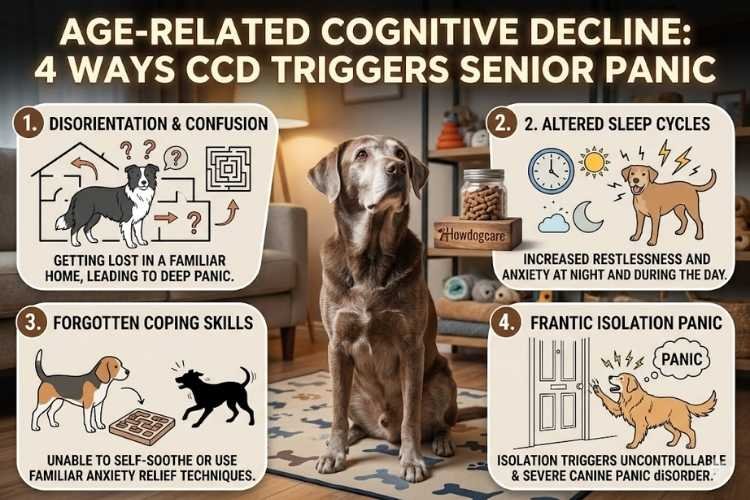
As dogs enter their golden years, their brain naturally ages, frequently leading to Canine Cognitive Dysfunction (CCD), which operates very similarly to human Alzheimer’s disease.
CCD physically alters their brain chemistry, causing profound confusion, altered sleep cycles, and deep disorientation even in highly familiar living rooms. A senior dog may suddenly panic when left alone simply because they literally forget where they are or how to comfortably cope with everyday isolation.
8 Unmistakable Symptoms of Separation Anxiety in Dogs
It is incredibly common for pet parents to confuse standard canine boredom with genuine panic. A merely bored dog might casually chew a single stray slipper, but a dog experiencing separation anxiety in dogs exhibits intense, uncontrollable distress.
Identifying these eight unmistakable symptoms early is absolutely crucial. Recognizing the difference allows you to accurately diagnose the problem and begin effective behavioral modification before the panic permanently escalates.
1. Destructive Chewing and Scratching at Exits (Doors and Windows)
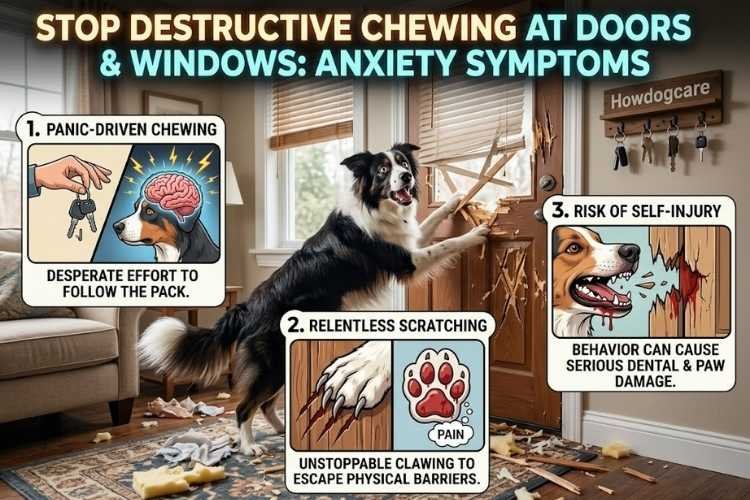
When a dog is in full panic mode, their primitive survival instinct screams at them to reunite with their pack. This results in severe, highly targeted destruction directly around your home’s exit points.
- Shredded door frames: Frantically digging at the front door to follow you out.
- Destroyed window blinds: Tearing down window coverings to visually track where you went.
- Severe self-injury: Suffering from broken teeth or bloody, torn paw pads from desperate, relentless scratching at physical barriers.
Related: Top 10 Best Dog Doors Reviews (Updated Guide & Expert Tips)
2. Incessant Howling, Barking, or Whining When Left Alone
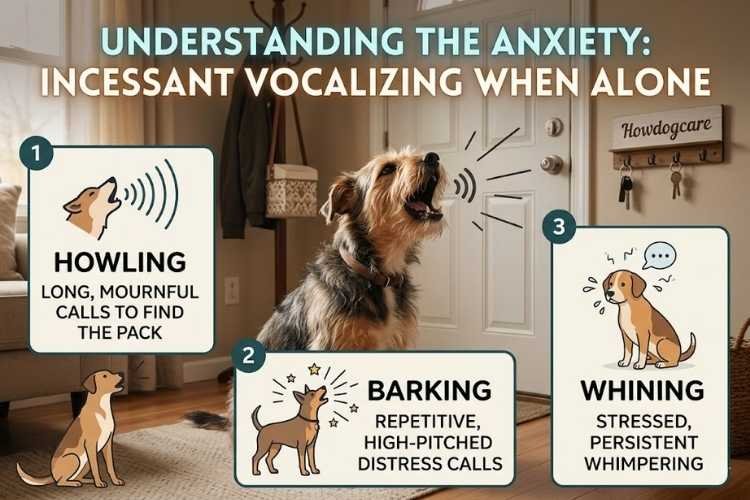
An anxious dog does not simply bark once at a passing mail carrier and then quietly settle down. They vocalize continuously in a desperate, frantic attempt to call you back to the safety of the den.
This incessant howling or high-pitched, stressed whining often begins the exact moment the door clicks shut behind you. It can literally last for hours without pause, frequently resulting in highly stressful noise complaints from frustrated neighbors.
3. Uncharacteristic Indoor Inappropriate Elimination (Potty Accidents)
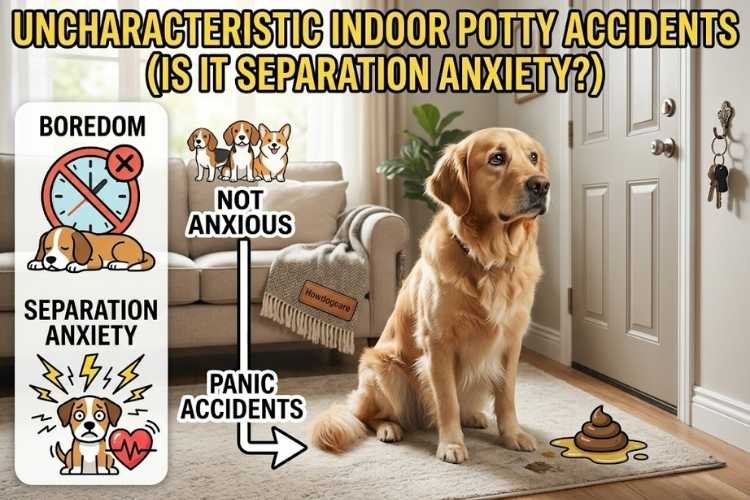
If your previously perfectly house-trained adult dog suddenly starts having indoor accidents strictly when left alone, it is a massive red flag for isolation stress.
This inappropriate elimination is completely involuntary. Just like a human experiencing severe, sudden trauma, the dog’s terrified autonomic nervous system simply loses total control of basic bodily functions during the peak of their panic attack.
4. Extreme Pacing and Inability to Settle
A healthy, relaxed dog will typically sleep peacefully for the vast majority of the day while their owners are at work. An anxious dog, however, completely loses the psychological ability to physically settle and rest.
If you set up a home pet camera, you will often observe extreme, relentless pacing. They may walk in strict, repetitive circles or anxiously trot back and forth in a distinct path between the front door and the living room window.
5. Excessive Drooling, Panting, or Hypersalivation
Acute psychological stress constantly manifests through highly visible, physical biological reactions. When a dog’s nervous system goes into overdrive, their body physically reacts to the perceived environmental threat.
You may return home to find your dog completely soaked in heavy drool or panting uncontrollably, even if the house is perfectly air-conditioned. Finding large, unexplained puddles of saliva near the front entryway is a classic hallmark of profound distress.
6. Desperate Attempts to Escape Confinement (Severe Crate Phobia)
While a crate acts as a wonderful, comforting den for a well-adjusted dog, it frequently becomes a terrifying prison for a dog actively battling isolation stress. Being physically trapped completely removes their natural flight response.
They will desperately bite at the metal wire, throw their entire body weight against the locking mechanism, and bend the thick crate bars in a blind panic. This severe crate phobia often leads to devastating facial, dental, and jaw injuries.
7. Refusal to Eat or Drink While the Owner is Away
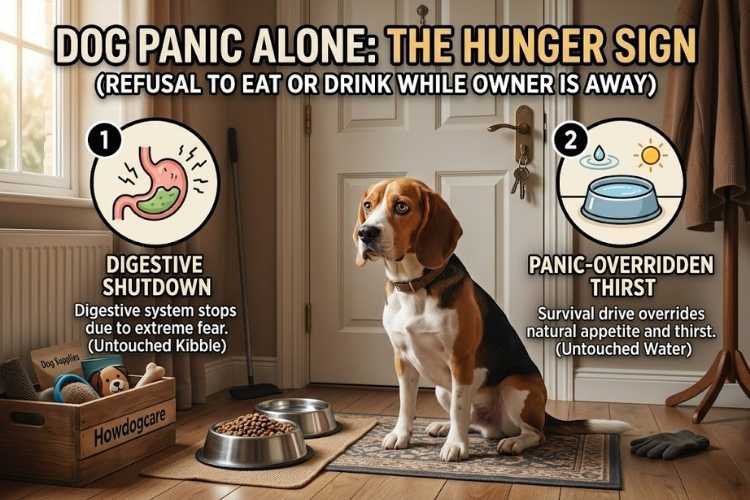
The canine digestive system completely shuts down during a state of extreme, acute fear. The biological drive for immediate survival instantly overrides their natural appetite and thirst.
You might leave a highly enticing, peanut-butter-stuffed puzzle toy on the living room floor, only to return eight hours later and find it entirely untouched. The dog will only finally relax enough to eat the high-value treat once you have safely returned home.
8. The “Shadowing” Behavior: Clinging Before Departure
Dogs are absolute masters of observation and quickly learn the highly specific micro-routines that signal your impending departure. Therefore, their panic frequently begins long before you ever actually touch the front doorknob.
This anxious “shadowing” behavior means your dog nervously follows you from room to room. They will lean heavily against your legs, pace nervously, or heavily pant the moment you put on your work shoes, grab your car keys, or apply your daily perfume.
10 Effective Natural Solutions to Calm Your Anxious Dog
Treating separation anxiety in dogs requires a deep commitment to patience, empathy, and consistency. Before exploring heavy pharmaceutical interventions with your vet, it is highly recommended to implement holistic, behavioral strategies first.
By systematically altering how your dog perceives your departure, you can slowly rebuild their independent confidence. Let’s explore the most effective, science-backed natural solutions to soothe your anxious pup and restore peace to your home.
1. Establishing a Predictable, Low-Stress Daily Routine
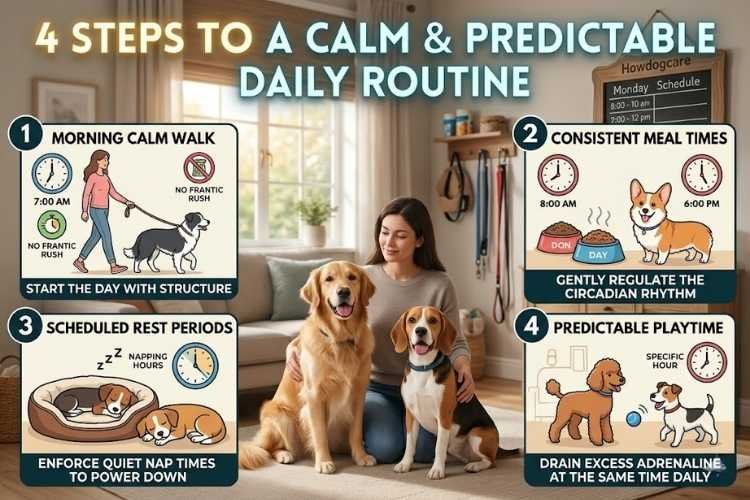
Dogs fundamentally crave structure. When their environment is highly predictable, their baseline anxiety naturally plummets. Creating a strict, unwavering daily schedule is your very first line of defense.
You must aim to feed, walk, and initiate playtime at the exact same hours every single day. This biological predictability drastically reduces their overall stress levels, making them far more resilient to unexpected triggers.
- Morning Structure: Start the day with a calm, structured walk, rather than a frantic rush out the front door.
- Consistent Meals: Feed your dog at the same times daily to gently regulate their internal circadian rhythm.
- Scheduled Rest: Enforce mandatory, quiet nap times in their bed to actively teach them how to power down.
2. The Power of Desensitization to Departure Cues (Keys, Coats, Shoes)
As discussed earlier, your dog’s panic often begins the moment you touch your car keys or put on your work shoes. To effectively stop this, you must actively break the psychological association between the visual cue and the terrifying departure.
Professional behaviorists call this systematic desensitization. You must deliberately perform your standard departure triggers over and over again without ever actually leaving the house.
- Jingle your keys: Pick up your keys, casually carry them to the couch, and quietly watch television.
- Wear your coat indoors: Put on your heavy work coat while simply cooking dinner or folding laundry.
- Bore them with repetition: Repeat these mundane actions daily until your dog completely ignores the triggers.
3. Utilizing Counter-Conditioning with High-Value Treats
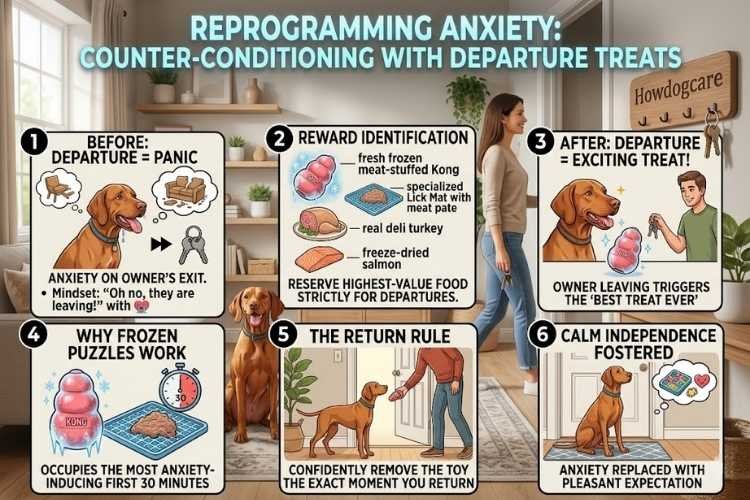
Counter-conditioning is a psychological tool that completely flips your dog’s underlying emotional response. You want to change their mindset from “Oh no, they are leaving!” to “Yes, they are leaving, which means I get my favorite treat!”
You must reserve their absolute highest-value food reward strictly for your departures. If they only receive a frozen, meat-stuffed puzzle toy when you walk out the door, isolation suddenly becomes highly profitable.
- Use frozen treats: A frozen lick mat or stuffed Kong takes up to 30 minutes to finish, successfully distracting them through the most anxiety-inducing window of departure.
- Pick it up immediately: The exact moment you return home, confidently remove the toy. This makes your absence the absolute only way to access the reward.
4. Creating a Safe, Comforting “Zen Zone” or Den Area
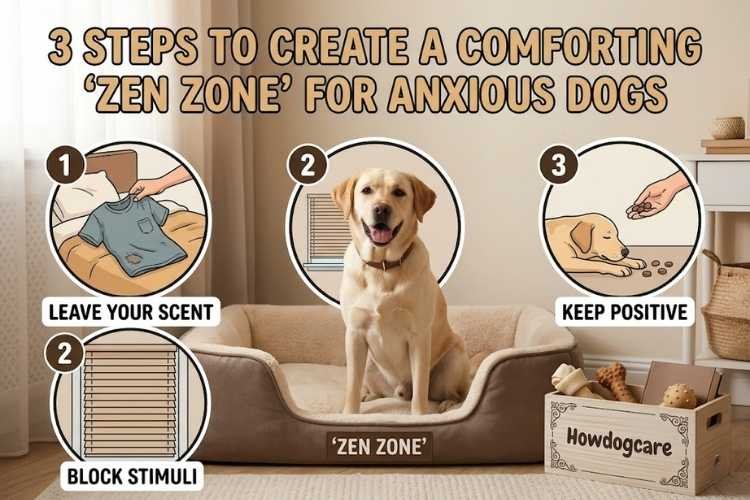
Anxious dogs frequently panic because they feel entirely responsible for guarding a massive, empty house. Creating a smaller, highly restricted “Zen Zone” instantly removes that overwhelming psychological burden.
This space should never, ever feel like a punishment. It should be a quiet, dog-proofed spare room, a secure playpen, or an open-door crate filled with their absolute favorite comforting items.
- Leave scent articles: Place a heavily worn t-shirt that smells exactly like you inside their cozy bed.
- Block outside stimuli: Close the window blinds to prevent them from anxiously guarding neighborhood traffic.
- Keep it positive: Heavily reward your dog for independently choosing to rest in this area while you are still home.
Related: Best Dog Beds – 10 Cozy Picks Your Dog Will Absolutely Love
5. Incorporating Calming Pheromone Diffusers (e.g., Adaptil)
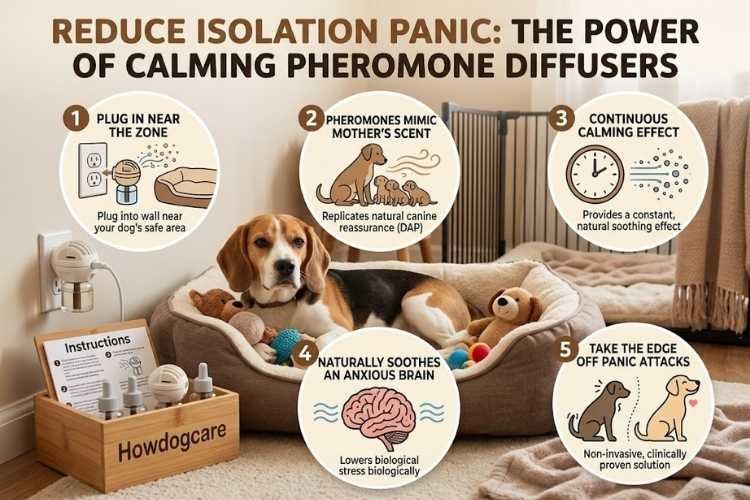
Modern veterinary science offers incredible, non-invasive tools to help lower your dog’s biological stress. Synthetic pheromone diffusers, like Adaptil, perfectly replicate the natural, comforting hormones released by a mother dog nursing her puppies.
These odorless, dog-appeasing pheromones (DAP) send continuous, highly comforting chemical signals directly to your dog’s brain. Plugging a diffuser directly into the wall outlet near their “Zen Zone” provides a constant, natural calming effect that takes the edge off their panic.
Related: Pheromone Diffusers for Dogs – The Complete Guide to Calm and Happy Pets
6. Exploring Natural Calming Supplements (Chamomile, L-Theanine, CBD)
If environmental changes and routine adjustments are not quite enough, natural calming supplements can gently take the edge off your dog’s panic. These holistic remedies work to safely lower their baseline stress, making behavioral training far more effective.
Always consult your veterinarian before introducing any new supplements to ensure they are perfectly safe for your specific pet’s weight and medical history.
- High-Quality CBD Oil: Canine-specific CBD directly interacts with their endocannabinoid system to naturally reduce severe stress and promote deep relaxation.
- L-Theanine: An amino acid commonly found in green tea that actively promotes a calm mental state without causing heavy, unnatural drowsiness.
- Herbal Remedies: Natural, proven herbs like chamomile, passionflower, and valerian root are frequently used in holistic chews to safely soothe an anxious nervous system.
7. The Importance of Vigorous Physical Exercise Before Departures
When dealing with separation anxiety in dogs, you must remember a fundamental behavioral truth: a tired dog is a relaxed dog. If your pup is bursting with unspent physical energy, their isolation panic will drastically amplify the moment you leave.
You must actively drain their excess adrenaline before you ever walk out the front door. A quick, casual five-minute potty break in the backyard is simply not enough to prevent a panic attack.
- Structured Runs: Engage in a vigorous 30-minute run or a highly brisk walk to physically exhaust their muscles.
- Fetch Sessions: High-intensity, focused games like fetch or frisbee quickly burn through cortisol and nervous energy.
- Mandatory Cool Down: Always allow a solid 20-minute cool-down period before your actual departure so their breathing and heart rate completely normalize.
8. Mental Stimulation: Distracting with Puzzle Toys and Snuffle Mats
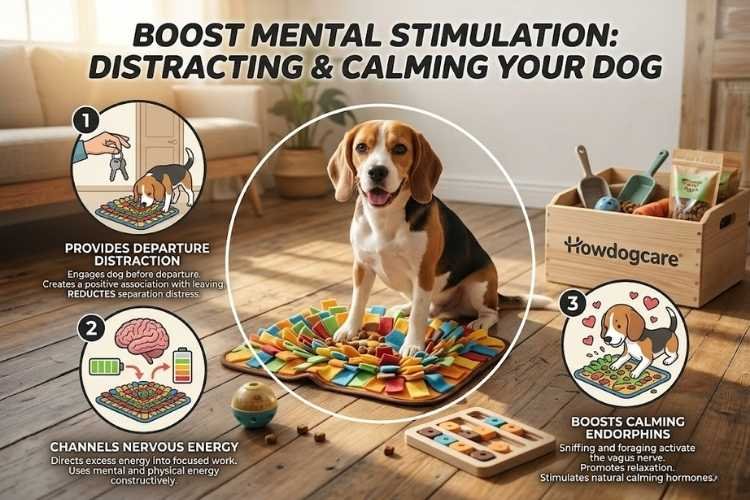
Physical exhaustion is crucial, but mental fatigue is equally powerful. Engaging your dog’s brain forces them to focus entirely on a highly rewarding task rather than obsessing over your impending departure.
By leaving them with interactive, challenging tools, you actively shift their mindset from deep panic to intense concentration. This effectively bridges the most anxiety-inducing window: the first 20 minutes after you leave.
- Snuffle Mats: These fabric mats force your dog to use their powerful nose to hunt for hidden kibble, an activity that naturally lowers their heart rate.
- Advanced Puzzle Toys: Interactive wooden or plastic puzzles require them to slide hidden compartments and solve problems to earn high-value treats.
- Frozen Lick Mats: The repetitive, physical act of licking actively releases calming endorphins and naturally soothes an anxious brain.
9. Playing Canine-Specific Relaxing Music or White Noise
An empty, completely silent house is incredibly intimidating for a dog accustomed to a bustling, noisy family. In total silence, every single outside noise—like a passing delivery truck or a neighbor’s slamming door—can instantly trigger a severe panic attack.
You must actively manage their auditory environment by masking these unpredictable, scary sounds. Providing a consistent, soothing background noise creates a powerful psychological safety blanket.
- Bioacoustic Music: Play specialized, canine-formulated music designed with specific frequencies and slow tempos proven by veterinary science to lower a dog’s heart rate.
- White Noise Machines: A loud box fan or a dedicated white noise machine effectively drowns out sharp, triggering neighborhood sounds.
- Familiar Voices: Leaving a calm talk radio station or an audiobook playing softly provides the comforting illusion that humans are still nearby.
10. Practicing “Flitting” to Build Independent Confidence at Home
If your dog constantly acts like your personal shadow, they completely lack the independent confidence needed to survive alone. You must actively teach them that they are perfectly safe in a room, even if you are not physically present next to them.
Professional trainers highly recommend a psychological exercise called “flitting” to break this intense hyper-attachment and build core confidence.
- Constant Movement: Randomly stand up, walk into the kitchen, and immediately sit back down on the couch without ever looking at or speaking to your dog.
- Bore Them with Repetition: Repeat this rapid, pointless movement dozens of times until your dog simply gets too exhausted to keep following you.
- Reward Independence: When they finally choose to stay comfortably on their bed while you leave the room, quietly return and heavily reward that brave independence.
You might also like
What NOT to Do: Common Mistakes That Worsen the Panic
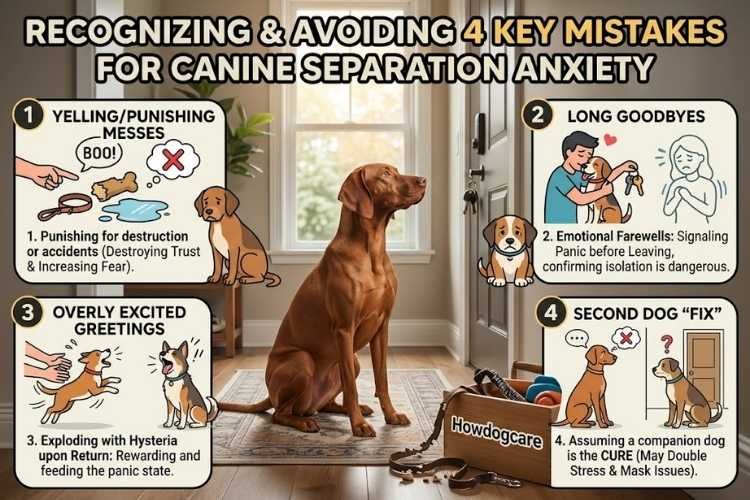
When desperately trying to manage separation anxiety in dogs, it is incredibly easy for well-meaning pet parents to make critical errors. Because canine psychology is vastly different from our own, our natural human reactions frequently exacerbate the problem.
By actively avoiding these highly common behavioral pitfalls, you can completely prevent accidental training setbacks. Let’s explore exactly what to avoid to keep your dog’s psychological recovery safely on track.
Why Punishing an Anxious Dog Always Backfires
Finding your favorite pair of shoes completely shredded or your doorframe chewed is undeniably frustrating. However, punishing your dog for isolation-induced destruction is the absolute worst psychological mistake you can make.
Remember, your dog is absolutely not acting out of spite; they are actively experiencing a severe, uncontrollable panic attack. Yelling, scolding, or aggressively pointing at the mess completely shatters their baseline trust in you.
- Increases overall fear: Harsh punishment actively proves to your dog that your return is unpredictable and physically dangerous, creating a massive secondary layer of severe anxiety.
- Timing disconnect: A dog’s short-term memory is incredibly brief. If you scold them hours after the act, they physically cannot connect your current anger to their past destruction.
- Fails to treat the root: Punishment never cures the underlying panic; it simply forces the terrified dog to destroy items in hidden corners to avoid your terrifying wrath.
The Danger of Dramatic Goodbyes and Enthusiastic Hellos
Humans naturally want to offer heavy emotional reassurance when leaving a highly distressed loved one. Unfortunately, showering your dog with long, emotional apologies and hugs before walking out the door only validates their intense fear.
Your highly dramatic goodbye clearly signals to your dog’s brain that something terrible is about to happen. Similarly, exploding with high-pitched excitement the exact moment you return home heavily reinforces that your absence was indeed a highly traumatic event that they barely survived.
- Practice neutral departures: Calmly pick up your keys and exit the house without making any direct eye contact or offering any verbal farewells.
- Ignore the frantic greeting: When you return, completely ignore your jumping, frantic dog until all four paws are on the floor and they offer a calm, quiet sit.
- Normalize the transition: Acting completely bored during these transitions actively teaches your dog that your coming and going is a totally mundane, safe, and uneventful daily routine.
Why Getting a Second Dog Isn’t Always the Cure for Anxiety
A very common piece of well-intentioned advice is to simply adopt a second dog to keep your anxious one company. While this occasionally works for minor isolation distress, it is rarely the magic cure for true separation anxiety in dogs.
If your dog is specifically hyper-attached to you, the sudden presence of another canine will absolutely not soothe their intense panic when you leave the house. You simply cannot replace deep human attachment with a canine companion.
- Risking double anxiety: You run the severe risk of the new dog actively learning the anxious, destructive behaviors from your current pet, suddenly leaving you with two panicking dogs.
- Masks the core issue: True behavioral recovery requires actively teaching your dog how to feel completely safe and confident on their own.
- Transfers codependency: Relying on a second dog often just transfers your dog’s intense codependency onto the new animal, rather than actually building their independent psychological resilience.
When to Seek Professional Veterinary or Behaviorist Help

While natural modifications are highly effective, some cases of separation anxiety in dogs are simply too severe for at-home training alone. If your dog’s distress is actively threatening their physical safety, you must immediately escalate your approach.
Seeking guidance from a certified veterinary behaviorist ensures you are using the safest, most scientifically sound treatment protocols available. They possess the clinical expertise required to tackle profound canine panic disorders.
Recognizing the Signs of Severe, Self-Injurious Panic
A mild case of isolation stress might involve a few chewed baseboards, but a severe panic disorder is a genuine medical emergency. You must rapidly intervene if your dog’s behavior crosses the line into active, dangerous self-harm.
- Physical injury: Bleeding paws from digging at doors, broken teeth from chewing metal crate bars, or deep gashes from attempting to break through glass windows.
- Extreme bodily stress: Uncontrollable vomiting, severe stress-induced diarrhea, or collapsing from absolute exhaustion after hours of relentless pacing and howling.
Exploring Prescription Anti-Anxiety Medications with Your Vet
There is absolutely no shame in utilizing modern veterinary medicine to help a terrified dog. A licensed veterinarian can accurately prescribe highly effective, FDA-approved anti-anxiety medications to safely regulate your dog’s imbalanced brain chemistry.
- Daily SSRIs: Long-term medications, such as fluoxetine (Prozac) or clomipramine, help permanently stabilize serotonin levels to safely lower overall baseline anxiety.
- Event-Specific Sedatives: Fast-acting medications, like trazodone or gabapentin, are frequently prescribed to temporarily blunt the acute terror that strikes immediately following your departure.
How Medication Can Facilitate Behavioral Training
A very common misconception is that medication will turn an anxious dog into a heavily drugged, lethargic zombie. In reality, proper medication simply acts as a critical neurological bridge, lowering their panic just enough to allow actual learning to occur.
When a dog’s brain is completely flooded with extreme fear, they physically cannot absorb your counter-conditioning training. Medication gently lowers that intense biological threshold, finally allowing their brain to register that being left alone is actually completely safe.
Frequently Asked Questions About Canine Separation Anxiety
1. How long does it typically take to cure separation anxiety in dogs?
Curing severe separation anxiety takes significant time, often requiring several months of highly consistent, daily behavioral modification. There is no magic overnight fix, and rushing the delicate desensitization process will almost certainly cause severe psychological setbacks and worsen the panic.
2. Can crate training help or hurt a dog with severe separation issues?
For some dogs, an open-door crate acts as a highly secure, comforting den that significantly lowers their stress. However, if a dog suffers from severe confinement phobia alongside their separation anxiety, forcing them into a locked metal crate will instantly escalate their panic and lead to highly dangerous physical injuries.
3. Will my dog eventually just “grow out” of their separation anxiety?
No, a dog will absolutely never just “grow out” of a genuine, clinical panic disorder. Without active, science-backed behavioral intervention and structured training, the intense psychological distress will only compound and progressively worsen as the dog ages.
4. Are there specific puzzle toys best suited for anxious, destructive chewers?
For highly destructive chewers, you must strictly use ultra-durable, heavy-duty rubber toys, such as the black extreme Kong line. You must avoid soft plush puzzles or brittle plastic toys, as a panicking dog can easily tear these apart and accidentally ingest dangerous, life-threatening blockages.
5. How do I know if my dog is just bored or genuinely anxious?
A bored dog casually chews random household items (like a single shoe) and easily falls asleep when they are finally tired. A genuinely anxious dog highly targets exit points, vocalizes endlessly without pausing, frequently has involuntary potty accidents, and displays severe physical stress signals like heavy drooling or extreme pacing.