


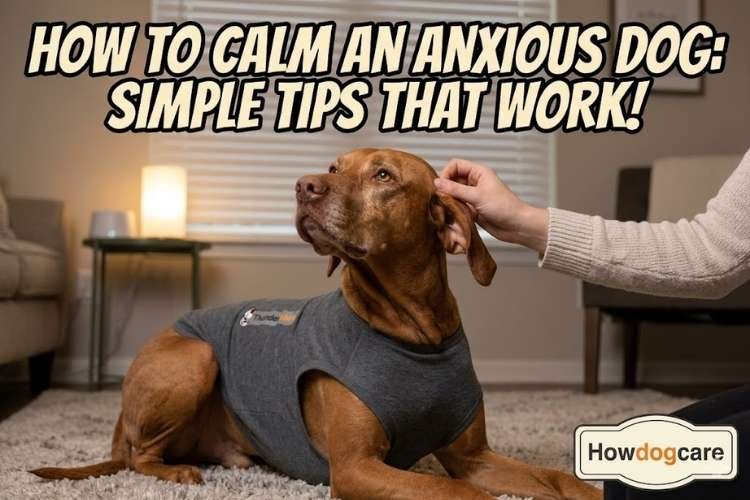
Watching your furry best friend tremble during a thunderstorm or panic when you leave the house is absolutely heartbreaking. If you are desperately searching for exactly how to calm an anxious dog, you are in the right place. Canine stress is a highly common issue, but it is also completely manageable with the right approach.
At howdogcare.com, we know that a calm dog is a happy dog. This comprehensive guide will break down the exact biological reasons behind your dog’s fear. We will explore proven, actionable techniques to help your dog feel safe, secure, and entirely stress-free in any environment.
Understanding Canine Stress: Why Your Dog Panics
Before you can effectively treat your dog’s anxiety, you must understand where it comes from. Dogs do not experience fear out of spite or stubbornness. Their panic is a deeply ingrained, biological survival mechanism.
When a dog encounters a terrifying trigger—like fireworks, strange dogs, or being left entirely alone—their brain immediately floods their body with stress hormones. This massive chemical rush completely overrides their logical thinking.
The Fight, Flight, or Freeze Response in Dogs
Just like humans, dogs possess a highly sensitive autonomic nervous system. When faced with a perceived threat, they instantly enter a state of survival.
- Fight: The dog may aggressively bark, lunge, or snap to actively drive the terrifying threat away.
- Flight: The dog will desperately try to escape, often bolting out open doors or frantically hiding under heavy furniture.
- Freeze: The dog completely shuts down, refusing to move, take treats, or respond to their own name.
You cannot successfully train a dog while they are trapped in this severe survival mode. You must actively lower their heart rate first.
1. Read the Room: Spotting the Subtle Signs of Dog Anxiety
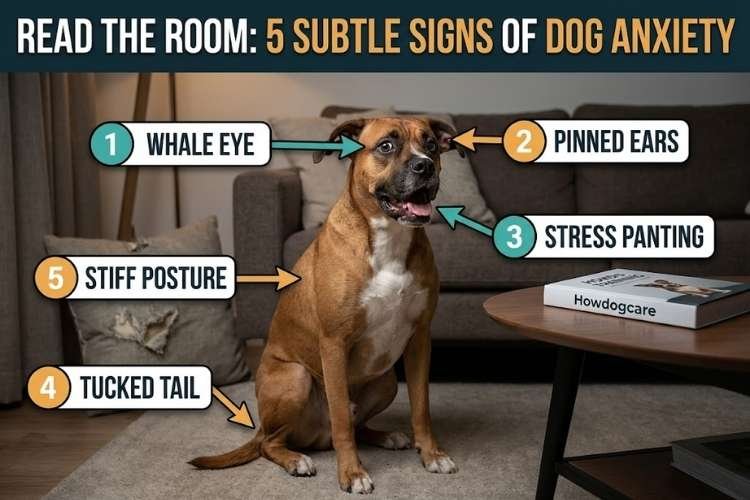
Dogs constantly communicate their emotional state through highly specific body language. Unfortunately, humans often completely miss the early warning signs of canine stress.
By identifying the subtle markers of fear, you can easily intervene before your dog escalates into a full-blown panic attack.
Body Language Cues: Tucked Tails, Pinned Ears, and Pacing
A relaxed dog carries a loose, wiggly body. An anxious dog physically tightens up, attempting to make themselves look as small as possible.
- Whale Eye: You will clearly see the whites of your dog’s eyes as they avert their head but keep their gaze fixed on the trigger.
- Tension: Watch closely for tightly pinned back ears, a heavily tucked tail between the hind legs, and a stiff, frozen posture.
- Displacement Behaviors: Sudden, out-of-context yawning, aggressive lip licking, or intense full-body shaking are massive indicators of mental stress.
Vocalizations: Excessive Whining, Barking, and Stress Panting
If a dog cannot physically escape a scary situation, they will aggressively use their voice to express their severe discomfort.
- Panting: If your dog is heavily panting but the room is entirely cool and they have not exercised, they are experiencing an acute adrenaline rush.
- Whining and Crying: High-pitched, continuous whining frequently occurs during car rides or tight veterinary visits.
- Alarm Barking: A sharp, repetitive, and highly frantic bark is an active attempt to sound an alarm about a perceived danger.
Destructive Behaviors: Indoor Digging, Chewing, and Escape Attempts
Many pet parents mistakenly label a highly anxious dog as simply “bad” or “destructive.” In reality, severe separation anxiety forces dogs to perform frantic, damaging behaviors.
- Dogs will aggressively chew heavy wooden baseboards or completely shred plush furniture to release massive nervous energy.
- You may find deep, bloody scratch marks directly on your front door from desperate escape attempts.
- Indoor digging on carpets or couches is a frantic attempt to create a safe, physical den to hide inside.
2. Immediate Physical Interventions to Soothe Your Dog

When your dog is actively spiraling into a severe panic attack, you need fast, highly reliable solutions. You must physically intervene to manually bring their heart rate down.
Here are the most effective, science-backed physical techniques for instantly soothing a terrified canine.
The Power of Deep Pressure Therapy: Anxiety Wraps and Thundershirts
Deep pressure therapy is a highly proven, drug-free method for reducing severe mammalian anxiety. It works exactly like swaddling a crying human infant.
- Garments like the Thundershirt apply gentle, constant pressure completely around your dog’s torso.
- This specific pressure actively stimulates the nervous system to release highly calming, feel-good endorphins.
- Always introduce the anxiety wrap during a calm, happy moment so your dog positively associates the garment with relaxation.
TTouch Therapy: Gentle Massage Techniques for Instant Relaxation
Physical touch is an incredibly powerful tool if properly applied. Frantically patting an anxious dog can actually increase their overstimulation. Instead, use highly structured, calming massage.
- TTouch (Tellington TTouch) involves using your fingers to make slow, deliberate, circular motions directly on your dog’s skin.
- Focus strictly on the base of the ears, the thick neck, and the heavy shoulders to immediately lower their heart rate.
- Maintain a steady, deep breathing rhythm yourself; your dog will actively mirror your physical calm.
Physical Redirection: Using High-Value Chews to Lower Heart Rates
The biological act of licking and chewing is highly therapeutic for dogs. It actively redirects their brain away from the terrifying trigger and forces them to focus on a rewarding task.
- Provide a highly durable, long-lasting chew like a thick bully stick or an organic yak cheese chew.
- Offer a tightly stuffed frozen Kong filled with pureed pumpkin and peanut butter.
- The continuous, repetitive jaw motion actively releases natural, highly soothing serotonin directly into your dog’s brain.
3. Modifying the Environment to Create a “Safe Zone”
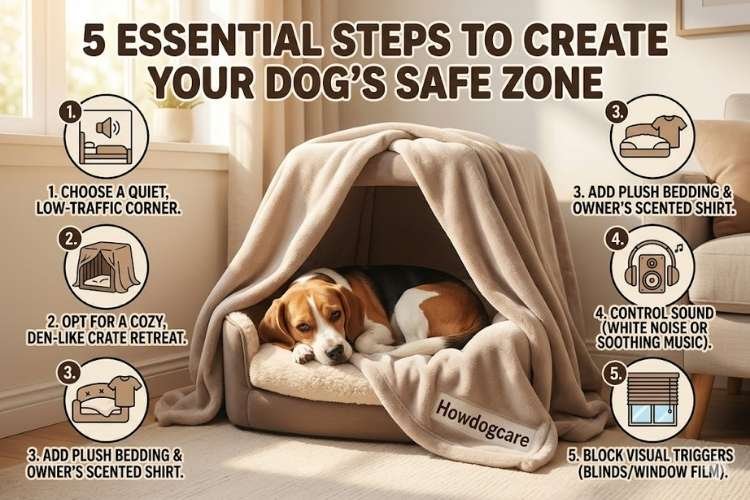
When figuring out how to calm an anxious dog, evaluating their physical surroundings is a crucial first step. A chaotic, unpredictable home environment heavily amplifies canine stress.
You must actively design a dedicated, entirely quiet space where your dog can safely escape from overwhelming household stimuli.
Building a Den-Like Retreat: Crate Training for Comfort, Not Punishment
Dogs possess a natural, deep-rooted instinct to seek out small, dark, enclosed spaces when they feel terrified. A properly introduced wire or plastic crate acts exactly like a secure, comforting den.
- Never use the crate as a timeout or a form of punishment. * Cover the top and sides with a heavy, breathable blanket to effectively block out frightening visual stimuli and create a dark, soothing cave.
- Leave the door wide open and stock the space heavily with their favorite high-value chews and an unwashed t-shirt carrying your comforting scent.
Sound Therapy: White Noise, Classical Music, and Reggae for Dogs
Sudden, sharp environmental noises—like heavy construction, passing sirens, or booming thunder—instantly trigger massive anxiety spikes. You can highly effectively mask these terrifying sounds using specialized acoustic therapy.
- Veterinary studies consistently prove that classical music and soft reggae rhythms physically lower a dog’s heart rate and respiration.
- Place a high-quality white noise machine or a loud, humming box fan directly next to their safe zone.
- This constant acoustic barrier effortlessly drowns out the unpredictable neighborhood triggers that keep your dog constantly on edge.
Managing Visual Triggers: Closing Blinds and Using Window Film
Many highly reactive dogs experience severe daily anxiety simply from watching the outside world through a large living room window. The constant parade of strange delivery trucks and fast bicycles keeps their nervous system on high alert.
- Actively block these overwhelming visual triggers by completely closing heavy blinds or thick curtains during peak neighborhood activity hours.
- Alternatively, easily apply translucent, frosted window film directly to the lower half of your glass doors.
- This brilliant modification allows beautiful natural sunlight in while completely blocking the stressful, chaotic view of the street.
4. Daily Routine Adjustments for Long-Term Calm
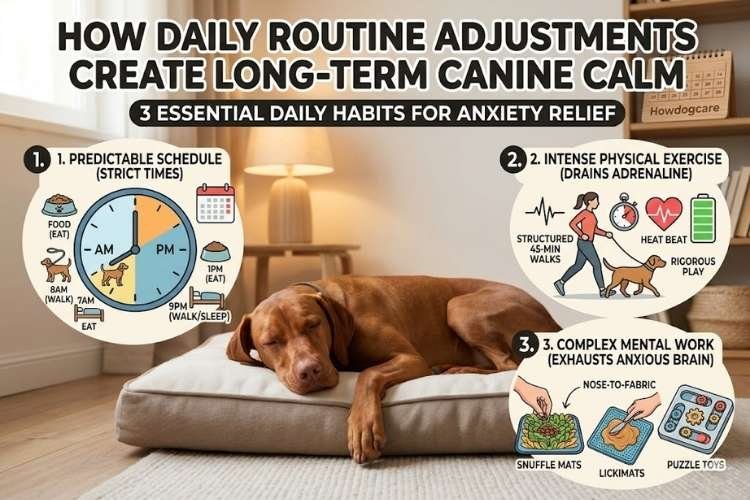
Dogs thrive heavily on strict consistency and highly predictable schedules. A chaotic, ever-changing daily routine rapidly fuels severe underlying anxiety and deep insecurity.
Establishing a firm, daily foundation of structured exercise and mental work actively builds a highly confident, deeply relaxed canine.
The Psychological Importance of a Predictable Daily Schedule
Uncertainty breeds massive fear in sensitive dogs. They deeply need to know exactly when they will eat, sleep, and go outside to eliminate.
- Feed your dog their meals at the exact same times every single day to properly regulate their digestive and nervous systems.
- Establish a highly reliable morning and evening routine.
- This strict predictability physically signals to your dog that their environment is completely safe, organized, and fully controlled by a confident leader.
Physical Exercise: Draining Nervous Energy Through Structured Walks
A physically exhausted dog simply lacks the surplus chemical energy required to pace frantically or panic over minor environmental triggers. However, a quick, chaotic lap around the block is absolutely not enough.
- Engage your dog in brisk, 45-minute structured walks where they walk calmly by your side, completely draining their excess adrenaline.
- Incorporate heavy physical play, like intense games of fetch or rigorous tug-of-war in a safe backyard.
- Always schedule this heavy physical exertion specifically before known stressful events, like a heavy thunderstorm or a house party.
Mental Stimulation: Snuffle Mats, Lickimats, and Puzzle Toys
Physical exercise tires the heavy muscles, but intense mental stimulation entirely exhausts an anxious brain. You must force your dog to actively use their powerful nose and problem-solving skills to earn their daily kibble.
- Snuffle Mats: Hide dry food deep inside thick fleece strips to heavily encourage their natural, highly calming foraging instincts.
- Lickimats: Smear thick Greek yogurt or peanut butter on a textured silicone mat to trigger the deep release of soothing endorphins through repetitive licking.
- Advanced Puzzle Toys: Require your dog to physically slide, flip, or press specific compartments to unlock high-value rewards, completely distracting them from environmental anxiety.
5. Desensitization and Counterconditioning (Behavioral Training)
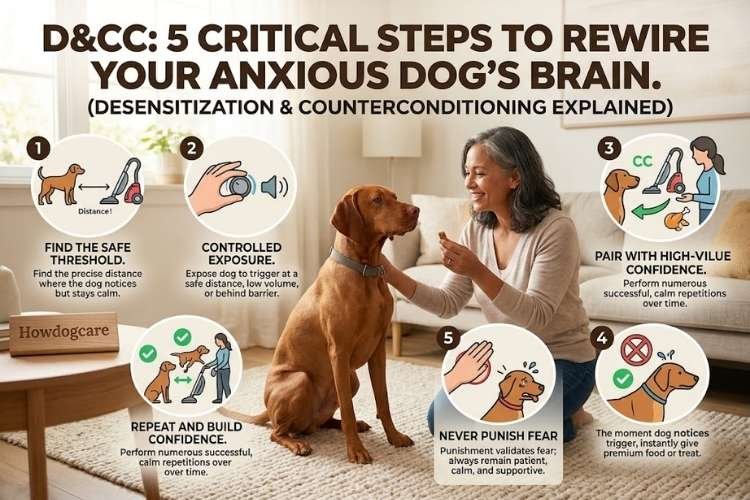
To permanently solve severe phobias, you must actively change how your dog’s brain interprets the terrifying trigger. You cannot simply avoid the scary thing forever.
This requires two highly scientific, proven training processes: systemic desensitization and active counterconditioning.
Finding the Threshold: Exposing Your Dog to Triggers Safely
You absolutely cannot flood a dog with their fear and expect them to simply “get over it.” This highly dangerous approach causes massive, irreversible psychological trauma.
- Instead, you must identify your dog’s specific emotional threshold—the exact distance where they notice the trigger but remain calm enough to accept a treat.
- Start your training entirely under this safe threshold.
- Expose them to the trigger at a massive physical distance or play a recording of the scary sound at an incredibly low volume.
The “Look at That” Game: Changing the Emotional Response
Counterconditioning actively pairs a terrifying, negative stimulus with a highly valuable, positive reward. It fundamentally rewires the canine brain.
- Play the simple, highly effective “Look at That” game.
- The exact millisecond your dog calmly looks at their scary trigger, instantly click a training clicker and deliver a premium piece of chicken.
- Over time, they completely stop seeing the trigger as a terrifying threat and start viewing it as a highly reliable predictor of amazing food.
Why You Should Never Punish or Scold a Fearful Dog
Yelling at a trembling, anxious dog is the absolute worst mistake a pet parent can possibly make. Punishment entirely validates their deep fear.
- Harsh corrections actively confirm to the dog’s brain that the current situation is indeed highly dangerous and completely unstable.
- Using physical punishments or a harsh tone heavily damages the critical bond of trust between you and your dog.
- Always remain highly calm, confident, and deeply patient; your fearful dog heavily relies on your quiet leadership to finally feel safe.
You might also like
6. Natural Calming Supplements and Pheromones

When training and environmental changes are not quite enough, natural supplements can effectively bridge the gap. These over-the-counter options gently take the edge off your dog’s panic without heavily sedating them.
Always consult your primary veterinarian before introducing any new supplement to ensure it will not negatively interact with existing medications.
Adaptil and DAP (Dog Appeasing Pheromones): Mimicking a Mother’s Scent
Science has successfully replicated the deeply comforting biological signals that a mother dog naturally provides to her newborn puppies. These synthetic pheromones communicate absolute safety to the canine brain.
- Dog Appeasing Pheromone (DAP) products are entirely odorless to humans but highly detectable by your dog’s powerful vomeronasal organ.
- Plug-in Adaptil diffusers are incredibly effective for creating a permanent calming zone directly inside your home.
- For outdoor anxiety, a snug pheromone collar provides continuous, soothing support during stressful neighborhood walks or busy vet visits.
L-Theanine, Chamomile, and Zylkene: Natural Dietary Supplements Explained
Veterinary science heavily utilizes specific natural compounds to actively lower stress hormones and promote a deep sense of biological relaxation.
- L-Theanine is an amino acid naturally found in green tea leaves that actively increases calming brain waves without causing heavy drowsiness.
- Chamomile and Valerian Root are powerful herbal sedatives widely used in high-quality, bite-sized calming chews.
- Zylkene utilizes a highly specific milk protein that scientifically mimics the deeply relaxed state a puppy experiences immediately after nursing.
CBD Oil for Dogs: Current Veterinary Consensus and Dosing Safety
Cannabidiol (CBD) has massively surged in popularity as a natural remedy for severe canine anxiety and chronic joint pain. While clinical studies are still actively ongoing, veterinary behaviorists report highly positive anecdotal results.
- CBD actively interacts with your dog’s endocannabinoid system to naturally regulate mood and rapidly decrease fear responses.
- You must strictly purchase high-quality, third-party tested CBD oils specifically formulated for pets, ensuring they contain absolutely zero toxic THC.
- Always start with the lowest possible dose and carefully monitor your dog’s physical response before slowly increasing the daily amount.
7. Medical Intervention: When to Consult a Veterinary Behaviorist
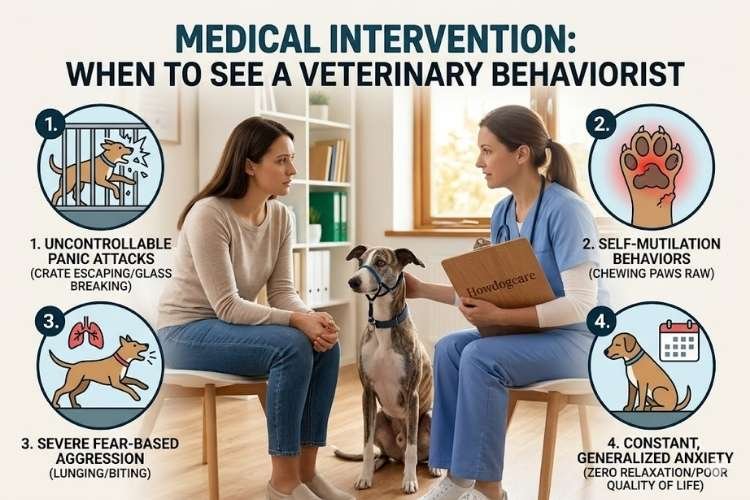
Sometimes, natural remedies and dedicated behavioral training simply cannot break through a massive wall of panic. If your dog’s anxiety heavily impacts their daily quality of life, it is time for professional medical intervention.
Seeking prescription medication is absolutely not a failure; it is a deeply compassionate choice to relieve your dog’s intense mental suffering.
Recognizing the Difference Between Mild Fear and Clinical Phobias
You must accurately distinguish between a dog who is simply nervous and a dog experiencing a severe, life-threatening clinical phobia.
- Mild fear looks like mild pacing, soft whining, or hiding under a desk during a loud thunderstorm.
- A clinical phobia causes a complete loss of bodily control; the dog may violently break through glass windows or severely injure themselves attempting to escape a crate.
- If your dog routinely experiences severe panic attacks that risk their physical safety, you must immediately consult a board-certified veterinary behaviorist.
The Role of Prescription Anti-Anxiety Medications (Trazodone, Fluoxetine)
Modern veterinary medicine offers highly effective prescription drugs specifically designed to medically correct severe chemical imbalances in the anxious canine brain.
- Situational Medications (like Trazodone or Gabapentin) are given a few hours before a known terrifying event, such as a major holiday fireworks display or a painful grooming session.
- Daily Medications (like Fluoxetine/Prozac) are utilized for chronic, severe generalized anxiety. They actively raise the brain’s baseline serotonin levels.
- Medication physically lowers the dog’s internal panic threshold, finally allowing your behavioral training and counterconditioning to actually take effect.
Frequently Asked Questions (FAQs) About Canine Anxiety
When you are desperately trying to soothe a terrified pet, you need rapid, highly accurate answers. Here are the expert, concise solutions to the most frequently asked questions about canine stress.
1. Does petting and comforting an anxious dog reinforce their fear?
No, this is a highly common, damaging myth. You absolutely cannot reinforce an emotion. Gently petting and speaking softly to a terrified dog provides critical emotional support and actively helps lower their soaring heart rate.
2. Can a dog suddenly develop severe anxiety later in life?
Yes, absolutely. Senior dogs frequently develop sudden anxiety due to cognitive dysfunction (canine dementia) or the frightening loss of their vision and hearing. Furthermore, a single, highly traumatic event—like a vicious dog attack—can trigger sudden anxiety at any age.
3. How long does it actually take to see results from anxiety training?
There is no quick fix for a deeply ingrained emotional response. Mild situational fears may improve in a few short weeks, but severe clinical phobias strictly require many months or even years of highly consistent, patient behavioral modification.
4. Are rescue dogs more prone to separation anxiety?
Yes, rescue dogs frequently suffer from severe separation anxiety. Their difficult pasts often involve multiple traumatic rehomings, extended stays in loud shelters, or a complete lack of early puppy socialization, making them deeply insecure when left alone.
Conclusion: Patience is the Key to a Peaceful Pup
Ultimately, learning exactly how to calm an anxious dog requires a layered, highly compassionate approach. There is no magic wand to instantly erase deep canine fear. By carefully reading their subtle body language, creating a secure physical den, and utilizing science-backed counterconditioning, you can completely transform their mental state.
Whether you utilize a simple Thundershirt or partner closely with a veterinary behaviorist, your unwavering patience is your greatest tool. Stay highly consistent, celebrate the tiny daily victories, and you will eventually guide your furry best friend toward a confident, deeply peaceful life.