

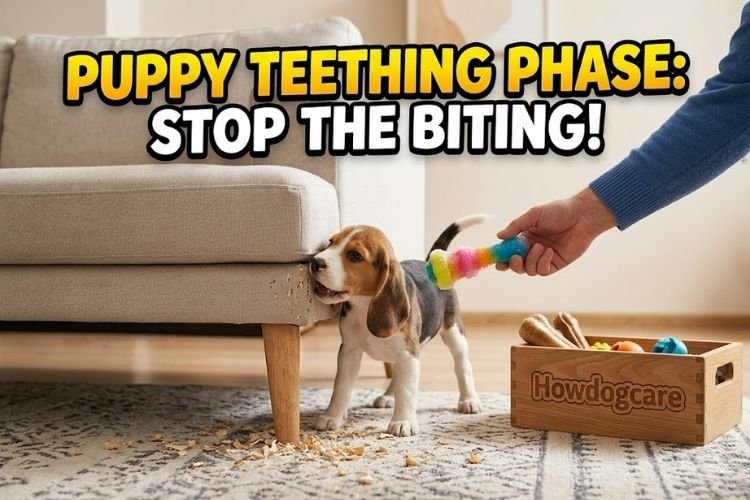
Bringing home a new puppy is an incredibly exciting journey, but it always comes with a few painful surprises. Suddenly, your adorable furball transforms into a tiny land shark, leaving a trail of destruction across your living room.
If your hands, shoes, and baseboards are constantly under attack, you are officially navigating the puppy teething phase. While this developmental stage tests every pet parent’s patience, it is a completely temporary challenge.
Surviving this difficult window requires proactive management, the right training strategies, and highly durable chew toys. In this comprehensive guide, we will help you soothe their painful gums, stop the endless nipping, and successfully save your expensive furniture.
The Canine Chewing Phenomenon: Why Your Puppy Bites Everything
Those tiny, needle-sharp puppy teeth can cause serious frustration and painful scratches for any pet owner. However, it is absolutely crucial to understand that your dog is not trying to be malicious or disobedient.
When a puppy bites everything in sight, they are simply responding to an overwhelming, innate biological urge. The puppy teething phase brings intense oral discomfort, and chewing is their only natural method to find physical relief.
The Biological Need Behind Destructive Chewing
To truly manage this stage effectively, you must treat chewing as a strict biological necessity rather than bad behavior. As their large, permanent adult teeth push upward, they create intense, throbbing pressure under the gumline.
- Mechanical relief: Vigorous chewing actively massages inflamed gums, mechanically helping to cut through the tough tissue and safely release the trapped adult teeth.
- Essential jaw development: Gnawing on varied, tough textures provides necessary exercise to strengthen their rapidly growing jaw muscles.
- Natural pain management: The repetitive physical act of chewing naturally triggers the release of soothing endorphins in your dog’s brain, actively calming their anxiety and pain.
Differentiating Teething Pain from Normal Play Biting
Not all canine biting stems from the exact same root cause. As an informed owner, you must accurately tell the difference between a puppy managing painful gums and a puppy simply acting out.
Correctly identifying the behavioral trigger ensures you apply the most effective training response.
- Signs of teething behavior: This action looks like slow, highly methodical gnawing on stationary objects. If your dog is quietly chewing on a wooden armchair leg or the hard plastic of a crate, they are actively soothing sore gums.
- Signs of play biting (nipping): This behavior is highly energetic, fast-paced, and usually directed at moving human targets. If your puppy is fiercely nipping your ankles or aggressively mouthing your hands while barking, they are strictly trying to initiate playtime.
- The correct management shift: True teething requires offering safe, frozen chew toys to provide immediate relief. Conversely, energetic play biting requires strict bite inhibition training and immediate redirection.
The Complete Puppy Teething Timeline: What to Expect
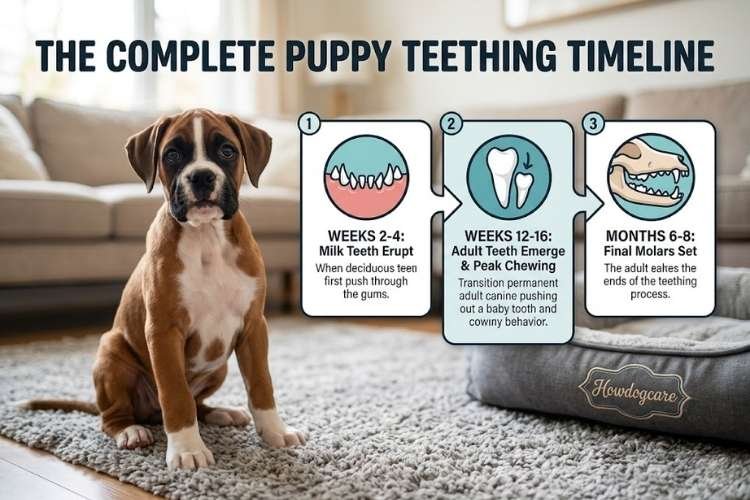
Navigating the puppy teething phase is significantly easier when you have a clear, chronological roadmap. Knowing exactly what is happening inside your dog’s mouth helps you anticipate their needs and protect your belongings.
Unlike humans, dogs complete their entire dental transition in just a few short months. Let’s break down the exact timeline so you know exactly how long this destructive phase will last.
Weeks 2 to 4: The Eruption of the Needle-Sharp Milk Teeth
Your puppy’s dental journey begins long before they even leave their mother’s side. Between two and four weeks of age, their very first set of teeth begins to violently cut through the soft gumline.
These 28 deciduous teeth—commonly called “milk teeth” or “baby teeth”—are notoriously thin, fragile, and needle-sharp.
- Initial eruption order: The tiny incisors (front teeth) usually appear first, followed quickly by the sharp canine teeth and premolars.
- Weaning triggers: The sharp pain these needle-like teeth cause the mother dog naturally encourages her to begin the weaning process.
- No molars yet: Puppies do not have baby molars, simply because their tiny jaws cannot physically accommodate them at this age.
Weeks 12 to 16: The Arrival of the Adult Incisors and Canines
The true, destructive puppy teething phase officially kicks into high gear around the three-to-four-month mark. This is universally the most painful, frustrating, and chaotic window for both the dog and the owner.
During this crucial time, the roots of the baby teeth naturally dissolve, allowing the much larger permanent teeth to forcefully push them out.
- The biting peak: As the massive adult canines (the “fang” teeth) begin to erupt, your puppy will experience peak gum inflammation and a relentless urge to chew hard objects.
- Finding lost teeth: You may occasionally find tiny, hollow baby teeth on the carpet or in their bedding, though most dogs harmlessly swallow them while eating.
- Minor bleeding: Light blood spotting on their favorite chew toys or rope bones is completely normal as the adult incisors firmly lock into place.
Months 6 to 8: Setting the Final Adult Molars
You can finally breathe a massive sigh of relief as your dog approaches six to eight months of age. This specific milestone officially marks the end of the intense puppy teething phase.
Their jaw structure has finally grown large and wide enough to accommodate the heavy-duty adult molars at the very back of the mouth.
- The final canine set: Your dog will now proudly feature a complete, permanent set of 42 strong adult teeth.
- Chewing behavior shift: The frantic, pain-driven destruction will rapidly decrease. However, adolescent dogs will still chew out of boredom or habit if not properly exercised.
- Mandatory veterinary check: This is the perfect time for your vet to examine their mouth and confidently confirm that no stubborn baby teeth were accidentally left behind.
Related: Top 10 Best Puppy Teething Toys Small Breed Reviews
5 Unmistakable Signs Your Puppy is Actively Teething
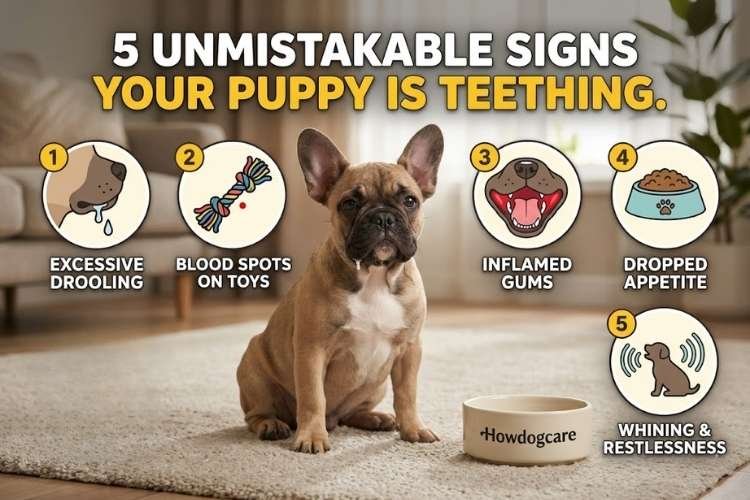
If your normally happy puppy suddenly transforms into a restless, drooling chewer, they are likely entering the thick of the puppy teething phase. Because dogs cannot simply tell us they are in pain, owners must act as sharp observers to diagnose the root cause of these sudden behavioral shifts.
Look for these five unmistakable biological and behavioral signs to confidently confirm your dog is actively cutting new teeth.
1. Excessive Drooling and Wet Paws
You may suddenly notice thick strings of saliva hanging from your dog’s mouth or constantly find wet patches on their front legs. This excessive drooling is a completely natural biological response to severe oral inflammation.
As the gums swell and stretch to accommodate adult teeth, the salivary glands immediately kick into overdrive. This excess saliva works to naturally cool, soothe, and lubricate the highly irritated tissue inside the mouth.
2. Visible Blood Spots on Toys and Bedding
Finding bright red spots on your carpet, dog bed, or favorite chew toy can immediately panic a new pet parent. However, minor bleeding is a completely expected and normal part of the canine teething process.
As the large adult teeth forcefully push the fragile baby teeth out of the gumline, small blood vessels are naturally severed. This normal physical process frequently leaves behind light, harmless traces of blood on whatever they were just chewing.
3. Swollen, Red, or Inflamed Gums
The most direct way to confirm teething pain is by performing a quick, gentle oral exam right at home. Carefully lift your puppy’s upper and lower lips to visually inspect the soft gum tissue resting just above their teeth.
Healthy canine gums should look smooth, flat, and pale pink. Conversely, actively teething gums will appear noticeably swollen, highly puffy, and an angry, inflamed red color.
4. A Sudden Drop in Appetite or Kibble Reluctance
If your normally food-motivated dog suddenly refuses to eat their breakfast, check their mouth before assuming they are terribly sick. Crunching down on hard, dry kibble sends sharp, shooting pain directly through their highly inflamed gums.
This intense discomfort often causes temporary picky eating. Puppies will frequently mouth their food, drop it on the floor, or reluctantly abandon their meals entirely to avoid hurting themselves.
5. Increased Vocalization: Whining and Restlessness
The constant, dull ache of emerging adult teeth is incredibly frustrating for a young dog to endure day and night. This relentless physical discomfort frequently disrupts their normal sleep schedule, making them highly overtired, moody, and cranky.
As a result, you will often hear sudden, unprovoked whining, aimless pacing, and heavy sighing. They are simply vocalizing their frustration as they struggle to find a comfortable, pain-free resting position.
Phase 1: Proactive Puppy-Proofing to Save Your Home
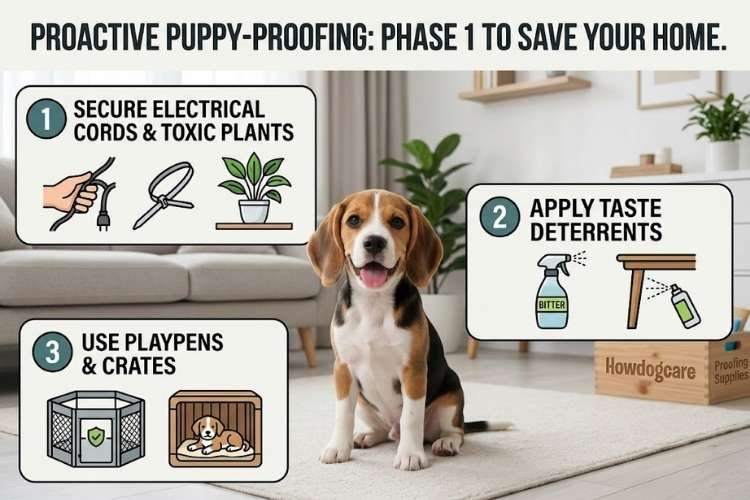
The absolute best way to survive the puppy teething phase is simply assuming your dog will try to chew everything in sight. Proactive puppy-proofing is your very first line of defense against expensive furniture damage and traumatic emergency vet visits.
Before your puppy ever has the chance to make a destructive mistake, you must critically evaluate your living space from their perspective. By actively removing dangerous temptations, you immediately set your puppy up for behavioral success.
Securing Electrical Cords and Toxic Houseplants
Teething puppies naturally explore the world with their mouths and frequently target attractive, ground-level objects. Consequently, loose wires and low-hanging plants instantly become highly dangerous, life-threatening targets.
Chewing on a plugged-in television or laptop cord can easily cause fatal electrocution or severe, permanent oral burns.
- Tuck away all wires: Strictly use heavy-duty PVC cord protectors or tightly zip-tie all loose cables completely out of reach.
- Elevate your greenery: Many common houseplants, such as Pothos and Philodendrons, are highly toxic to dogs. Relocate all plants to high shelves or completely remove them from your dog’s designated zone.
- Remove ground clutter: Diligently pick up all shoes, children’s toys, and remote controls. If an object is left on the floor, your teething puppy automatically assumes it is a chew toy.
Utilizing Bitter Apple Sprays and Taste Deterrents Correctly
You obviously cannot simply hide your baseboards, coffee table legs, or large area rugs from a curious dog. For these permanent household fixtures, taste deterrents like bitter apple spray act as a highly effective behavioral boundary.
When used correctly, these safe, foul-tasting liquids quickly teach your puppy that the couch tastes absolutely terrible.
- Test the deterrent first: Lightly spray a cotton ball and let your dog taste it. If they immediately spit it out and shake their head, the specific brand will work for them.
- Apply generously to targets: Liberally spray the bitter liquid directly onto wooden furniture legs, low cabinet corners, and the edges of your rugs.
- Reapply consistently: These sprays rapidly evaporate and quickly lose their potent taste. You must strictly reapply the deterrent every single day to maintain an effective boundary during the puppy teething phase.
The Power of Playpens and Strategic Crate Confinement
The only 100% foolproof method to prevent furniture destruction is implementing absolute environmental management. When you cannot actively supervise your dog with your full attention, you must strategically restrict their household freedom.
Giving a teething puppy free roam of the house is a guaranteed recipe for chewed dining chairs and ruined carpets.
- Utilize a safe crate: A properly sized crate acts as a secure, den-like sanctuary. It keeps your puppy perfectly safe and your furniture intact whenever you leave the house.
- Deploy exercise pens (x-pens): Set up a sturdy metal playpen in the center of your living room. This provides a safe, controlled space to play with approved toys while physically blocking access to the couch.
- Use baby gates for zoning: Firmly block off access to carpeted bedrooms, bathrooms, or home offices. Keeping their world small actively minimizes the chances of destructive chewing mistakes.
Related: Top 10 Best Indoor Dog Gates Reviews (Updated Guide & Tips)
Phase 2: The Best DIY Soothing Remedies for Inflamed Gums
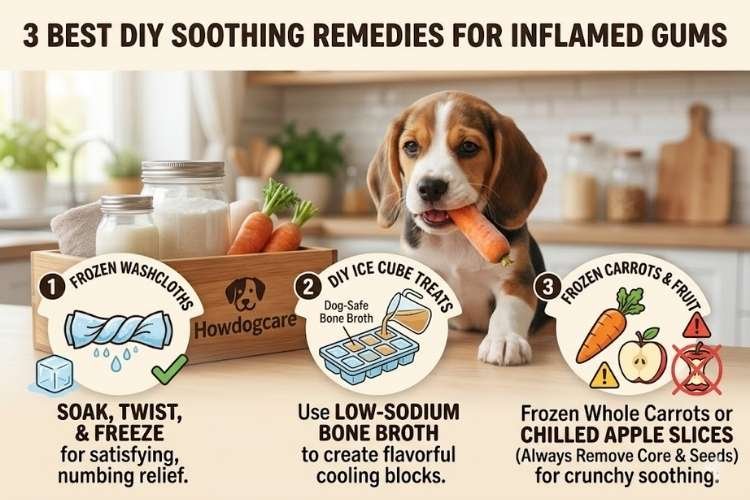
Surviving the puppy teething phase does not require spending a fortune on expensive commercial products. Some of the most highly effective pain relief strategies come directly from your own kitchen.
By utilizing safe, budget-friendly DIY remedies, you can instantly provide natural, soothing comfort for your dog’s painfully inflamed gums. Cold temperatures are your absolute best friend during this stage, acting as a powerful, natural anesthetic.
The Magic of Frozen Wet Washcloths
One of the absolute best, vet-approved teething hacks requires nothing more than a cheap cotton washcloth and cold water. The soft, textured fabric gently massages their sore gums, while the freezing temperature rapidly numbs the throbbing pain.
To create this highly satisfying, budget-friendly chew, follow these exact steps:
- Soak and wring: Thoroughly soak a clean, plain cotton washcloth in water or low-sodium chicken broth, firmly wringing it out so it remains damp but not dripping.
- Twist tightly: Tightly twist the wet fabric into a thick, rope-like shape to create a highly satisfying, durable chewing surface.
- Freeze until solid: Place the twisted rag in your freezer for at least two hours before offering it to your clearly uncomfortable puppy.
- Mandatory supervision: Always strictly supervise your dog with this remedy. You must immediately take the cloth away if they begin tearing, shredding, or swallowing the fabric to prevent intestinal blockages.
DIY Ice Cube Treats Using Pet-Safe Bone Broth
Plain ice cubes are excellent for rapidly reducing oral swelling, but plain water easily loses a hyperactive puppy’s interest. To keep them happily occupied for much longer periods, elevate this simple trick by using highly flavorful, dog-safe liquids.
Pour low-sodium, onion-free and garlic-free bone broth directly into standard ice cube trays. These savory ice blocks provide fantastic, low-calorie mental enrichment while actively soothing their hot, irritated mouths.
You can easily toss a few of these frozen cubes directly onto the grass for a fun outdoor game. Alternatively, stuff them inside a hollow rubber chew toy for a highly rewarding, pain-relieving indoor challenge.
Frozen Carrots and Chilled Apple Slices for Natural Relief
If you prefer to entirely avoid the watery mess of melting ice, fresh produce serves as an incredible, vitamin-packed chewing alternative. Many common household vegetables and fruits act as safe, healthy, and cheap alternatives to commercial teething rings.
- Large frozen carrots: Whole, thick carrots are arguably the ultimate natural teething chew. The dense, frozen fiber provides immense jaw resistance, effectively helping to safely loosen stubborn baby teeth.
- Chilled apple slices: Serve thick, cold apple slices straight from the refrigerator for a quick, crunchy, and highly soothing afternoon snack.
- Crucial safety warning: Always completely remove the apple core and meticulously pick out all the seeds. Apple seeds contain trace amounts of cyanide and pose a severe choking hazard to young puppies.
Phase 3: Choosing the Safest Teething Toys (And What to Avoid)
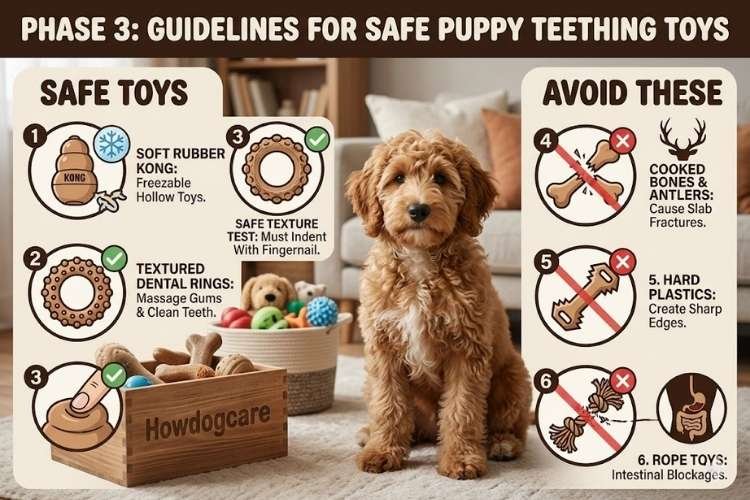
Successfully navigating the puppy teething phase requires more than just patience; it requires the right tools. Providing your dog with appropriate, safe chew toys is the absolute best way to protect your furniture and their dental health.
However, not all dog toys are created equal. Walking down a pet store aisle can be incredibly overwhelming, and choosing the wrong product can easily result in a painful veterinary emergency.
Why Texture Matters: Soft Rubber vs. Hard Nylon
When evaluating a new toy for a young dog, texture is the most critical safety factor. A four-month-old puppy has incredibly fragile, newly erupting adult teeth that can easily fracture under too much pressure.
- The fingernail test: Before buying any toy, press your thumbnail firmly into the surface. If the material does not slightly indent, it is absolutely too hard for your puppy’s mouth.
- Embrace soft rubber: Specially formulated puppy rubber provides the perfect amount of satisfying resistance without risking catastrophic tooth damage.
- Avoid hard nylon: Dense nylon bones are designed for aggressive adult chewers and are far too rigid for the delicate puppy teething phase.
Related: Top 10 Best Puppy Teething Treats Reviews
Top Recommended: Hollow Rubber Toys for Freezing
Hollow, stuffable rubber toys are universally recommended by veterinarians and professional trainers for excellent reason. They are the ultimate multi-tasking tool for teething puppies.
- Endless customization: You can easily stuff these highly durable toys with wet food, plain yogurt, or mashed bananas.
- The freezing advantage: Placing a stuffed rubber toy in the freezer transforms it into a long-lasting, highly soothing ice pack for their throbbing gums.
- Independent enrichment: Extracting the frozen food requires intense focus, keeping your puppy quietly occupied and mentally exhausted for hours.
Top Recommended: Textured Dental Rings and Nubby Chews
Sometimes, a puppy just needs a satisfying texture to gnaw on without the added distraction of food. This is exactly where specifically engineered dental rings truly shine.
- Targeted gum massage: Toys covered in raised rubber nubs or soft bristles actively rub against inflamed tissue, providing immediate, targeted pain relief.
- Natural plaque removal: The mechanical action of chewing on these textured surfaces helps gently scrape away early plaque buildup on their brand-new adult teeth.
- Easy to grip: Ring-shaped toys allow your puppy to easily pin the object down with their front paws for serious, focused chewing sessions.
High-Risk Items to Ban: Cooked Bones, Antlers, and Hard Plastics
While pet stores readily sell them, many popular natural chews are highly dangerous for young, developing mouths. You must strictly ban certain items from your home to prevent devastating injuries.
- Never feed cooked bones: Cooking forcefully strips the moisture from real animal bones, causing them to easily splinter into razor-sharp shards that can fatally puncture the intestines.
- Avoid dense antlers and hooves: These natural products are structurally harder than canine teeth. Chewing them frequently causes painful slab fractures, directly leading to highly expensive emergency dental extractions.
- Skip hard plastic toys: Cheap, rigid plastic easily cracks under strong jaw pressure, creating sharp edges that aggressively cut your dog’s sensitive gums.
The Hidden Danger of Rope Toys During the Teething Phase
Braided cotton rope toys are incredibly popular, but they pose a severe, hidden risk during the destructive puppy teething phase. While they are fantastic for supervised games of tug-of-war, they are absolutely terrible independent chew toys.
- The shredding risk: Teething puppies will obsessively gnaw on the ends of the rope, easily pulling out and swallowing long, indigestible strands of cotton thread.
- Linear foreign bodies: Once swallowed, these strong strings do not safely dissolve in the stomach. Instead, they can violently bunch up the intestines, creating a life-threatening linear blockage requiring immediate surgery.
- Strict supervision required: If you choose to use rope toys, strictly reserve them for active, human-led playtime and lock them safely away immediately afterward.
You might also like
Phase 4: Expert Training Tactics to Stop Puppy Nipping
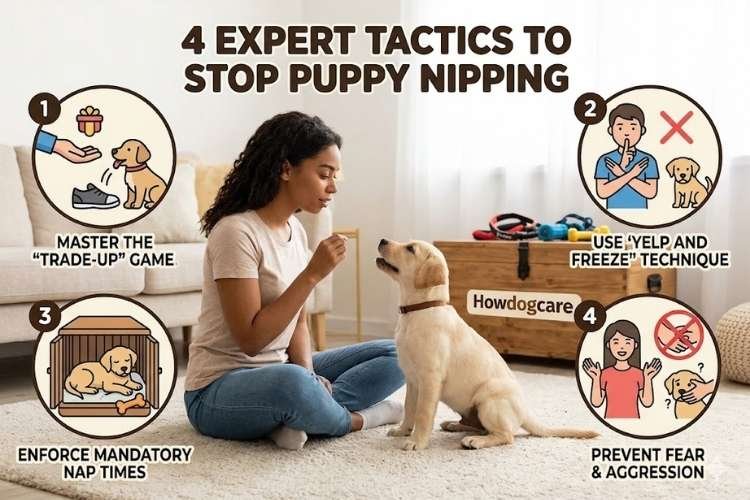
While providing safe chew toys handles the physical pain of the puppy teething phase, you must also actively address their daily behavior. Pain management alone will not magically stop a hyperactive puppy from nipping your ankles or stealing your favorite shoes.
You must consistently pair physical relief with clear, structured bite inhibition training. This dual approach ensures your puppy learns exactly what is acceptable to chew on and what is strictly off-limits.
Mastering the “Trade-Up” Game for Stolen Items
Teething puppies are notorious thieves, constantly running off with forbidden items to soothe their aching gums. Chasing them around the living room instantly turns stealing into a highly rewarding game, while aggressively snatching items away frequently creates dangerous, long-term resource guarding.
To safely retrieve a stolen shoe without conflict, you must master the highly effective “trade-up” game.
- Stay completely calm: Do not yell, panic, or run toward the puppy. Approach them slowly and confidently.
- Offer a premium exchange: Present a significantly higher-value item right near their nose, such as a piece of real chicken or a premium, smelly treat.
- Praise the drop: The exact second they willingly drop the stolen shoe to grab the treat, heavily praise them and swiftly remove the forbidden item from the floor.
Related: Top 10 Best Puppy Training Treats Soft Reviews
The “Yelp and Freeze” Method for Bite Inhibition
Puppies naturally learn how hard is “too hard” by vigorously playing with their littermates. If one puppy bites another too fiercely, the injured sibling lets out a sharp yelp and instantly stops playing.
You can easily mimic this exact canine communication to actively teach your dog that human skin is incredibly fragile.
- Deliver a sharp yelp: The very moment their sharp teeth painfully touch your skin, let out a loud, sudden “Ouch!” or high-pitched yelp.
- Freeze completely: Instantly cross your arms, turn your back, and become completely boring. All playtime and eye contact must immediately stop.
- Remove yourself: If they ignore the yelp and continue to nip your ankles, promptly walk out of the room and shut the door for 30 seconds, proving that rough biting permanently ends the fun.
Why You Must Never Use Physical Punishment for Biting
It is incredibly frustrating when a puppy relentlessly bites your hands, but you must completely avoid outdated, dominance-based training methods. Physically punishing a dog during the highly sensitive puppy teething phase is incredibly destructive to your long-term bond.
Tapping them hard on the nose or forcibly holding their muzzle shut does not teach them what to chew instead. It only teaches their developing brain that human hands are unpredictable, painful, and dangerous.
Using physical force quickly creates deep-rooted hand shyness. This causes the dog to reflexively snap or bite out of sheer fear-based aggression whenever a stranger simply reaches down to pet them.
Enforcing Mandatory Nap Times for Overtired, Moody Puppies
Owners frequently misinterpret a frantic, aggressive biting fit as a sign of a stubborn or bad temperament. In reality, a puppy acting like a manic, unstoppable land shark is almost always severely overtired.
Just like human toddlers, young dogs completely lack the mental ability to self-soothe when they become utterly exhausted. The constant, dull ache of emerging teeth frequently disrupts their natural sleep cycles, leading to extreme crankiness.
- Watch for the witching hour: If your redirection tactics completely fail and their biting becomes frantic and erratic, immediately stop training.
- Enforce a quiet nap: Gently place them in their secure, darkened crate with a highly durable, safe chew toy.
- Let them reset: Without the constant stimulation of the living room, an overtired puppy will usually fall fast asleep within five minutes, eventually waking up as a calm, manageable dog.
Veterinary Red Flags During the Teething Process
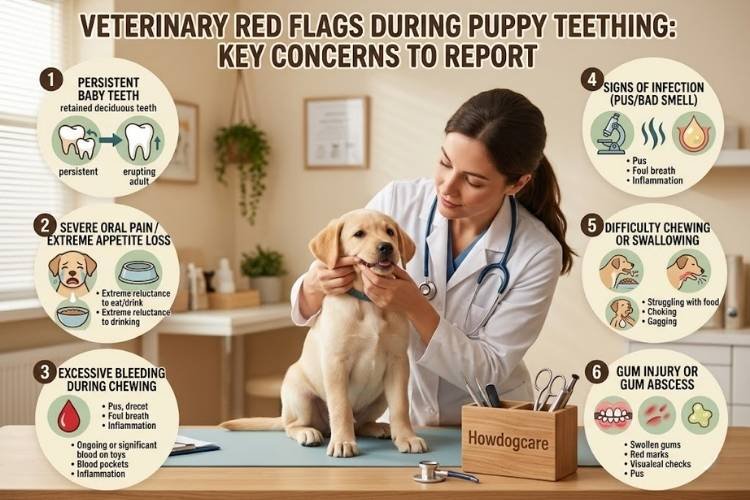
While the puppy teething phase is a completely natural biological process, it does not always proceed perfectly. As a responsible owner, you must carefully monitor their mouth for potential medical complications.
Catching these veterinary red flags early prevents permanent damage to their adult bite and saves you from highly expensive surgical procedures down the road.
Identifying Retained Deciduous Teeth (Double Teeth)
Sometimes, a stubborn baby tooth fails to naturally fall out as the permanent adult tooth erupts right beside it. This highly common condition creates a crowded “double teeth” appearance, frequently seen in small and toy breeds like Yorkies and Chihuahuas.
- Bite misalignment: The retained baby tooth physically forces the incoming adult tooth into an unnatural, highly painful angle.
- Trapped debris: The incredibly tight space between the two teeth easily traps food and rapidly accelerates dangerous plaque buildup.
- Veterinary intervention: If the baby tooth remains firmly rooted past six months of age, it requires immediate professional removal.
Spotting Dangerous Oral Infections and Abscesses
As baby teeth finally fall out, they leave behind small, open wounds in the gumline that are highly susceptible to bacterial infections. While very mild redness is normal, severe infections require immediate medical treatment and antibiotics.
- Severe facial swelling: Watch carefully for sudden, asymmetrical swelling right beneath the eyes or along the jawline.
- Foul-smelling breath: A sudden, overwhelmingly putrid or rotting odor is a primary indicator of trapped bacteria or an invisible root abscess.
- Heavy bleeding: Continuous, bright red bleeding that does not naturally stop after a few minutes is not normal and requires urgent veterinary care.
When to Schedule a Professional Dental Extraction
If you clearly spot a retained tooth or suspect a fractured root from a hard chew toy, immediately consult your trusted veterinarian. They will visually examine the mouth and take dental X-rays to determine the safest, least invasive course of action.
- Combine with spay/neuter: Vets frequently recommend performing necessary dental extractions while the dog is already safely under anesthesia for their routine spay or neuter surgery.
- Never wait it out: Delaying a medically necessary extraction permanently alters their jaw structure and guarantees a lifetime of chronic, silent dental pain.
Quick Answers to Your Puppy Teething FAQs
Navigating the various stages of the puppy teething phase inevitably brings up numerous questions. Here are the clear, concise, and vet-approved answers to the most common concerns pet parents face.
1. Exactly how long does the puppy teething phase last?
The intense, highly destructive window of teething typically peaks between three and five months of age. However, the entire biological process officially ends when they reach six to eight months old, successfully setting their final adult molars.
2. Is it safe to pull a loose baby tooth out myself?
No, you must never manually pull or forcefully wiggle a loose puppy tooth yourself. Pulling can easily snap the long root off deep inside the gumline, directly causing a highly painful infection that requires emergency surgery.
3. Do puppies swallow their own baby teeth?
Yes, the vast majority of puppies harmlessly swallow their baby teeth while eating kibble or enthusiastically chewing on toys. These tiny teeth safely pass right through their digestive tract without causing any internal damage.
4. Can teething cause diarrhea or a mild fever in dogs?
While human babies often get fevers while teething, puppies do not. Teething simply causes localized oral pain; it does not cause diarrhea, vomiting, or severe lethargy. If your puppy displays these systemic symptoms, they are actively sick with a virus or parasite, not just teething.
The Final Takeaway: Consistency and Patience Win the Day
Surviving the puppy teething phase is a temporary but highly exhausting marathon. Your hands will likely get scratched, and a rogue shoe might unfortunately get ruined along the way. However, you must always remember that your puppy is acting out of biological pain, not spite.
By proactively puppy-proofing your home, heavily utilizing frozen soothing remedies, and remaining strictly consistent with your bite inhibition training, you will successfully navigate this chaotic window. Your incredible patience right now guarantees a beautifully behaved, gentle adult dog in the future.