


Bringing a new puppy or rescue dog into your home is incredibly exciting, but managing their environment can quickly become stressful. If you are dealing with indoor potty accidents or chewed furniture, learning exactly how to crate train a dog is your ultimate solution.
When done correctly, crate training never involves fear or punishment. Instead, it builds a comfortable, secure environment that your dog actively seeks out. In this guide, we will walk you through the exact steps to create a positive, stress-free crate experience for your furry best friend.
The “Den” Philosophy: Why Crate Training is Crucial for Your Dog’s Well-being
Many beginners mistakenly view a crate as a harsh cage or a canine prison. To successfully train your pet, you must completely shift this mindset. In the wild, canine ancestors naturally sought out small, enclosed dens for warmth, safety, and rearing puppies.
By introducing a crate properly, you are simply tapping into this powerful, biological instinct. A crate becomes their personal bedroom—a quiet sanctuary where they can fully relax without needing to remain on high alert.
Preventing Destructive Behavior When You Aren’t Home
Puppies explore the world entirely with their mouths, and an unsupervised dog can easily swallow toxic plants or chew through dangerous electrical cords.
- The crate actively prevents the rehearsal of bad habits while you are away at work.
- It protects your expensive furniture, shoes, and carpets from destructive teething.
- Most importantly, it prevents life-threatening intestinal blockages caused by swallowing foreign objects.
Providing a Safe Haven for Anxious or Overstimulated Dogs
Just like humans, dogs can become easily overwhelmed in chaotic environments. Whether it is a noisy family gathering, a booming thunderstorm, or crying toddlers, your dog needs a guaranteed escape route.
When a crate is introduced correctly, an anxious dog will voluntarily retreat into it to self-soothe. It provides a predictable, dark, and quiet environment that rapidly lowers their heart rate and naturally reduces cortisol levels.
Preparation Phase: Choosing the Perfect Crate and Setup
Before you can actively begin training, you must set the stage for success. Buying the wrong equipment or placing it in the wrong room will instantly sabotage your efforts. Let’s look at the essential preparation steps.
Selecting the Right Size: Not Too Big, Not Too Small
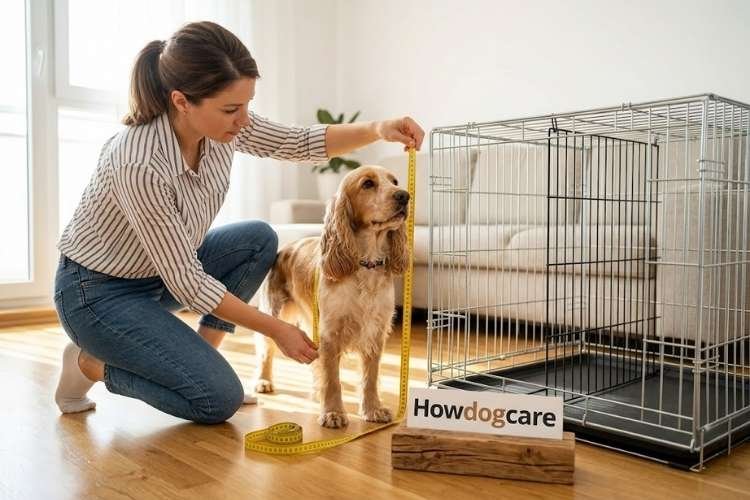
Buying a crate that is too large is the number one mistake pet parents make during housebreaking. If the space is massive, a dog will naturally sleep in one corner and use the opposite corner as their bathroom.
- The crate should be just large enough for your dog to stand up comfortably without hitting their head.
- They must be able to turn around in a full circle effortlessly.
- They should be able to lie down fully extended on their side without being cramped.
The “Turnaround” Rule for Growing Puppies
If you are bringing home an eight-week-old puppy, do not buy five different crates as they grow. Instead, invest in a high-quality adult-sized crate that includes a wire divider panel.
You can use the divider to physically shrink the interior space, enforcing the “turnaround” rule. As your puppy grows taller and longer, simply move the panel back every few weeks to perfectly accommodate their new size.
Wire vs. Plastic vs. Soft-Sided: Which Material is Best?
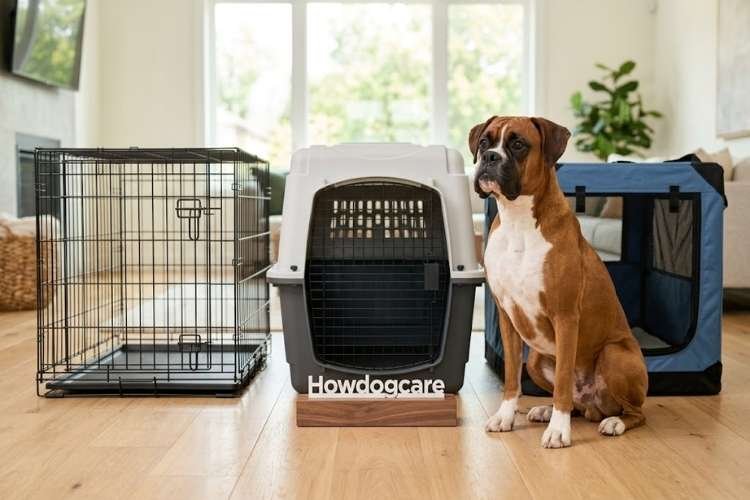
The market is flooded with different crate styles, but selecting the right material depends entirely on your dog’s specific needs and your lifestyle.
- Wire Crates: Excellent for maximum airflow and visibility. They are ideal for hot climates and highly social dogs that want to observe the room.
- Plastic Airline Crates: Perfect for creating a dark, enclosed, den-like atmosphere. They are highly recommended for nervous dogs or frequent travelers.
- Soft-Sided Crates: Best used strictly for calm, fully trained adult dogs. A teething puppy will chew through the fabric mesh in minutes.
Location Matters: Where to Put the Crate in Your Home
Where you place the crate dictates how quickly your dog accepts it. Dogs are pack animals, and isolating them in a dark, distant basement immediately triggers severe separation anxiety.
- Start in High-Traffic Areas: Initially, place the crate in the living room or kitchen where the family spends the most time.
- Keep it Comfortable: Avoid placing the plastic or wire crate directly over an active heating vent or in direct, blazing sunlight.
- Nighttime Placement: Move the crate into your bedroom at night so your puppy can hear your steady breathing, which dramatically reduces nighttime whining.
8 Proven Steps: How to Crate Train a Dog Without the Tears
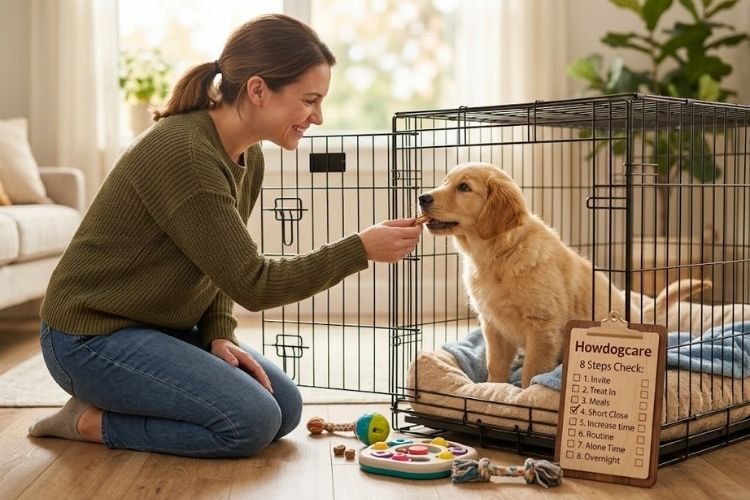
Mastering how to crate train a dog requires patience, consistency, and a commitment to positive reinforcement. If you rush the process or force your dog inside, the crate quickly becomes a terrifying trap rather than a relaxing bedroom.
By breaking the training down into small, digestible phases, you empower your dog to make confident choices. Follow these eight sequential steps to build a lifelong, positive association with their new den.
Step 1: Leave the Door Open and Let Them Explore Naturally
Your very first goal is to make the crate an exciting, highly rewarding piece of furniture. Secure the door wide open so it cannot accidentally swing shut and spook your dog.
- Toss a few high-value, incredibly smelly treats into the back of the crate while they aren’t looking.
- Let your dog discover these hidden “prizes” entirely on their own throughout the day.
- Crucial Rule: Never physically push or drag your dog into the enclosure. Let their nose guide them in naturally.
Step 2: Feed Every Meal Inside the Crate to Build Positive Associations
Food is the ultimate canine motivator. By moving their daily meals inside the enclosure, you instantly transform a strange plastic box into the best room in the house.
- Place their food bowl all the way at the back of the crate to encourage them to step fully inside.
- If your dog is deeply fearful, start by placing the bowl right outside the door, moving it an inch further inside for each subsequent meal.
- Always leave the door completely open while they eat during this early, confidence-building stage.
Step 3: Introduce the “Kennel” Command with High-Value Treats
Once your dog happily walks into the crate to search for food, it is time to attach a verbal cue to the action. Choose a simple, distinct word like “Kennel,” “Crate,” or “House.”
- With a premium treat in your hand, enthusiastically say your chosen command word.
- Toss the treat into the back of the crate. As they walk in to retrieve it, instantly praise them.
- Call them back out, and repeat this fun, low-stress game for five minutes at a time.
Step 4: Close the Door for Short, Supervised Intervals
When your dog is comfortably eating their full meals inside without hesitation, you can introduce the concept of a closed door. This step requires careful timing to prevent panic.
- Prepare their meal, place it inside, and gently swing the door shut while they are actively eating.
- Stand right next to the crate, quietly observing their body language.
- The moment they finish their last bite of kibble, immediately open the door and let them out.
Step 5: Slowly Increase the Time While You Are in the Room
Now you must teach your dog to settle down and relax with the door secured. Provide a mentally stimulating activity to keep their brain happily occupied.
- Give them a durable rubber toy stuffed with frozen peanut butter or a long-lasting chew stick.
- Close the door and sit quietly in the same room, reading a book or watching television.
- Keep these sessions brief, aiming for 10 to 15 minutes. Open the door only when they are lying down quietly.
Step 6: Step Out of Sight (The Disappearing Act)
Dogs need to learn that you leaving the room does not mean you are gone forever. This step builds vital independence and prevents isolation distress.
- Secure your dog in the crate with a high-value chew toy and quietly step out of the room.
- Return after just one or two minutes, remaining completely calm and neutral.
- Gradually increase your time out of sight from two minutes to five, then ten, and eventually thirty minutes.
Step 7: Practice Short Departures from the House
Once your dog can comfortably relax in the crate for 30 minutes while you are in another room, you can officially leave the house. Start with quick, predictable errands.
- Put them in the crate 10 minutes before you actually walk out the front door to let them settle.
- Leave the house for brief trips, like grabbing a coffee or picking up the mail.
- When you return, quietly let them out. Do not celebrate or make a massive fuss over your arrival.
Why Low-Key Goodbyes Prevent Separation Anxiety
A highly emotional, prolonged goodbye actively damages your crate training progress. When you hug your dog, use a high-pitched voice, and apologize for leaving, you signal that a terrifying event is about to happen.
Always keep your departures incredibly boring and routine. A quick, calm “Be a good dog” is all you need. This neutral energy teaches them that you leaving the house is simply no big deal.
Step 8: Transitioning to Overnight Sleeping in the Crate
Nighttime crate training provides invaluable peace of mind, knowing your puppy isn’t destroying the living room while you sleep. However, puppies often panic when left entirely alone in the dark.
- Initially, place the crate directly next to your bed so they can hear your breathing and smell your scent.
- If they whine in the middle of the night, keep the lights off and take them out for a strictly business potty break.
- Once they sleep through the night consistently without accidents, you can slowly begin inching the crate toward its permanent location in the house.
You might also like
Troubleshooting Common Crate Training Problems
Even with a perfect plan, learning how to crate train a dog comes with inevitable challenges. Every dog learns at their own pace, and minor setbacks are a completely normal part of the process. Let’s troubleshoot the most frequent roadblocks pet parents encounter to keep your training on track.
How to Handle Whining and Barking (Without Giving In)
Hearing your new puppy cry inside their crate is emotionally exhausting. However, rushing to open the door the second they whine actively rewards the exact behavior you want to stop.
- Wait for a brief moment of complete silence—even just three seconds—before you unlatch the door.
- This strict timing teaches them that quiet, calm behavior is the only key that unlocks their den.
- If you cave and let them out during a barking fit, they learn that extreme persistence always wins.
The Difference Between a Potty Cry and a Tantrum
You must learn to rapidly differentiate between genuine physical distress and an attention-seeking tantrum. A potty cry is usually a sudden, urgent whine after several hours of quiet, restful sleep.
If you suspect a full bladder, take them outside on a leash immediately. Keep the trip silent, boring, and strictly business; if they do not go within two minutes, return them straight to the crate without any playtime.
What to Do If Your Puppy Consistently Soils the Crate
Dogs instinctively avoid soiling their own sleeping quarters. If your puppy is constantly having accidents inside their enclosure, you must immediately re-evaluate your physical setup.
- Check the Size: Ensure you are actively using a wire divider panel so they cannot sleep on one side and pee on the other.
- Remove Soft Bedding: Thick blankets quickly absorb urine, masking the uncomfortable dampness. Use a bare plastic pan until they are fully potty trained.
- Rule Out Medical Issues: Frequent accidents often indicate a hidden urinary tract infection, requiring a quick veterinary checkup to rule out physical pain.
Why You Should Never Use the Crate for Punishment
Your dog’s crate must remain a sanctuary of ultimate safety and relaxation. Banishing your dog to their enclosure in anger completely destroys the delicate trust you have carefully built.
If you yell and aggressively lock them away after they chew a shoe, the crate simply becomes a terrifying prison. Instead, proactively manage their environment and use the crate gently before bad behavior has a chance to occur.
Frequently Asked Questions (FAQs) About Crate Training
Navigating the early days of confinement training naturally brings up a lot of practical questions. Here are the clear, authoritative answers to the most common inquiries pet parents ask.
1. How Long Can I Safely Leave My Dog in a Crate?
As a general rule of thumb, a puppy can safely hold their bladder for one hour per month of age, plus one. Therefore, a strict maximum for a three-month-old puppy is four hours.
Adult dogs should generally never be crated for more than six to eight hours at a time. Extended, daily isolation causes severe physical discomfort, joint stiffness, and deep psychological distress.
2. Should I Cover My Dog’s Wire Crate with a Blanket?
Draping a breathable blanket over a wire crate is a fantastic way to mimic a dark, secure, natural den. This simple trick instantly reduces visual stimulation and calms high-strung, alert dogs.
- Always leave one side completely uncovered to guarantee proper airflow and temperature control.
- Never use a heavy, thick blanket in warm climates, as wire crates can quickly overheat.
3. Can I Successfully Crate Train an Older Rescue Dog?
Absolutely, but older dogs often come with emotional baggage or previous traumatic confinement experiences. You must proceed much slower than you would with a blank-slate puppy.
Rely heavily on high-value frozen puzzle toys to slowly rebuild a positive, happy association. Never force a panicked rescue dog inside; you must let them set the pace of their own learning to avoid triggering deep-seated fears.
4. What Safe Toys Can I Leave Inside the Crate?
Leaving a dog completely unoccupied leads to deep boredom and destructive anxiety. However, you must only provide indestructible, crate-safe options to prevent a medical emergency.
- Heavy-duty rubber toys stuffed with frozen, dog-safe peanut butter are the gold standard for unsupervised chewing.
- Strictly avoid plush toys, squeakers, or rope toys, as they pose a severe, fatal choking hazard if shredded and swallowed while you are not home.
Conclusion: Patience and Consistency Lead to Crate Success
Mastering exactly how to crate train a dog is not a fast, weekend project; it is a gradual journey of building mutual trust. By prioritizing positive reinforcement and respecting your dog’s natural denning instincts, you create a lifelong safe haven they will actually love.
Stick rigorously to your daily routine, heavily celebrate the small victories, and never rush the process. With unwavering consistency, your dog will soon happily retreat to their personal bedroom, bringing immense peace of mind to your entire household.