


Bringing a new dog into your home marks the beginning of an incredible journey. Understanding the specific puppy development stages is absolutely essential for any responsible pet parent who wants to raise a healthy, well-adjusted adult dog.
Unlike human maturation, a puppy’s growth happens at a lightning-fast pace. Knowing exactly what to expect week by week empowers you to provide the right care, nutrition, and training exactly when your dog needs it most.
The Incredible Journey: Understanding How Your Puppy Grows
A dog transforms from a helpless, blind newborn into a physically mature adult in just one to two short years. This rapid maturation is highly complex and vastly different from the slow progression of human development.
Because puppies grow and learn so quickly, missing a critical developmental window can easily lead to lifelong behavioral struggles. Your puppy’s brain is constantly wiring itself based on their daily experiences.
By thoroughly familiarizing yourself with these week-by-week milestones, you can confidently anticipate your puppy’s needs rather than constantly reacting to bad behavior. This proactive approach actively prevents severe behavioral issues—such as deep-rooted anxiety or fear-based aggression—before they ever have a chance to take hold.
Why Tracking Growth Milestones is Crucial for Canine Health
As an informed owner, your daily observations act as the primary line of defense for your dog’s overall well-being. Closely monitoring both physical and behavioral markers allows you to catch potential health problems incredibly early.
For example, if your puppy is not attempting to bear weight on their legs by a certain week, it flags an immediate developmental delay. Tracking these milestones helps you quickly identify subtle nutritional deficiencies or emerging behavioral red flags.
Here is why tracking growth is non-negotiable for canine health:
- Early illness detection: Spotting missed physical milestones often points directly to underlying congenital health conditions.
- Accurate nutritional adjustments: It ensures your puppy is gaining the correct, healthy weight for their specific breed size, protecting their fragile joints.
- Timely behavioral intervention: Catching signs of resource guarding or fear early makes positive reinforcement training significantly more effective.
The Role of Genetics and Environment in Puppy Maturation
Every single puppy is fundamentally shaped by two powerful forces working together: their inherited DNA and your home. While genetics essentially provide the architectural blueprint, your immediate environment acts as the active builder.
Inherited breed traits heavily dictate your dog’s ultimate physical size, baseline energy levels, and natural working instincts. For instance, a Border Collie is genetically hardwired with a strong drive to herd, while a Great Pyrenees is bred to instinctively guard.
However, your immediate environment and the daily socialization you provide determine exactly how those genetic traits are ultimately expressed. A calm, highly structured home environment combined with positive training can easily soothe a naturally high-energy breed, beautifully molding them into a perfectly balanced adult dog.
Stage 1: The Neonatal Period (Birth to 2 Weeks)
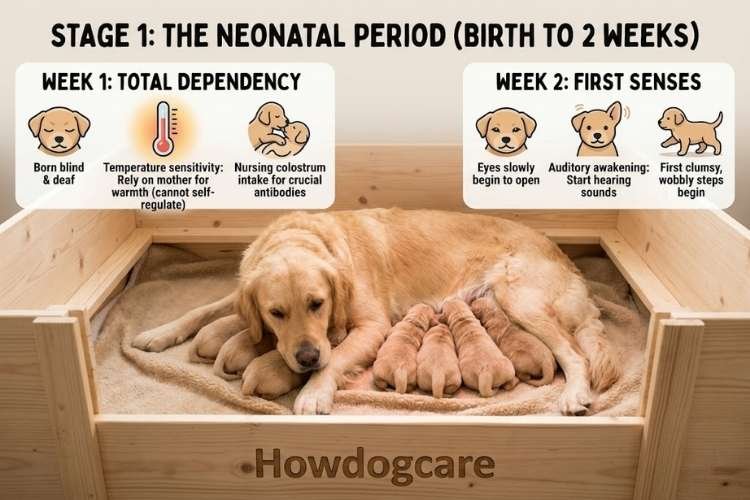
The very first of the puppy development stages is known as the neonatal period. During these fragile first two weeks, puppies are completely helpless and rely entirely on their mother for their most basic survival needs.
Your primary role during this phase is simply observing from a distance. You must ensure the mother is healthy, calm, and fully capable of providing round-the-clock care to her vulnerable litter.
Week 1: Total Dependency and Sensory Development
The first week of life is entirely focused on eating, sleeping, and staying warm. A newborn puppy’s brain is highly immature, operating purely on basic survival instincts rather than conscious thought.
Physical Milestones: Blind, Deaf, and Temperature Sensitive
Puppies are born completely blind, deaf, and without teeth. They navigate their tiny world purely through a highly developed sense of smell and basic touch, instinctively crawling toward their mother’s warmth.
Most importantly, newborn puppies cannot regulate their own body temperature. They must stay huddled tightly against their mother and littermates; otherwise, they risk fatal hypothermia within hours.
Furthermore, their internal organs are not fully independent yet. The mother must physically lick her puppies’ abdomens to stimulate urination and defecation, as they cannot eliminate waste on their own.
Care Tips: The Importance of the Mother’s Colostrum
Proper nutrition during the first 24 hours is a literal matter of life and death. The mother’s very first milk, known as colostrum, is thick, highly concentrated, and packed with life-saving maternal antibodies.
This specialized milk temporarily acts as the puppy’s immune system, fiercely protecting them against dangerous environmental pathogens while their own immune system slowly develops.
To support the litter during week one, owners should focus on the following:
- Monitor nursing strictly: Ensure every single puppy, especially the “runt,” is successfully latching and actively nursing multiple times a day.
- Maintain whelping box hygiene: Keep the bedding impeccably clean and dry to prevent life-threatening bacterial infections.
- Limit human interference: Avoid unnecessary handling. Over-handling puppies causes the mother severe stress and disrupts her natural maternal instincts.
Related: Top 10 Best Dog Pad Holder Tray Reviews
Week 2: The First Glimpse of the World
Week two brings massive, exciting shifts in these early puppy development stages. While they still spend the vast majority of their day sleeping and nursing, their bodies are preparing for an explosion of rapid growth.
Eyes Opening and Initial Motor Movements
The most highly anticipated milestone of week two is the gradual opening of the puppy’s eyes, which typically occurs between days 10 and 14.
Initially, their vision is quite poor. Their eyes will appear cloudy, grayish-blue, and highly sensitive to bright light. It takes several more weeks for their true eye color to emerge and for sharp, focused vision to fully develop.
Simultaneously, their physical coordination begins to noticeably advance.
- Unsteady standing: They slowly transition from a dragging “army crawl” to pushing themselves up into a wobbly, unstable stance.
- Auditory awakening: Their ear canals finally begin to open, allowing them to hear sudden noises, loud voices, and their mother’s reassuring grunts.
- Active navigation: They begin clumsily exploring the immediate perimeter of the whelping box, actively interacting with their siblings for the first time.
Stage 2: The Transitional Period (Weeks 2 to 4)

The transitional period is arguably the most dramatic phase within the entire timeline of puppy development stages. In just two short weeks, a puppy transforms from a completely helpless newborn into a curious, interactive little animal.
This rapid phase marks the true awakening of their primary senses. As their brains rapidly process brand-new sights and sounds, they finally begin to interact purposefully with their immediate environment and their canine family.
Week 3: Hearing, Walking, and the First Teeth
Week three is a massive turning point for both canine mobility and sensory input. They are no longer simply existing in the whelping box; they are actively experiencing the world around them.
Physical Milestones: Wobbly Steps and the Eruption of Milk Teeth
The most significant sensory change is the full development of the auditory canal. As their ears finally open, puppies will suddenly startle at loud noises and actively turn their heads toward their mother’s reassuring voice.
Simultaneously, their leg muscles finally gain enough strength to bear their own body weight.
- The wobbly walk: You will see them take their very first uncoordinated, clumsy steps, replacing the neonatal “army crawl” with actual walking.
- Milk teeth eruption: Those razor-sharp little puppy teeth—often referred to as milk teeth—begin cutting through the gums. This physical milestone prepares their mouths for the eventual weaning process.
Behavioral Changes: Recognizing Littermates and Humans
With their eyes and ears now functioning properly, a beautiful behavioral shift naturally occurs. The puppy suddenly realizes they are not the only creature in the whelping box.
They will start actively recognizing their littermates, leading to the very first, heartwarming signs of intentional tail wagging. Furthermore, they begin to register the presence of gentle human caretakers, laying the absolute earliest foundations for positive human socialization.
Week 4: Finding Their Voice and Exploring the Den
By the end of the first month, your puppy finally begins to look and act like a miniature adult dog. They are highly curious, significantly more coordinated, and eager to test their newly discovered physical limits.
Barking, Growling, and Play-Fighting Basics
Week four introduces a completely new dynamic to the litter: noise. As puppies discover their vocal cords, you will hear their very first clumsy attempts at barking, squeaking, and playful growling.
This week also kicks off their vital social education.
- Play-fighting: They will actively engage in clumsy wrestling matches and tumbling games with their siblings.
- Learning canine body language: Through these early scuffles, they begin to learn basic social cues and understand how their physical actions affect others.
- Expanding the perimeter: Gaining confidence, they will frequently waddle to the edges of the whelping box, showing a strong, natural desire to explore the larger “den” around them.
Related: Is The Barking Dog Collar Effective? Complete Guide for Owners
Stage 3: The Crucial Socialization Period (Weeks 4 to 12)
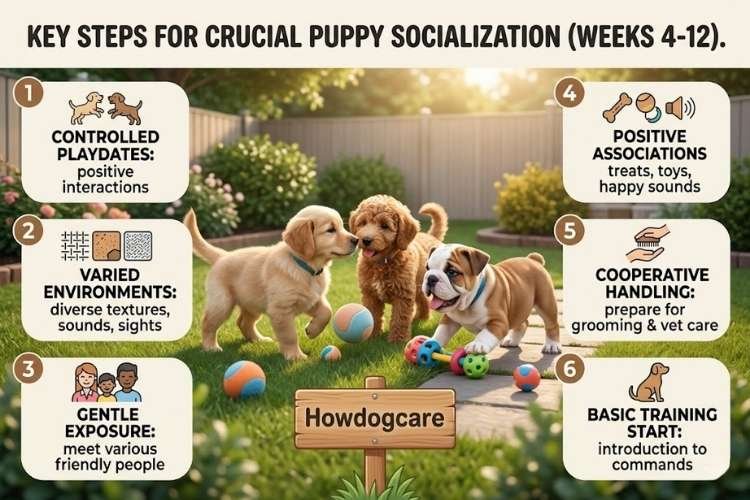
Welcome to the most important behavioral window in your dog’s entire life. During this phase of the puppy development stages, their brain acts like a highly absorbent sponge, soaking up every single environmental experience.
What happens during these critical eight weeks permanently shapes their adult temperament. Proper, positive socialization during this period actively prevents lifelong anxiety, fear-based aggression, and severe leash reactivity.
Week 5 to 6: Weaning and Learning Canine Rules
By week five, the mother dog naturally begins the weaning process. She will spend less time nursing and significantly more time gently correcting her puppies, teaching them crucial canine boundaries.
Bite Inhibition: Vital Lessons from Mom and Siblings
This is the exact time puppies learn the golden rule of bite inhibition. Because their tiny milk teeth are incredibly sharp, biting a sibling too hard immediately results in a loud, high-pitched yelp.
The injured littermate will instantly stop playing and walk away. Consequently, the biting puppy quickly learns a vital, lifelong lesson:
- Hard bites end the fun: They realize that biting too fiercely instantly ruins their playtime.
- Soft mouths are required: They learn to safely control their jaw pressure during wrestling matches.
- Maternal corrections: The mother will issue firm, low growls if the puppies become overly aggressive with her.
Week 7 to 8: The Fear Imprint Stage and Going to a New Home
Most puppies officially leave their litter and head to their forever homes around week eight. This massive transition coincidentally aligns perfectly with a highly sensitive psychological phase.
Navigating the First Fear Period with Positive Reinforcement
During week eight, puppies enter their very first Fear Imprint Stage. Any highly traumatic or terrifying experience occurring right now can easily morph into a permanent, lifelong phobia.
Therefore, you must keep their new household environment incredibly calm and predictably safe.
- Avoid forced interactions: Never force a terrified puppy to interact with scary objects or loud strangers.
- Use high-value rewards: Pair every new, slightly scary experience with premium training treats to build positive associations.
- Keep travel stress low: Ensure the car ride home is quiet, comfortable, and highly secure.
Veterinary Milestones: The First Round of Core Vaccines
Before you even consider taking your new puppy for a neighborhood walk, you must prioritize their medical safety. Week eight is the standard timeline for their very first veterinary wellness exam.
Your vet will administer the first round of core DHPP/DAPP vaccines, protecting against deadly contagious diseases like Parvovirus and Distemper. Until these vaccines fully kick in, strictly avoid public areas where unvaccinated dogs roam.
Week 9 to 10: Building Confidence and Establishing Routines
By week nine, the initial shock of moving to a new home begins to fade. Your puppy is now ready to eagerly learn the basic household rules and build a reliable daily routine.
Mastering Housebreaking and Basic Name Recognition
Physically, their bladder capacity is finally starting to increase. They can now hold their urine slightly longer, making consistent, schedule-based housebreaking highly achievable.
This is also the perfect time to introduce short, five-minute formal training sessions.
- Name recognition: Reward them instantly the exact second they look at you when you call their name.
- Positive crate associations: Continue feeding meals inside their crate to build a safe, den-like sanctuary.
- Leash introductions: Let them drag a lightweight leash around the house under strict supervision to get used to the feeling.
Related: Top 10 Best Dog Leashes Reviews (Updated Guide)
Week 11 to 12: The “Sponge” Phase of Learning
The critical socialization window rapidly begins to close around week 12 to 14. You must actively maximize their exposure to the human world while strictly maintaining their physical safety.
Maximizing Safe Exposure Before the Socialization Window Closes
You can beautifully socialize an unvaccinated puppy without ever letting their paws touch contaminated public grass. Creativity and highly controlled environments are your absolute best tools right now.
- Indoor desensitization: Introduce the loud vacuum cleaner, clattering pots, and slippery tile floors strictly inside your safe home.
- Stroller walks: Place your puppy in a secure pet stroller to safely observe passing traffic, bicycles, and loud neighborhood noises.
- Car ride adventures: Take frequent, short car rides to the local drive-thru, heavily rewarding them for calm, quiet behavior in the backseat.
Stage 4: The Juvenile Period (3 to 6 Months)
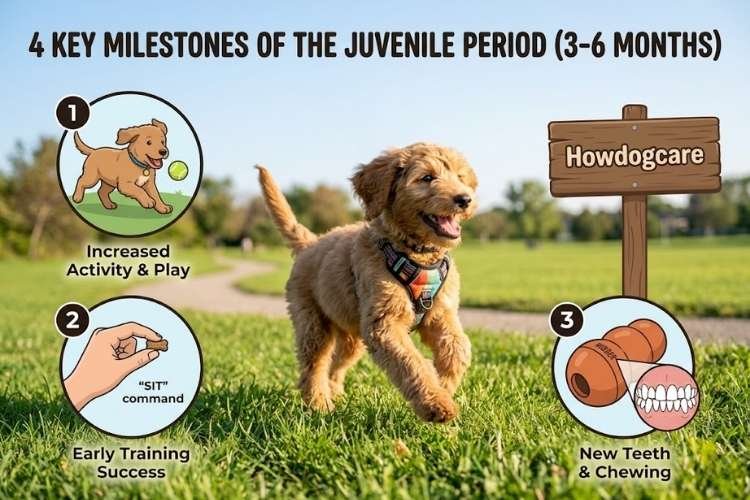
Entering the juvenile period marks a distinct and challenging shift in the puppy development stages. Your dog is no longer a clumsy, toddler-like puppy; they are now a fast-growing, highly energetic, and boundary-testing adolescent.
During these crucial three months, their physical growth skyrockets, and their permanent adult personality truly begins to solidify. Consistent boundaries are more important now than ever.
Month 3 to 4: The Peak of Puppy Teething and Chewing
Between 12 and 16 weeks of age, your puppy will begin rapidly losing their needle-like milk teeth. As their large, permanent adult teeth aggressively push through the gumline, they experience significant pain and oral irritation.
This physical discomfort naturally leads to an overwhelming, biological urge to chew on absolutely everything in sight to relieve the pressure.
Managing Inflamed Gums and Destructive Biting
To successfully save your household furniture and shoes, you must proactively manage their inflamed gums. Never punish a teething puppy for chewing; instead, heavily utilize positive redirection.
- Provide frozen relief: Soak a heavy-duty rubber toy in water or pet-safe bone broth and freeze it overnight. The cold temperature naturally numbs their sore, bleeding gums.
- Master the trade-up game: If they grab a forbidden item, do not chase them. Immediately offer a highly valuable, approved chew toy in exchange to build lifelong good habits.
Top Teething Pick: KONG Puppy Rubber Toy
- Standout Features: Crafted from a customized, ultra-soft teething rubber formula; hollow center designed for stuffing and freezing; unpredictable bounce pattern.
- Why We Recommend It: It provides hours of independent mental stimulation while safely soothing painful gums, all without risking damage to their newly emerging adult teeth.
- Pros & Cons: Pros: Highly durable, top-rack dishwasher safe, universally vet-recommended. Cons: Requires active preparation (stuffing and freezing) by the owner ahead of time.
Veterinary Milestones: Final Puppy Shots and the Rabies Vaccine
Month four brings a massive sigh of relief for protective pet parents. Your puppy will visit the clinic to receive their final round of core booster shots, alongside their first legally required Rabies vaccine.
- Full immunity achieved: Roughly ten to fourteen days after these final injections, your dog is officially considered medically protected against major canine viruses.
- The green light for adventure: Your veterinarian will finally clear you to safely explore public dog parks, bustling hiking trails, and professional grooming salons.
Month 5 to 6: Rapid Growth Spurts and Motor Coordination
As your puppy confidently approaches the six-month mark, their motor coordination vastly improves. They can suddenly run faster, jump significantly higher, and navigate complex environments with ease.
However, this newfound physical prowess and independence almost always translates into stubborn, boundary-pushing behavior.
The “Flight Instinct” Phase: Why Recall Training Suddenly Fails
Many owners panic when their previously obedient, loyal puppy suddenly completely ignores the “come” command. This highly frustrating behavioral shift is universally known among trainers as the “flight instinct” phase.
As their environmental confidence peaks, their innate desire to explore the wider world temporarily overrides their desire to stay close to you.
- Expect temporary regressions: It is completely normal for a five-month-old puppy to suddenly act like they have entirely forgotten their foundational obedience training.
- Utilize a long-line leash: Never let your puppy off-leash in unfenced areas during this rebellious phase. Use a 15-to-30-foot training lead to safely enforce all recall commands.
- Stay highly relevant: Bring premium, strong-smelling treats (like real chicken or cheese) on every single walk to ensure you remain more interesting than environmental distractions.
You might also like
- The Ultimate Guide to Bringing a New Puppy Home: First 30 Days
- Dog Training Guide for Beginners: Step-by-Step Tips for Success
- Top 10 Best Dog Stairs for Bed Reviews (Updated Guide & Tips)
- Top 10 Best Electric Dog Grooming Table Reviews (Updated Guide)
- Best Dog Costumes for Halloween 2026 – Dress Your Pup to Impress!
Stage 5: Canine Adolescence (6 to 18 Months)
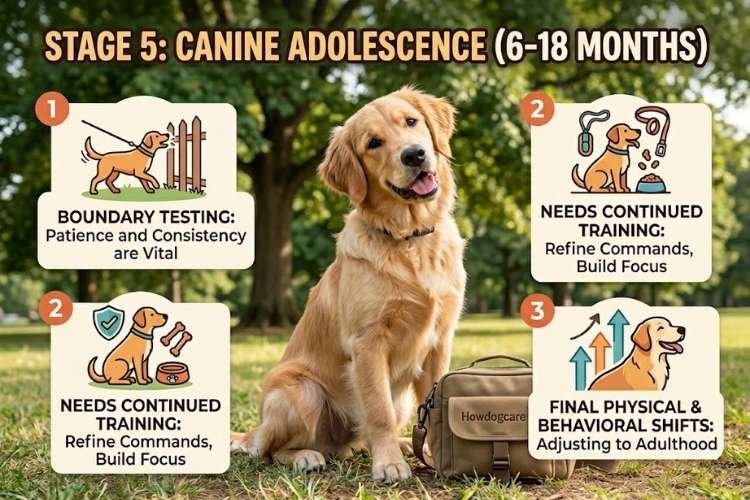
Welcome to the most notorious phase of the puppy development stages: canine adolescence. Just like human teenagers, dogs between six and eighteen months experience massive hormonal shifts and a strong biological desire for independence.
This “teenage” phase is characterized by intense stubbornness, selective hearing, and boundary-testing behavior. Surviving this period requires immense patience, a great sense of humor, and a strict return to foundational training basics.
Month 6 to 9: Sexual Maturity and Testing Boundaries
Between six and nine months of age, your rapidly growing dog officially reaches sexual maturity. Their bodies are flooded with surging hormones, which can drastically alter their daily behavior, mood, and focus.
Hormonal Changes and the Spay/Neuter Conversation
Unless your dog was altered at a very early age, you will clearly see the physical signs of puberty during this window. This is the time to have a serious conversation with your veterinarian about the best timeline for altering your pet.
- Female heat cycles: Intact females typically experience their first heat cycle around six months, characterized by physical swelling, bloody discharge, and frequent urination.
- Male marking behavior: Intact males often begin lifting their legs to urine-mark their territory and may display increased, obsessive roaming behaviors to track female scents.
- Timing matters: Many modern veterinarians strongly recommend waiting until large breeds are 12 to 18 months old to spay or neuter, allowing their skeletal growth plates to fully close.
The Second Fear Impact Period: Handling Sudden Phobias
Do not panic if your previously confident eight-month-old dog suddenly becomes utterly terrified of a familiar object, like a fire hydrant or a living room trash can. This completely normal psychological regression is known as the Second Fear Impact Period.
Their adolescent brain is essentially reassessing their familiar environment for hidden dangers. Managing this phase correctly is crucial for their long-term confidence.
- Never force interaction: Dragging a terrified dog toward a “scary” object will permanently validate and cement their fear.
- Act completely normal: Walk past the object confidently without making a big emotional fuss, signaling to your dog that there is absolutely nothing to worry about.
- Use high-value rewards: Praise and heavily treat them only if they choose to bravely investigate the terrifying object on their own terms.
Month 10 to 18: Reaching Full Physical Height
As your dog crosses the 10-month mark, their rapid upward vertical growth finally begins to slow down. They are now reaching their full adult skeletal height, though they will continue filling out with muscle mass for several more months.
Transitioning from Puppy Kibble to Adult Dog Food
This is the critical window to carefully transition your dog from calorie-dense puppy kibble to a balanced adult maintenance diet. Continuing to feed high-calorie puppy food for too long promotes unnatural, rapid growth that severely damages developing joints.
- The 7-Day Switch: Never change diets abruptly. Gradually mix the new adult kibble with the old puppy food over seven to ten days to prevent severe gastrointestinal distress.
- Monitor body condition: You should be able to easily feel, but not visibly see, your dog’s ribs. Adjust their new adult portions immediately if they begin gaining excess weight.
- Breed-specific timelines: Giant breeds may need large-breed puppy formulas until 18 to 24 months, while small toy breeds can safely transition to adult food by 10 months.
Top Transition Pick: PetSafe Digital Pet Food Scale
- Standout Features: Built-in digital scale perfectly measures food in grams or ounces directly within a removable, anti-microbial stainless steel bowl.
- Why We Recommend It: A dog’s metabolism drastically slows down during adolescence. Accurately weighing adult kibble is the absolute most effective way to prevent dangerous canine obesity during this diet transition.
- Pros & Cons: Pros: Highly precise portion control, easy to wash, actively prevents overfeeding. Cons: Requires battery power and more careful handling than standard, cheap plastic scoops.
Stage 6: Social Maturity (18 to 24+ Months)
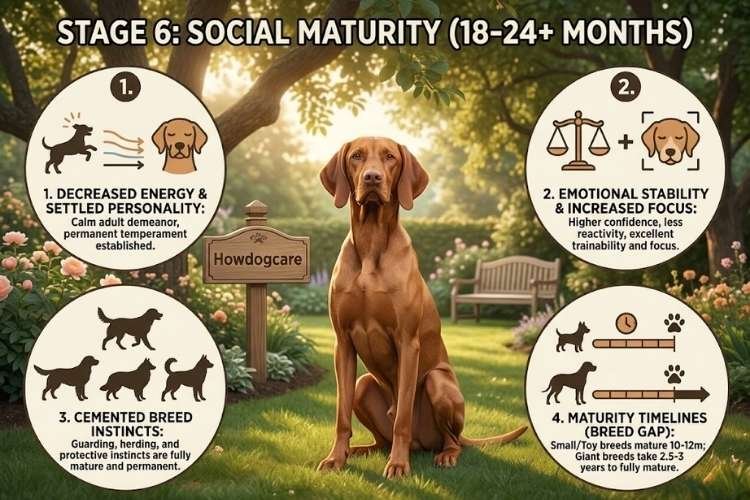
The final phase of the puppy development stages is reaching true social maturity. Your dog has officially completed their physical and emotional transition into full adulthood. The exhausting, boundary-testing days of adolescence are finally behind you.
By this stage, your dog’s permanent personality is fully set. You are now living with the mature companion you have spent the last year carefully shaping and training.
The Final Settlement: From Hyperactive Teen to Calm Adult
During this final settlement period, you will notice a massive, permanent shift in their daily energy levels. The frantic, hyperactive bursts of puppyhood are beautifully replaced by a predictable, reliable calm.
- Cementing instincts: Their natural breed instincts, such as territorial guarding, retrieving, or herding, will now fully solidify and become permanent behavioral traits.
- Emotional stability: They are significantly less reactive to strange noises or new environments, navigating the wider world with calm, quiet confidence.
- Increased focus: Their attention span maximizes, making advanced obedience training or agility sports incredibly rewarding during this phase.
How Breed Size Dictates the Maturation Finish Line
It is crucial to understand that there is no universal timeline for reaching full adulthood. Your dog’s specific genetic makeup heavily dictates exactly when they cross this final developmental finish line.
Toy Breeds vs. Giant Breeds: The Massive Developmental Gap
The timeline difference between a tiny Chihuahua and a massive Great Dane is incredibly stark, requiring entirely different expectations from owners.
- Toy and Small Breeds: Dogs weighing under 20 pounds mature incredibly fast, often reaching full physical and social maturity by 10 to 12 months of age.
- Giant Breeds: Massive breeds like English Mastiffs or Great Pyrenees grow at a much slower, sustained pace. They may not reach full social and physical maturity until they are 2.5 to 3 years old.
Top Adulthood Pick: Big Barker Orthopedic Dog Bed
- Standout Features: Constructed from 7-inch thick, therapeutic foam; incredibly durable, machine-washable microfiber cover; specifically engineered for the weight of large dogs.
- Why We Recommend It: As your dog reaches their full adult weight, standard poly-fill beds quickly flatten out, leaving their heavy joints resting on the hard floor. This clinically proven bed actively protects fully grown adult joints from early-onset arthritis.
- Pros & Cons: Pros: Ten-year “no-flatten” guarantee, incredible joint support, easy to clean. Cons: Very expensive upfront investment; takes up significant floor space in the home.
Expert Answers to Your Puppy Growth FAQs
Navigating the various puppy development stages inevitably brings up numerous questions. Here are the clear, concise answers to the most common concerns pet parents face during their dog’s first year.
1. At what age does a puppy’s personality become permanent?
A dog’s fundamental personality fully solidifies between 12 to 24 months of age, directly aligning with the onset of social maturity. While early socialization strictly shapes their baseline confidence, this final adult phase permanently cements their temperament and instinctive drives.
2. How do I know if my puppy is growing at a healthy weight?
The absolute best tracking method is utilizing a Body Condition Score rather than relying purely on a scale. You should be able to easily feel your dog’s ribs without pressing hard, and they should have a clearly defined, tucked “waist” when viewed from directly above.
3. When do puppies finally lose their sharp baby teeth?
Puppies typically lose all 28 of their needle-like baby teeth by the time they are six months old. They are rapidly replaced by a permanent set of 42 strong, blunt adult teeth, effectively ending the painful, highly destructive teething phase.
4. Is it normal for my 8-month-old dog to suddenly forget all their training?
Yes, this is completely normal! At eight months, your dog is in the absolute peak of canine adolescence. Surging hormones and the “Second Fear Impact Period” temporarily cause intense stubbornness, selective hearing, and highly frustrating regressions in foundational obedience.
The Final Takeaway: Patience Through Every Puppy Phase
Raising a dog through all the rapid puppy development stages is a marathon, not a sprint. It requires immense dedication, emotional resilience, and relentless consistency from everyone in your household.
Developmental regressions, chewed shoes, and sudden fears are completely natural bumps along the road. You must never view these temporary behavioral challenges as permanent failures.
By understanding exactly what your dog’s brain and body are experiencing at every age, you can proactively guide them toward success. Your incredible patience right now will ultimately reward you with a perfectly adjusted, fiercely loyal canine companion for life.