

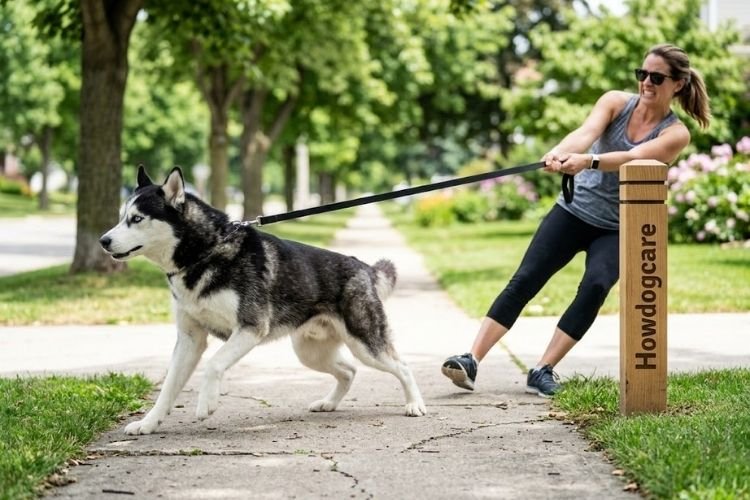
Walking your dog should be a relaxing bonding experience, not a painful physical battle. If you are tired of returning home with an aching shoulder and a frustrated pet, learning exactly how to stop leash pulling is absolutely essential.
This comprehensive guide breaks down the science behind the behavior and provides actionable, expert-approved training techniques. By upgrading your gear and changing your approach, you can permanently transform your stressful walks into peaceful, enjoyable strolls.
The Tug-of-War: Understanding Why Your Dog Constantly Pulls on the Leash
To effectively fix a behavioral problem, you must first understand the root cause. Dogs do not drag you down the street out of spite or a desire to dominate you. They pull simply because the outside environment is incredibly exciting, and the behavior successfully gets them where they want to go faster.
The “Opposition Reflex”: Why Pulling Back Makes Them Pull Harder
When your dog pulls forward, your natural human instinct is to immediately yank the leash backward. Unfortunately, this activates a biological canine response known as the opposition reflex.
- When dogs feel pressure against their chest or neck, their brain instinctively tells them to lean heavily into that pressure.
- Pulling back initiates an endless, exhausting game of tug-of-war that your dog is genetically designed to win.
- To break this frustrating cycle, you must learn to entirely remove the tension from the leash.
Speed Differences: Your Dog’s Natural Pace vs. Human Walking Speed
Frustration on the leash often stems from a simple, unavoidable biomechanical mismatch. Your dog operates on four legs, while you only use two.
- A dog’s natural, comfortable trotting pace is significantly faster than a standard human walking speed.
- They pull because they naturally feel like they are constantly waiting for you to catch up.
- Training loose leash walking requires teaching them the unnatural, highly disciplined behavior of slowing down to match your leisurely pace.
Essential Gear: Upgrading Your Equipment Before You Train
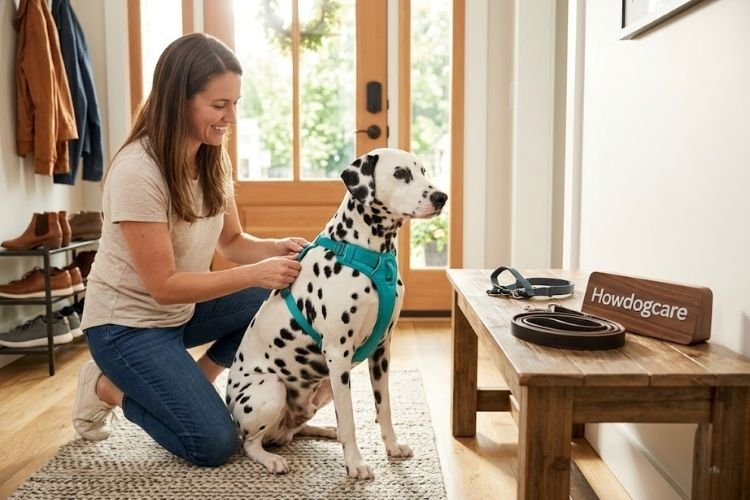
No piece of equipment will magically train your dog for you. However, utilizing the right walking tools provides necessary physical management, keeping you safe while you actively teach better habits. Upgrading your gear is the crucial first step before implementing any new behavioral techniques.
Why Front-Clip Harnesses Instantly Reduce Pulling Power
Traditional back-clip harnesses were originally designed for sled dogs, actively encouraging them to pull heavy loads forward. To stop the dragging, you must change the physics of the walk entirely.
- A front-clip harness features a leash attachment ring located directly on the dog’s chest.
- When they surge forward, the leash smoothly redirects their forward momentum, turning their body back toward you.
- This mechanical interruption immediately strips away their pulling power without causing pain or dangerous choking.
The Hidden Dangers of Retractable Leashes
If you want to teach a dog to walk politely by your side, you must immediately throw your retractable leash in the trash. These popular devices actively reinforce the exact behavior you are trying to permanently stop.
- A retractable leash physically teaches your dog that pulling hard against tension directly creates more freedom and distance.
- The thin cords frequently cause severe friction burns, deep cuts, and dangerous tangles during sudden lunges.
- Switch immediately to a standard, fixed-length six-foot nylon or leather leash for maximum safety and training control.
Head Halters: A Safe Solution for Large, Powerful Breeds
If you are walking a massive, powerful breed that significantly outweighs you, a standard harness might not provide enough physical leverage. In these cases, a head halter is an incredibly effective management tool.
- Head halters function similarly to a horse’s bridle, safely controlling the dog’s head rather than their broad, muscular chest.
- Where the head goes, the body must naturally follow, completely eliminating their ability to launch forward.
- Because dogs are extremely sensitive around their faces, you must slowly and positively desensitize them to wearing the halter indoors before stepping outside.
7 Simple Training Tips: How to Stop Leash Pulling Effectively
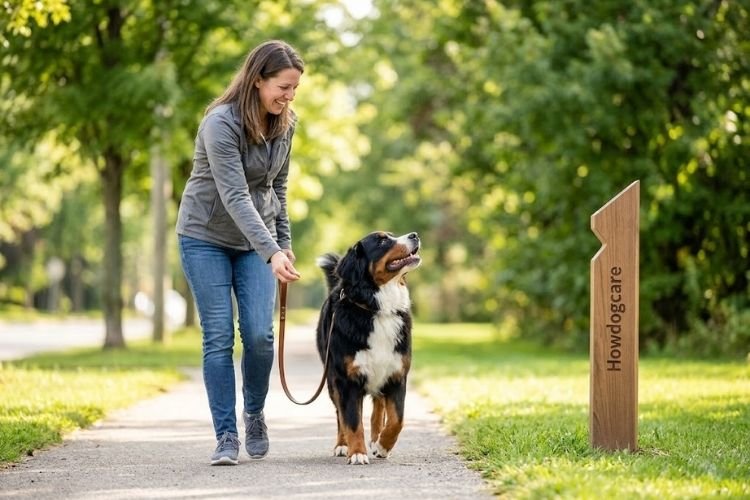
Equipping the right gear manages the problem physically, but active training changes your dog’s mindset permanently. If you truly want to master how to stop leash pulling, you must commit to consistent, positive reinforcement.
Let’s explore the seven most effective, expert-approved strategies to build polite walking habits and completely transform your daily routine.
Tip 1: Drain Excess Energy Before the Walk Even Begins
Expecting a highly energetic dog to walk calmly by your side immediately after leaving the house is entirely unrealistic. A hyperactive dog simply cannot focus on loose leash training.
- Play an intense game of fetch or tug-of-war in the backyard for ten minutes before clipping on the leash.
- Use mental stimulation, like a snuffle mat or interactive puzzle toy, to thoroughly tire out their active brain.
- Taking the initial edge off allows them to actually concentrate on your commands rather than their zoomies.
Tip 2: Master the “Be a Tree” Method (Stop When They Pull)
Dogs pull because pulling successfully moves them forward toward the exciting smells they want to investigate. You must immediately teach them that tension on the leash acts as an emergency brake system.
- The absolute second you feel the leash tighten, freeze completely in place like a deeply rooted tree.
- Do not pull back, speak to them, or yank the leash; simply refuse to take another step forward.
- Wait patiently until your dog naturally steps back or turns to look at you, creating a loose “J” shape in the leash.
Consistency is Key: Why Surrendering One Step Ruins the Training
Dogs are masters of recognizing patterns and exploiting our human inconsistencies. If you stop nine times but let them drag you to that interesting fire hydrant on the tenth try, the training completely fails.
- Intermittent reinforcement actively teaches them that pulling sometimes works if they just try harder.
- You must absolutely commit to stopping every single time tension occurs, without any exceptions.
Tip 3: Reward the “Slack” with High-Value Treats
Punishment simply tells a dog what not to do, but positive reinforcement actively teaches them the exact position you want them to maintain. You must heavily pay your dog for staying right by your side.
- Whenever your dog is walking with a completely loose leash, consistently deliver a high-value treat directly next to your leg.
- This builds a massive “reinforcement zone” where they quickly learn that staying close is incredibly rewarding.
- Deliver the treats very frequently at first—every two or three steps—to build strong, immediate habits.
Finding Your Dog’s Ultimate Motivation (Food vs. Toys)
Not all dogs are wildly food-motivated, especially when faced with highly distracting outdoor environments. You must discover the specific currency that holds your dog’s highest attention.
- If plain, boring kibble fails, upgrade to pungent, high-value rewards like boiled chicken, hot dogs, or freeze-dried liver.
- For intensely play-driven dogs, use a special tug toy that only appears during walks to heavily reward polite walking.
Tip 4: Change Directions Frequently to Keep Their Attention on You
If you always walk in a straight, perfectly predictable line, your dog easily tunes you out and focuses entirely on the environment ahead. You need to become the most unpredictable, interesting part of the walk.
- The moment your dog starts forging ahead, briskly turn 180 degrees and walk directly in the opposite direction.
- When they excitedly catch up to your new position, enthusiastically praise and heavily reward them.
- Frequent U-turns force your dog to constantly check in with you to see where you are going next.
Tip 5: Teach the “Look at Me” Command for Better Focus Amidst Distractions
A dog intensely staring at a squirrel across the street is completely deaf to your verbal commands. Teaching reliable eye contact effectively breaks their environmental fixation before a lunging reaction occurs.
- Practice a simple “Look” or “Watch me” command indoors, rewarding them heavily for making direct, sustained eye contact.
- Gradually transition this command outdoors, using it whenever a major, highly exciting distraction approaches.
- Gaining their visual focus naturally slows their physical pace and instantly prevents tension from building on the leash.
Tip 6: Keep Initial Training Sessions Short and Highly Rewarding
Teaching polite walking requires massive, exhausting mental effort from your dog. Expecting a flawless, hour-long stroll on the very first day will only guarantee severe frustration for both of you.
- Limit active, highly focused training sessions to just ten or fifteen minutes at a time.
- Always end the training session on a positive, highly successful note before mental fatigue completely sets in.
- If they need significantly more physical exercise, utilize a safe, fenced-in dog park to let them run freely afterward.
Tip 7: Practice Indoors or in a Low-Distraction Environment First
Taking a dog straight out the front door into a chaotic, noisy neighborhood is setting them up for immediate failure. You must build fundamental skills in a completely boring, highly controlled space first.
- Begin your loose leash walking exercises directly inside your living room or down a quiet hallway.
- Once they flawlessly master the “Be a Tree” method indoors, slowly upgrade the difficulty to your fenced backyard.
- Only transition to the busy public sidewalk when they confidently understand the rules in low-distraction environments.
You might also like
What to Avoid: 3 Common Mistakes That Reinforce Bad Walking Habits
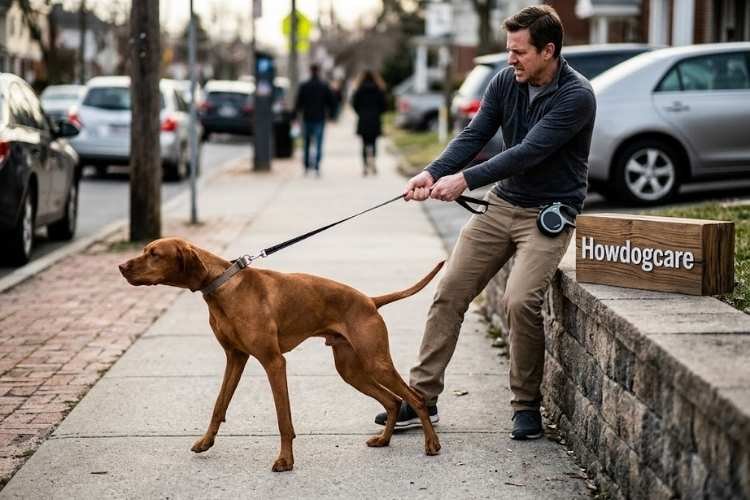
When learning how to stop leash pulling, avoiding the wrong techniques is just as critical as practicing the right ones. Many frustrated pet parents unknowingly sabotage their own progress by resorting to outdated, counterproductive methods.
To ensure lasting success and protect your dog’s physical health, you must strictly avoid these three major training mistakes.
Mistake 1: Relying on Painful Prong or Choke Collars for Quick Fixes
Aversive tools like prong or choke collars only suppress the behavior through sudden physical pain and fear. They never actually teach the dog what they are supposed to do instead.
- These collars frequently cause severe, long-term damage to the delicate trachea and thyroid glands.
- Painful corrections often lead to dangerous leash reactivity, making your dog aggressively fearful toward other dogs or strangers.
- Always prioritize positive reinforcement to build a willing, happy, and trusting walking partner.
Mistake 2: Yanking or Jerking the Leash to “Correct” the Dog
Suddenly snapping the leash back is an aggressive human reaction that severely damages the trust between you and your dog. It completely confuses them and instantly spikes their anxiety levels.
- A sudden leash pop only activates the biological opposition reflex, causing them to pull even harder against the tension.
- Jerking the neck can easily cause spinal misalignment or whiplash injuries in smaller breeds.
- Instead of yanking, simply stop walking entirely to safely and calmly remove all forward momentum.
Mistake 3: Allowing Intermittent Reinforcement (Sometimes Pulling Actually Works)
If you strictly enforce the rules on Monday but let your dog drag you to the park on Tuesday, your training will completely fail. Dogs are opportunists who thrive on predictable consistency.
- Intermittent reinforcement teaches them that pulling is a gamble that occasionally pays off with a great reward.
- If you let them reach a fire hydrant while the leash is tight, you have just rewarded the pulling behavior.
- If you are too tired to train properly on a given day, use a front-clip harness to manage the walk safely rather than surrendering the rules.
Frequently Asked Questions (FAQs) About Loose Leash Walking
Mastering polite walking is a daily journey that naturally raises specific, situational questions. Here are the authoritative answers to the most common queries pet parents have when troubleshooting their daily strolls.
1. How Long Does It Take to Train a Dog Not to Pull?
There is no overnight magic fix for a deeply ingrained pulling habit. Consistent loose leash walking generally requires four to eight weeks of daily, highly structured practice.
- Puppies generally learn much faster, as they have not yet rehearsed the bad behavior for years.
- Patience, high-value rewards, and unwavering consistency are your greatest tools for permanent behavioral change.
2. Should I Let My Dog Sniff on Walks, or Keep Them Moving?
Absolutely let them sniff. A walk is primarily for your dog’s mental enrichment, and sniffing is their primary, natural way of exploring the world.
- Teach a specific “Go Sniff” release cue as a high-value reward for walking nicely by your side.
- Structured sniff breaks actually exhaust their brain significantly faster than simply marching in a straight, boring line.
3. Why Does My Dog Only Pull When We Are Heading Back Home?
Many dogs pull aggressively on the return trip because they know exactly where they are going. The familiarity of home, or the anticipation of dinner, creates massive, uncontrollable excitement.
- Counter this by frequently walking past your house without actually going inside to break the predictable pattern.
- Use your highest value treats exclusively on the final stretch of the walk to maintain their focus on you.
4. Can I Successfully Stop Leash Pulling in an Older, Stubborn Rescue Dog?
Yes, you can absolutely teach an old dog new tricks. However, it takes significantly more time and patience to gently overwrite years of heavily rehearsed pulling habits.
- Start in a zero-distraction environment, like your living room, to build the fundamental mechanics and rebuild focus.
- Heavily utilize a front-clip harness to safely manage their physical strength while the new training slowly takes effect.
Conclusion: Transforming Stressful Walks into Peaceful Bonding Time
Learning exactly how to stop leash pulling requires a complete shift in both your equipment and your daily training mindset. By completely removing the tension from the leash and heavily rewarding polite behavior, you establish clear, fair communication with your pet.
Ditch the painful collars, master the “Be a Tree” method, and remain fiercely consistent with your boundaries. With patience and daily practice, you will finally eliminate the exhausting tug-of-war, turning your daily walks into the relaxing, joyful bonding experience you both deserve.