

When the weather outside is frightful or your daily schedule is packed, your dog’s energy levels do not magically pause. A lack of physical activity often leads to chewed shoes, incessant barking, and a highly frustrated pet. Fortunately, a long outdoor walk isn’t the only way to tire out your canine companion. You need effective, engaging methods to mentally stimulate a bored dog right in your living room.
Engaging your dog’s brain through focused tasks, scent work, and problem-solving can actually drain more energy than physical exercise. Here are 10 expert-approved indoor games guaranteed to keep your pup entertained, calm, and cognitively sharp.
Unlocking Canine Cognition: Why Brain Work Rivals Physical Exercise
Have you ever noticed your dog happily snoozing after a short, focused training session? That is the power of cognitive fatigue in action. Just like humans, a dog’s brain consumes a massive amount of energy when processing new information or solving problems.
When you take the time to mentally stimulate a bored dog, you force their brain to work overtime. Focusing on a puzzle or deciphering a new command burns glucose rapidly, leading to a deep, satisfying tiredness. In fact, just fifteen minutes of intense mental enrichment can rival the physical exhaustion of a three-mile run.
The Hidden Behavioral Risks of Chronic Dog Boredom
Dogs are naturally active problem-solvers originally bred for specific jobs like herding, retrieving, or guarding. When we leave them in a modern home with absolutely nothing to do, that pent-up energy quickly turns into severe behavioral frustration.
If you do not actively challenge their minds, your dog will inevitably invent their own “jobs”—and you probably will not like the results. A lack of daily cognitive enrichment directly triggers several behavioral risks:
- Destructive Chewing: Shredding pillows, baseboards, or shoes to release nervous, unchanneled energy.
- Incessant Vocalizing: Nuisance barking or whining at the window out of sheer under-stimulation.
- Restless Pacing: An inability to settle down or relax, often accompanied by anxious pacing and panting.
Sniffing as a Superpower: The Value of Olfactory Stimulation
To truly understand how to tire out your pup, you must tap into their greatest biological asset: their nose. A dog’s sense of smell is up to 100,000 times more sensitive than ours. More importantly, a massive portion of a dog’s brain is dedicated purely to analyzing complex odors.
This means that olfactory stimulation (scent work) is the ultimate mental workout for your pet. When a dog sniffs actively to locate an item, their respiration rate alters, and their brain goes into hyper-drive processing microscopic scent particles.
Simply letting your dog use their nose to hunt for hidden rewards is one of the fastest, most effective ways to mentally stimulate a bored dog. It actively lowers their heart rate, dramatically reduces stress, and leaves them blissfully exhausted on the couch.
Game 1: The “Find It” Scent Tracking Challenge
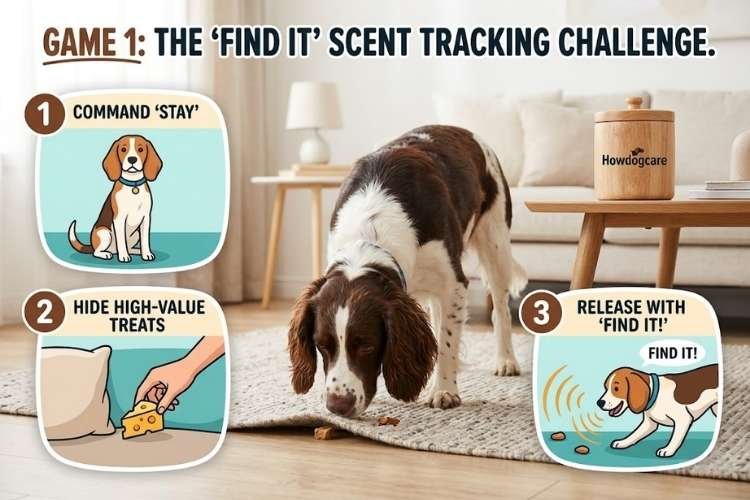
If you want a foolproof way to mentally stimulate a bored dog, scent tracking is your best starting point. The “Find It” game taps directly into their powerful olfactory instincts.
This simple activity transforms your living room into an enriching indoor hunting ground. Best of all, it requires absolutely no expensive equipment and tires them out incredibly fast.
Step-by-Step Setup for Scent Work Beginners
You must start simple to build your dog’s confidence in this new game. Grab a handful of highly aromatic, high-value treats like freeze-dried liver or small pieces of cheese.
Place your dog in a solid “Sit” and “Stay” command on one side of the room. While they watch you closely, place three or four treats on the floor in plain sight.
Release them with an enthusiastic “Find it!” command. Praise them heavily when they gobble up the rewards. Repeat this visible setup until they immediately associate your command with the act of searching.
Advancing to “Blind” Hiding Spots
Once your dog understands the basic concept, it is time to significantly increase the mental difficulty. You need to force them to stop using their eyes and start relying exclusively on their nose.
Put your dog in another room or keep them completely out of sight. Hide the treats in “blind” locations to deeply challenge their tracking skills:
- Tucked slightly underneath the edges of throw rugs.
- Hidden securely behind sofa cushions or pillows.
- Placed inside an empty, open cardboard delivery box.
Release them back into the room and say “Find it!” Watching them systematically sniff out the hidden jackpots is incredibly rewarding and highly exhausting for their active brain.
Game 2: Conquering Interactive Puzzle Toys
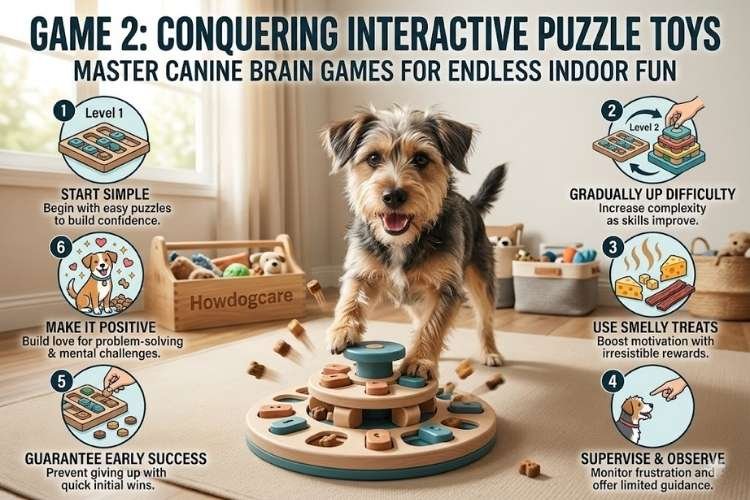
Sometimes, you need a hands-off approach to entertain your pup while you are busy working from home. Interactive puzzle toys are excellent, independent tools to mentally stimulate a bored dog.
These store-bought contraptions require your dog to slide, lift, or nudge hidden compartments to reveal a kibble reward. They encourage sustained focus and teach critical, independent problem-solving skills.
Choosing the Right Difficulty Level for Your Breed
Canine puzzle toys are typically categorized by difficulty tiers, ranging from Level 1 (beginner) to Level 4 (expert). It is crucial to match the puzzle to your dog’s current experience level, not just their breed’s reputation.
Never give a complex Level 3 puzzle to a dog who has never played these games before. A novice dog needs a basic Level 1 board where they simply knock over a plastic cone to get a treat. As they effortlessly master each tier, you can gradually upgrade the complexity.
Avoiding Frustration and Promoting Independence
If a puzzle is too difficult, a dog will quickly become frustrated. This frustration often leads to them flipping the entire board over or chewing the plastic pieces to force the treats out.
You can actively prevent this and keep the experience positive by following these simple rules:
- Supervise the first session: Sit with your dog and gently point to the moving parts.
- Guarantee an early win: Leave the puzzle compartments slightly open during their first few attempts.
- Use high-value rewards: Use extra-smelly treats initially to keep their motivation exceptionally high.
Your primary goal is to build their puzzle-solving confidence. Once they fully grasp the mechanics, they will happily work independently, keeping their brain safely engaged and out of trouble.
Related: Top 10 Best Puzzle Toys for Dogs Reviews
Game 3: The DIY Muffin Tin & Tennis Ball Brain Teaser
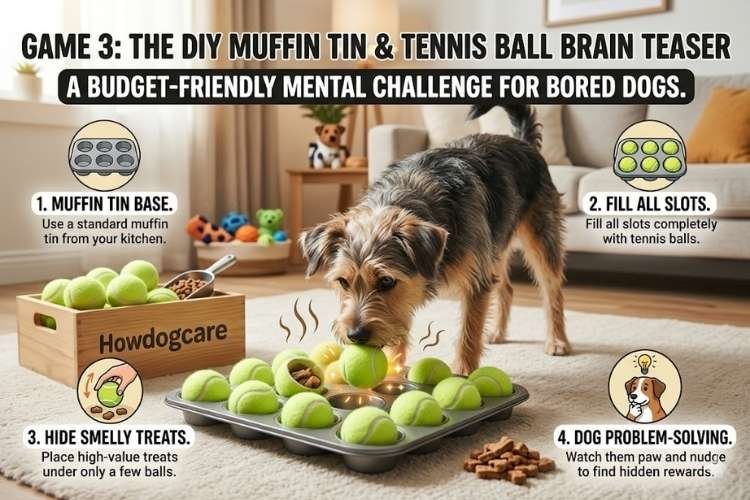
You do not need to spend a fortune on fancy, store-bought puzzles to mentally stimulate a bored dog. One of the most effective canine brain teasers can be built right now using items already sitting in your kitchen cabinets.
This budget-friendly, homemade puzzle game is incredibly engaging. It forces your dog to use both their nose and their paws to successfully uncover hidden rewards.
Items Required from Your Kitchen
Gathering the supplies for this homemade enrichment game takes less than a minute. You only need three basic household items to get started:
- A standard 12-hole muffin tin (metal or heavy silicone works perfectly).
- 12 clean tennis balls (ensure they are appropriately sized for your specific dog).
- A handful of highly aromatic treats (like diced hot dogs or freeze-dried salmon).
Related: Top 5 Best Dog Treats For Training Reviews
How to Play and Supervise Safely
To set up the game, place a few smelly treats into several random, empty holes of the muffin tin. Next, cover every single hole in the tin with a tennis ball. This leaves some balls hiding a delicious treat, and others hiding absolutely nothing.
Place the tin flat on the floor and encourage your dog to investigate. They must figure out how to carefully lift, bite, or paw the tennis balls out of the way to reveal the jackpots beneath.
Crucial Safety Warning: You must actively supervise this game from start to finish. Never leave your dog alone with tennis balls, as aggressive chewers can quickly destroy them and create a severe choking hazard. Once all the treats are found, immediately put the puzzle away.
Game 4: Human Hide-and-Seek for Reliable Recall Training
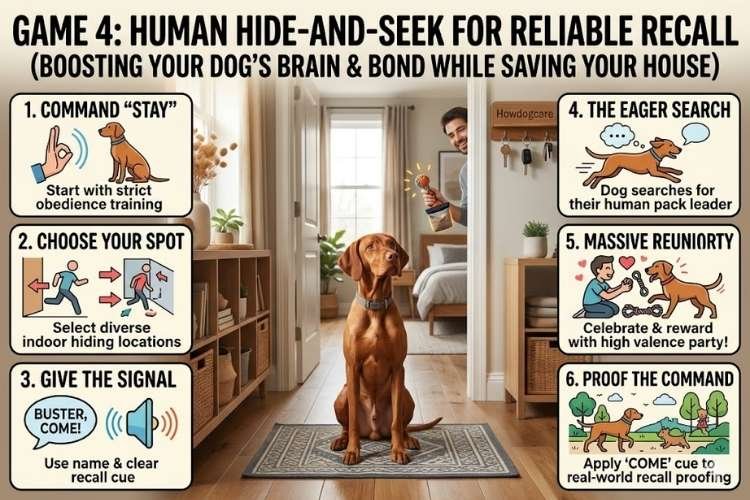
Indoor enrichment does not always have to revolve around food rewards. Playing human hide-and-seek is a thrilling way to mentally stimulate a bored dog while simultaneously practicing vital obedience skills.
By turning a classic childhood game into a structured training session, you actively reinforce their “come when called” recall. It challenges their brain to locate you using environmental cues and scent tracking.
Why This Game Dramatically Boosts Your Bond
Dogs are inherently social animals with a very strong pack-seeking drive. When you suddenly disappear into another room, their natural instinct kicks in to track you down and reunite with their leader.
When they finally locate you hiding behind a bedroom door or crouching behind the sofa, throw a massive party. Offer enthusiastic verbal praise, physical affection, or a quick game of tug. This teaches them that returning to you is the ultimate reward, which drastically improves their recall reliability outdoors.
Adding the “Stay” Command for Extra Difficulty
To elevate this game into a serious cognitive workout, you must incorporate strict impulse control. Command your dog to “Sit” and “Stay” in a central room before you walk away to hide.
Holding a prolonged “Stay” while you excitedly run away requires immense mental discipline from an eager dog. Once you are safely hidden, cheerfully call out their name and your recall word (like “Buster, Come!”). This intense combination of strict patience followed by an explosive, focused search is guaranteed to leave them mentally exhausted.
Game 5: Shaping New Behaviors with Clicker Training
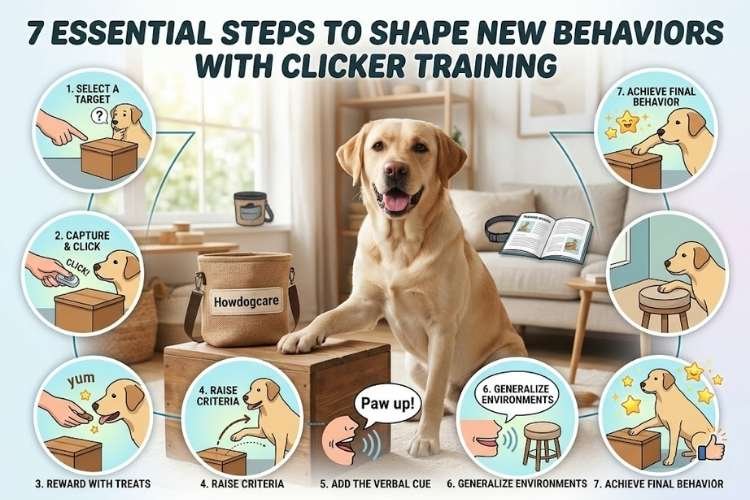
If you want to deeply mentally stimulate a bored dog, few techniques are as effective as clicker training. Specifically, the advanced training method known as “shaping” pushes their cognitive limits.
Shaping is a positive reinforcement game that requires your dog to actively guess the exact behavior you want them to perform. It transforms standard obedience training into an intense, rewarding mental puzzle.
The Psychology Behind “Shaping”
Traditional training uses lures to tell a dog exactly what to do. Shaping, however, waits for the dog to offer spontaneous behaviors independently. You use a distinct sound, like a clicker, to capture and reward tiny micro-movements toward a final goal.
This constant guesswork is incredibly taxing on their central nervous system. Because your dog is actively thinking, testing, and adapting their actions to earn a reward, their brain tires out surprisingly fast.
Easy “Shaping” Tricks to Try Today
You can begin shaping simple, engaging behaviors right in your living room. The secret is to observe closely and heavily reward any small step in the right direction. Try these beginner-friendly shaping exercises:
- Nose Targeting: Hold out your flat palm or a sticky note. Click and reward the exact millisecond your dog sniffs or bumps it with their nose.
- Box Interactions: Place a shallow cardboard delivery box on the floor. Click and reward when they look at it, then when they walk toward it, and finally when they place a paw inside.
Game 6: Teaching Toy Recognition (The “Name Game”)
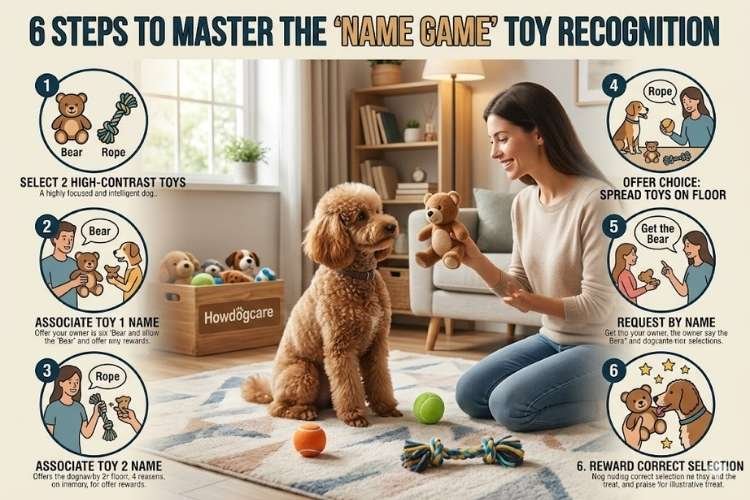
Dogs possess an incredible capacity to learn, categorize, and retain human language. Teaching toy recognition, commonly called the “Name Game,” is a brilliant way to expand their vocabulary.
This game gives your pet a highly complex, focused “job” to complete indoors. It is an incredibly rewarding way to mentally stimulate a bored dog while showcasing their hidden intelligence.
Starting with Two High-Contrast Toys
Begin this cognitive exercise by selecting two visually distinct and differently textured items. A fluffy stuffed “Bear” and a sturdy cotton “Rope” work perfectly. You must establish clear, isolated associations before asking them to choose.
Hold up the Bear, clearly say the specific word “Bear,” and immediately toss a treat when your dog sniffs or nudges it. Put the Bear out of sight and repeat this exact process with the Rope.
Proofing the Vocabulary Over Time
Once your dog confidently reacts to the individual names, place both the Bear and the Rope on the floor side-by-side. Enthusiastically ask your dog to “Get the Bear.” If they grab the correct toy, deliver a massive jackpot reward.
As they master these first two items, you can gradually introduce a third, fourth, and fifth toy. Eventually, you can deeply challenge their memory by asking them to fetch a specific, named item from their messy toy box in another room.
Related: Dog Training Guide for Beginners: Step-by-Step Tips for Success
Game 7: Building a Safe Indoor Agility Course
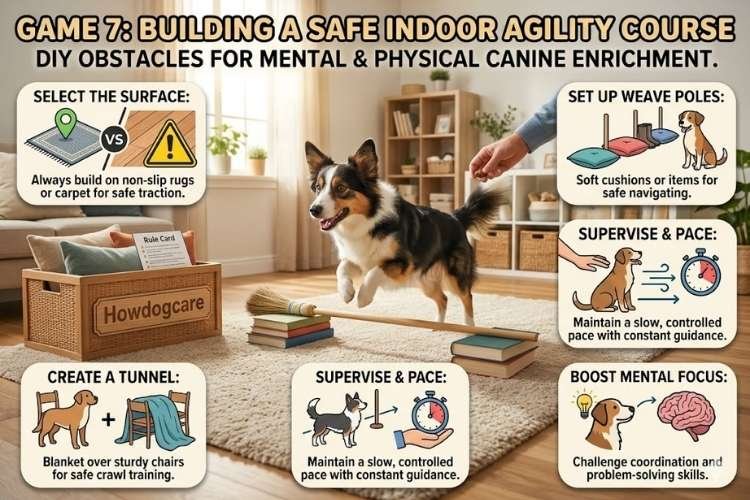
Sometimes, you need to combine physical movement with cognitive challenges to effectively mentally stimulate a bored dog. Building a safe, custom indoor agility course right in your hallway or living room is an excellent solution.
Guiding your dog through unfamiliar obstacles requires intense focus and constant communication. It successfully drains their energy while actively reinforcing their trust in your leadership.
Using Blankets, Chairs, and Broomsticks Safely
You do not need professional, expensive equipment to create a highly engaging obstacle course. Look around your home for safe, everyday items to build your temporary agility ring.
Use a handful of high-value treats to slowly guide your dog through these creative DIY challenges:
- The Tunnel: Drape a lightweight blanket over two sturdy dining chairs to create a fun, enclosed crawl space.
- The Weave Poles: Line up several soft throw cushions or sturdy boots to carefully navigate and weave around.
- The Low Jump: Balance a plastic broomstick a few inches off the ground on top of stacked books for a very safe hurdle.
Pacing the Course to Prevent Slipping Hazards
Indoor agility must always prioritize your dog’s physical safety over speed and excitement. Hardwood floors, tiles, and smooth laminate surfaces are incredibly slippery and can cause severe joint injuries or torn ligaments.
Always build your course on a large, grippy area rug or a fully carpeted room to ensure safe traction. Keep the overall pace slow and deliberate, focusing entirely on their mental concentration rather than physical speed.
Game 8: Structured Tug-of-War for Impulse Control
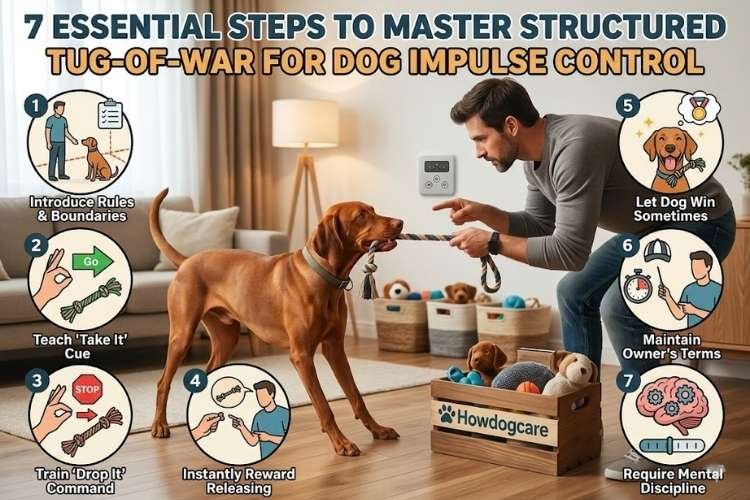
Tug-of-war is often mistakenly viewed as a purely physical activity. However, adding strict rules and boundaries transforms it into a powerful psychological workout.
Implementing clear rules requires immense impulse control from an overly excited pup. This structured approach is a fantastic, high-energy way to mentally stimulate a bored dog without even leaving your couch.
Teaching the Crucial “Drop It” and “Take It” Commands
A structured game of tug must always begin and end entirely on your terms to maintain focus. Introduce the “Take It” command to clearly signal exactly when they are allowed to grab the rope toy.
More importantly, you must train a highly reliable “Drop It” command to instantly pause the excitement. When they successfully release the toy on command, immediately reward them by restarting the game. This teaches them that quickly listening to you brings the fun back.
Debunking the Dominance Myth in Tug
Many dog owners mistakenly believe that letting a dog win a game of tug encourages alpha dominance or behavioral issues. Modern behavioral science completely debunks this outdated, harmful myth.
Allowing your dog to frequently win the tug toy actually builds their self-esteem and deepens their cooperative bond with you. It actively transforms the activity into a fun, mutually rewarding game rather than a stressful power struggle.
Game 9: The “Which Hand?” Treat Guessing Game
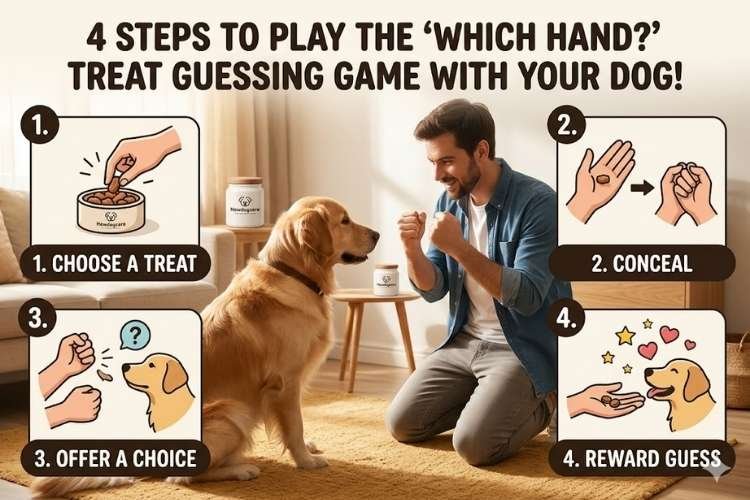
If you live in a smaller apartment or have limited physical mobility, you can still effectively mentally stimulate a bored dog. The “Which Hand?” treat guessing game requires absolutely zero floor space but provides an intense sensory workout.
This stationary brain teaser forces your dog to concentrate deeply and rely entirely on their nose to locate a hidden reward. It is a fantastic, low-impact way to build their focus and tire out their active mind.
A Simple Starter Game for Puppies
This basic guessing game is perfectly suited for easily distracted puppies or senior dogs with joint issues. Begin the exercise by showing your dog a highly aromatic treat, like a small piece of freeze-dried salmon.
Next, confidently close both of your fists behind your back, concealing the treat in just one hand. Present both closed fists to your dog, ask “Which hand?”, and wait patiently for them to sniff out the prize.
When they confidently nudge or paw at the correct fist, immediately open your hand and let them enjoy the reward. This builds their deductive reasoning skills and keeps them entirely engaged with you.
Transitioning to the Advanced “Shell Game”
Once your dog effortlessly masters the two-hand guessing game, it is time to significantly elevate the difficulty. You can easily transition this concept to the floor by creating a challenging canine “Shell Game.”
Gather three identical, opaque plastic cups and place a smelly treat under just one of them while your dog watches closely. Gently shuffle the cups around the floor to deliberately confuse their eyes.
Release your dog to eagerly investigate the plastic cups. They must use concentrated scent tracking to actively knock over the correct cup and claim their hidden jackpot.
Game 10: The Ultimate Chore Game (Teaching “Put it Away”)
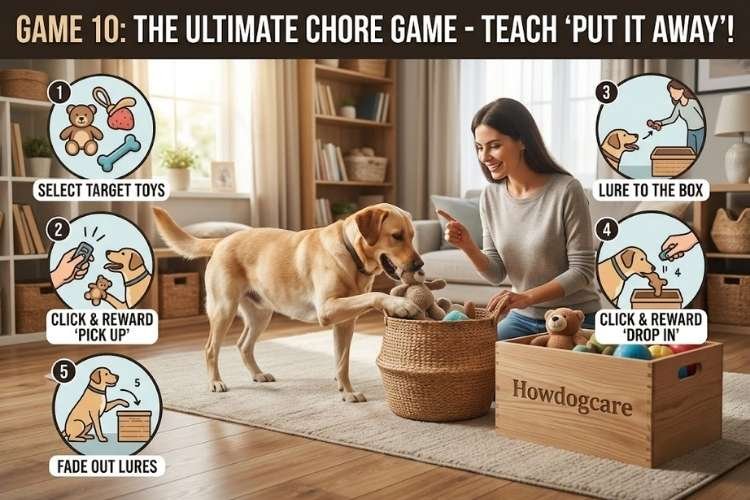
What if you could mentally stimulate a bored dog while simultaneously keeping your living room flawlessly clean? Teaching your dog to actively put their scattered toys away is the ultimate, dual-purpose enrichment chore.
This advanced trick requires significant cognitive focus and prolonged impulse control. It successfully drains their mental energy while keeping your home wonderfully tidy.
Breaking Down the Toy Box Routine into Micro-Steps
You cannot expect a dog to instantly understand the complex concept of cleaning up a room. You must carefully break this routine down into manageable, highly rewarding micro-steps to ensure their success:
- Pick it up: Use a clicker or verbal praise to reward your dog simply for grabbing a toy in their mouth.
- Carry it here: Enthusiastically encourage them to walk toward you and the toy box while holding the item.
- Drop it in: Command them to “Drop It” directly over the open basket and instantly deliver a high-value treat.
Rewarding the Final Drop
During the initial training phases, you must reward every single micro-step to build their cleaning confidence. Over time, you will gradually withhold the food treat until they complete the final, successful drop into the toy box.
Eventually, you can slowly fade out the food rewards entirely. The complex mental challenge and your enthusiastic praise will effectively make the clean-up process itself a highly rewarding, energy-draining game.
You might also like
Safety First: Golden Rules for Indoor Canine Enrichment
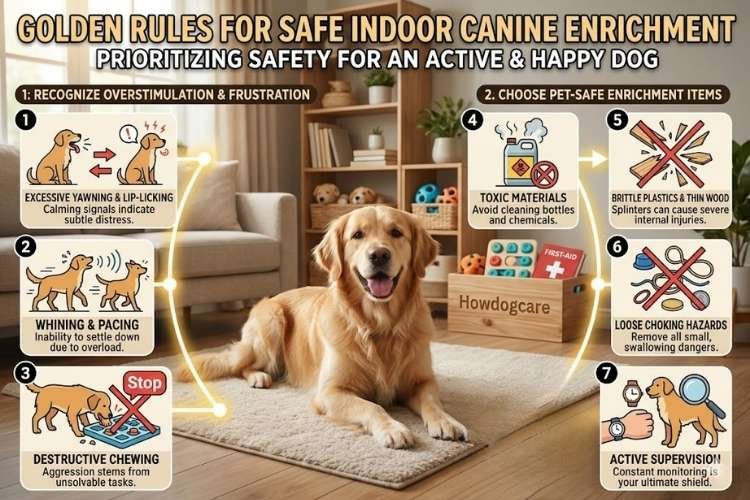
While it is incredibly rewarding to mentally stimulate a bored dog, you must always prioritize their physical and emotional safety. Indoor enrichment requires clear boundaries to ensure playtime remains productive and completely hazard-free.
Without proper supervision, even the best brain games can quickly turn into stressful or dangerous situations. Establishing strict ground rules protects your pet and preserves the lifespan of your household items.
Monitoring for Signs of Overstimulation or Frustration
Cognitive fatigue is the ultimate goal, but pushing a dog too hard often leads to severe behavioral frustration. You must actively read your dog’s body language to know exactly when to end the training session.
Stop the game immediately and give your dog a break if you notice these common stress signals:
- Excessive yawning or lip-licking: These are classic canine calming signals indicating mild distress or confusion.
- Whining or pacing: A clear sign they are feeling entirely overwhelmed by the difficulty of the puzzle.
- Destructive chewing: If they stop trying to solve the puzzle and start aggressively tearing the plastic apart, the game is far too hard.
Always aim to end the session on a positive, successful high note before any of these signs of overstimulation occur.
Choosing Pet-Safe Household Items
Creating DIY puzzles is wonderfully budget-friendly, but you must be incredibly selective about the materials you introduce. Never repurpose household items that pose a hidden danger to an eager, aggressive chewer.
Always carefully inspect your materials and avoid the following hazards when you mentally stimulate a bored dog:
- Brittle plastics or thin wood: These materials easily splinter under pressure and can severely puncture their digestive tract.
- Toxic containers: Never reuse empty plastic bottles that previously held harsh cleaning supplies or harmful chemical liquids.
- Small, loose components: Always remove bottle caps, loose string, staples, or rubber bands that create an immediate, deadly choking hazard.
Customizing Mental Stimulation by Dog Age and Breed
It is important to remember that a one-size-fits-all approach rarely works for canine cognition. You must carefully customize your training strategy to effectively mentally stimulate a bored dog. Tailoring these indoor games to their specific life stage and genetic background ensures a highly successful, frustration-free experience.
Adapting Brain Games for Senior Dogs
Older dogs often suffer from painful joint issues or gradually declining vision, making physical agility games highly inappropriate. However, their incredible sense of smell rarely fades with age. Focus entirely on low-impact, high-scent games to safely keep their aging minds remarkably sharp.
Using soft, fabric snuffle mats or basic stationary guessing games provides perfect enrichment without causing physical strain.
High-Drive Working Breeds vs. Companion Breeds
You must strictly adjust the overall puzzle difficulty to match your dog’s specific genetic drive. Understanding their breed history helps you prevent severe under-stimulation or overwhelming frustration:
- High-Drive Working Breeds: Dogs like Border Collies or German Shepherds require highly complex shaping exercises or advanced agility courses to feel truly satisfied.
- Small Companion Breeds: Dogs like Shih Tzus or Pugs may be completely and happily exhausted by a simple, five-minute game of hide-and-seek.
Frequently Asked Questions About Indoor Canine Enrichment
1. How much mental stimulation does a dog need per day?
Most experts recommend at least 15 to 30 minutes of dedicated cognitive enrichment every single day. Remarkably, just 15 minutes of intense brain work can exhaust a dog just as much as a full hour of physical exercise.
2. Can mental games actually tire a dog out physically?
Yes. The canine brain consumes a massive amount of glucose and biological energy during focused, problem-solving tasks. This intense cognitive effort directly leads to deep physical relaxation and highly satisfying naps.
3. What if my dog gets frustrated and gives up on puzzle toys?
You must immediately take a step back and dramatically lower the difficulty level. Keep the puzzle compartments fully open and use incredibly aromatic, higher-value treats to safely rebuild their problem-solving confidence.
4. Are indoor brain games a full replacement for daily walks?
No. While highly effective for draining energy, brain games merely complement necessary physical exercise and essential potty breaks. They can never entirely replace a dog’s biological need for outdoor cardiovascular health and varied sensory intake.
Transforming Boredom into Bonding: Your Next Steps
You now have a complete, expert-approved arsenal of indoor activities to effectively mentally stimulate a bored dog. However, simply reading this guide will not change their behavior unless you take immediate, consistent action.
Pick just one simple game from this list, like the “Find It” scent challenge, and try it with your pup today. Spending a mere 10 minutes focused entirely on these enriching games will dramatically improve their household behavior. More importantly, it will deeply strengthen the unbreakable bond between you and your dog.