Disclosure: This post may contain affiliate links. As an Amazon Associate I earn from qualifying purchases, at no extra cost to you. Learn more
Specs are compiled from manufacturer listings and verified buyer reviews and can change over time — please confirm the key details on the product page before buying.
If your vet just said the words “reduced protein” and your dog has turned into a picky eater overnight, you already know the hard part: kidney-friendly food your dog will actually finish. This guide ranks the low-protein dog foods that real owners keep coming back to, explains what each one actually does for your dog, and shows you which pick fits a fussy senior versus a dog who eats anything.
This guide is built by comparing the manufacturers’ published specifications and the patterns across verified customer reviews, so you get each pick’s real strengths and trade-offs instead of marketing spin.
Some of these formulas require a vet prescription, some are over-the-counter, and one is a wet food that doubles as a pill wrap. Below you will find the full breakdown of the low protein dog food that best matches your dog’s appetite and stage of care.
Top Picks

How To Choose a Low Protein Dog Food
The single biggest mistake owners make here is assuming low protein and low phosphorus are the same thing. For a dog with kidney concerns, phosphorus is usually the mineral your vet is watching most closely, so a bag that is low in protein but loaded with phosphorus misses the point. Check both numbers, and confirm with your vet which one your dog’s bloodwork is actually flagging.
Prescription Versus Over-The-Counter
A prescription renal diet is formulated to be fed as your dog’s only food, under a vet’s direction. An over-the-counter option like SquarePet VFS or Dave’s Kidney Care is designed for dogs with milder or early-stage concerns, or as a bridge when a prescription food gets refused. Neither is automatically better — what matters is whether your dog will eat it every day.
Appetite Is Half The Battle
Restricted diets tend to taste flatter than regular kibble, and a dog who refuses dinner gains nothing from a perfect formula. That is why owners so often mention kibble shape, gravy, and aroma in reviews. A crescent or bean-shaped kibble, a saucy pate, or a warm broth mix can be the difference between a clean bowl and a full one.
Match The Format To The Dog
A toothless senior or a tiny breed often does better on wet food or soaked kibble than on hard pieces. A large dog with a healthy mouth may do fine on dry kibble and save you the mixing work. Think about how your dog actually eats before you buy a six-pound bag.
Side-by-Side Comparison
| Model | Best For | Format | Bag or Pack Size | Protein Approach | Amazon |
|---|---|---|---|---|---|
| Royal Canin Renal Support S★ Best Overall | Fussy dogs who need a prescription kidney diet | Dry kibble | 6 lb bag | Targeted protein levels | Amazon |
| SquarePet VFS Low PhosphorusBest Prescription-Free | Early-stage kidney dogs without a prescription | Dry kibble | 4.4 lb bag | Targeted protein, phosphorus, sodium | Amazon |
| Dave’s Pet Food Kidney Care Tuna Pate | Pill wrapping and tempting a stubborn senior | Wet pate | 12 pack of 5.5 oz cans | Low protein (1.5%) | Amazon |
| Purina Pro Plan NF Kidney Function | Long-term daily feeding on a vet diet | Dry kibble | 6 lb bag | Restricted high-quality protein | Amazon |
| Hill’s Prescription Diet k/d | Picky eaters who need wet renal food | Wet stew | 9.4 lb case | Reduced phosphorus and sodium | Amazon |
| Hill’s Prescription Diet l/d | Dogs with liver concerns, not kidney ones | Wet ground | 9.8 lb case | Low protein, low copper | Amazon |
Detailed Reviews
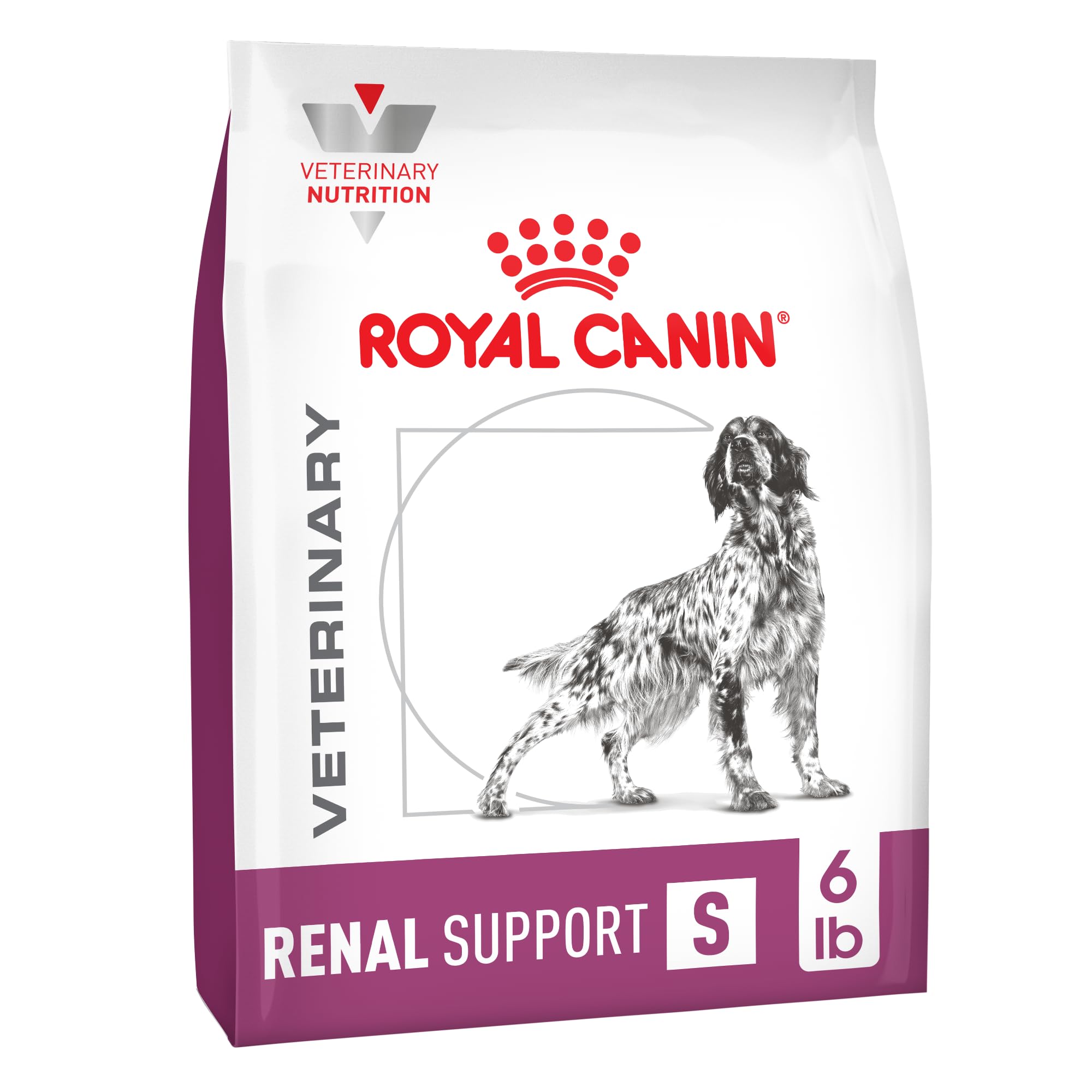
1. ROYAL CANIN Canine Renal Support Dry Dog Food, 6 lb
Our pick — 4.5+★ from 400+ verified ratings; the strongest balance of quality and price.
The prescription kidney diet that fussy dogs actually clean up — thanks to a kibble shaped like a kidney bean.
The thing that wins people over here is the shape. The kibble is a small crescent, and owners have turned it into a whole ritual — one happy household calls it “giving Lucy her beans.” That sounds cute, but it matters: on a restricted renal diet, a dog that enjoys the bowl is a dog that keeps eating. Royal Canin builds this formula around low phosphorus and targeted protein levels, with a precise antioxidant complex and fish-oil fatty acids for renal support.
It is a veterinary-exclusive diet, so your vet needs to sign off before you order. The formula is energy-dense on purpose, which keeps meal volume smaller for a dog with a reduced appetite. It comes in a 6 pound bag — that is 27 cups of food — so a small dog gets real mileage out of one order. Compare that to the SquarePet bag, which is 4.4 pounds; the Royal Canin holds 1.6 pounds more kibble for the same shelf space.
The honest trade-off is cost. Prescription renal food is expensive everywhere, and one frustrated buyer pointed out this bag runs higher than buying the same diet through a vet or a pet store. That is a real budget consideration, not a knock on the food itself. Plan on this being a recurring monthly cost if your dog settles into it, and ask your vet whether a store-bought bag is an option.
What Makes It The Top Pick
- Crescent kibble that picky kidney dogs actually finish
- Low phosphorus with targeted protein levels, built for renal support
- Energy-dense formula keeps each meal smaller
- 6 pound bag equals 27 cups of food
Where It Asks More Of You
- Requires a vet prescription before purchase
- Runs pricier than the same diet sourced through a vet
- Some dogs still need broth or water mixed in to finish it
Reach for this if: your vet has already prescribed a renal diet and your dog is picky enough to reject flat-tasting kibble.
Think twice if: your dog is on a tight budget long term — check whether your vet sells the same bag cheaper first.
2. SquarePet VFS Low Phosphorus Formula Dry Dog Food, 4.4 lb
No prescription required, and the taste is the reason owners keep reordering.
For a dog in the early or mild stage of kidney trouble, the hassle of a prescription refill can be the breaking point. SquarePet VFS skips that entirely. It is an over-the-counter kibble with targeted amounts of protein, phosphorus, and sodium, built around cage-free turkey and whole eggs. Owners describe dogs who refused a prescription diet outright, then ate this one readily — one 13-year-old with a history of pancreatitis and stage 3 kidney disease switched over and stayed stable for years.
The bag is 4.4 pounds, which is smaller than the 6 pound Royal Canin bag above. For a big dog that means more frequent reordering, so factor that into your routine. What you get in return is an easier buying process and a formula enriched with omega-3 fatty acids including DHA and EPA from salmon oil, plus taurine and L-carnitine for muscle support.
The one recurring gripe is price perception. Some owners find it dear for an OTC bag, and one buyer flagged a mismatch between the listed per-pound price and the actual per-pound cost. That is worth checking at checkout rather than assuming. If your dog does well on it, buying on a recurring delivery schedule smooths out the sticker shock.
Where it earns its keep: the turkey-and-egg recipe is the standout — owners describe dogs who turned their noses up at prescription kibble and then ate this one without coaxing. For a mild-stage kidney dog and an owner tired of refill paperwork, that combination is the whole pitch.
The catch to plan around: 4.4 pounds does not stretch far with a large dog, and the per-pound cost is the detail to double-check before you commit to a subscription.
The right match: early-stage kidney dogs whose owners want to skip the prescription process entirely.
Look elsewhere if: you have a large-breed dog that would burn through a 4.4 pound bag quickly, or your vet has already prescribed a specific renal formula.
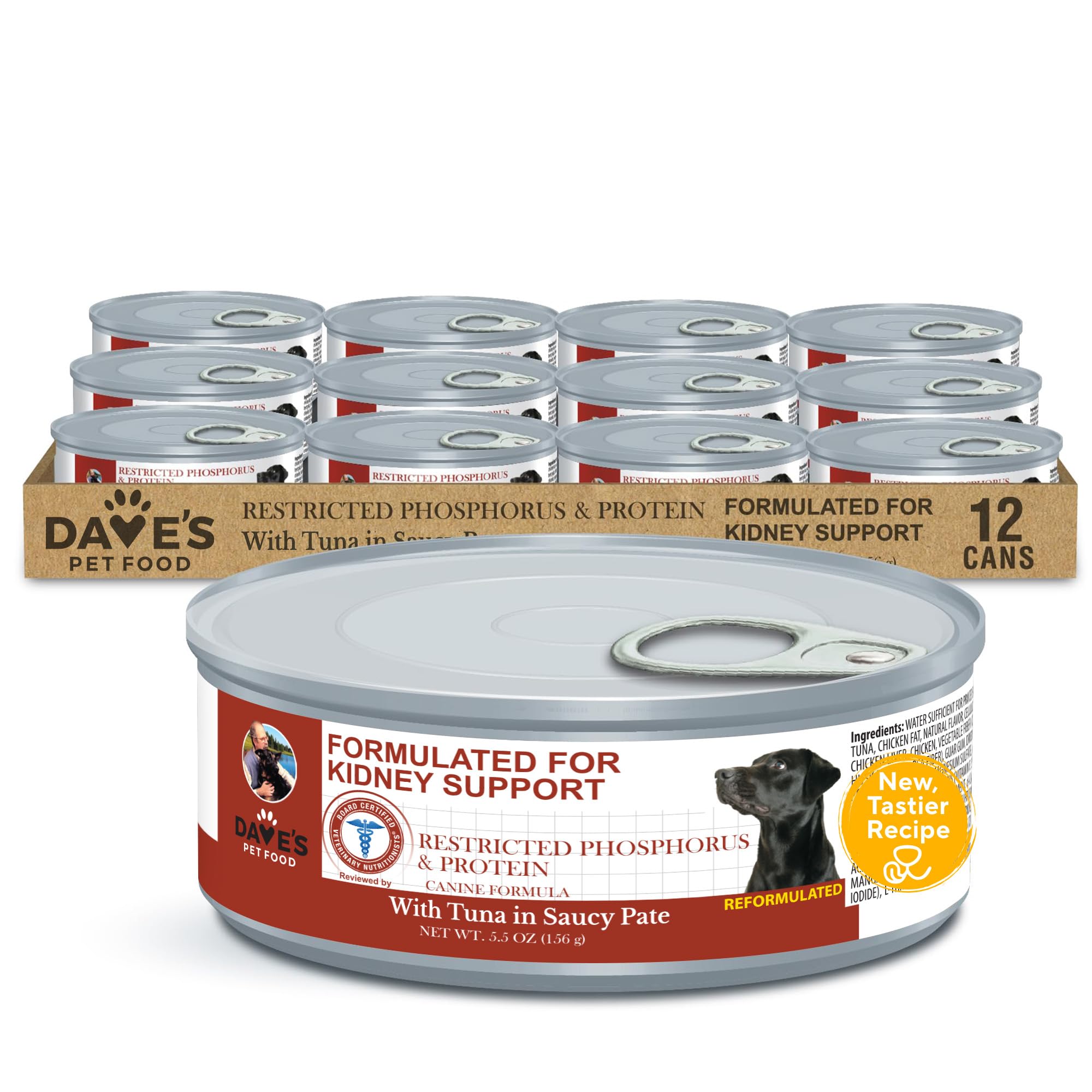
3. Dave’s Pet Food Kidney Care Dog Food, Tuna Pate, 12 Pack
A tuna pate that does double duty: kidney-friendly dinner, and the camouflage for a bitter pill.
The numbers here are the story. Dave’s Kidney Care is a wet pate with low protein at 1.5% and low phosphorus capped at 0.08% max — that is a genuinely tight phosphorus ceiling for an over-the-counter can. It is formulated by board-certified veterinary nutritionists and sold over the counter, no prescription needed. Each 5.5 ounce can adds omega-3 fatty acids, EPA, DHA, and B-complex vitamins to replace what increased urination washes out.
Where this food really shines is in the small stuff. One 14-year-old Rat Terrier with kidney disease runs on this tuna pate as a pill wrap — the dog swallows the capsule without noticing it is there. That is a real use case a kibble cannot fill. The adjustable water-to-food ratio also lets you loosen the texture for a picky eater or a dog with dental trouble.
Now the honest part. This is a 3.5+ star food with a serious split in the reviews, and the taste is the reason. Dogs either dive in or walk away, texture has been called pasty, and one buyer found the pate too firm for a toothless dog. If your dog has never tried it, order a single pack before committing to a full case. Treat it as a topper or a pill vehicle rather than the sole diet until you know your dog’s verdict.
What it does better than the dry options: the tuna pate is soft, aromatic, and easy to mold around a capsule — the practical choice for a dog on daily medication.
What to know before you buy: the texture and taste divide dogs sharply, so start small and expect to mix it with something your dog already trusts.
Built for: owners hiding daily pills, or tempting a senior with moist, aromatic food that meets a low phosphorus target.
Not the one if: your dog is already known to be texture-sensitive or turns its nose up at pate.
4. Purina Pro Plan NF Kidney Function Dry Dog Food, 6 lb

Built for the long haul: a restricted kibble dogs eat for months without complaint.
Purina Pro Plan NF takes a different tack from the Royal Canin pick above. Instead of a novelty shape, it leans on a restricted amount of high-quality protein plus restricted phosphorus and reduced sodium. Each serving is energy-dense to deliver the calories a kidney dog needs without a large volume of food. It also carries antioxidants and comes as a 6 pound bag — the same size as the Royal Canin, but built on a vegetable-forward kibble rather than a chicken crescent.
The strongest case for this one is durability. One dog ate it for a year with bloodwork showing kidney function nearly back to normal, and a 15-year-old Chihuahua that refused every other renal food and even home cooking finally settled on this one. That kind of long-term acceptance is the thing that keeps a restricted diet actually working, since a dog has to stay on it.
Two things to plan for. First, the kibble is large enough that some owners find it a tough chew, and one household with a mostly toothless dog soaks each meal in water for hours before serving. That is an extra step, not a dealbreaker. Second, a few buyers reported the formula changing and a dog refusing the new batch — a reminder to transition slowly and keep an eye on the first bowl.
The Case For The Bag
- Restricted protein, phosphorus, and sodium in one formula
- Energy-dense so meals stay small
- Buyers report long-term acceptance, including from fussy seniors
- Antioxidant support built in
Friction Points To Know
- Kibble can be too large for small or toothless mouths
- May need soaking before serving
- Occasional reports of a formula change dogs notice
Suits you if: you want a dry renal diet your dog will accept month after month.
Something to weigh first: a small dog or one with dental problems will likely need the kibble soaked soft before each meal.
5. Hill’s Prescription Diet k/d Kidney Care Wet Dog Food

The wet renal diet picky dogs keep licking clean, with reduced phosphorus and sodium in the can.
Hill’s k/d is the wet-food answer for a dog who will not touch dry renal kibble. It arrives as a chicken and vegetable stew with bite-sized chunks in gravy — a format that carries aroma and moisture, two things a picky eater responds to. The formula is built on reduced phosphorus and sodium, plus ActivBiome+ Kidney Defense, a prebiotic blend the company says supports kidney function through the gut.
What seals the deal is acceptance. Owners of kidney dogs describe dogs that love the taste and choose it over other diets. One dog with kidney problems outright prefers it to every other food the owner tried. For a household already mixing kibble with wet food for hydration, this can be the wet half of that routine. It is a 9.4 pound case, so you are set up for steady feeding without weekly reordering.
The formula is prescription-only, and the price per can is on the higher end for a therapeutic food. That is the trade-off — you are paying for a clinically formulated diet in a format dogs actually finish. For most households, the clean bowl is worth the cost, but check whether your vet or an alternate retailer carries it cheaper before you lock in.
Where it wins: the stew texture and aroma are what turn kidney-diet dread into a bowl that gets licked clean, and the prebiotic blend adds a support angle the dry diets do not carry.
What you agree to: a higher per-can cost and a vet prescription, so budget for both before you commit to the case.
Your pick if: your dog won’t eat dry renal food and you want a wet diet that is easier to finish.
skip it if: cost per can is your hard limit, or your vet has not yet approved a renal-wet plan.
6. Hill’s Prescription Diet l/d Liver Care Wet Dog Food

Low protein here is aimed at a different organ — this one is for liver support, not kidneys.
The recipe is chicken flavor in a ground texture, and it lands well with dogs who face limited food options. Owners describe it as one of the better options in a very small pool.
The catch is texture. The canned food is firm and densely packed, and some owners have to break it apart, mash it with a fork, and add hot water to reach an easy texture. A dog may also refuse it plain and need a mix-in. If your dog is a fussy or toothless eater, plan on a few minutes of prep per meal.
Why it earns a spot: a genuinely low-protein, low-copper formula for dogs with liver concerns, in a chicken ground texture most dogs accept once loosened with water.
What you give up: the can is dense and dry straight out of the tin, so expect to mash and hydrate it — and a prescription is required.
Made for: dogs diagnosed with liver concerns who need controlled protein and low copper in a wet food.
Not the right call if: your dog’s issue is kidney-related — that is a different formula, and this one is not a swap.
Know the Specs
Protein Percentage
Protein is listed as a percentage on the guaranteed analysis, and on a renal diet that number is a ceiling, not a target. You want a restricted amount of high-quality protein — enough to maintain muscle, not so much that the kidneys work harder. That is why the formulas here focus on “targeted” or “restricted” protein rather than a headline percentage you can compare across brands at a glance.
Phosphorus Level
Phosphorus is the mineral most renal diets are actually built around, because it is the one that accumulates when kidneys slow down. Dave’s, for example, caps its phosphorus at 0.08% max. When you compare bags, check phosphorus and protein together — a low-protein food with high phosphorus does not help a kidney dog.
Prescription Status
The word “prescription” means the diet is intended as your dog’s only food under a vet’s direction. Over-the-counter foods like SquarePet VFS and Dave’s are designed for milder cases or as a bridge. Never assume one replaces the other — confirm with your vet which tier your dog sits in.
Format and Texture
Dry kibble, wet pate, wet stew, and ground canned food all deliver nutrition differently. Wet food carries moisture and aroma, which helps picky dogs and seniors with dental trouble. Dry kibble is more economical and lasts longer open. The format should match how your dog actually eats today, not how it ate two years ago.
Common Questions
Do I need a prescription to buy low protein dog food?
Is low protein the same as low phosphorus?
Can I feed a kidney diet to a dog without kidney problems?
What if my dog refuses the prescription food?
Can I use Hill’s l/d and k/d interchangeably?
How long does a bag or case last?
Should I switch my dog to a low protein diet slowly?
Is wet food better than dry for a kidney dog?
Could the low protein be too low for my dog?
Do these diets help a dog gain weight back?
The Bottom Line
For most dogs starting a renal diet, the low protein dog food winner is the Royal Canin Veterinary Diet Renal Support S because its kidney-bean kibble gets picky dogs to finish their bowl while delivering the low phosphorus and targeted protein a kidney dog needs. If a prescription is a hassle or your dog is early-stage, the SquarePet VFS is the prescription-free pick. And for a wet food that keeps a fussy senior eating — or hides a daily pill — the Dave’s Kidney Care Tuna Pate is the one to reach for.
How we choose
We do not accept paid placement. Every pick is matched to a real buyer and a real use-case; we do not hands-on test units.
Sources
Specifications: manufacturer listings and product documentation. Review insights: verified customer reviews, as of October 2026. Pricing: not shown on this page (it changes often); check the current price via the retailer link.
As an Amazon Associate, How Dog Care earns from qualifying purchases. This does not affect which products we feature.