Disclosure: This post may contain affiliate links. As an Amazon Associate I earn from qualifying purchases, at no extra cost to you. Learn more
Specs are compiled from manufacturer listings and verified buyer reviews and can change over time — please confirm the key details on the product page before buying.
If your dog’s back legs have stopped carrying their share, the wheelchair that actually helps is the one measured to your dog’s own body, not the one with the biggest feature list. Get chest width, leg height and body length right first, and a rear-support cart can get your dog walking again. Get them wrong, and you will be wrestling a struggling dog into a frame it hates. This guide breaks down seven rear-leg carts by size range, weight and harness design, so you can match one to your dog’s measurements rather than guess.
This guide is built by comparing the manufacturers’ published specifications and the patterns across verified customer reviews, so you get each pick’s real strengths and trade-offs instead of marketing spin.
Your dog’s measurements matter more than any brand name when you buy a rear-leg cart. Sellers sort these carts by size band, weight limit and leg height, not by label. So grab a tape measure before you shop. Below are the real sizing numbers and fit notes for each pick in this guide to dog wheelchairs for back legs. Read each size band carefully so the cart matches your dog’s body.
Top Picks

How To Choose The Best Dog Wheelchairs for Back Legs
Every rear-leg cart does the same basic job: it takes the weight off the hind end and hands it to a frame on wheels. What separates these carts is how closely the frame matches your dog’s measurements and how quickly the harness goes on. Get both wrong and your dog plants its feet instead of walking.
Measure before you shop, not after
You need three numbers from your dog: chest circumference, the distance between the front and rear legs, and the distance between the two front legs. One of the larger carts here spells that out and even offers to size your dog from six measurements and a photo. If a cart is sold as a size band like 70–180 lbs with a 20–22″ leg height, your dog has to sit inside both numbers, not just the weight.
The front harness is often where fit goes wrong. A short-legged breed can measure into a weight band and still be the wrong shape, because the front harness is built around a longer body. When your dog is built low and long, look for a cart labelled for that body type rather than forcing the standard frame.
Adjustability keeps the cart useful as health changes
Height, width and length adjustment is the feature that lets a cart stay with your dog. Some frames here offer 18 length, 12 width and 12 height settings, others just height and length. More settings mean more room to correct a rub or a tip before it becomes a daily problem.
Match the wheels to where you actually walk
A dense foam wheel with a rubber tread rolls over pavement, grass and dirt without going flat. Rubber or EVA treads do the same job with a bit more cushioning. If your dog only potters around the patio, any of these work, but if your walks are long or the ground is rough, look at the wheel description rather than assuming it handles everything.
Side-by-Side Comparison
| Model | Best For | Size Range | Item Weight | Adjustment | Amazon |
|---|---|---|---|---|---|
| Walkin’ Wheels for Large Dogs★ Best Overall | Large dogs, 70–180 lbs | 70–180 lbs, 20–22″ leg | 21 pounds | Height, length, width | Amazon |
| VEVOR 2-Wheel Dog WheelchairBudget-Friendly | Budget-friendly medium dogs | Up to 48 lbs, medium | 6.4 pounds | 18 length, 12 width, 12 height | Amazon |
| Adjustable Large Dog Wheelchair (XL) | Large dogs needing off-road wheels | XL, 28.3–33.9″ chest | 7.13 pounds | Height and length | Amazon |
| Whisker Bark Stainless Steel Cart | Easy daily on-and-off | L, 60+ lb | 5 pounds | Height, width, length | Amazon |
| Walkin’ Wheels Small Dog (Pink) | Small breeds, 15–25 lbs | 15–25 lbs, 6–8″ leg | 10 pounds | Height, length, width | Amazon |
| Walkin’ Wheels for Dachshund | Short, long-bodied dogs | 11–14 lbs, 7–9″ leg | 8 pounds | Height, length, width | Amazon |
| All-Terrain Aluminum Cart (M) | Rough ground, medium builds | 35–48.5 lbs | — | Height, width, length | Amazon |
Detailed Reviews
1. Walkin’ Wheels Dog Wheelchair for Large Dogs, 70–180 Pounds
Our pick — 4.0+★ from 600+ verified ratings; the strongest balance of quality and price.
The heavyweight bruiser built to carry a big dog through changing health for years.
For a dog between 70 and 180 pounds, this is the cart to beat — it sits at 4.0+ stars from a crowd of owners, and the build quality is what buyers talk about first. The frame is aluminum and weighs 21 pounds, which is the trade-off for the strength: the VEVOR cart below weighs just 6.4 pounds, so this one takes real effort to hoist into a car. What you get for that mass is a frame that folds flat for storage and parts that are all washable, including the dense foam wheels with rubber treads.
You pay for the adjustability here. The frame lets you set height, length and width, so you can fix a rub or a wobble as your dog’s body changes. Buyers report dogs adapt quickly. One buyer writes about a “12yo 80lb German Shepherd, 95% paralyzed from stair slip, regained ~75% mobility in ~1 year.” Reviewers also note a mood lift: dogs that had gone quiet and withdrawn show interest again once they are moving.
Setup is not instant. Expect a couple of hours of assembly and adjustment, and plan to do it before your dog is in the frame rather than with them waiting. The recurring gripes are small: harness stitching that wears, foam tread on the wheels that goes quickly with heavy use, and a D-ring that can fail. Replacements are available, and most owners treat these as maintenance rather than reasons to walk away. The bigger caveat is fit for very heavy dogs with a missing limb or a painful hip — get the measurements confirmed before you order.
Why it earns the top spot
- Adjustable height, length and width so the fit can follow your dog’s health
- 21-pound aluminum frame with dense foam rubber-tread wheels that will not puncture
- Folds flat for the car and every part wipes or washes clean
- Sized for 70–180 lbs with a 20–22″ leg height
What to plan around
- Assembly and adjustment can take a couple of hours
- Harness stitching and wheel tread wear over heavy use
- At 21 pounds it is the heaviest cart here to lift into a vehicle
Made for: big dogs with back-leg weakness who need a solid, long-term frame they can grow into.
Think twice if: your dog is very heavy and missing a rear leg, or has a painful hip — confirm the fit before ordering.
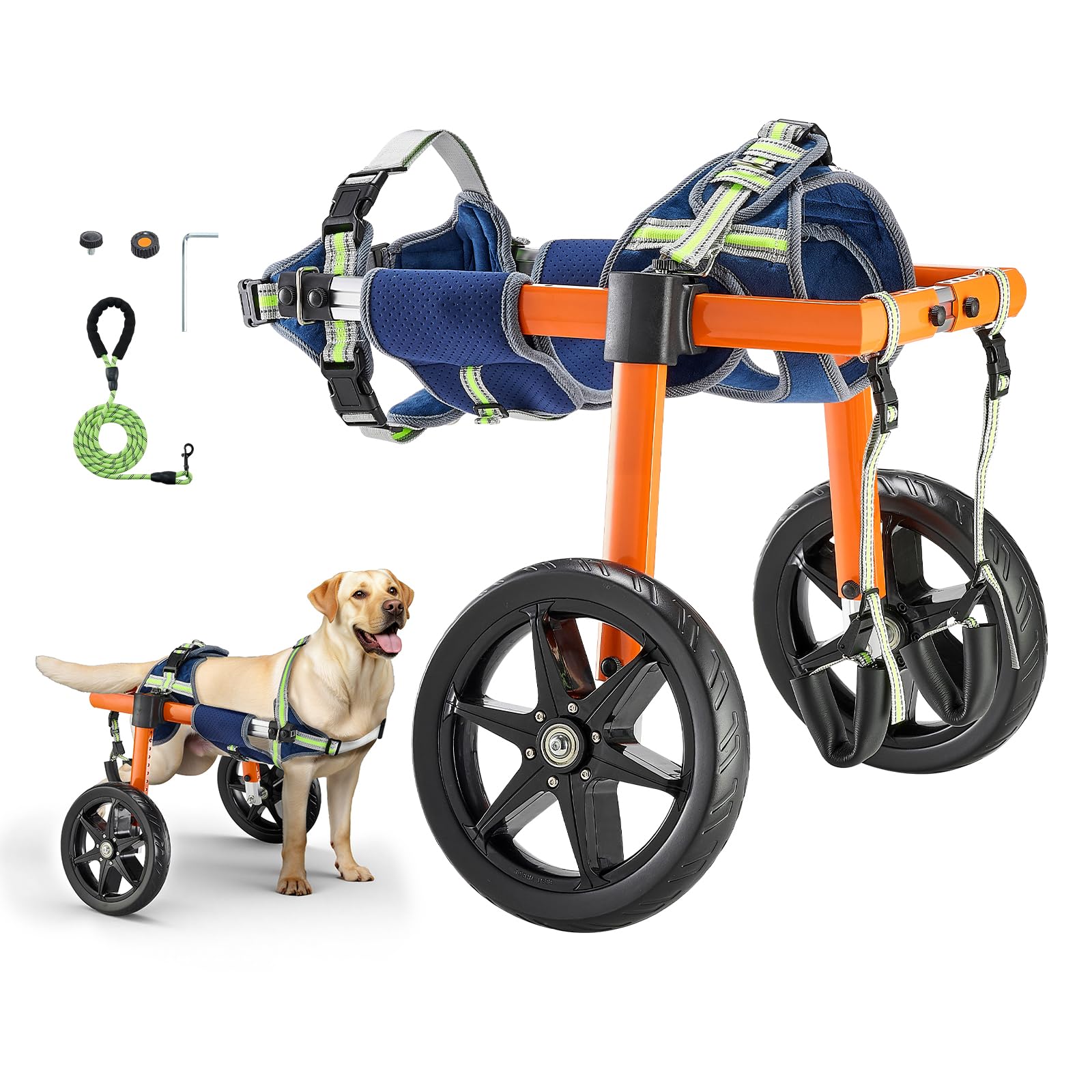
2. VEVOR Dog Wheelchair for Back Legs, 2 Wheels
The lightest cart here, and the one that asks two pairs of hands before it works.
At 6.4 pounds this is the featherweight of the group — the Walkin’ Wheels for large dogs above weighs 21 pounds, so this one is far easier to carry up steps or lift into a boot. The frame is 1.5 mm thickened aluminum, which the maker says is sturdier than the standard 1 mm tubing, and the shock-absorbing wheels with EVA treads soften the ride over gravel, grass, dirt and asphalt.
Fit is where it shines on paper: 18 length, 12 width and 12 height settings give you a lot of room to dial in a medium dog up to 48 pounds. The mesh is breathable and washable, and the package includes a 2 m leash plus the bolts and wrench you need. Owners describe the qualities that matter most for a budget cart: it is well-made, gives a dog freedom to run and play, and rolls well on grass, dirt and wet packed sand.
The honest catch is getting your dog into it. Owners mention it “takes 2 persons to put it on the dog,” and the strap arrangement is the part that trips people up. A French bulldog owner found the front harness needed more adjustment and more height options for a heavier dog, and swapped the harness out. So if you live alone and your dog cannot stand still, this cart will test your patience, even though the freedom it gives on a good day is real.
The lightest option: 6.4 pounds is far easier to manage than a 21-pound frame, and the 1.5 mm aluminum plus EVA-tread wheels handle daily walks without complaint.
The friction point: the harness takes practice and often a second person, so it suits a household where someone can help at first.
Reach for this if: you want a light, affordable cart for a medium dog and have a helper for the first few weeks.
Look elsewhere if: you need to strap the dog in single-handed every morning.
3. Adjustable Large Dog Wheelchair (XL), Upgraded Wheels
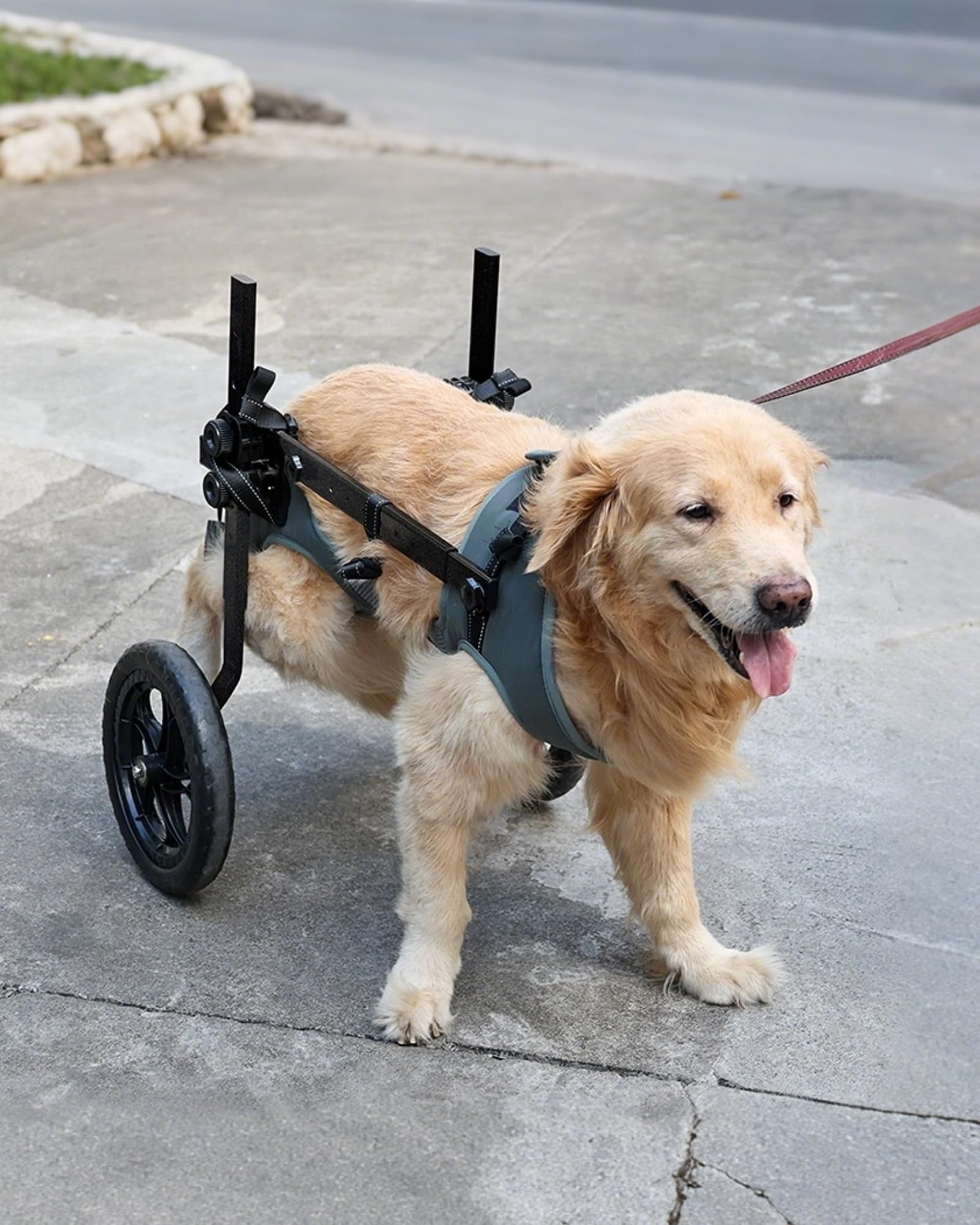
A light large-dog cart with upgraded wheels that rolls where smooth-floor carts get stuck.
For a big dog needing something easy to carry, the stand-out number is 7.13 pounds on an XL frame — a fraction of the Walkin’ Wheels large cart. The upgraded wheels are the other headline: larger diameter for smoother steering and stable running, and the cart is built to handle grass rather than just a smooth kitchen floor.
The size band is a chest circumference of 28.3–33.9 inches in this XL version, and the maker asks you to measure chest, the gap between front and rear legs, and the gap between the front legs before ordering. They will size the cart for you from six measurements and a photo if you are not sure. Height and length adjust to fine-tune the fit, and it is designed for dogs with hind-leg disability but normal front legs.
Owners describe the same picture an off-road upgrade is meant to fix — better on grass and rough surfaces than a smooth-floor cart, and larger wheels that help balance. The compromise, and it comes through clearly, is getting a heavy dog in and out: one buyer found it was not easy to get a 60 lb. dog into the cart, and another wanted more durability and comfort. The frame does the job, but expect to build a routine around loading your dog in.
Where it wins: 7.13 pounds on an XL frame plus upgraded wheels that work on grass, at a strong 4.0+ star standing for a newer cart.
Where it asks work: loading a 60-pound dog in takes practice, and the frame is built to do the job rather than to pamper.
Best fit for: an owner of a 60-pound-plus dog who wants a light frame and grass-friendly wheels.
Skip if: your dog is a short, long-bodied breed — the front harness on this frame is cut for a longer body.
4. Whisker Bark Adjustable Dog Wheelchair

The cart built around one daily relief: getting your dog in and out without a wrestling match.
The buying decision here is speed and ease of use, and this cart is rated on exactly that. Owners find it goes on and off quickly — “Getting it on and off is super easy” — which matters more than any spec if you are loading a dog twice a day. The frame is stainless steel for everyday support, and it adjusts in height, width and length for a more personal fit.
Support where your dog needs it comes from a breathable belly panel and padded harness areas, so the weight is cradled rather than hung from straps. The solid rubber wheels roll on grass, sidewalks, pavement and indoor floors, so you can move between a kitchen and a garden without swapping anything. It is also designed so your dog can relieve itself naturally, and it wipes clean and travels as a portable frame.
This size L is for 60+ lb dogs, and fit is the sticking point. For most buyers it lands well — the fit scores high and the harness sits securely. The recurring note is body shape: a short, long dog like a dachshund does not belong in this front harness, and the maker’s own XXS sizing did not save it for one 10 lb dachshund. If your dog is a standard large build, this is a calm, sturdy daily cart; if it is a low, long-bodied breed, look down this list instead.
What people notice first
- Quick to put on and take off, which is what owners praise most
- Adjustable height, width and length for a secure fit
- Breathable belly panel and padded harness areas for comfort
- Solid rubber wheels roll indoors and on pavement, grass and sidewalks
Where it does not fit
- The front harness does not suit short, long-bodied breeds like dachshunds
- Size L starts at 60+ lb, so it is not for small dogs
Who it suits: a 60-pound-plus dog of normal build whose owner wants a fast, stress-free routine.
Who should look on: owners of dachshunds and other low, long dogs, who need a body-specific cart.
5. Walkin’ Wheels Small Dog Wheelchair, 15–25 lbs (Pink)
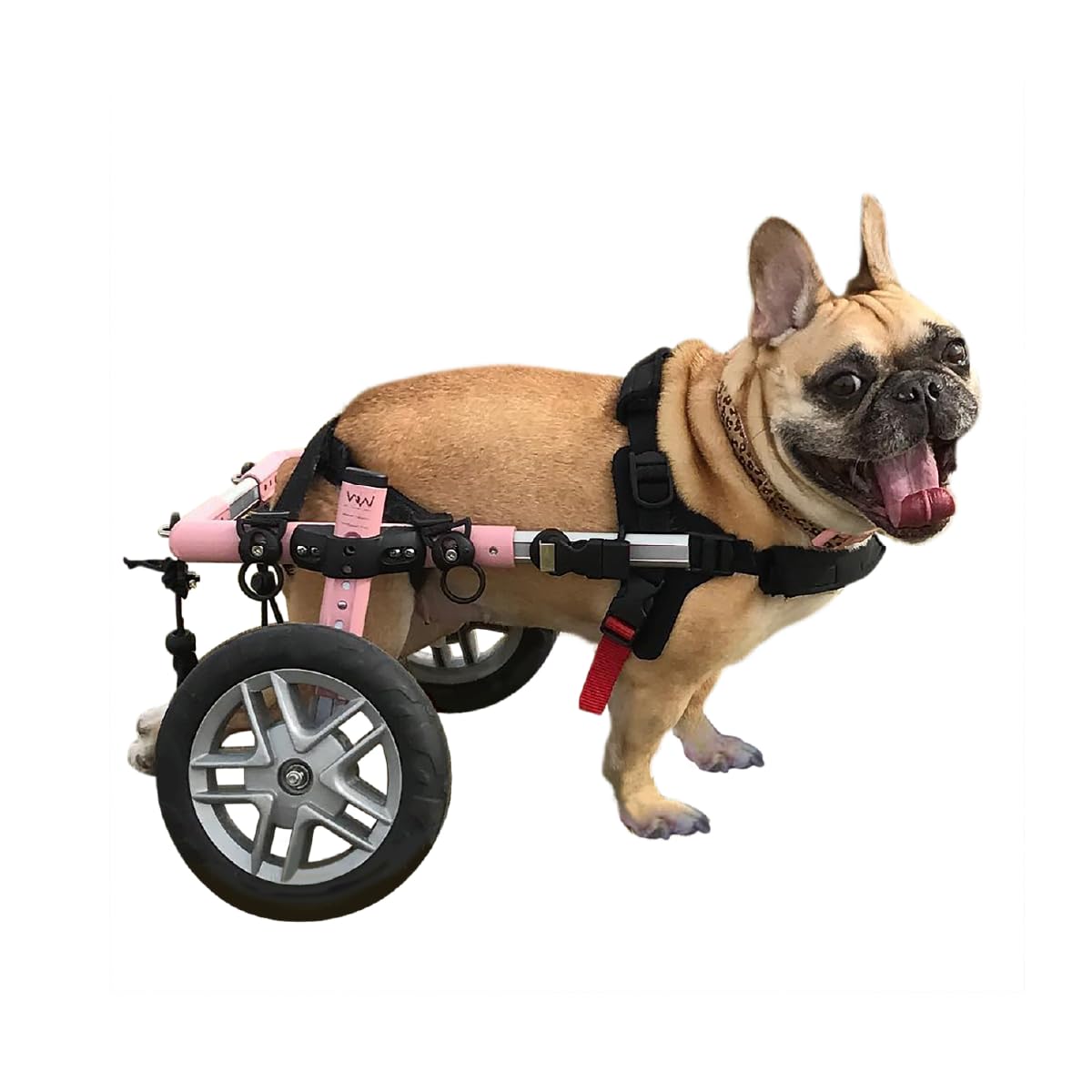
The small-dog cart with the most proof behind it, and a fold-flat frame for the car.
For a dog between 15 and 25 pounds with 6–8 inch legs, this is the safest bet on the list — a long-standing cart with a deep pool of owners behind it. The frame is extruded aluminum at 10 pounds, and the maker calls it chew-proof, with wheels that handle all terrains. The struts fold so you can load it in the car or tuck it into a small space, and the whole thing adjusts in height, length and width.
What comes through in owner experience is how quickly small dogs adapt. A 10-year-old Pomeranian with IVDD, nearly paralyzed in the back legs and depressed, was moving in under 15 minutes and running and walking on grass. A mini-dachshund with a blown disc needed a front vest plus straps and clips, which took some working out, but then ran outside with its tail wagging. A 45-minute assembly and an included belly support strap are standard, and owners describe the build as sturdy and worth the money.
The part that demands patience is the front vest setup, which is more involved than a simple harness. Legs can be hard to raise into position, and one dog pulled to the side, possibly because of the angle of its body. It is also a fixed size band — there is no version of this frame that will fit a taller dog, so check the 6–8 inch leg height before you buy.
The strongest small-dog buy: 15–25 lb sizing with 6–8 inch leg height, on a foldable 10-pound extruded aluminum frame that owners trust.
The honest friction: the front vest and straps are fiddly at first, and the frame only fits dogs in this exact size band.
Pick it if: you have a 15–25 lb dog and want the most proven small-dog cart here.
Pass it by if: your dog’s legs are shorter or taller than 6–8 inches — the frame will not stretch.
6. Walkin’ Wheels for Dachshund, Small Dogs 2–30+ Pounds

The cart cut for a long, low body when the standard small-dog frame rubs and slips.
If your dog is a dachshund, a corgi or anything else built long and low, the front harness on a standard cart does not sit right — this is the frame shaped around that body. It comes in 11–14 pounds with a 7–9 inch leg height, and it includes stirrups and a belly band to carry the hind end. The aluminum frame weighs 8 pounds, folds for travel, and adjusts in height, length and width.
The designer details are where the value shows. The dense foam wheels with rubber treads will not puncture and roll over varied ground, and the frame is meant to be matched to the dog rather than pinched to it. Owners who get the fit right describe real freedom, with a 3-year-old dachshund whose back legs went after IVDD running freely outside. Company support comes up strongly too, and that matters when you are learning to fit a cart on your own.
The honest limit is the learning curve and the dog’s own willingness. The front harness and straps are fiddly, and assembly instructions are vague enough that you will lean on support to get it fitted. A 17-year-old dachshund simply refused to move even with treats, which is a reminder that an older dog with no drive will not take to a cart no matter how good the fit. Some owners also find the frame a little heavy for a small dog at first.
Built for the body: 11–14 lb sizing with 7–9 inch leg height, plus stirrups and a belly band that suit a long-backed dog.
The patience test: assembly guidance is thin and the harness is fiddly, so a phone call to support will save you an evening.
Your match if: your dachshund is between 11 and 14 pounds with 7–9 inch legs, and you are happy to fine-tune the harness.
Not your match if: your dog is significantly heavier or taller — this frame is cut for a narrow size band.
7. All-Terrain Aluminum Cart for Back Legs, 35–48.5 lbs (M)
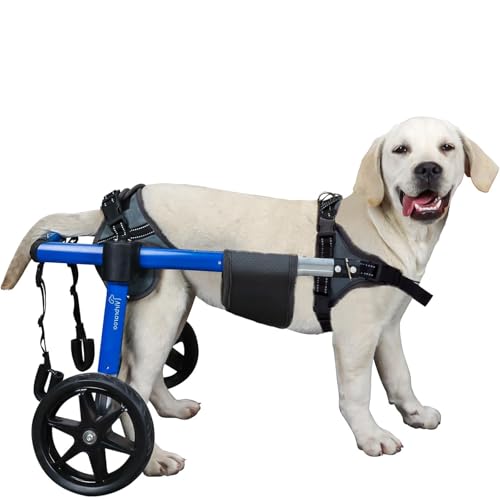
Big smooth-rolling wheels and a reinforced abdominal strap for rough ground and spinal support.
This cart is aimed at the owner who walks on grass, gravel and pavement and wants the wheels to do the hard work. The wheels are 7.9 inches with quality bearings, so they roll quietly and smoothly across all three surfaces, and they suit dogs with limited mobility from arthritis, paralysis or injury. The frame is aircraft-grade aluminum, and the abdominal strap is reinforced to redistribute weight off the spine and hips for dogs with degenerative myelopathy or IVDD.
The harness is the thoughtful part: a soft, non-irritating fabric reduces rubbing for long wear, and a front harness clips onto the frame quickly for setup. The maker also gives a simple test before you buy — lift your dog’s hips with a towel, and if the front legs can carry weight and step forward, this rear-leg cart suits the dog. If they wobble or lack push, a four-wheel chair is the right call instead.
The warning here is durability at the wheels. Most owners find the cart sturdy and easy to adjust, and a 98-pound German Shepherd with DM got back to walks in it. But one cart had a main wheel come off on its second use and tip over with the dog inside, and another owner found the harness hard to manage while supporting a large dog. Sizing is also a mixed bag: this size band is 35–48.5 lb, and some owners found the harness ran big or the front strap awkward.
Worth it for: a 35–48.5 lb dog who walks on mixed ground and needs the abdominal strap for spinal support.
Give it a miss if: your dog is a very large breed with rear-leg weakness — the harness is harder to manage at that size.
Know the Specs
Size Band and Leg Height
A rear-leg cart is made to a range of body weights plus a leg height, and your dog has to sit inside both. A cart sized 15–25 lbs with 6–8 inch legs will not fit a taller dog even if the weight matches. Measure chest circumference, the gap between front and rear legs, and the gap between the front legs, then check them against the band. Most cart returns come down to a size band that did not match the dog.
Frame Weight and Adjustability
Frame weight decides how easy the cart is to lift into a car, and it varies widely here, from 6.4 pounds on the VEVOR to 21 pounds on the large Walkin’ Wheels. Adjustability decides how well the cart follows your dog: more height, width and length settings give you room to correct a rub or a wobble over time. Choose a frame light enough for you to lift into the car and adjustable enough to correct a rub.
Harness and Belly Support
The harness carries your dog’s weight, so a front harness cut for the wrong body shape will rub and slip. A short, long-bodied dog needs a front harness cut for that body, or it will rub and slip. A padded belly panel or reinforced abdominal strap spreads the load, which helps dogs with spinal issues like IVDD or degenerative myelopathy. A harness that takes two people to close will turn a daily routine into a chore.
Wheels and Terrain
Wheel type decides where you can walk. Dense foam wheels with rubber treads will not puncture and roll over varied ground. Larger wheels, like the 7.9-inch set on the all-terrain cart above, roll smoother over grass and gravel. Shock-absorbing EVA treads soften the ride on rough surfaces. Pick the wheel for your daily route — pavement, grass or gravel — not for a hike you may never take.
Common Questions
How do I know if my dog needs a wheelchair for back legs?
Will a rear-leg wheelchair fit my dachshund?
What measurements do I need before ordering?
How long does it take to assemble a dog wheelchair?
Can my dog pee and poop while wearing the wheelchair?
Is a two-wheel rear cart better than a four-wheel cart?
How do I stop the harness from rubbing my dog?
How much does a rear-leg dog wheelchair weigh?
Can a dog with IVDD use a rear-leg wheelchair?
What if my dog refuses to move in the wheelchair?
The Bottom Line
Start with the Walkin’ Wheels for Large Dogs if your dog weighs 70–180 lbs. Its height, length and width settings let the fit follow your dog as its body changes, and the frame is built to carry that weight. For a 15–25 lb small breed, the Walkin’ Wheels Small Dog is the proven choice. For a dachshund or any long, low body, the Walkin’ Wheels for Dachshund is cut for that shape. Whichever you pick, measure your dog first — the right cart is sized to its chest, leg height and body length.
How we choose
We do not accept paid placement. Every pick is matched to a real buyer and a real use-case; we do not hands-on test units.
Sources
Specifications: manufacturer listings and product documentation. Review insights: verified customer reviews, as of October 2026. Pricing: not shown on this page (it changes often); check the current price via the retailer link.
As an Amazon Associate, How Dog Care earns from qualifying purchases. This does not affect which products we feature.