Disclosure: This post may contain affiliate links. As an Amazon Associate I earn from qualifying purchases, at no extra cost to you. Learn more
Specs are compiled from manufacturer listings and verified buyer reviews and can change over time — please confirm the key details on the product page before buying.
If your Labrador has turned every plush squirrel into a fifteen-minute pile of fluff, you already know the real question isn’t which toy looks fun — it’s which toy is still in one piece next month. The picks below are all sized for a large breed mouth, and every one has a real track record with hard-chewing dogs. The KONG Classic is the safest first buy for most homes: it is stuffable, dishwasher safe, and a 4.5+ star favorite among 93,000+ owners. But a few of the others solve problems the KONG can’t, like fetch on open ground or a dog that needs a tough bone to gnaw on alone.
This guide is built by comparing the manufacturers’ published specifications and the patterns across verified customer reviews, so you get each pick’s real strengths and trade-offs instead of marketing spin.
These picks cover that gap, and below you’ll find the full breakdown of the best Dog Toys for Labradors.
Top Picks

How To Choose The Best Dog Toys for Labradors
Labs are retrievers with a soft mouth for carrying but a strong, persistent grip when they settle in to chew. That combination breaks most toys in two different ways. A fetch ball gets punctured during a game of tug, and a plush toy gets gutted in an afternoon. You want a toy whose material matches the job you’re buying it for, rather than one toy asked to do everything.
Match the material to the activity
Solid natural rubber holds up to chewing and bounces for fetch. Nylon is harder and better for a dog that wants to gnaw, but it will dull the fun if your Lab only wants to chase. Cotton rope is for tugging and gentle dental wear. If you buy one toy hoping it covers chewing, fetch, and teething, you’ll replace it in a week.
Size it for a big mouth, not a small one
A toy sized for medium breeds becomes a choking risk or simply gets ignored by a Labrador. Look for pieces with a wide enough profile for a paw grip and a mouth grip. A ball your dog can’t comfortably hold in its jaws during a game of fetch sits in the corner of the yard.
Read “aggressive chewer” labels with a raised eyebrow
Many toys say they’re built for power chewers. Few survive one. The most reliable sign is not the label but the material and whether the design leaves room for your dog to grip without shredding. A toy that gives your dog a good bite zone and no loose fabric is usually the safer bet.
Side-by-Side Comparison
| Model | Best For | Primary Material | Size | Play Type | Amazon |
|---|---|---|---|---|---|
| KONG Classic★ Best Overall | Everyday chewing and crate time | Natural rubber | 8.23″L x 5.43″W x 2.76″H | Stuff and chew | Amazon |
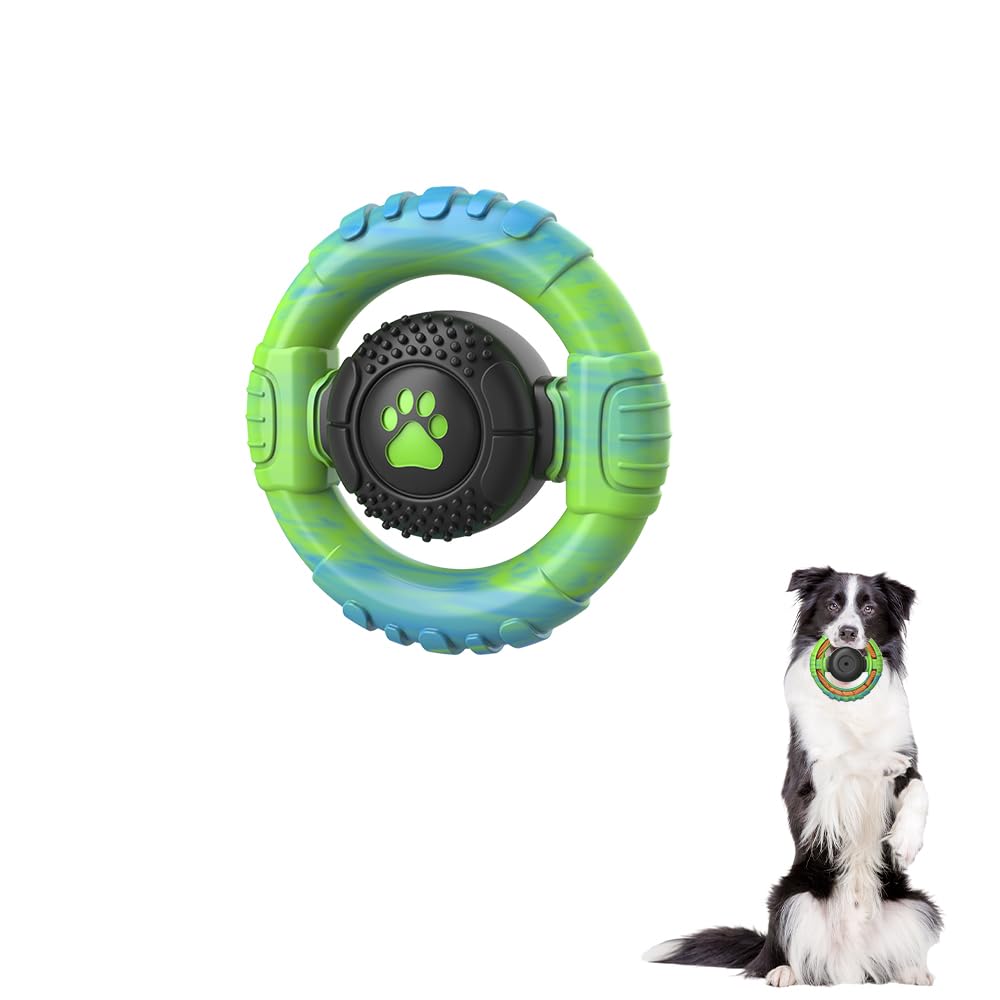
| Wodifer Chew ToyBest Value | Hard chewers who like squeaks | Natural rubber and nylon | 5.7″ diameter | Chew and squeak | Amazon |
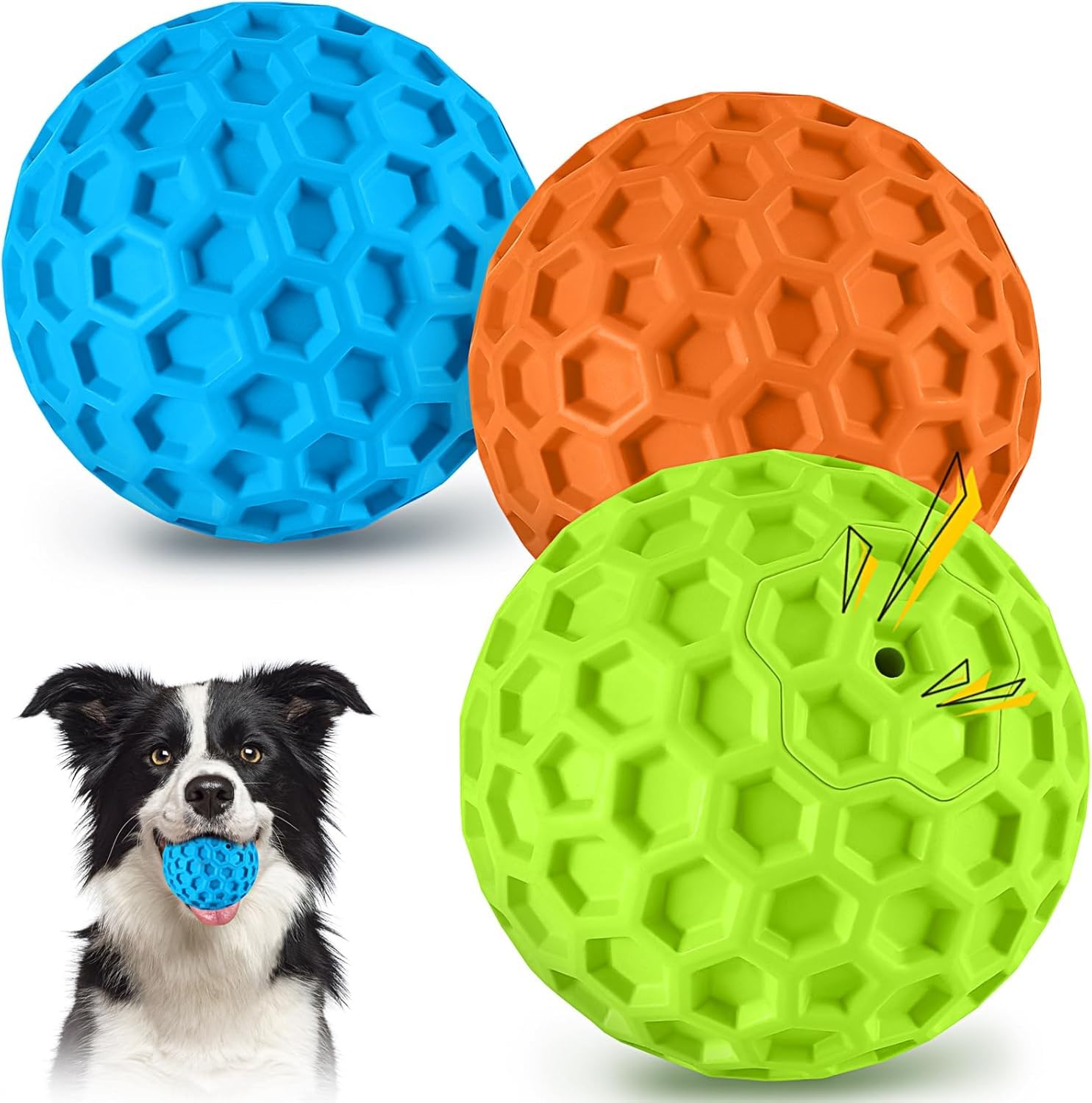
| havit Squeaky BallsBest for Fetch | Fetch and water play | Natural rubber | 3″ diameter | Fetch and squeak | Amazon |
| Aitmexcn Rope Set | Tug of war and multi-dog homes | Cotton | 8-piece set | Tug and chew | Amazon |
| Benebone Wishbone | Long solo chew sessions | Durable nylon-style chew | 10.5″L x 5.5″W x 7.5″H | Chew | Amazon |
| PeppyPawz Sharky | Destructive chewers who like plush | Polyester plush and rubber | 6″L x 5″W x 5″H | Squeak and chew | Amazon |
| Chuckit! Kick Fetch | Fetch across a big yard | Rubber, foam, canvas | 8″ diameter | Fetch and kick | Amazon |
| Nylabone 4-Pack | Bored dogs who need variety | Nylon blend | 5.5″ to 7.75″ long | Chew | Amazon |
| Benebone 4-Pack | Households with several hard chewers | Durable chew material | 8.75″L x 8.5″W x 4.5″H | Chew | Amazon |
Detailed Reviews
1. KONG Classic Stuffable Dog Toy
Our pick — 4.5+★ from 93,500+ verified ratings; the strongest balance of quality and price.
The toy that turns a bored Labrador into a busy one for twenty quiet minutes.
Your Lab’s chewing instinct needs a job, and the KONG Classic gives it one. You pack the hollow center with kibble, peanut butter, or freeze a wet mix inside, and your dog spends the next stretch licking and working it out. That occupied time is what owners talk about most — the sheer amount of engagement this red rubber shape creates beats almost anything else in the toy bin. The 8.23-inch length gives a big mouth plenty to hold, and the hollow shape means it doesn’t just sit there like a plain ball.
Inside the house, it doubles as a crate-training tool. Fill it before you leave, and the chew-plus-lick combo settles an anxious pup far better than a bare bone. The natural rubber has enough give to survive a determined Labrador without being so hard that it’s unpleasant to hold. It’s dishwasher safe too, so a week of frozen peanut butter doesn’t become a permanent smell. As buyers report: “he’ll spend hours with it and does not damage it even though he’s an aggressive chewer.”
Here’s the honest trade-off. The classic shape is on the smaller side for a full-grown Lab, so it can vanish under the sofa during a game of fetch. The rubber also picks up lint and hair from the floor. You’ll give it a rinse more often than you’d like. None of that stops it being the first toy most Lab owners should buy.
natural rubber bounce
- Stuff it, freeze it, and your dog self-entertains while you work.
- Natural rubber has enough flex to survive a strong chewer.
- Dishwasher safe, so clean-up stays quick.
- Erratic bounce keeps fetch sessions unpredictable and fun.
treats fall out
- Smaller than you may expect for a full-grown Labrador.
- Rubber grabs floor hair and needs frequent washing.
- Not a fetch ball — keep a separate one for outdoor games.
first chew: your Lab needs something to work on quietly, especially during crate time or when you’re out.
heavy gnawers: a dedicated fetch ball, because the KONG’s uneven shape isn’t built for long throws across a yard.
2. Dog Toys for Aggressive Chewers
A steering-wheel chew with a squeaker, built for the Lab that destroys everything in minutes.
This one leads with its material story. It’s made from a mix of super tough nylon and natural rubber, and the maker says it shows only minor scratches after several days of chewing. The 5.7-inch diameter gives a large dog a proper grip, and the odd steering-wheel shape means it doesn’t roll away when your Lab loses interest mid-chew. Grooves on the back take beef sauce or dog toothpaste, which is a nice way to make an otherwise simple chew more interesting.
Labs get bored with silent bones fast, and the noise draws them back. Some owners mention the squeaker still working after months of chewing. The hard material does leave marks, but the design holds its shape rather than splitting into halves like cheaper bones. If you have a Lab that destroys toys in a single session, this is a low-cost way to test whether nylon-rubber blends survive in your house.
The catch is weight and jagged edges. The toy has enough mass that dropping it on a bare foot stings, and heavy chewing can leave rough edges over time. A Lab that’s a moderate chewer usually comes out ahead; a true power chewer may still find a way in. At this tier, it’s a sensible toe-dip before spending more.
quiet squeaker build: the treat grooves and rubber zone give you an add-on way to keep your dog interested, which is rare at this price tier.
edge wear: once the chewing starts producing rough spots, swap it out rather than letting your Lab work on a jagged toy.
silent play: you want a low-cost first test of nylon-rubber durability in your home.
power chewers: your Lab is a true power chewer that has cracked hard toys before.
3. havit Squeaky Dog Balls
Three rubber balls that float, bounce, and keep squeaking long after cheaper toys go quiet.
Here’s the size story that matters for a retriever. Each ball measures 3 inches across — compact next to the KONG Classic at 8.23 inches long — which makes it a proper fetch target rather than a chew toy. Labs love to chase, and the springy bounce and rolling action here are tuned for exactly that. The uneven surface gives teeth and paws a decent grip, and the whole thing floats, so a game at the lake doesn’t end with you wading in.
The squeak is built in and holds up better than most. The rubber is dense and has real weight to it, so throws travel well. Owners consistently flag durability as the headline — one review notes the balls “lasted 5+ days vs. typical 5 minutes.” That’s the sort of margin that matters when your Lab kills a ball per outing. The three-color set also means you can split them between the car, the yard, and the house.
What’s less ideal is the squeak itself. It runs high-pitched, and some owners find the size on the large side for smaller Labs or puppies. If your dog prefers to gnaw rather than fetch, these aren’t the right fit — they’re built for movement and play, not hours of grinding. Use them as your fetch-and-water set, not your chew set.
fetch fans: Labs that live for fetch, especially if your local park has a pond.
tough jaws: your Lab settles in to chew rather than chase.
4. Aitmexcn 8 Pack Dog Rope Toys

Eight cotton toys in one box, so you can finally stop rationing the good one.
Multiple dogs or one very busy Lab — either way, the math works. This set packs two knotted tug ropes, two large rope balls, one rope ball with a handle, and three knotted chew ropes in different styles. The cotton fibers have a texture that rubs against teeth as your dog tugs, which is the dental angle built into the play. Tug, fetch, toss, carry — it’s a full kit rather than a single toy.
One Doberman owner reports a set lasting from puppy to one year old with no ripping or shredding. That’s an unusually clean result for cotton, and it speaks to how thick the knots are. Rotating the toys one at a time stretches a package across months, so you always have a fresh one in reserve. The variety also helps if your Lab gets bored of any single shape.
The honesty part: rope toys and hard chewers are a difficult pair. A determined chewer will work loose the fibers, and you’ll be sweeping string off the floor. That’s the trade-off of cotton — it’s softer on teeth and good for tug, but it doesn’t hold up to relentless grinding. Supervise tug sessions, and pick up the loose strands before your dog swallows them.
eight pack value: buying eight toys at once means you can replace the worn ones without a fresh shopping trip, and the mix of shapes keeps a busy dog guessing.
stringy shreds: cotton will shred under a heavy chewer, so this is a toy for supervised play rather than unsupervised gnawing.
multi dog homes: tug-loving Labs and homes with more than one dog.
neat freaks: your Lab chews unsupervised and you’d rather not sweep up cotton fibers.
5. Benebone Wishbone Dog Chew Toy

The bone your Lab keeps coming back to long after the new-toy smell wears off.
What sets the Wishbone apart is the shape. It’s curved specifically for a paw-friendly grip, so your dog can pin it down and work at it without it skittering across the floor. The 10.5-inch length gives a full-grown Lab plenty to wrap jaws around. Bacon flavor comes from real bacon, which sounds gimmicky until you watch a Lab ignore every other toy in the room for this one. It’s the kind of chew that becomes a dog’s default.
Durability is where the story splits. Some owners get weeks of use and call it “suitable for VERY heavy chewers.” Others see pieces break off, especially at the thinner corners. That’s the honest split — the material is hard, which is what makes it last, and hard materials crack under a determined bite. Check the bone regularly and take it away once the ends start to splinter. Step on a chewed bone in the dark and you’ll understand why owners warn about it.
Size matters too. This is the Large, built for big jaws, and it holds up to that job. A Lab that only likes soft toys, or won’t chew hard surfaces, may ignore it completely. But if your Lab needs a long solo chew to settle down, this is among the most reliable options you can put down.
chew sessions: a Lab that settles best with a hard, flavored bone to work on alone.
soft mouths: your dog prefers soft toys or is a puppy still on baby teeth.
6. Tough Squeaky Chew Ball

A plush shark that hides two more toys inside — for the Lab that loves the tearing part most.
Not every destructive chewer wants a bone. Some want to shred. The Sharky leans into that instinct: a plush outer layer tears open to reveal a bouncy rubber ball and a crinkle layer inside. The inner ball is BPA-free rubber, and the plush is stuffing-free, so when the outer layer goes, you don’t get a cloud of fluff across the living room. That stuffing-free detail is the quiet fix for the toy-gutting problem.
The squeaker and crinkle fins are what keep a Lab engaged. The outer fabric is reinforced polyester, which holds up better than a standard plush but won’t outlast a hard nylon bone. For a Lab that’s already wrecked sturdier toys, treat this as the fun toy rather than the endurance toy. That’s the realistic role it plays: entertainment, not survival.
Be clear-eyed about the lifespan. Destructive dogs will get through the first layer fast, sometimes within an hour. Customers note mixed results — the toy often survives the initial tear and keeps the dog interested, but the fins and outer fabric can become swallowable pieces. Cut off the loose bits as they appear. If your Lab swallows fabric, this isn’t the right toy for them.
tough squeak ball: the stuffing-free build means no fluff explosion, which is a real plus for a Lab that shreds every plush in sight.
fabric cover: reinforced plush is still plush, so remove loose fins as they appear rather than letting them pile up.
active chewers: Labs that love the tearing and squeaking part of play more than chewing.
delicate toys: Labs that swallow fabric pieces or chew beyond the outer layer.
7. Chuckit! Kick Fetch Ball

An eight-inch ball you can kick across the park while your Lab does the running.
Most fetch toys are sized for your dog’s mouth. This one is sized for your foot. At 8 inches across, the Kick Fetch is meant to be booted, thrown, or punted rather than squeezed into a pocket. The deep ridges give a Lab a grip point to pick it up, which is where a smooth soccer ball fails. The bounce is unpredictable enough to keep a retriever guessing, and the whole thing floats, so a trip to the lake becomes a game.
Chuckit! is straight about what this is: a fetch toy, not a chew toy. Made from rubber, foam, and rugged canvas, it’s soft on the mouth, but the maker says it’s not intended for aggressive chewers. Owners who use it for fetch report one ball lasting three years before it was destroyed. Bright orange and blue make it easy to find in long grass.
The trade-off is the fabric cover. Rough chewers can peel the canvas from the foam core, so play needs supervision. A gentle Lab will likely keep one for years; a chewer will find the seam. Use it for games and put it away after, and it earns its place in any Lab household.
yard games: yards, parks, and beaches where a big kick beats a short throw.
small breeds: dogs left alone with toys to chew — this one needs you in the game.
8. Nylabone Strong Chew Dog Toy 4-Pack
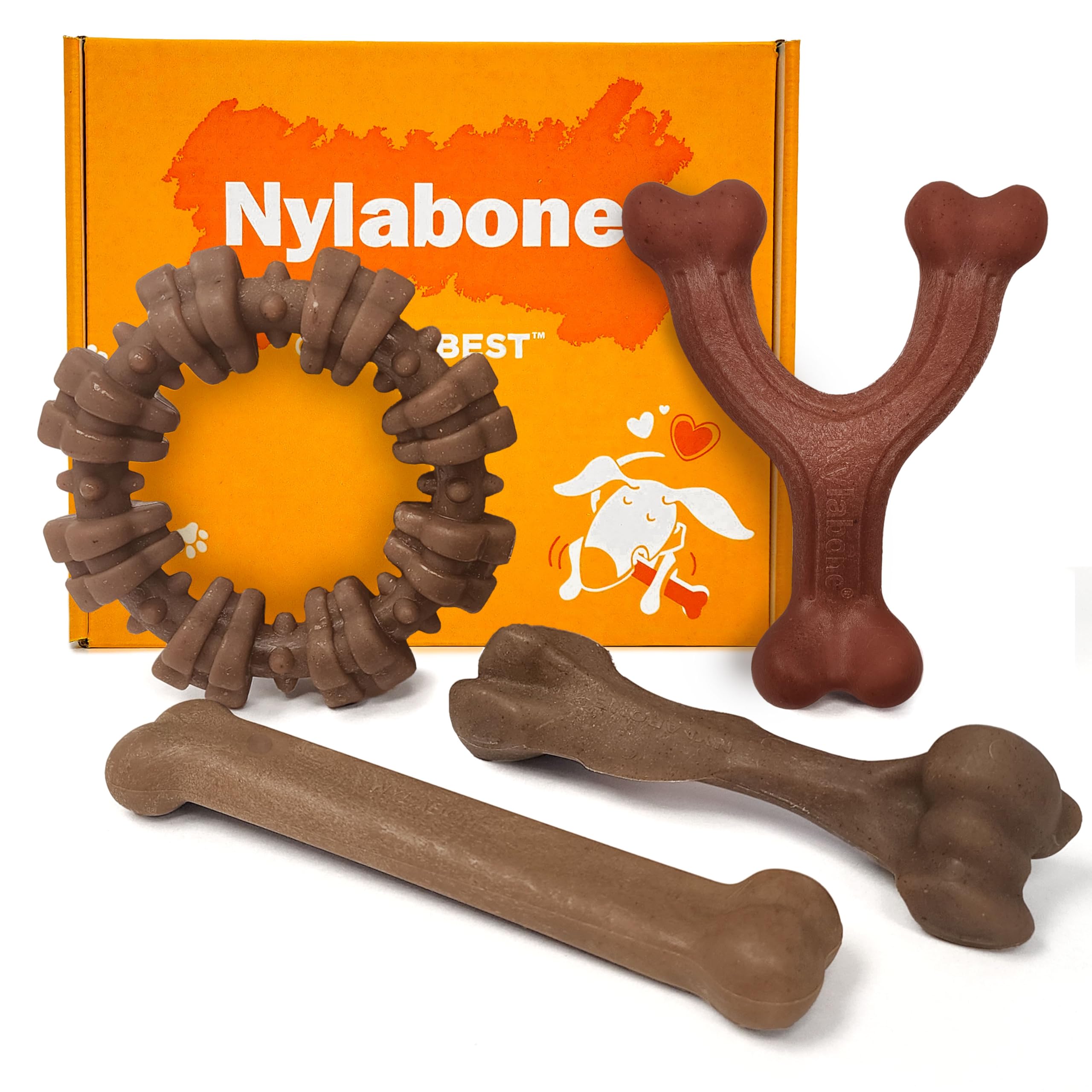
Four flavored bones in one box, each sized for a large jaw and each a different shape.
Variety is the strategy here. The set gives you a textured ring, an authentic femur-style bone, a wishbone with three chewing ends, and the classic bone shape. Each runs between 5.5 and 7.75 inches long, intended for large breeds up to 50 pounds. Flavors vary across chicken, bacon, bison, venison, and beef, so a picky Lab has options. Rotating shapes keeps a dog from getting bored of one chew.
The textured ridges and nubs are the dental side of the pitch — they rub against teeth and help with breath as the dog works. For a Lab that’s chewed through softer toys, these have real staying power. The femur-style bone is designed to give you the experience of a real bone without splinters. Owners describe the set surviving several months of chewing across two dogs.
The physical weight of the set is notable at 1.7 pounds, so this is a real object in your dog’s mouth, not a light chew. Puppies and dogs under the weight range may find the bones too much. And no chew is truly unbreakable — check the pieces regularly and retire any that start to come apart. For a house with a steady chewer, the four shapes make this a smart rotation.
four pack variety: four shapes means four different chewing experiences, which is exactly what a Lab with a short attention span needs to stay interested.
size mismatch: these are built for large breeds up to 50 pounds, so smaller Labs and puppies should scale down to a smaller line.
stock up: you want a ready-made rotation of chews in one purchase for a large Lab.
tiny pups: your dog is a puppy or under the intended weight range.
9. Benebone Large 4-Pack Dog Toys

Four Benebone chews in one box, for the household where one bone never lasts.
The pitch is simple: buy four at once, so a Lab always has one to work on while the others get rotated or replaced. Each bone is a different Benebone shape, and the real-flavor coating — bacon, fish, and maple wood across the set — is what gets a dog’s nose into it. The paw-friendly curves let your dog pin the bone down, and the total weight of 2.8 pounds speaks to how substantial each piece feels.
For a house with two hard chewers, the four-pack stops the fight over a single favorite. Owners describe each bone lasting around a month with a power chewer, a realistic estimate for this hard chew material. It’s also a good way to test which shape your particular Lab actually prefers before you commit to buying singles. Variety keeps a busy adolescent from losing interest.
The caveats are the same as the single Wishbone: this is a hard chew, so it’s not right for teething puppies. Some owners also notice the fish-shaped piece wears at the thin corners faster. Keep an eye on all four and take any away once small pieces start coming off. Bought as a rotation, the set spreads the cost across four toys and gives your Lab more to choose from.
big chewers: multi-dog homes or single Labs that burn through bones at a steady clip.
apartment space: puppies, small breeds, or dogs still on baby teeth.
Know the Specs
Material and Chew Resistance
Natural rubber flexes and bounces back, which is why it survives chewing better than rigid plastic. Nylon is harder and lasts longer for dogs that grind, but it doesn’t bounce well, so it’s a chew toy rather than a fetch toy. Cotton rope is for tugging; it will shed fibers under a hard chewer. Matching the material to the job you’re buying for is the single biggest factor in whether a toy survives a Labrador.
Toy Size for a Large Breed
A toy sized for medium dogs becomes a choking risk or simply gets ignored. For a Lab, look for a wide enough profile for a paw grip and a mouth grip. The KONG Classic’s 8.23-inch length and the Chuckit!’s 8-inch ball are both sized for big jaws, while a 3-inch ball like the havit set is a fetch target, not a chew target. Wrong sizing is the most common reason a toy gets sidelined.
Common Questions
Is the KONG Classic the best choice for a Labrador puppy?
How long does a Benebone last with a heavy-chewing Lab?
Can a Labrador chew a Chuckit! Kick Fetch Ball?
Are rope toys safe for a dog that chews hard?
What size toy should I buy for a full-grown Labrador?
Is a nylon chew better than a natural rubber chew?
Can I put the KONG Classic in the dishwasher?
How do I tell when a chew toy needs to be replaced?
Are the PeppyPawz Sharky and Chuckit! Kick Fetch good toys for the same dog?
Will a Benebone fit a dog that is under 90 pounds?
The Bottom Line
For most Labradors, the dog toys for labradors winner is the KONG Classic because it’s the one toy that keeps working across chewing, filling, and crate time — and a 4.5+ star reputation across 93,000+ owners backs that up. If fetch is your daily ritual, grab the havit Squeaky Balls. And for a Lab that chews like a machine, the Benebone Wishbone is the one to reach for. Pick the job you need done, then buy the toy built for it — your Labrador will get more out of one right match than five wrong ones.
How we choose
We do not accept paid placement. Every pick is matched to a real buyer and a real use-case; we do not hands-on test units.
Sources
Specifications: manufacturer listings and product documentation. Review insights: verified customer reviews, as of October 2026. Pricing: not shown on this page (it changes often); check the current price via the retailer link.
As an Amazon Associate, How Dog Care earns from qualifying purchases. This does not affect which products we feature.