Disclosure: This post may contain affiliate links. As an Amazon Associate I earn from qualifying purchases, at no extra cost to you. Learn more
Specs are compiled from manufacturer listings and verified buyer reviews and can change over time — please confirm the key details on the product page before buying.
If your dog has ever slipped a gate and vanished around the corner, you already know the panic that follows. A dog activity tracker puts a live pin on your phone showing where your dog actually is, how far they walked today, and whether they left the yard while you were at work. The picks below cover three very different jobs: collars built to find a bolter, wearables built to watch a dog’s health trends, and one budget-friendly entry that does the basics well. Start with the DBDD tracker if you want real-time location plus a year of service already paid for, or jump to the Fi Series 3+ if you want the most complete picture of your dog’s daily activity. The rest of this guide breaks down which one fits your dog’s size, your yard, and how much you want to spend on a monthly plan.
This guide is built by comparing the manufacturers’ published specifications and the patterns across verified customer reviews, so you get each pick’s real strengths and trade-offs instead of marketing spin.
Every tracker here needs some kind of plan to ping a satellite, so the monthly cost matters as much as the device itself. Below you’ll find the specs that actually change how a tracker behaves in the field, plus the honest limits of each one. best dog activity trackers should match your dog’s escape habits and your real budget, not just the prettiest app.
Top Picks

How To Choose a Dog Activity Tracker
The first question is not which tracker is best — it’s what you need it to do. A dog that bolts through open gates needs live location updates you can watch in real time. A senior dog with a heart murmur needs a device that logs resting heart and breathing rate week by week. Those are different tools, and buying the wrong one wastes money on a subscription you’ll resent.
Start with the escape risk, not the feature list
If your dog bolts out the door, the number that matters is update speed. Live updates every 2–3 seconds let you follow a moving dog through the neighborhood. A tracker that refreshes once a minute shows you where your dog was, not where they are. Check the specs for how often the position refreshes in live mode. Then confirm your yard is big enough for the virtual fence (a boundary you draw in the app that alerts you if your dog crosses it). Some trackers recommend a fence several hundred feet across, which won’t suit a small city lot.
Weigh the tracker against your dog’s size
A tracker hanging off a collar has to be light enough that your dog forgets it’s there. The lightest options here sit under an ounce and suit small breeds; the heaviest run well past 2 ounces and are better suited to medium and large dogs. If you have a Chihuahua or a Yorkie, steer toward the featherweights. If your dog is a Lab or a cattle dog, weight barely matters and battery life should win the tiebreak.
Do the subscription math before you commit
Almost every tracker in this list needs a cellular plan to send location data, and that cost recurs every month or year. Some come with a year or a few months included; others charge from day one. Read the plan terms before you activate, and note whether the subscription is refundable. The device price is the smaller number over the long run.
Side-by-Side Comparison
| Model | Best For | Weight | Battery Life | Waterproofing | Amazon |
|---|---|---|---|---|---|
| DBDD GPS Dog Trackers★ Best Overall | Year of service included | 1.6 oz | — | Waterproof | Amazon |
| Tractive Smart Dog GPS TrackerMost Health Data | Vital signs and bark alerts | 5.6 oz | Up to 14 days | Waterproof | Amazon |
| Pawfit Lite 4G GPS Dog TrackerBest for Small Dogs | Small dogs, ultra-light wear | Under 18 g | 400 mAh battery | Waterproof | Amazon |
| PetSafe GPS Dog Tracker | Long battery, rural coverage | 3.2 oz | Up to 30 days | IP67 | Amazon |
| AI-Powered Smartphone for Pets | Two-way talk and music | 1.3 oz | Up to 5 days | IP67 | Amazon |
| Life360 Pet GPS Tracker | Family network and care logging | 29.4 g | Up to 14 days | IP68 | Amazon |
| Fi Series 3+ GPS Dog Collar | Behavior and sleep trends | 77 g | 285 mAh battery | IP68 | Amazon |
| Invoxia Biotracker | Heart and breathing trends | 28 g | Up to 15 days | IP67 | Amazon |
Detailed Reviews
1. DBDD GPS Dog Trackers
Our pick — 4.5+★ from 20+ verified ratings; the strongest balance of quality and price.
A year of live tracking already paid for, in a tracker light enough for most collars.
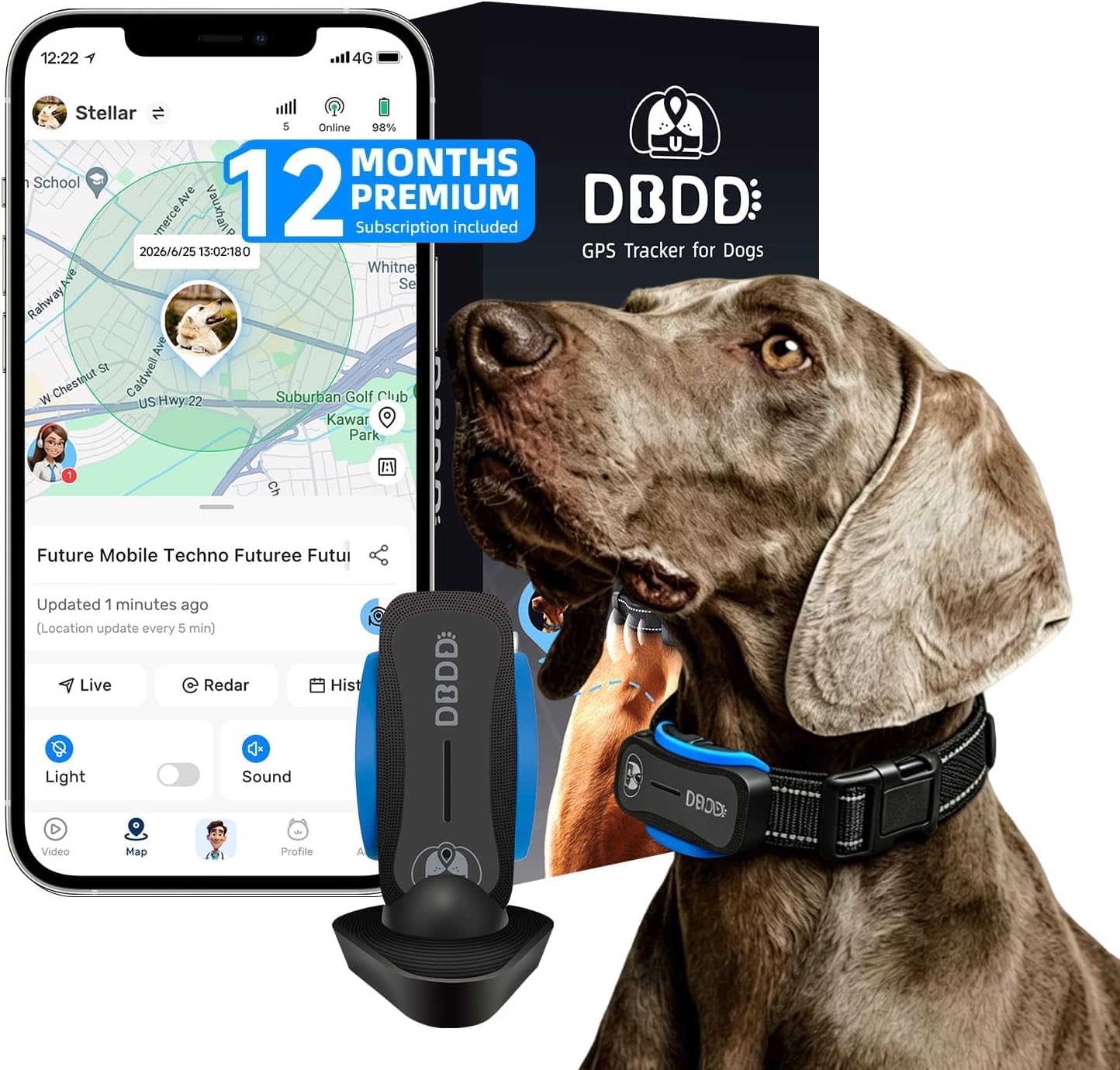
Most trackers nickle-and-dime you with a monthly plan from the first day. The DBDD tracker builds twelve months of service into the box, so you get connected and tracking without a second purchase. That one inclusion is why this is the pick worth leading with for most dog owners.
At 1.6 ounces, it hangs on a collar without your dog noticing. For comparison, the Tractive tracker in this list weighs 5.6 ounces — a real difference on a small neck. The app shows your dog’s live location on iOS and Android, and the virtual fence pings your phone if your dog leaves the zone. No shock, no correction, just an alert.
Beyond location, the DBDD logs a wellness score, activity levels, and sleep patterns through a built-in AI assistant — a good early read on whether your dog is moving less than usual. The build handles rain, mud, and swimming, so a wet walk doesn’t end the day. The honest catch is the learning curve: app setup asks for some patience the first time, and the live map can lag when cell coverage thins out on trails. Battery life lands at a few days between charges, and you’ll want a nightly charging habit if your dog bolts often.
Reasons This Tops the List
- Twelve months of service bundled in, no hidden monthly fee at setup
- 1.6 oz on the collar — light enough that small and medium dogs don’t fuss
- Virtual fence alerts without shock correction
- AI wellness score, sleep, and activity read
- Handles rain, mud, and swims
What Trips People Up
- App setup takes a learning pass
- Map can lag where cell signal drops
- Needs regular charging — plan for it
Grab this if: you want a real-time tracker with a full year of service included and a lightweight profile for everyday walks.
Look elsewhere if: you want a tracker that logs resting heart and breathing rates for a senior dog.
2. Tractive Smart Dog GPS Tracker
Heart and breathing rate tracking in a tracker that pings every two to three seconds.
Live positions every 2–3 seconds is the headline — Tractive updates far more often than a once-a-minute tracker, so you can actually watch a moving dog cross a field. If your dog runs, that speed matters more than any feature list.
The deeper play here is health. Tractive tracks changes in your dog’s heart and respiratory rates, learns its normal behavior, and flags unusual sleep, activity, or barking patterns. For a senior dog or one recovering from treatment, those trends are the useful part. It’s fully waterproof and built for dogs over 8 pounds, with up to 14 days of battery life per charge.
Here’s where it gets honest. The collar clip is the weak link — the silicone loop can break and drop the tracker, and a sturdier strap or a wider collar helps. The virtual fence is also finicky on small lots; a half-acre yard can trigger false alarms. One-year subscriptions are non-refundable once activated, so read the plan before you commit. Buyers report “Battery lasts ~9 days average, up to 2 weeks; live radar accurate within 10-20 ft” — realistic numbers to plan a charging routine around, not the marketing 14.
Where it earns its keep: real-time tracking speed and vital-signs monitoring is a combination few trackers here offer — the health trend data alone justifies it for an older or anxious dog.
The honest catch: the clip and the fence-size sensitivity are the recurring friction points, so plan for a sturdier strap and a larger safe zone.
Reach for this if: your dog is a bolter you need to follow in real time, and you want heart and breathing-rate trends in the same device.
Think twice if: you have a small yard that would set off constant fence alerts, or you’re not ready for a non-refundable yearly plan.
3. Pawfit Lite 4G GPS Dog Tracker
The featherweight built for Chihuahuas and Yorkies that bigger trackers overbalance.
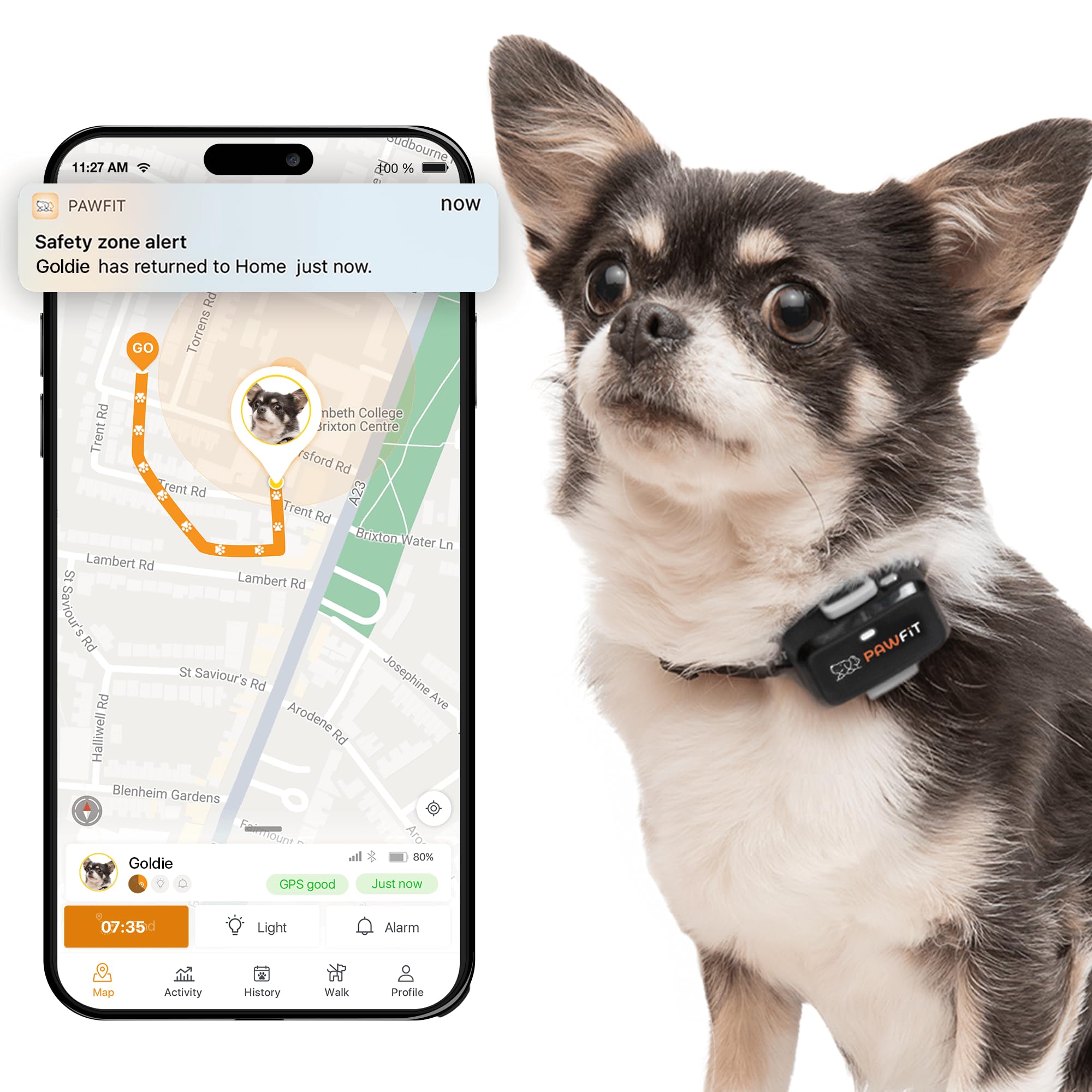
Your smallest dog won’t get dragged down here: the Pawfit Lite weighs under 18 grams, lighter than almost anything else in this guide. That’s why it suits a Chihuahua or a toy breed — the weight won’t bother them on a walk. The 400 mAh battery (a modest power cell) is sized to match a small dog’s walks rather than long days out.
The tracker runs on a built-in multi-network 4G SIM, so you can follow your dog across Europe and North America where mobile coverage lives. You set virtual safe zones, get an escape ping when your dog leaves, and see 24-hour location history. The LED light helps at dusk. Activity goals and shared access for family or a dog walker round out the app.
An easy app and instant safe-zone alerts (notices when your dog leaves a set area) are what win people over. The trade-off is clearly the battery. Some owners see it hold a charge well over a week; others report it dropping fast, and one frank review sums up the worry: “Battery life sucks, Maybe 2 days.” On fence sizing: the recommended zone is roughly 656 feet per side, far too big for a small lot — your dog could be two streets over before the alert catches up. A 30-day subscription is included to start.
Best fit for: small breeds and owners who want the lightest possible tracker with a well-made app and instant safe-zone alerts.
Not the one if: you expect a week of battery between charges on every setting, or you need a tight fence on a small property.
4. PetSafe GPS Dog Tracker
Roughly a month per charge, paired with a stainless clip that stays put on wide collars.
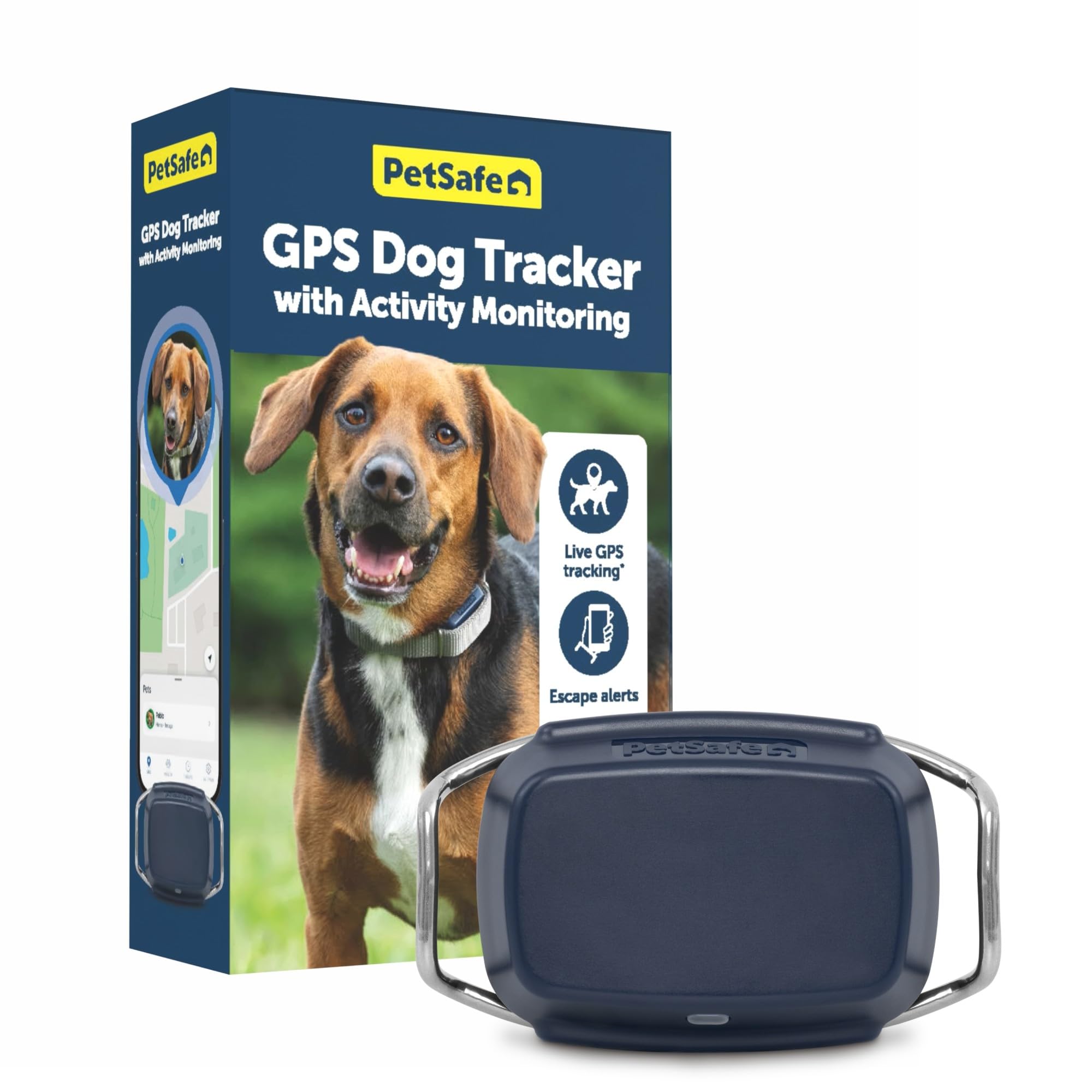
For an owner who keeps forgetting to charge, this is the answer. PetSafe rates the battery at up to 30 days, which dwarfs what most 5-day trackers give you. The 3.2-ounce body carries an IP67 waterproof rating and a stainless-steel clip that fits collars and harnesses up to 1 inch wide — a sturdier mount than the silicone loops on some rivals.
Live location runs on GPS plus cellular, and the My PetSafe app bundles everything: Safe Zones, rapid escape alerts, Find My Pet directions, and wellness data (steps, rest, distance, bark patterns). A huge plus for country dwellers — this one keeps tracking where cell and Wi-Fi are patchy, an area where some Bluetooth-only trackers fall down.
There are real catches. A subscription is required to open up tracking at all, so factor the monthly plan in. Charge it regularly despite the long rating, and expect occasional quirks: a home pin that shows up at a neighbor’s address, or a slow password reset flow. On small breeds, the 3.2-ounce body is noticeable and can slide on narrow collars — this tracker is happiest on a medium or large dog with a wide collar.
Why it’s here: the 30-day battery rating plus IP67 and a stainless clip makes it the low-maintenance pick for big dogs whose owners travel or forget to charge.
Where it stumbles: subscription required, some app tuning to do on address pins, and a body that’s chunky on small necks.
This one’s for: medium-to-large dog owners who want to charge roughly once a month and need tracking to hold in weak-signal rural spots.
Skip the pairing if: your dog is a toy breed and you need something that rides unnoticed.
5. AI-Powered Smartphone for Pets
A collar that talks back — play music, call your dog, and get an AI read on its mood.
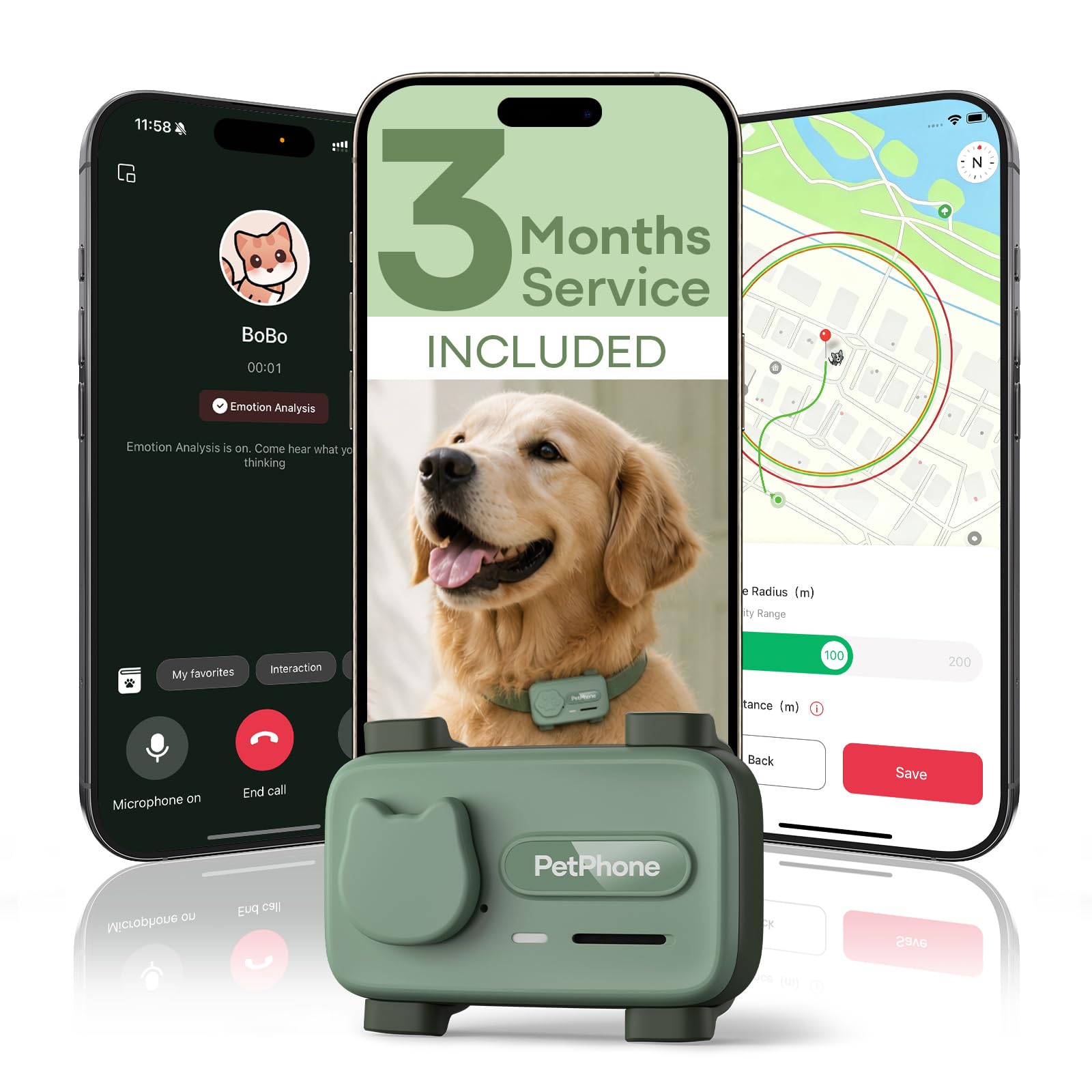
You can talk to your dog with this one, not just track them. It packs a two-way speaker and mic, so you can call your dog and hear them respond, or play pre-recorded sounds and music to settle anxiety when you’re out. For a dog with separation stress, that’s the reason to look here. At 1.3 ounces, it’s lighter than almost everything else in this guide.
Location is serious under the fun, too: six positioning technologies (GPS, AGPS, LBS, Bluetooth, WiFi, active radar) give real-time tracking, with radar finding your dog within 100 meters and a light or ringtone search within 50 meters. A three-level virtual fence pings you when your dog leaves, and activity data is baseline-tracked over six weeks so a drop in movement triggers a health reminder. IP67 waterproofing and 600 mAh of battery rate up to 5 days.
The reality check is that it works best as a connection and activity tool, not a hardcore search-and-rescue unit. Full features depend on a subscription, and the “call your pet” side reads as a novelty to some. If your dog is a serious flight risk on big open land, a dedicated live-GPS tracker is the safer primary. For a home alone dog who perks up at the sound of your voice, this is genuinely charming.
What Makes It Different
- Two-way talk and remote music playback
- 1.3 oz — one of the lightest here
- Six positioning technologies, radar within 100 meters
- Three-level virtual fence with alerts
Where It Falls Short
- Full functionality tied to a subscription
- Up to 5 days of battery — shorter than most
- Reads as a novelty to safety-focused owners
Made for: owners of an anxious dog who want to hear, talk to, and settle their pet remotely while still tracking location.
Pass on it if: your dog is a high-risk bolter and you need the fastest live search, not the friendliest collar.
6. Life360 Pet GPS Tracker
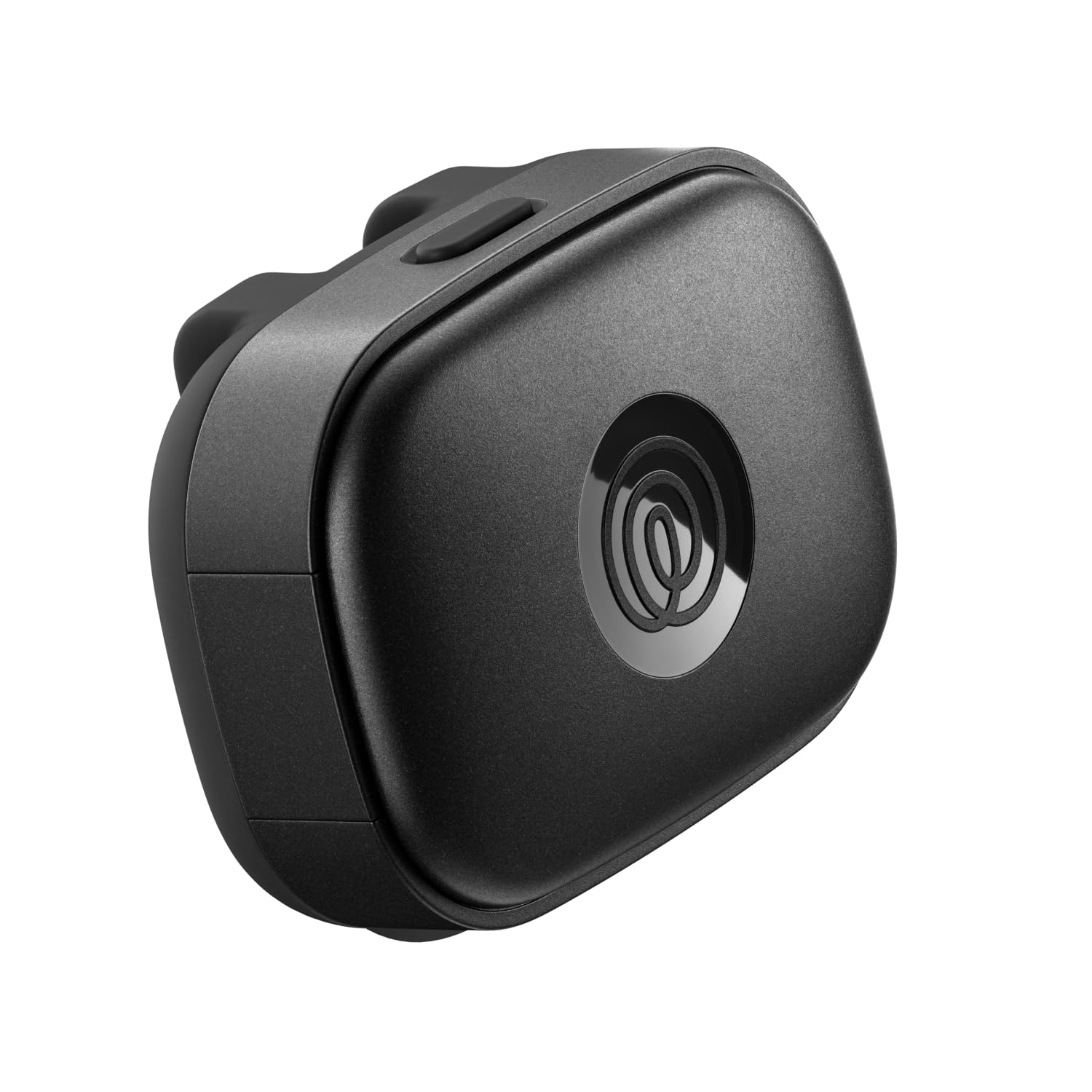
Built for the whole household — one shared map, one shared routine, and a huge community watching.
If more than one person walks the dog, Life360 solves a problem the others mostly ignore. Everyone joins the same family map, so you can see which family member has your pet, who walked them most, and share feeding and medication reminders in one place. That care-logging is the standout, not the GPS alone.
Tracking runs on GPS, LTE, and Bluetooth, with customizable virtual fences and Escape Alerts straight to your phone. The 12-month Silver subscription is included for new and free members — though it auto-renews after the year. Battery is rated up to 14 days, and Reserve Mode extends findability for up to 6 months after the battery depletes, which is a genuinely useful safety net for a lost dog.
Battery is the honest weak point. Standard tracking gets you around two weeks, but frequent-update or beta mode pulls that down sharply, so most buyers run it conservatively. A rare false “left home” alert can fire too. The perk is the network behind it — when a dog goes missing, the broader Life360 community is a second set of eyes. A sturdy, well-made tracker that suits families already living inside the app.
The winning angle: shared family care tracking plus Reserve Mode’s extended findability makes it the most household-friendly pick here.
The fair caveat: keep it on the standard update setting if you want the full two-week battery, and treat the plan as a yearly commitment that renews.
Pick this if: multiple people care for one dog and you want a shared map, walk tracking, and community-backed lost-pet help.
Consider another if: you want a set-and-forget battery or you avoid auto-renewing subscriptions.
7. Fi Series 3+ GPS Dog Collar
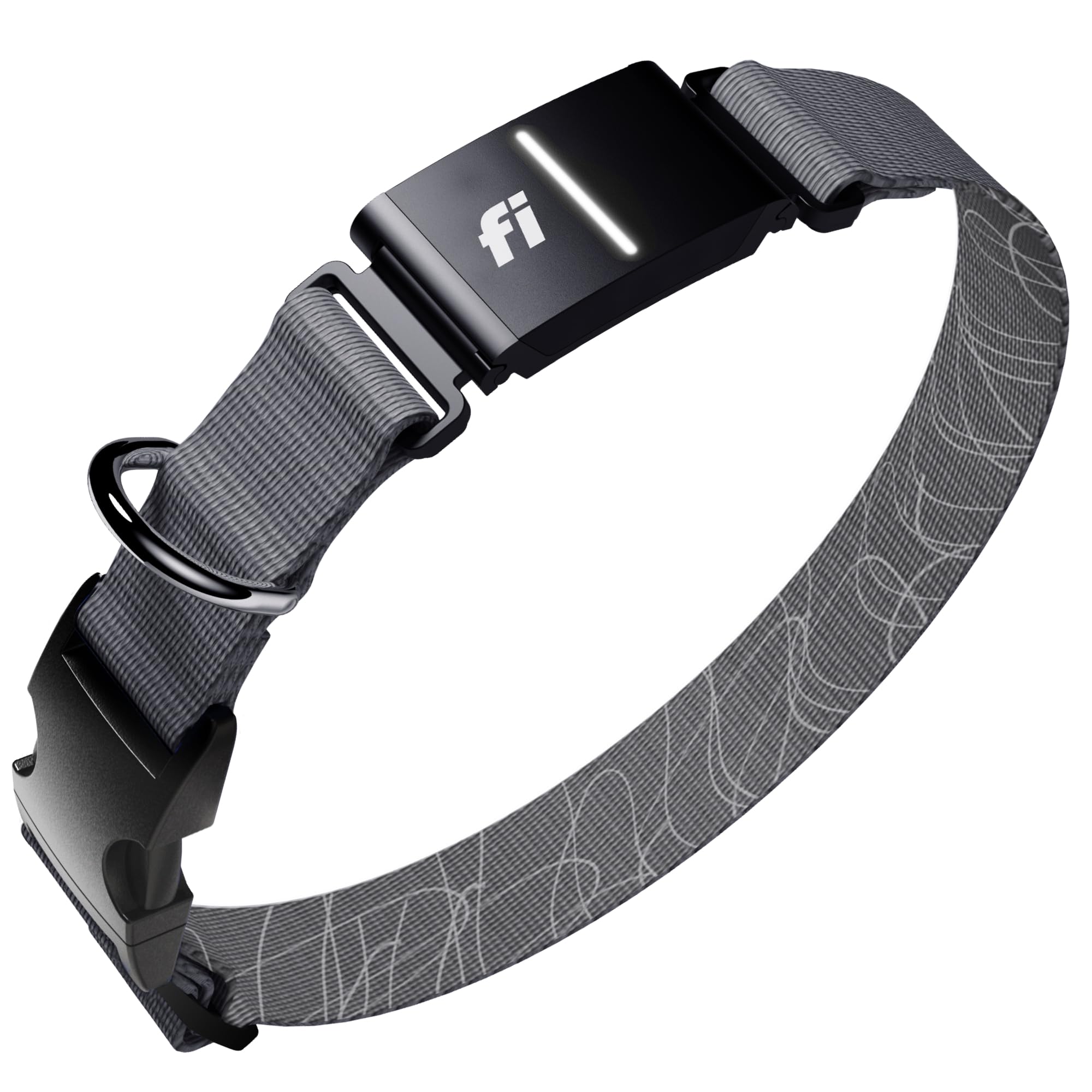
The tracker that watches habits, not just location — steps, sleep, barking, and eating.
Fi is the most complete activity monitor in this guide. It counts steps, tracks sleep and rest, and even detects behaviors like barking, licking, scratching, eating, and drinking. Those long-term trends make a subtle change in routine easier to catch. Weekly goals with breed comparisons keep daily activity on target — a far deeper behavioral picture than a basic step counter.
The hardware keeps up. A 285 mAh battery on a steel frame, IP68 waterproofing, a built-in LED for night visibility, and wireless charging all suit daily dog life. It fits Apple Watch for live location and activity on your wrist, and the app also handles vet-visit and vaccine reminders with uploaded health records. In a two-week test on an anxious rescue, this collar held live updates in spotty coverage, fired the fastest escape alert, and ran the full two weeks without charging.
What you give up is money and nuance. A Fi membership is required to activate, and it sits at the premium end of the category. Live tracking leans on cellular towers, so in rural areas with only one nearby tower, positioning can stall — this is a tracker for areas you know have solid coverage. At 77 grams it’s the heaviest here, better suited to medium and large dogs than toys.
The Fi Advantage
- Deepest behavior and sleep tracking of any pick
- IP68, LED, wireless charging, Apple Watch live view
- Fastest escape alerts in our field test
- Runs up to two weeks per charge on conservative settings
Weigh These First
- Premium pricing plus a required membership
- 77 g is heavy for small breeds
- Needs solid cellular coverage — one-tower rural areas struggle
The right call for: owners who want the most detailed activity and behavior trends and have solid cellular coverage where they walk.
Keep looking if: you have a toy breed, a rural property with a single tower, or you want to skip a membership entirely.
8. Invoxia Biotracker
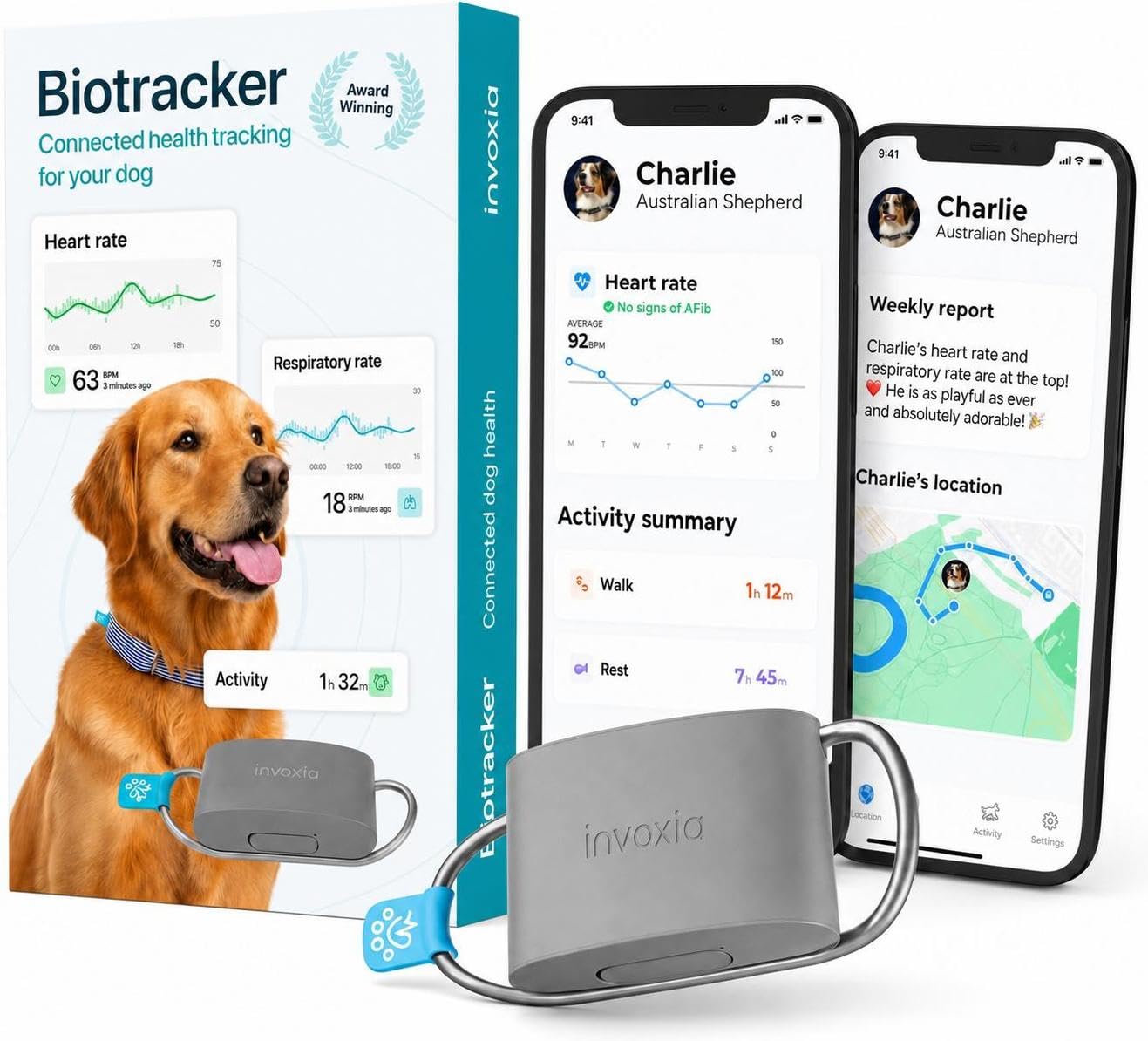
Six sensors reading heart and breathing rate at rest — a health tool that happens to track location.
This is the closest thing here to a wearable for your dog’s vitals. Six biometric sensors measure resting heart and breathing rate, ideally while your dog sleeps, or on demand from the app while they lie down with head on the floor. It’s a long-term monitoring tool, not an emergency alarm — unusual trends are confirmed over at least 20 days before you’re alerted. For a dog with a heart condition or in recovery after treatment, those weekly resting vitals are the reason to buy it.
Location is capable but conditional. With the Max GPS plan, you get 4G real-time tracking and escape alerts, and positions are accurate to the metre outdoors. Coverage is partial in some areas, and without the GPS plan, positions are logged via Bluetooth near your phone. The compact IP67 case, 28-gram weight, and up to 15 days of battery (around 10 with GPS always on) make it comfortable for everyday wear on collars 2.5 cm wide — the collar itself isn’t included.
Be clear-eyed about the GPS side. It can work sporadically and lean on your phone’s Bluetooth in weak areas, so it isn’t the fastest tool for following a dog mid-bolt. The strongest use is the health tracking, which works on the free Basic plan — no subscription just to see resting vitals — while the Plus and Max plans add alerts and real-time GPS. It’s a strange, clever device: brilliant at vitals, ordinary at pure search speed.
Well matched to: an owner following a senior dog’s heart or breathing trends, or one who wants vitals without committing to a plan.
Look elsewhere if: your priority is a fast, live GPS search on a dog that bolts, or you walk in low-signal areas.
Know the Specs
Live GPS update speed
Update speed is how often a tracker refreshes your dog’s position on the map. Two-to-three-second refreshes let you follow a moving dog in real time. A once-a-minute tracker shows where your dog was — fine for a dog who wanders off the porch, not for one that runs. If your dog is a bolter, treat update speed as the top spec and everything else as secondary. A live tracker refreshes faster while battery drains faster, so faster updates mean more charging.
Virtual fence size and accuracy
A virtual fence is a digital boundary you draw in the app around your yard; escape alerts fire when your dog crosses it. The fence only works as well as the GPS accuracy behind it. In open areas accuracy can be tight to the metre; in dense city blocks it can drift by tens of metres. If you draw a fence too tight for the accuracy on offer, you’ll get false alerts. Match your fence size to the tracker’s outdoor accuracy, not your ideal boundary.
Battery life versus live tracking
Battery ratings are built around a conservative mode, not constant live tracking. A tracker rated up to 14 days may drop well below that when you keep live updates on all day. Plan around a nightly or every-few-days charging habit depending on how often you switch to live view. A tracker with a large battery rating plus a sturdier strap is the low-maintenance combo for owners who forget to plug in.
Waterproof ratings explained
IP67 means the device survives brief submersion in shallow water; IP68 is the slightly tougher rating and the one to look for if your dog swims often. Both handle rain and splashes comfortably. Read the rating literally — a high waterproof rating protects against water, not against a chewed strap or a lost clip, so check the mount design as carefully as the rating.
Common Questions
Will a dog activity tracker work without a subscription?
How light does a tracker need to be for a small dog?
How often will I need to charge a dog tracker?
Can a dog activity tracker show if my dog is sleeping enough?
What happens if my dog’s tracker battery dies while they are lost?
Do these trackers use shock or vibration correction on the dog?
Will a tracker keep working in rural areas with weak cell signal?
Can I share tracker access with a dog walker or family member?
Does an activity tracker replace a microchip or a physical fence?
Is a GPS tracker better than a Bluetooth tracker for dogs?
The Bottom Line
For most dog owners, the dog activity trackers winner is the DBDD GPS Dog Trackers. It bundles a full year of live tracking, weighs 1.6 ounces, and carries virtual fence alerts plus a wellness score — with no setup fees to worry about. If heart and breathing-rate trends matter — a senior dog, an anxious dog — the Tractive Smart Dog GPS Tracker adds vital signs and bark monitoring to fast live updates. And for the deepest behavior and sleep picture with the fastest escape alerts, the Fi Series 3+ is the tracker to reach for.
One nudge: if you’ve never used a tracker and don’t want to commit to a subscription before you know it works for your dog, start with the PetSafe bundle. Three months of service included turns a test drive into a real decision.
How we choose
We do not accept paid placement. Every pick is matched to a real buyer and a real use-case; we do not hands-on test units.
Sources
Specifications: manufacturer listings and product documentation. Review insights: verified customer reviews, as of October 2026. Pricing: not shown on this page (it changes often); check the current price via the retailer link.
As an Amazon Associate, How Dog Care earns from qualifying purchases. This does not affect which products we feature.